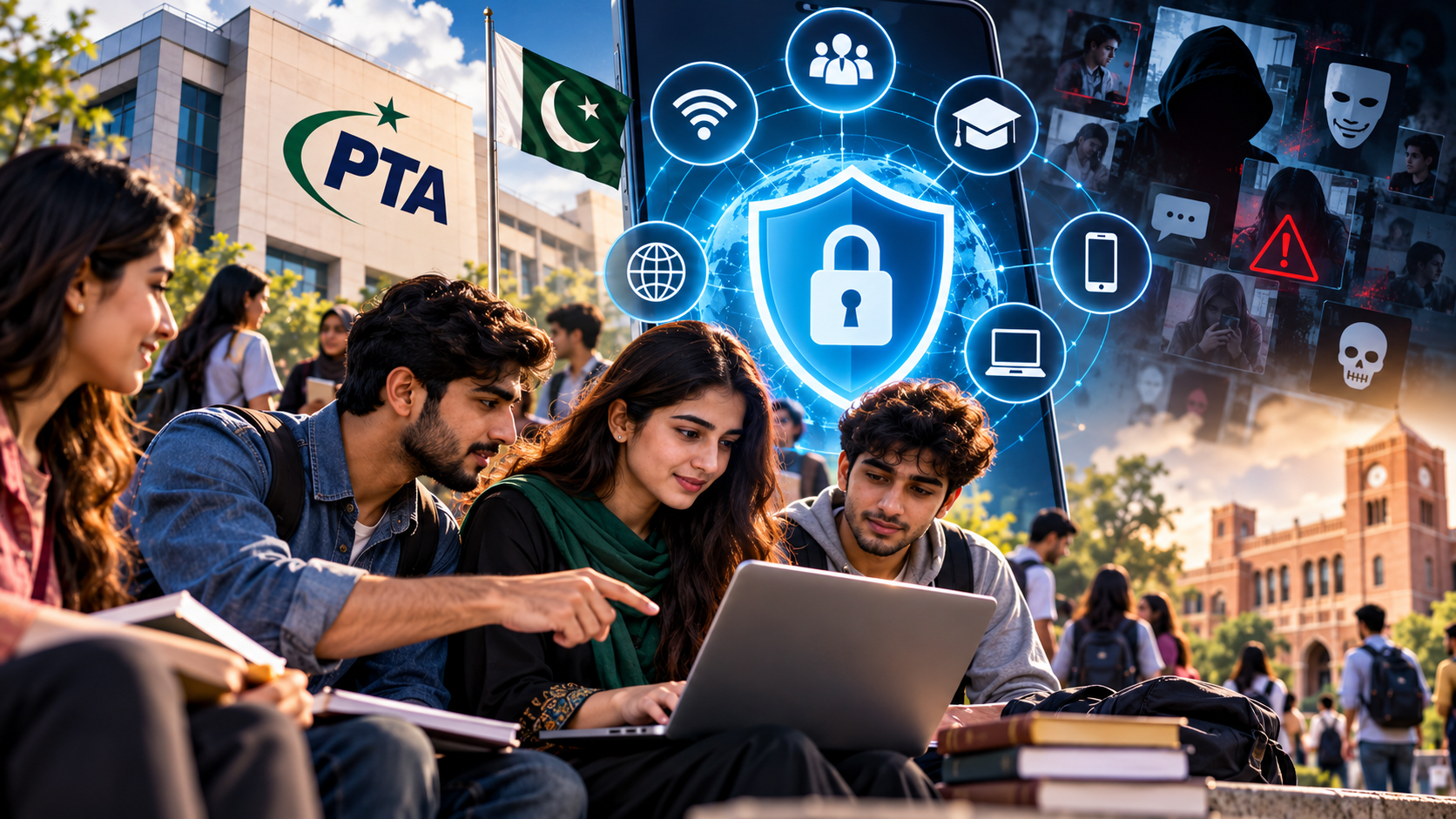
Lahore – The Pakistan Telecommunication Authority has briefed the heads of more than 165 universities on PTA safe internet use as part of a wider campaign to improve awareness about online risks.
The authority has conducted awareness seminars and other activities with universities and institutions affiliated with the Higher Education Commission. The sessions focus on safer, lawful and responsible use of the internet.
The initiative comes as students and young people spend more time on social media, messaging platforms and other digital services. PTA has also been working with HEC to promote more responsible use of online platforms among university students.
PTA Safe Internet Use Campaign Targets Students
The PTA’s awareness efforts cover several areas of online safety.
These include unsafe and unlawful online content, cyber risks and the legal options available to people who become victims of online offences.
The authority has also used digital platforms to distribute educational material. Videos and awareness content have been shared through YouTube and social media.
The aim is to help users understand common online threats before they become victims.
Why Internet Safety Matters for University Students
University students are among the most active users of digital platforms.
They use the internet for education, communication, entertainment and work. This wider use also exposes them to different online risks.
These can include scams, phishing, harassment, identity theft and malicious links.
Misinformation and harmful content can create additional problems.
PTA’s awareness sessions are intended to help young users identify such risks and use digital platforms more responsibly.
The authority has previously worked with HEC on efforts to promote safe and productive use of cyberspace among students and faculty.
PTA Highlights Cyber Risks and Legal Remedies
The awareness campaign does not only focus on prevention.
PTA has also highlighted the legal remedies available to people who face online abuse or cyber-related offences.
The authority has circulated educational material explaining common cyber threats and steps users can take to protect themselves.
Pakistan’s official cybercrime guidance also covers common risks, preventive measures and available legal safeguards for internet users.
The message is particularly important for students who may encounter suspicious messages, fake accounts or attempts to obtain personal information.
PTA Works With HEC on Online Safety
PTA and HEC have expanded their cooperation on responsible internet and social media use.
In December 2024, both organizations signed an MoU covering areas including awareness, capacity building and efforts to curb the misuse of social media.
The partnership also aims to help students use social media and internet technologies constructively.
The two organizations had already been working together on awareness initiatives before the MoU was signed.
Their cooperation has included efforts to reach university administrations, faculty members and students.
Parents Also Included in PTA Awareness Efforts
PTA’s online safety campaign extends beyond universities.
The authority has worked with organizations including UNICEF and TikTok to develop guides for parents and caregivers.
The material is designed to help parents understand the risks children can encounter online.
It also provides guidance on helping young people use digital platforms more safely.
This is becoming increasingly important as children gain access to smartphones and social media at younger ages.
Parents often have to balance online access with concerns about privacy, scams, harmful content and contact with strangers.
PTA Uses Social Media to Spread Awareness
The authority has also used its own digital channels to reach a wider audience.
Awareness videos and educational material have been distributed through YouTube and social media platforms.
PTA has also worked with mobile operators and television programmes to reach different sections of the public.
The approach allows the authority to take online safety information beyond universities.
It also gives parents, students and other internet users access to basic guidance through platforms they already use.
Online Safety Efforts Expand Across Universities
The focus on universities reflects the growing importance of digital skills in higher education.
HEC and PTA have previously highlighted the need for students to use online platforms effectively and responsibly.
In 2024, the two organizations said their cooperation would help reach young people in areas including Gilgit-Baltistan and Azad Jammu and Kashmir.
More recently, HEC and the National CERT signed an MoU on October 1, 2026, to strengthen cybersecurity across the higher education sector.
The agreement includes the creation of an Education Sector Computer Emergency Response Team, known as EduCERT.
The initiative is intended to improve cyber threat monitoring, information sharing, incident coordination and security awareness across universities.
What Students Can Do to Stay Safe Online
The PTA safe internet use campaign also highlights a wider responsibility for internet users.
Students should avoid opening suspicious links or downloading files from unknown sources.
They should also use strong and unique passwords for important accounts.
Two-factor authentication can provide another layer of protection.
Personal information should not be shared with unknown people or unverified websites.
Students should also be careful when communicating with unfamiliar accounts on social media.
If an online incident occurs, users should preserve relevant evidence and seek help through the appropriate legal or institutional channels.
PTA Pushes for More Responsible Internet Use
The briefing of more than 165 universities is part of a broader effort to improve digital awareness in Pakistan.
PTA’s campaign focuses on helping users understand both the opportunities and risks that come with internet access.
Its work with universities, parents, mobile operators and other organizations gives the campaign a wider reach.
The recent cooperation between HEC and National CERT also shows that cybersecurity awareness is becoming a bigger priority across Pakistan’s education sector.
As more academic, financial and social activities move online, knowing how to use the internet safely is becoming an essential skill.
For students in particular, responsible internet use is no longer simply about avoiding harmful websites.
It also means protecting personal information, recognizing scams, understanding digital risks and knowing what to do when something goes wrong.
Key Points:
- PTA has briefed the heads of more than 165 universities on safe internet use.
- The campaign covers cyber risks, unsafe content and legal remedies.
- PTA has conducted awareness activities with HEC-affiliated institutions.
- The authority has shared educational material through YouTube and social media.
- PTA has worked with UNICEF and TikTok on online safety guides for parents.
- Mobile operators and television programmes have also been involved.
- PTA and HEC have expanded cooperation on responsible social media use.
- HEC and National CERT recently agreed to strengthen cybersecurity across universities.
- The new EduCERT initiative will support cyber threat monitoring and incident coordination.
- The wider campaign aims to promote safer and more responsible internet use in Pakistan.
Read More:
For more such exclusive articles, follow Upfront .