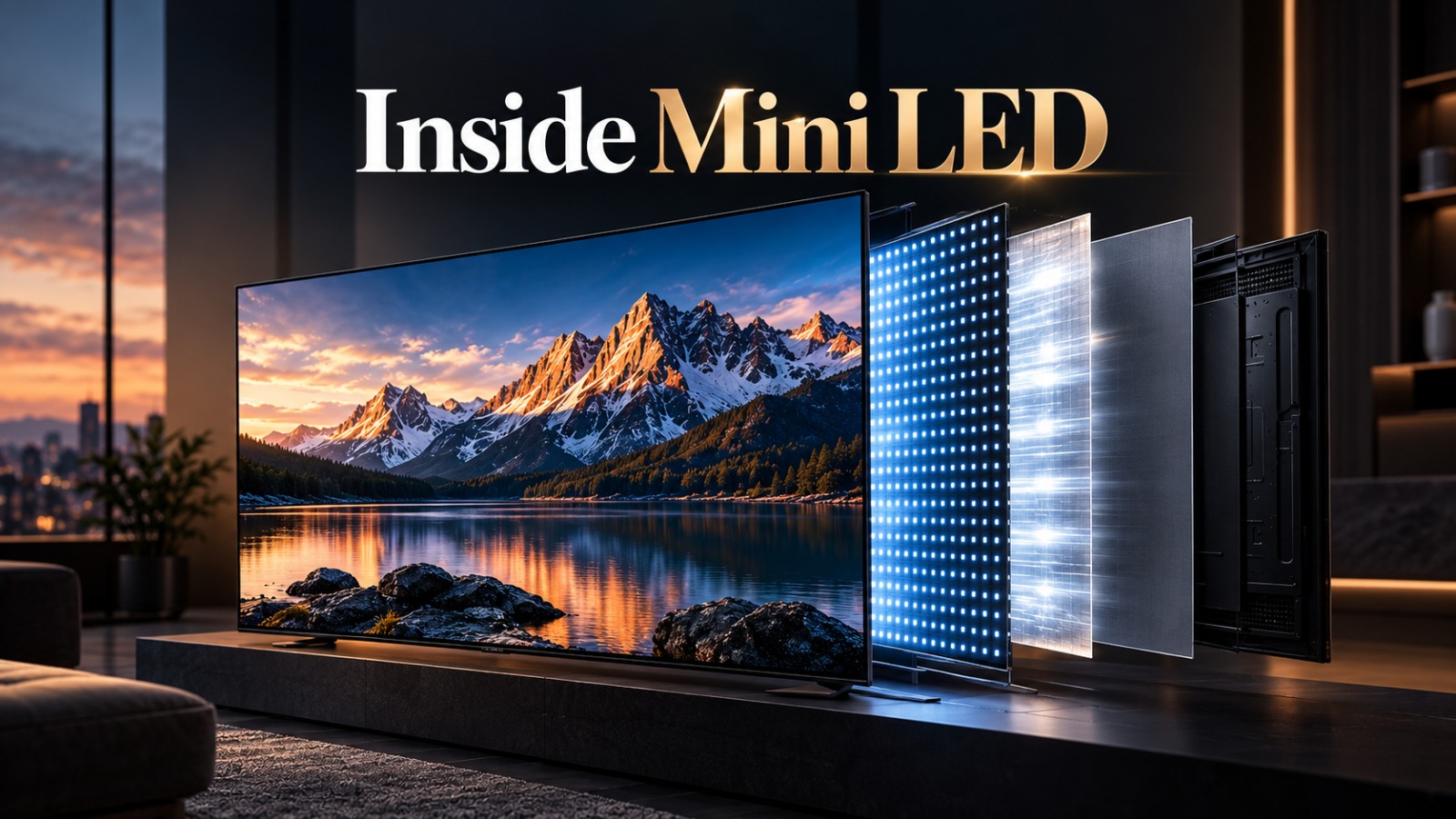
LAHORE – Mini LED technology is gaining ground in the global television market, but the technology label alone does not determine picture quality.
According to Omdia, Mini LED televisions accounted for 13% of global TV shipments in the second quarter of 2026. As adoption grows, understanding the technology behind these televisions is becoming increasingly important for consumers.
Mini LED refers to the light source used behind a liquid crystal display (LCD) panel. However, the way a television arranges and controls that light can influence contrast, black levels, bright highlights and blooming around bright objects against dark backgrounds.
Three factors can help consumers better understand the differences between Mini LED televisions: hardware local dimming, local dimming zones and backlight architecture.
Three factors that influence Mini LED picture quality:
-
Hardware local dimming
Hardware local dimming allows a television to control different groups of backlight LEDs independently. The TV can brighten, dim or switch off specific areas depending on the content displayed on the screen.
This approach helps the television manage light more precisely across a single image. It can improve contrast and help preserve dark areas while displaying bright highlights elsewhere on the screen.
-
Local dimming zones and precision
The number of independently controlled dimming zones can affect how precisely a television manages its backlight.
More zones can allow the TV to control smaller areas of the screen, helping separate bright objects from surrounding dark regions. This can reduce unwanted light spill and improve perceived contrast when other display characteristics are comparable.
However, zone count alone does not determine overall picture quality. The effectiveness of the dimming system and how it responds to different scenes also matter.
-
Full Array Local Dimming
Backlight architecture also plays an important role in Mini LED performance.
Full Array Local Dimming (FALD) places controllable backlight zones across the area behind the display panel. This allows the television to manage light across different parts of the screen rather than relying solely on edge-mounted lighting or more uniform illumination.
Combined with precise local dimming, this architecture can help improve contrast and provide better control over bright and dark areas.
Together, these features offer consumers a more practical way to assess Mini LED televisions instead of relying on the technology name alone.
TCL’s position in the Mini LED market
TCL has expanded its presence in the Mini LED television segment as the category has grown.
According to Omdia data cited by TCL Electronics, the company held a 31.1% share of global Mini LED TV shipments in 2025. Its shipments increased by 118% year on year.
The company reported further growth in the first half of 2026. TCL shipped 2.43 million Mini LED televisions during the period, representing a 77.1% increase compared with the same period a year earlier. The company also said it ranked first globally by Mini LED TV shipment volume.
Shipment figures demonstrate a manufacturer’s market presence, but they do not independently establish picture quality or overall technology leadership. Product specifications and real-world performance remain important considerations when comparing televisions.
What defines a good Mini LED TV?
As Mini LED becomes more common, evaluating televisions requires more than checking whether they carry the technology label.
A broader assessment can consider market presence, investment in backlight technology, clear performance criteria and consumer education. These factors can help buyers understand the differences between individual implementations.
For consumers, the starting point is to examine how a television controls its backlight, how precisely it manages dimming zones and whether it uses Full Array Local Dimming. These details can provide useful context when comparing models, although panel characteristics, processing and other specifications also affect the final picture.
Manufacturers can also help by explaining technical differences in clear, accessible language rather than relying on marketing terminology alone.
Ultimately, the future of Mini LED will depend not only on how widely the technology is adopted, but also on how well consumers understand its capabilities and limitations. A clearer explanation of backlight design and performance can help buyers make more informed decisions when choosing their next television.
Key points:
- Mini LED TVs accounted for 13% of global television shipments in the second quarter of 2026, according to Omdia.
- Hardware local dimming, dimming zone precision and backlight architecture are key factors affecting picture quality.
- TCL held a 31.1% share of global Mini LED TV shipments in 2025, according to data reported by the company.
- TCL shipped 2.43 million Mini LED TVs in the first half of 2026, recording 77.1% year-on-year growth, the company said.