
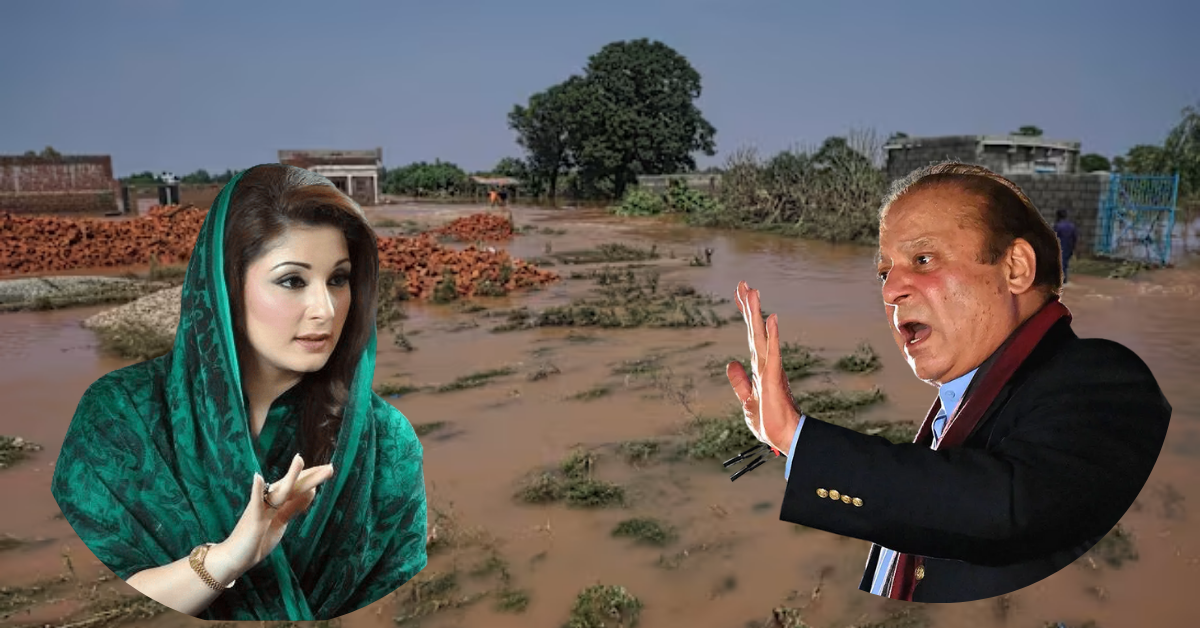
Lahore – Punjab Administration has stepped forward to battle and compensate for the loss of crops amid floods in the eastern and agricultural province of Pakistan. The government will use satellite imagery to assess crop losses from devastating floods this week and provide compensation to farmers, a provincial minister said on Saturday.
What caused the flooding?
The beginning of these floods began on Monday after India unleashed an excessive amount of water into the Chenab, Ravi, and Sutlej rivers following several heavy monsoon spells. The surge inundated vast tracts of land, destroying rice and fodder crops, sweeping away livestock, and uprooting entire settlements. Farming families were left without food or income as fields and homes disappeared under water.
In Kasur district, which borders India, more than 45,000 people were evacuated on Friday night after floodwaters broke an embankment on the Indian side of the Sutlej. By Saturday, groups of residents were still seen leaving their villages near Ganda Singh Headworks with livestock, many struggling in heavy rain.
What did the authorities say?
Punjab Health Minister Khawaja Salman Rafique, visiting the flood-hit areas, said authorities were using satellite data to determine the extent of damage. “The satellite will tell us that water entered one field and not another. On the basis of facts, data and analysis, people will be compensated,” he told a news outlet.
Although the water levels in Sutlej, Ravi, and Chenab is showing decline to some extent, Rafique noted that large-scale rehabilitation can only begin once the rivers fully recede. Thousands of farmers remain in despair over financial losses, fearing the burden of a lost harvest.
The extent of damage:
According to the Deputy Commissioner of Kasur Imran Ali, around 127 villages in the district had come in contact with the floods. While over 45,000 people were evacuated Friday night, only about 500 chose to stay in government relief camps set up in schools. The deputy commission remarked that people many people wish to stay with their relatives until the flooding period is over.
District Emergency Officer Dr. Nayyar Alam reported that 81 rescue teams were working to evacuate residents and save over 4,500 animals due to rising water levels. Many residents were reluctant to leave their homes. At a relief camp in District Public School, evacuees showed signs of scabies and diarrhea, raising concerns about water-borne diseases, though authorities had set up medical camps and dispatched medicines. Rice fields in Kasur are underwater, with flooding described as the worst in nearly 40 years.