Connect with us

Pakistan

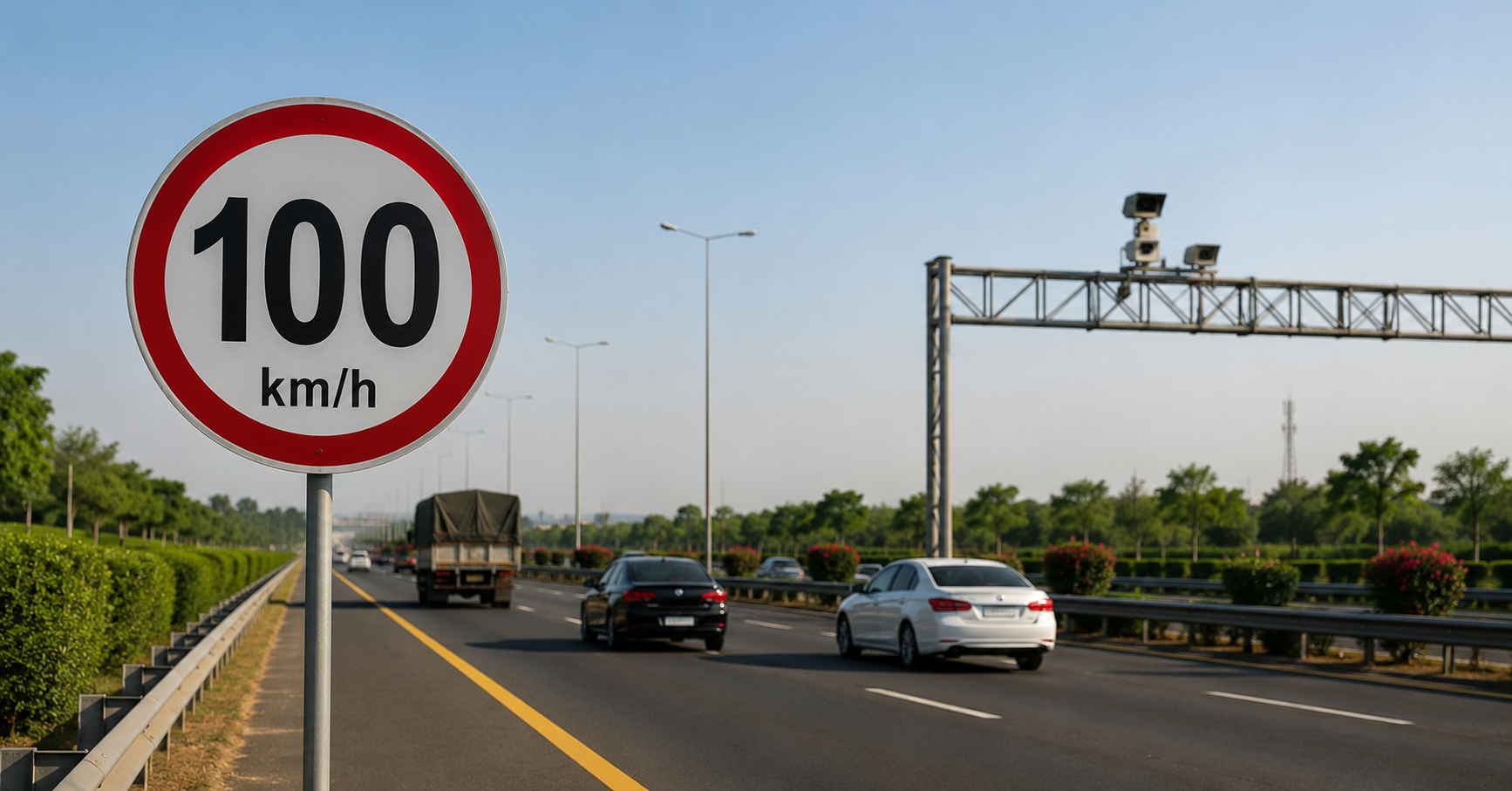
No decision taken to restore 120km/h motorway limit, says NHMP

Published

on

ISLAMABAD – The National Highways and Motorway Police (NHMP) on Saturday dismissed reports circulating on social media claiming that the previous 120km/h speed limit on motorways had been restored, clarifying that existing restrictions remain in force.

The clarification follows widespread speculation that the government had reinstated the earlier speed limit for cars and light transport vehicles (LTVs).

A spokesperson for the Motorway Police said no decision had been made to increase the speed limit, and motorists were required to continue observing the existing restrictions.

Pakistan reduced speed limits on motorways and national highways in March 2026 as part of measures aimed at conserving fuel and improving energy efficiency amid elevated global oil prices.

Under the revised policy, the speed limit for cars and LTVs on motorways was lowered from 120km/h to 100km/h, while the limit for passenger buses and heavy transport vehicles was reduced from 110km/h to 90km/h.

Recent reports suggested that authorities had decided to restore the previous motorway speed limit. However, the NHMP reiterated that no such notification had been issued and that the current limits remained applicable.

The police urged motorists to rely on official announcements for information regarding traffic regulations and to continue complying with existing speed restrictions.

Continue Reading

Latest

Government eases used car import rules, lifts age limit restrictions

Published

on

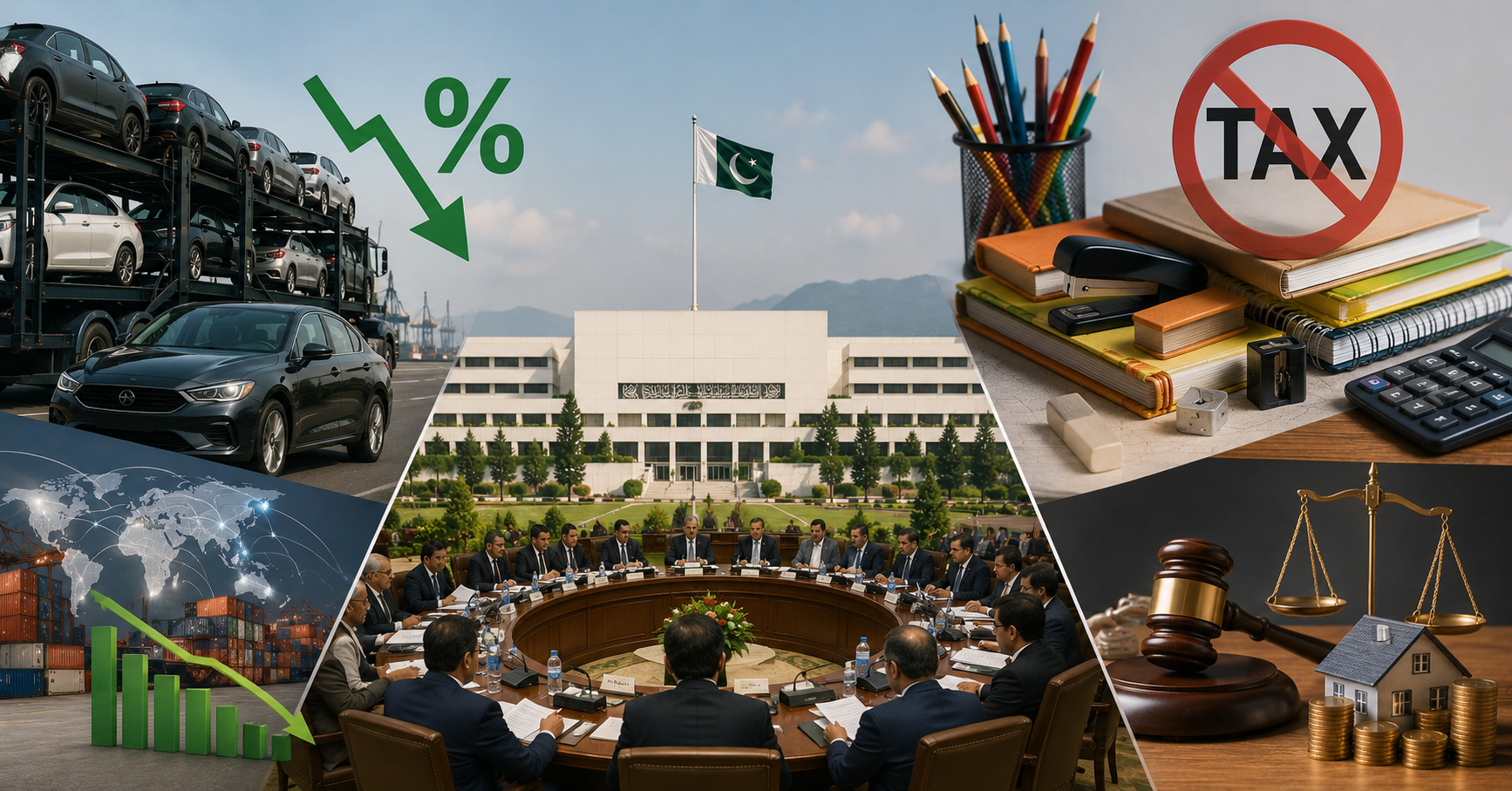
ISLAMABAD – The government informed a parliamentary committee on Tuesday that it has reduced taxes on the import of used cars and lifted the restriction on vehicle age limits, while failing to secure approval from the International Monetary Fund (IMF) for exempting stationery items such as pencils and exercise books from sales tax.

Briefing the Senate Standing Committee on Finance, Commerce Secretary Jawad Paul said that under commitments with the IMF, the restriction limiting imports to five-year-old used vehicles would be removed from July, subject to compliance with environmental standards. He added that the additional regulatory duty on imports would be reduced from 40pc to 30pc next month.

He said the relaxation in used car import restrictions was being implemented in phases in line with IMF conditions aimed at opening the market and ensuring equal opportunity for overseas sellers.

Separately, officials told the committee that proposals to exempt educational stationery from sales tax had not been accepted. Director General of the Tax Policy Office Dr Najeeb Memon said the IMF had opposed exemptions for the education sector, including stationery goods.

He said tax exemptions could not be extended to all essential items. In the last budget, an 18pc sales tax was imposed on pencils, geometry boxes, sharpeners, exercise books, and related items, significantly increasing prices.

The Finance Bill 2026-27 has retained the taxation on these items, even as other goods such as contraceptives and sanitary products have been exempted.

Finance Minister Muhammad Aurangzeb, who attended meetings of both parliamentary committees, also ruled out tax relief for the beverages sector and rejected a proposal to reduce federal excise duty by 5pc in exchange for higher revenue generation.

He further declined to provide additional tax concessions to exporters, stating that the government had already introduced relief measures, including reductions in advance income tax, abolition of super tax on exports, and concessional interest rates for exporters.

Senator Mohsin Aziz of the Pakistan Tehreek-i-Insaf (PTI) warned that existing policies could negatively affect export performance in the coming fiscal year, arguing that the tax framework remained challenging for businesses.

On the National Tariff Policy, the commerce secretary informed the committee that under a five-year reform plan, average tariffs are targeted to fall to 13pc from July. However, he said the revised average is expected to remain at 13.77pc due to slower reductions in the previous year and sectoral adjustments.

He added that regulatory duties, except on alcohol, had been reduced to 20pc. The government has retained a 90pc duty on alcohol, despite a ban on its import in the country.

The total fiscal impact of tariff reductions for the next year has been estimated at Rs143.4 billion.

Meanwhile, the National Assembly Standing Committee on Finance approved amendments granting special judges the authority to freeze the assets of under-trial accused persons under the Customs Act, including properties held in their name or through third parties.

Officials from the Federal Board of Revenue (FBR) said the provision was aimed at preventing the transfer of assets to evade confiscation. However, concerns were raised regarding safeguards for third-party holders of such assets.

The committee also approved removing the requirement for debit or credit card machines for small traders under a new fixed tax scheme. Officials said the FBR aimed to bring 100,000 large traders into the tax net, but only 37,000 had been registered so far.

The committee rejected a proposal to empower the FBR to exclude any category of traders from the definition of large traders, citing concerns over potential misuse of authority.

A decision on a proposal to impose Rs30 per unit sales tax on electricity supplied to steel melting and re-rolling mills was deferred amid divisions within the sector.

Continue Reading

Pakistan

NEPRA approves tariff cuts, power consumers to get Rs56bn relief

Published

on

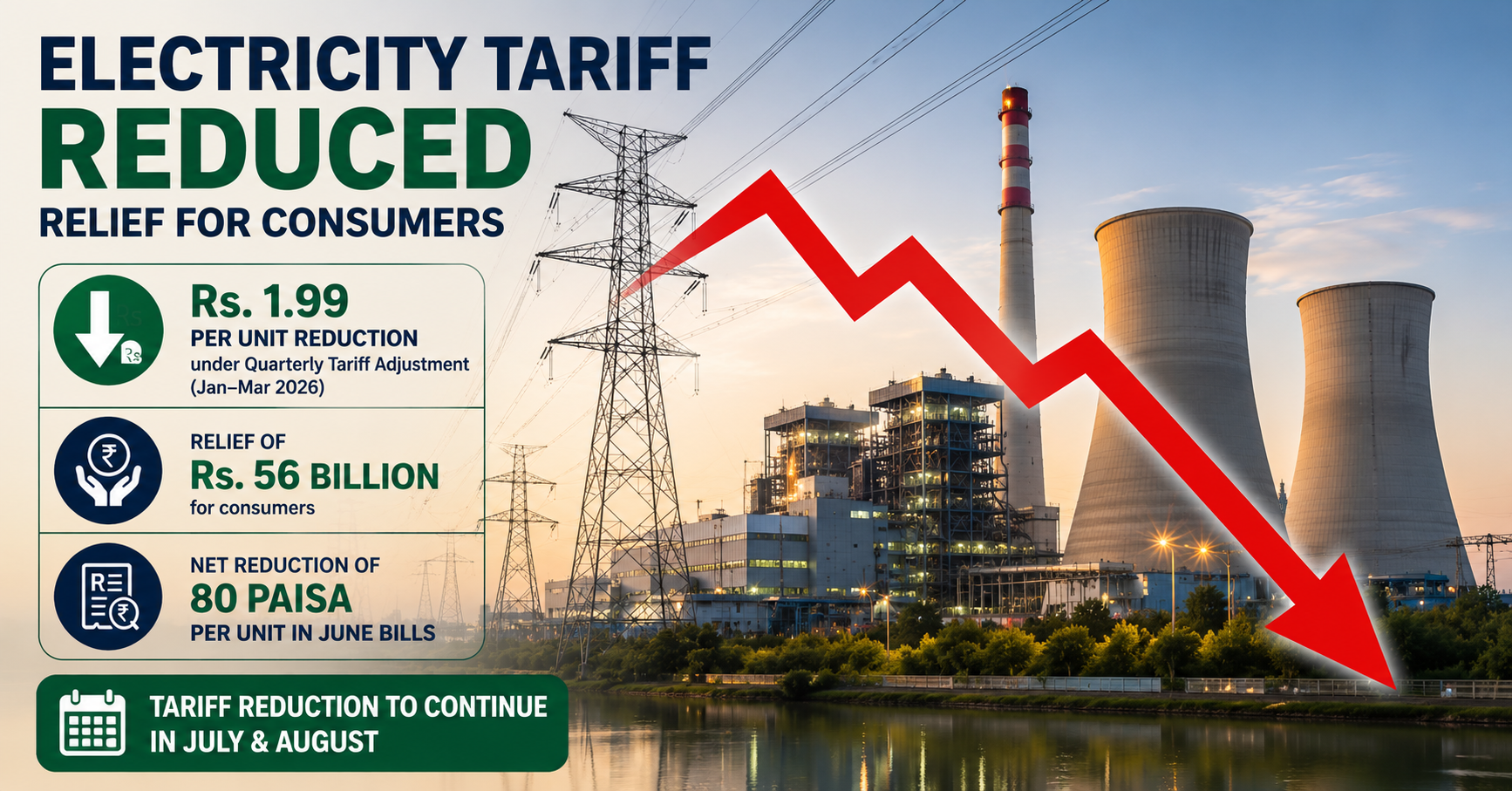
LAHORE – The National Electric Power Regulatory Authority (Nepra) has approved a reduction in electricity tariffs that is expected to provide consumers relief worth about Rs56 billion over the next three months.

In a notification issued on Thursday, the regulator announced a Rs1.99 per unit decrease under the quarterly tariff adjustment for the January-March 2026 quarter. The reduction will remain effective during June, July and August and is estimated to translate into consumer relief of roughly Rs67bn.

However, Nepra also allowed a fuel cost adjustment increase of Rs1.19 per unit for electricity consumed in April, which will be charged in June bills. The increase is expected to generate approximately Rs11bn for distribution companies.

As a result, consumers are likely to see a net reduction of around 80 paisa per unit in their June electricity bills, while the full benefit of the quarterly adjustment will continue in the following two months.

The approved FCA increase is lower than the Rs1.74 per unit sought by the Central Power Purchasing Agency, with Nepra trimming the proposed recovery amount to about Rs11bn from nearly Rs16bn.

According to the regulator, the quarterly adjustment was driven by changes in capacity payments, transmission charges, market operator costs, transmission and distribution losses, and the government’s incremental electricity consumption package for industrial and agricultural sectors.

Most consumer categories will benefit from the reduction, although certain lifeline and prepaid consumers, as well as some consumers covered by the incremental consumption scheme, will not be eligible for parts of the adjustment.

Continue Reading

Pakistan

Pakistan loses $1.6bn annually to e-commerce checkout inefficiencies: Report

Published

on

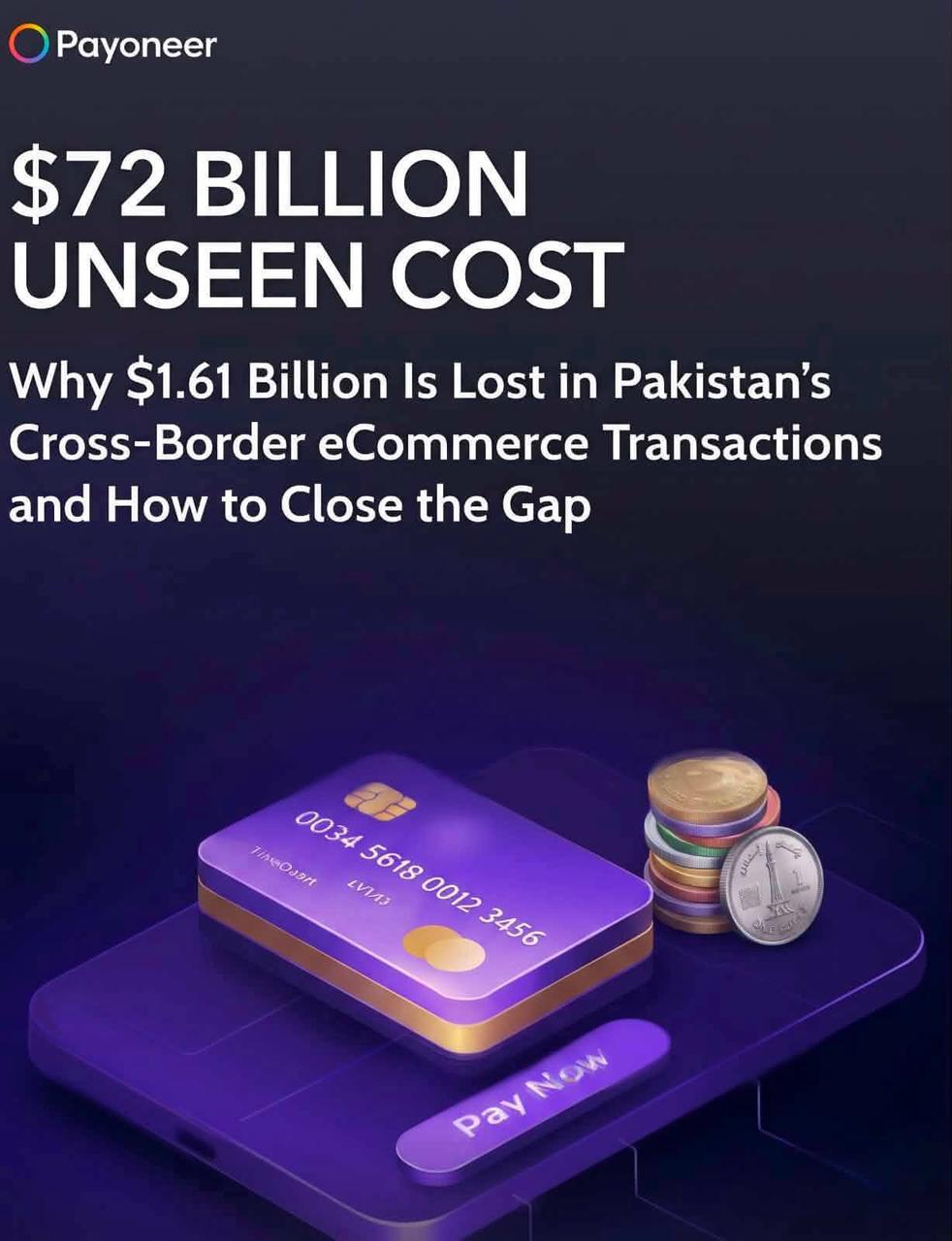
ISLAMABAD – Pakistan’s rapidly growing e-commerce sector is incurring significant financial losses at the checkout stage, with inefficiencies in payment systems costing businesses an estimated $1.61 billion annually, according to a new white paper by Payoneer.

The report highlights that merchants across Asia collectively lose around $72bn each year due to checkout-related challenges, with Pakistan representing a notable share of this gap.

A major portion of the losses in Pakistan — approximately $0.97bn — stems from cart abandonment, which accounts for over 60 per cent of the total. Analysts attribute this to friction during the checkout process, including unexpected charges, payment declines, and lack of pricing transparency.

Settlement delays contribute a further $0.46bn in losses, while $0.18bn is lost due to foreign exchange (FX) costs and other payment-related inefficiencies, the report noted.

Despite strong consumer demand, many transactions fail to convert into completed purchases, limiting revenue realisation for businesses. The issue is particularly acute for cross-border sellers, as international customers increasingly expect localised payment options and pricing in their own currencies.

Industry experts say complex payment systems involving multiple intermediaries further erode merchant margins, while delays in settlement cycles restrict cash flow, affecting businesses’ ability to fulfil orders and expand operations.

The findings point to structural weaknesses in Pakistan’s digital trade ecosystem, where financial infrastructure has yet to keep pace with the country’s expanding participation in global e-commerce.

Experts suggest that improving checkout processes, streamlining payment channels, and ensuring faster settlement could help address these inefficiencies. Introducing localised payment methods and transparent pricing, along with reducing fragmentation in banking relationships, may enhance conversion rates and unlock liquidity for businesses.

As Pakistan seeks to strengthen its position in Asia’s digital economy, addressing these bottlenecks could transform lost value into tangible growth for exporters and online sellers.

Continue Reading

Trending

Copyright © 2026