Connect with us

Politics

From landslide win to resignation: How Starmer lost Labour’s confidence

Published

on

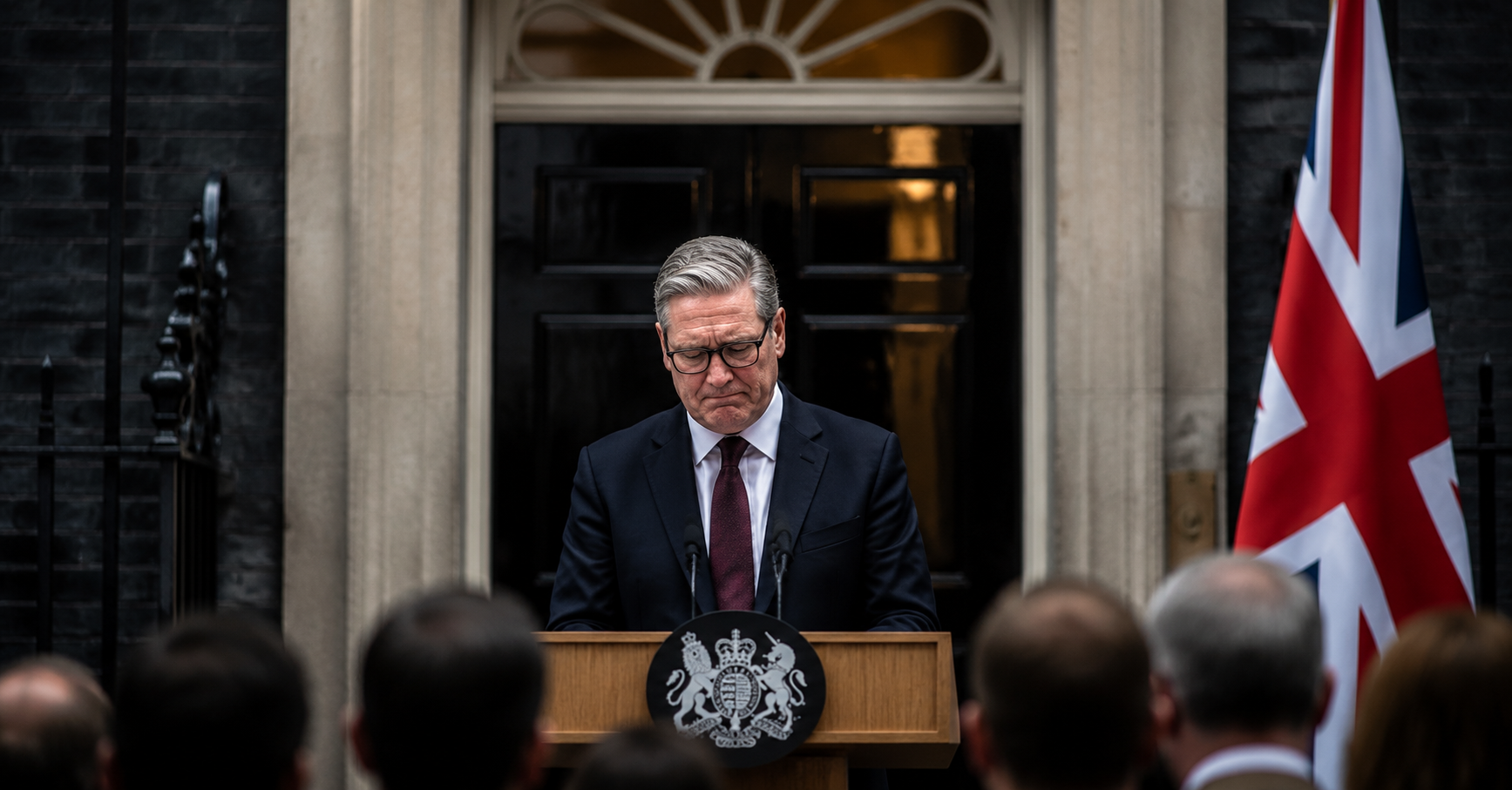
LONDON – British Prime Minister Keir Starmer announced his resignation on Monday, bringing to an end a premiership that began with a historic electoral victory but was ultimately undermined by declining public support, internal party divisions and questions over his leadership direction.

Starmer, who led the Labour Party to power in 2024 with one of the largest parliamentary majorities in modern British history, initially promised stability after years of political turmoil.

However, critics within the party increasingly accused him of lacking a clear vision for the country, according to more than 20 Labour insiders cited by Reuters.

Party members and lawmakers said the former lawyer focused on pragmatic policymaking but struggled to articulate a long-term national agenda, leaving his government vulnerable to competing factions and mounting public dissatisfaction.

Speaking outside Downing Street, Starmer acknowledged that many within Labour no longer believed he was the right person to lead the party into the next general election.

“The question my party is asking now is whether I am best placed to lead us into the next general election,” Starmer said. “I have heard the answer from my parliamentary party to that question and I accept that answer with good grace.”

His resignation follows months of pressure within Labour, which intensified after disappointing local election results and a steady decline in the prime minister’s popularity ratings.

According to Reuters, Starmer increasingly relied on advice from his wife, Victoria, during the final weeks of his premiership. While he initially vowed to remain in office, a weekend retreat at the prime minister’s official country residence reportedly contributed to his decision to step aside.

Former Greater Manchester mayor Andy Burnham is widely expected to succeed Starmer as Labour leader after emerging as a prominent figure capable of challenging the growing influence of Nigel Farage’s Reform UK party.

Several Labour lawmakers argued that concerns over Reform UK’s rising popularity played a significant role in the campaign to replace Starmer. The anti-immigration party has gained momentum in recent elections and currently poses a significant challenge to Labour’s electoral prospects.

Starmer’s rise to power had been regarded as a remarkable political turnaround. Elected Labour leader in 2020 after the party’s worst election performance since 1935, he sought to rebuild the party’s credibility by addressing internal divisions and repositioning Labour closer to the political centre.

Although Labour secured a commanding parliamentary majority in 2024, analysts noted that the victory owed much to Conservative weakness after years of political instability, rather than overwhelming public enthusiasm for Labour.

Once in government, Starmer struggled to deliver on key priorities, including economic growth, immigration control and reform of the National Health Service. Despite efforts to highlight achievements such as reduced waiting lists and improved labour protections, his administration failed to convince many voters that it was delivering meaningful change.

The government was also damaged by a series of controversies, including policy reversals, questions over political appointments and tensions within Starmer’s inner circle. Several senior advisers departed during his tenure, while relations with parts of the civil service reportedly deteriorated.

On foreign policy, Starmer received praise from some European leaders for his support for Ukraine and his efforts to coordinate diplomatic initiatives with European allies. He also maintained close engagement with US President Donald Trump, although relations later became strained over Britain’s decision not to join military action against Iran.

Political observers say Starmer’s departure reflects broader changes in British politics, including the weakening of the traditional two-party system and the rise of Reform UK as a major electoral force.

Whoever succeeds Starmer will inherit significant challenges, including sluggish economic growth, high public debt, pressure on public services and an increasingly fragmented political landscape.

Starmer’s resignation means Britain will soon have its seventh prime minister since the 2016 Brexit referendum, underlining the continuing volatility of British politics.

Continue Reading

Politics

Shehbaz, Asim Munir attend Switzerland talks aimed at implementing US-Iran deal

Published

on

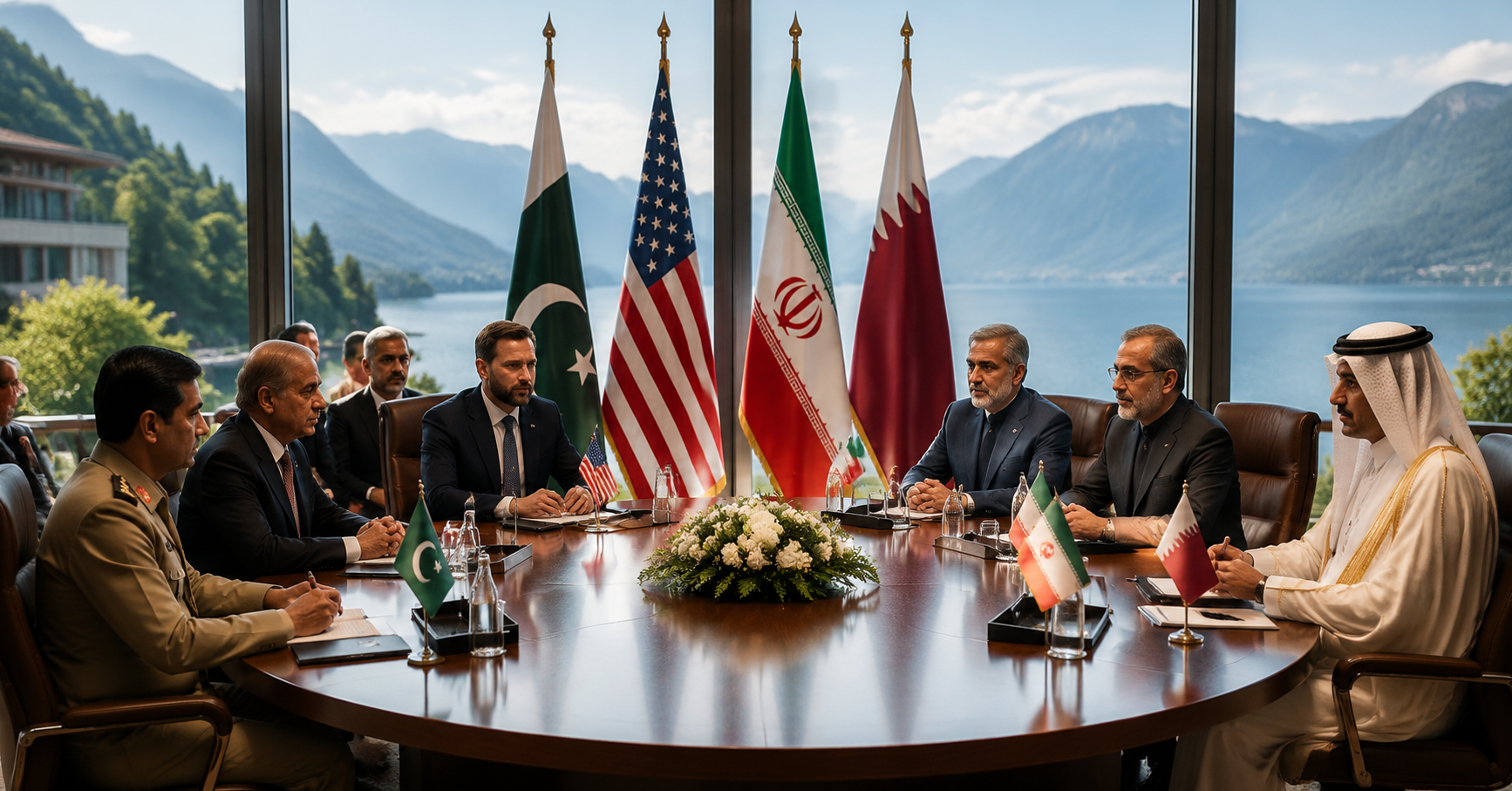
BUERGENSTOCK – High-level delegations from the United States and Iran met in Switzerland on Sunday for technical talks aimed at implementing a recently signed memorandum of understanding (MoU), with Pakistan and Qatar continuing their role as mediators in the peace process.

The negotiations, taking place at the Bürgenstock resort, mark the first formal engagement between Washington and Tehran since the signing of the Islamabad MoU, which established a framework for ending hostilities and launching broader negotiations.

Addressing participants ahead of the talks, Prime Minister Shehbaz Sharif expressed hope that the discussions would contribute to peace, progress and prosperity, saying the meeting reflected the success of sustained diplomatic efforts by all parties involved.

According to officials, the talks are focused on finalising mechanisms for implementing the agreement, including a ceasefire framework, the reopening of the Strait of Hormuz, the release of frozen Iranian assets and issues related to Iranian oil exports.

In a statement, Qatar’s foreign ministry announced the launch of the “Lucerne Lake Summit” and the first high-level committee meeting between the four parties. Doha said specialised working groups had been established to negotiate provisions of a final agreement and monitor implementation of commitments already undertaken.

The ministry also praised Pakistan’s role in facilitating dialogue and supporting negotiations, while reaffirming its commitment to a diplomatic resolution of regional disputes.

Ahead of the quadrilateral session, delegations held a series of bilateral and tripartite meetings. Iranian state media reported that representatives from Iran, the United States and Qatar discussed a ceasefire in Lebanon and the release of Iranian assets blocked abroad.

The Pakistani delegation, led by Prime Minister Shehbaz and Chief of Defence Forces Field Marshal Asim Munir, separately met US and Iranian officials before the start of formal proceedings.

US Vice President JD Vance, who arrived in Switzerland earlier on Sunday, said negotiators hoped to make progress on issues related to Iran’s nuclear programme and regional security, including the situation in Lebanon.

Iran’s delegation, headed by Parliament Speaker Mohammad Bagher Ghalibaf and including Foreign Minister Abbas Araghchi, said Tehran would seek full implementation of commitments made under the agreement.

Pakistan’s Foreign Office said Islamabad would continue to support the negotiation process and facilitate dialogue between the parties, describing its role as part of a broader commitment to regional stability and peaceful conflict resolution.

The talks follow the signing of a 14-point agreement between US President Donald Trump and Iranian President Masoud Pezeshkian, with Pakistan acting as mediator. The accord outlines a framework for ending the conflict, reopening regional trade routes and initiating further negotiations over the coming weeks.

Officials from all sides indicated that discussions could continue beyond Sunday if additional time is required to finalise technical details and implementation mechanisms.

Continue Reading

Politics

Italy cancels US visit after Trump-Meloni war of words

Published

on

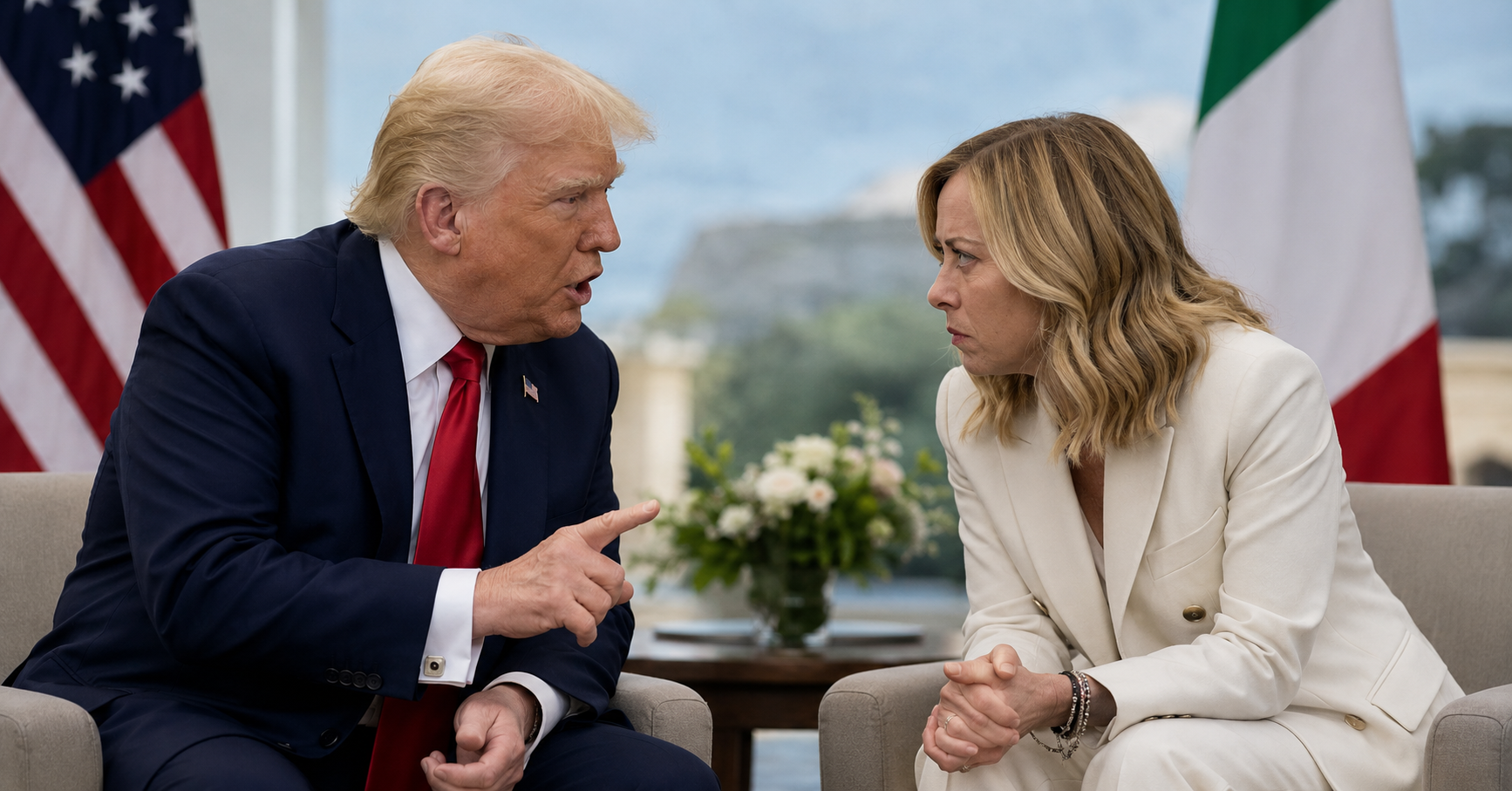
ROME – Italian Prime Minister Giorgia Meloni on Friday strongly rejected US President Donald Trump’s claim that she had “begged” him for a photograph during the recent G7 summit, describing the remarks as “completely made up”.

The unusually sharp exchange highlights growing tensions between the two leaders, who were once considered close political allies. Their relationship has come under increasing strain in recent months over disagreements on international issues, including the conflict in the Middle East.

Speaking in a video posted on social media, Meloni said she was “astonished” by Trump’s comments and criticised the US president for what she described as a pattern of disrespect towards allies.

“Donald Trump’s statements are completely made up. I am frankly astonished,” she said. “I don’t know why the president of the United States behaves like this towards his allies. It is not the first time.”

She added that Trump appeared to show greater leniency towards adversaries of the West than towards long-standing partners.

“I can only say it is disappointing that he does not show the same determination with the enemies of the West and of the United States, whose leaders he instead treats with far greater indulgence,” she said, adding: “Neither I nor Italy ever beg.”

The dispute erupted after Trump, in an interview with Italy’s La7 television channel, claimed that Meloni had sought a photograph with him during the G7 summit in France.

“She begged me to take a picture with her. She wanted a picture with me so badly,” Trump was quoted as saying. “I wouldn’t have taken it, but I felt sorry for her.”

Video footage from the summit showed the two leaders engaged in conversation while seated together, but Trump suggested he had merely been accommodating her.

A European diplomatic source said Meloni had been among the most outspoken leaders at the summit, openly challenging Trump on several issues and defending Europe’s position on international affairs.

The fallout from the comments quickly spread beyond rhetoric. Italian Foreign Minister Antonio Tajani cancelled a planned visit to the United States next week, prompting the cancellation of a US-Italy business conference scheduled to take place in Miami.

The US State Department did not immediately comment on Tajani’s decision.

Trump later continued his criticism of Meloni during an interview with NBC News, suggesting that she had previously been a supporter but had failed to back US positions regarding security in the Strait of Hormuz.

The remarks drew further condemnation from senior figures in Meloni’s government. Giovanbattista Fazzolari, a close ally of the prime minister and undersecretary to her office, accused Trump of damaging transatlantic relations.

“With his inappropriate outbursts, he has managed the difficult task of making the United States unpopular across Europe,” Fazzolari said, warning that such actions risked undermining historic ties between Washington and its European allies.

Meloni was among the few European leaders to attend Trump’s inauguration in 2025 and had long been viewed as one of his strongest supporters in Europe. However, relations between the two have deteriorated this year amid growing policy differences and a series of public disagreements.

Continue Reading

Trending

Copyright © 2026