Connect with us

Latest

5.4-magnitude earthquake jolts Islamabad, KP and parts of Punjab

Published

on

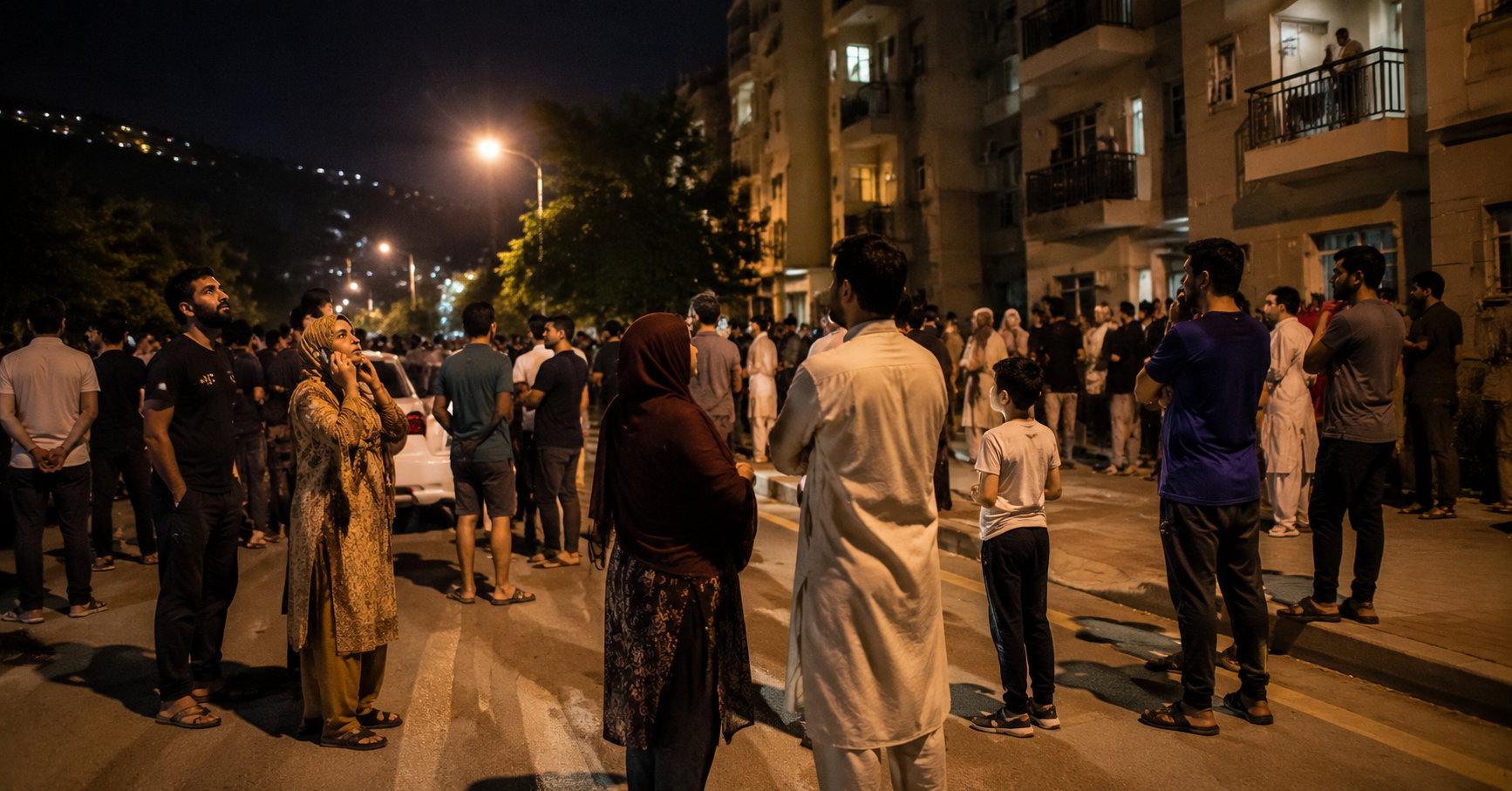
ISLAMABAD – A moderate earthquake measuring 5.4 on the Richter scale was felt in Islamabad and several cities across Khyber Pakhtunkhwa and Punjab on Monday, prompting residents to leave their homes and offices in panic.

According to the National Seismic Monitoring Centre, the earthquake originated in Afghanistan’s Hindu Kush region and occurred at a depth of 215 kilometres.

Tremors were reported in Islamabad, Peshawar, Buner, Bajaur, Faisalabad, Dera Ismail Khan, Khushab, Battagram, Mansehra, Swat, and Abbottabad, among other areas.

Residents in several cities rushed outdoors and recited prayers as the tremors were felt.

Authorities said there were no immediate reports of casualties or damage to property.

The latest earthquake comes days after similar tremors were recorded in various parts of the country, reflecting the region’s vulnerability to seismic activity due to its proximity to major tectonic fault lines.

Pakistan frequently experiences earthquakes, particularly in its northern and western regions, which lie along the boundary of the Indian and Eurasian tectonic plates.

Continue Reading

Latest

Nuclear inspections could resume soon after progress in Iran talks: JD Vance

Published

on

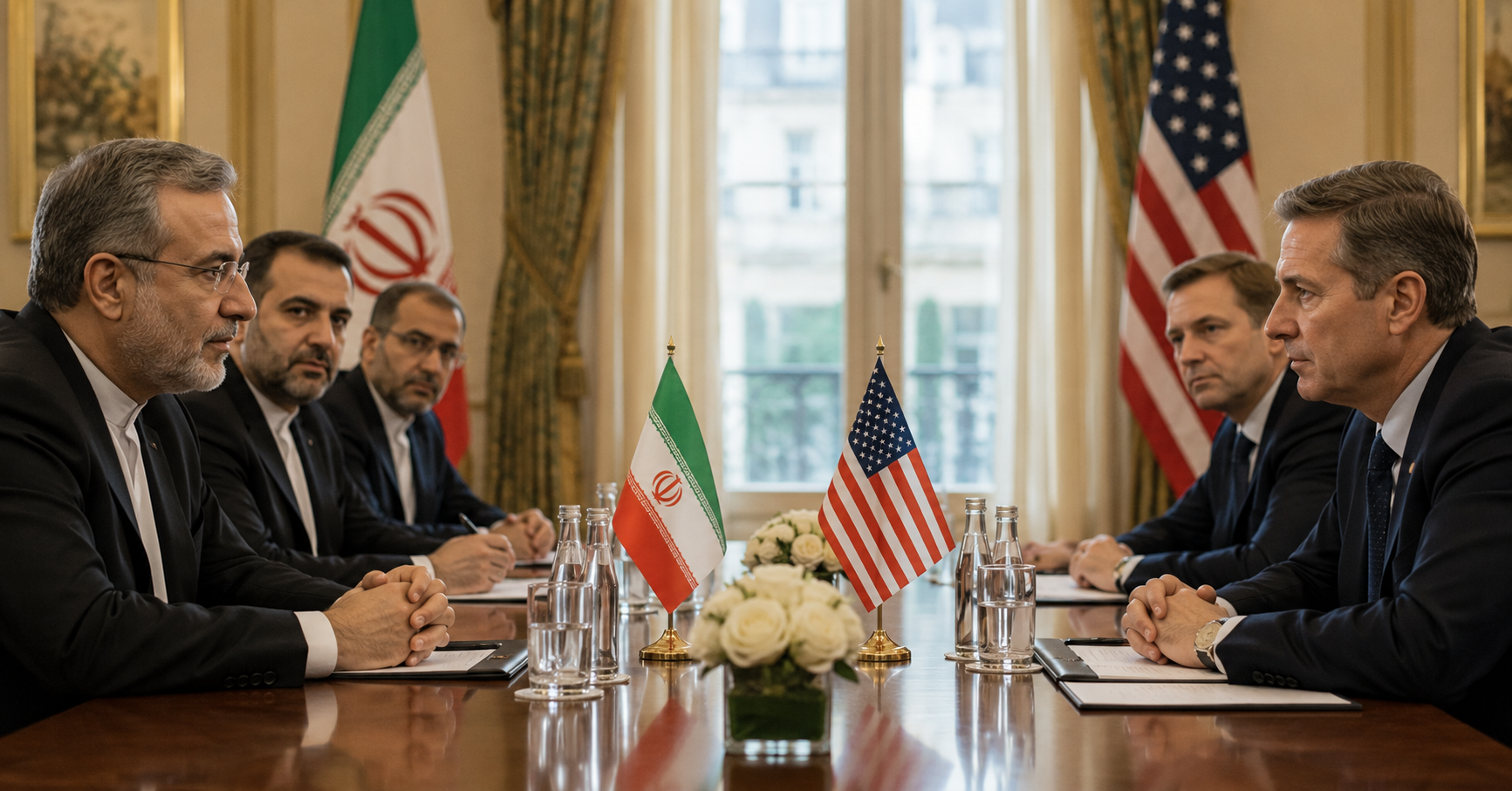
ISLAMABAD – WASHINGTON and Tehran reported progress on multiple contentious issues following high-level negotiations in Switzerland, with both sides agreeing to continue technical discussions aimed at reaching a broader agreement in the coming weeks.

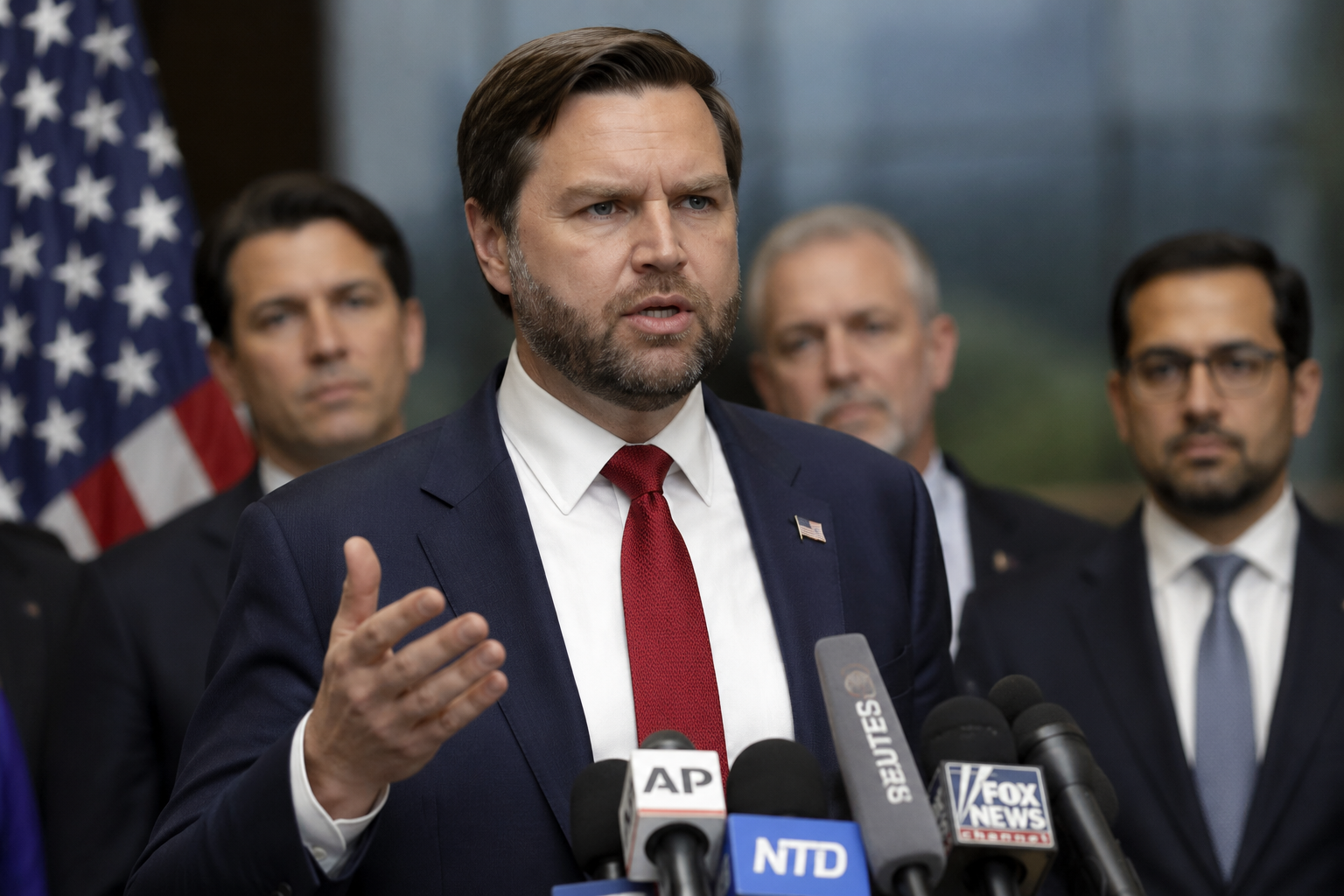
Speaking after the talks, US Vice President JD Vance said the discussions had resulted in understandings on several key issues, including the return of international nuclear inspectors, mechanisms governing Iran’s frozen assets and arrangements intended to preserve navigation through the Strait of Hormuz.

According to Vance, technical teams from both countries remained engaged after lengthy overnight negotiations and would continue working on the details of the preliminary understandings reached during the meeting.

He said the United States hoped inspections by the International Atomic Energy Agency (IAEA) could resume shortly, describing the development as a positive step towards a more comprehensive settlement.

The talks took place in Bürgenstock, Switzerland, where mediators sought to build on recent diplomatic efforts aimed at reducing regional tensions and establishing a framework for future negotiations.

Prime Minister Shehbaz Sharif welcomed the outcome of the meeting, saying the discussions had generated momentum towards a negotiated settlement between the two countries.

In a statement, he said participants had agreed to establish a high-level oversight mechanism and pursue a roadmap designed to facilitate a final agreement within the next two months.

The premier also acknowledged the role played by Qatar and Switzerland in supporting the diplomatic process, while reiterating Pakistan’s commitment to dialogue and peaceful conflict resolution.

Iran, however, offered a more cautious assessment of the discussions.

Foreign Ministry spokesman Esmaeil Baghaei said the nuclear issue had only been touched upon briefly and insisted that substantive negotiations on Tehran’s nuclear programme had not yet begun.

Nevertheless, he described the talks as productive and said the parties had agreed on several measures intended to create conditions for future negotiations.

Among the issues discussed were maritime security in the Strait of Hormuz, the possible release of Iranian assets held abroad and arrangements related to regional ceasefire efforts, particularly in Lebanon.

Baghaei said technical experts would continue consultations on the implementation of the understandings reached in Switzerland, expressing hope that all parties would demonstrate seriousness in moving the process forward.

The negotiations, facilitated by Pakistan and Qatar, concluded after nearly 18 hours of discussions, with both sides indicating a willingness to maintain diplomatic engagement despite persistent differences on key issues.

Continue Reading

Latest

Iran prioritises ‘jihad’ over talks but pursues diplomacy with caution

Published

on

GENEVA – Iran said on Sunday that negotiations with the United States were not its preferred course of action, even as senior officials from both countries gathered in Switzerland for a fresh round of talks aimed at advancing a preliminary agreement reached earlier this week.

Hojjatoleslam Abdollah Haji Sadeghi, the Supreme Leader’s representative to the Islamic Revolutionary Guard Corps (IRGC), said Tehran would engage in diplomacy “with power and caution” but stressed that negotiations were not Iran’s primary option.

“Our primary option is the field of jihad, whether on the battlefield or in the streets,” Iranian media quoted him as saying, adding that Tehran was not concerned about the prospect of talks failing.

The negotiations follow a memorandum of understanding (MoU) signed on June 18 that laid the groundwork for a ceasefire and a broader diplomatic process between Washington and Tehran.

Iranian Foreign Ministry spokesman Esmaeil Baqaei said discussions in Switzerland would focus on ensuring implementation of commitments contained in the agreement, particularly provisions related to the cessation of hostilities, Iran’s oil exports and the release of frozen assets.

Tehran has also indicated that alleged Israeli violations of the Lebanon ceasefire will feature prominently in the talks.

“The Zionist regime continues to violate its commitments in Lebanon; this issue will be the main topic of discussion,” an Iranian foreign ministry spokesman said.

President Masoud Pezeshkian described the understanding reached with Washington as being largely in Iran’s interest, saying it would allow the country to regain access to financial resources currently held abroad.

Speaking in Tehran, Mr Pezeshkian expressed optimism that $6 billion in Iranian funds frozen in Qatar would be released as negotiations progressed. He also reiterated that Iran had no intention of developing nuclear weapons, describing that position as consistent with the country’s longstanding policy.

The Iranian president further accused Israel of opposing the diplomatic process and attempting to prolong instability in the region.

Meanwhile, US Vice President JD Vance arrived in Switzerland to participate in the talks, expressing hope that progress could be achieved on both Iran’s nuclear programme and the situation in Lebanon.

“I think we’re going to hopefully make progress on the nuclear issue and the Lebanon ceasefire issue,” Mr Vance told reporters before departing for Switzerland.

The negotiations come against the backdrop of renewed tensions over the Strait of Hormuz after Iran’s Revolutionary Guards warned of risks to shipping following Israeli military actions in Lebanon. However, US officials said commercial traffic through the strategic waterway continued uninterrupted.

Iran’s delegation is being led by senior officials including Foreign Minister Abbas Araghchi and parliamentary speaker Mohammad Bagher Ghalibaf, while the US team includes Mr Vance and senior envoy Steve Witkoff.

Pakistani officials are also participating in the discussions alongside representatives from Qatar, reflecting Islamabad’s role in facilitating the initial agreement between Washington and Tehran.

Technical-level negotiations are expected to continue beyond Sunday, with officials from both sides indicating that talks would proceed for as long as necessary.

Continue Reading

Latest

Trump says Anthropic acted ‘responsibly’ over foreign AI access restrictions

Published

on

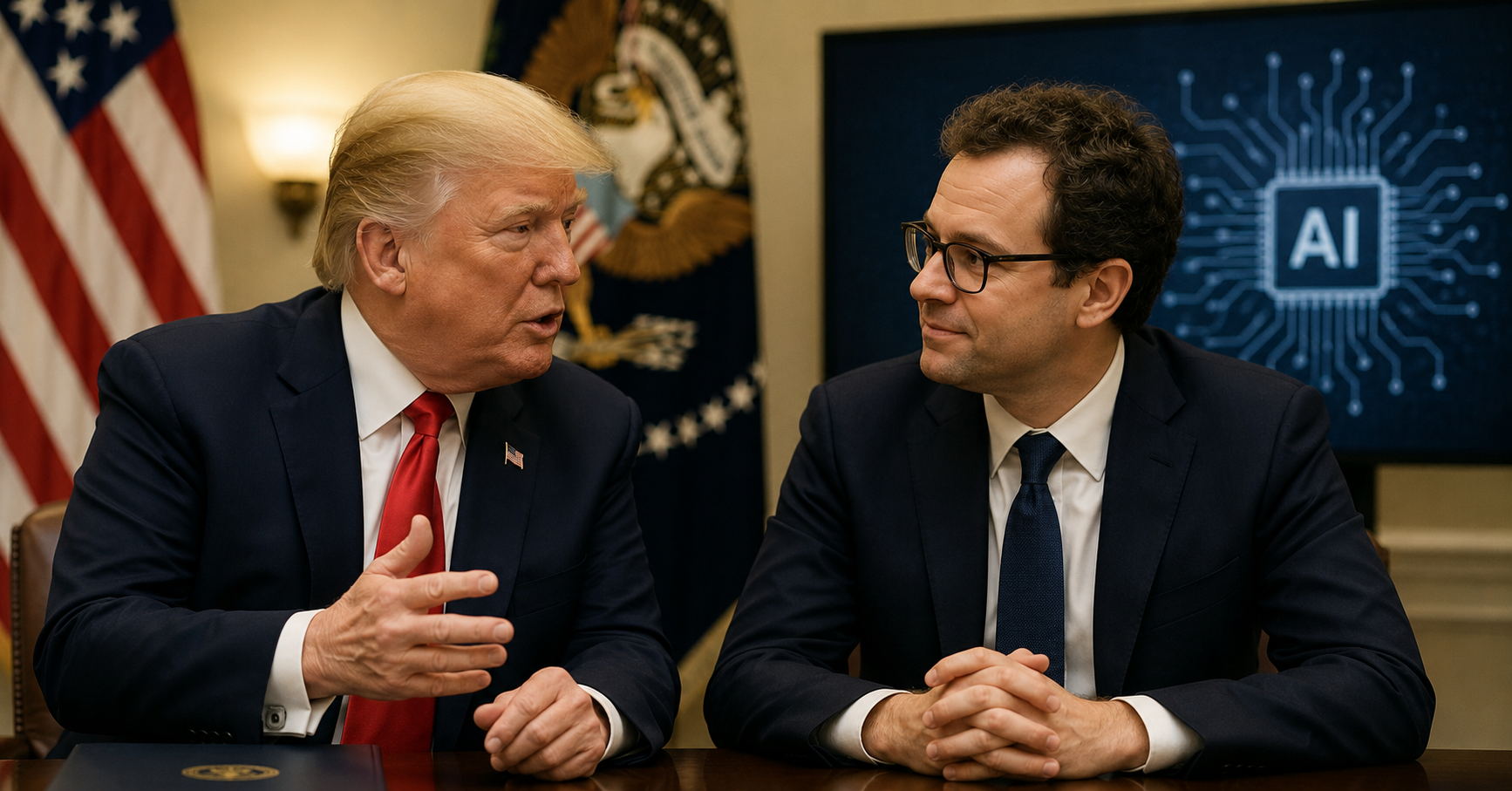
WASHINGTON – US President Donald Trump has said he no longer considers artificial intelligence firm Anthropic a national security threat, after expressing concerns over the company’s handling of access to its most advanced AI models.

In an interview with The Axios Show published on Friday, Trump said he may have viewed Anthropic and its chief executive officer, Dario Amodei, as a potential security concern a week earlier, but his position had since changed.

“Well, not now, but a week ago, maybe,” Trump said when asked whether he regarded Anthropic or Amodei as a threat to national security.

The remarks come amid a dispute over foreign access to Anthropic’s latest AI systems, Fable 5 and Mythos 5. Senior company officials were scheduled to meet members of the Trump administration this week to discuss the issue.

Anthropic had suspended access to the two models for all users last week after Trump directed the company to prevent foreign nationals from using them.

Trump told Axios that Anthropic had responded to the administration’s export-control directive “very quickly” and “responsibly”.

The US president and other Group of Seven (G7) leaders met technology executives, including Amodei, during a summit in France this week.

Trump also declined to rule out the possibility of invoking emergency powers under the Defence Production Act (DPA) in relation to Anthropic, though he suggested such action might not be necessary.

“I have the power to use a lot of things,” he said. “But I’m not sure I have to do that.”

In response to Trump’s comments, an Anthropic spokesperson said the company appreciated its ongoing engagement with the administration and remained committed to working with US authorities.

“We are grateful to the administration for their ongoing partnership in working to get this matter resolved as quickly as possible,” the spokesperson said. “We remain committed to working alongside them towards our shared goals of protecting critical infrastructure and making sure the US leads in AI.”

Continue Reading

Trending

Copyright © 2026