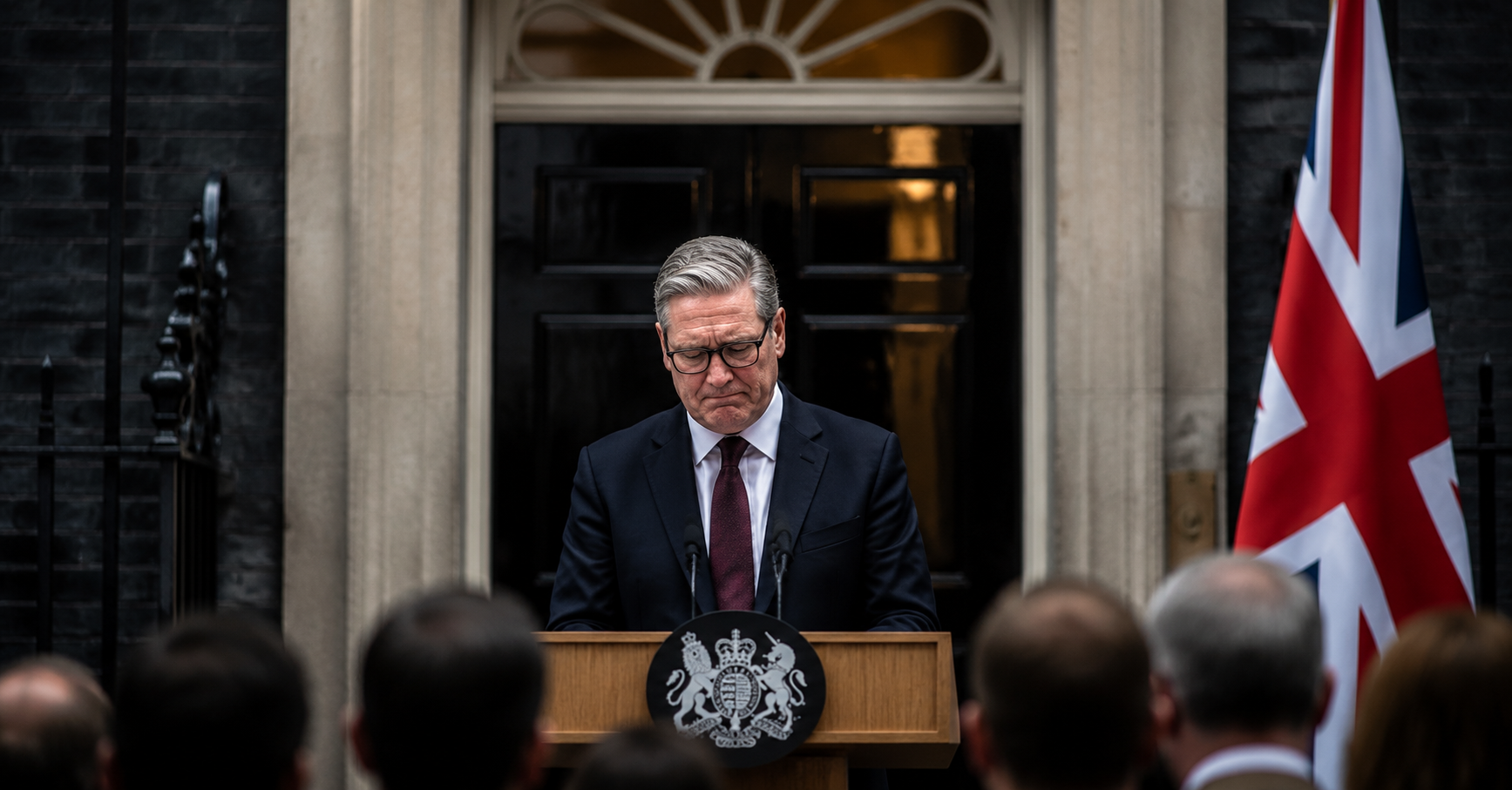
LONDON – British Prime Minister Keir Starmer announced his resignation on Monday, bringing to an end a premiership that began with a historic electoral victory but was ultimately undermined by declining public support, internal party divisions and questions over his leadership direction.
Starmer, who led the Labour Party to power in 2024 with one of the largest parliamentary majorities in modern British history, initially promised stability after years of political turmoil.
However, critics within the party increasingly accused him of lacking a clear vision for the country, according to more than 20 Labour insiders cited by Reuters.
Party members and lawmakers said the former lawyer focused on pragmatic policymaking but struggled to articulate a long-term national agenda, leaving his government vulnerable to competing factions and mounting public dissatisfaction.
Speaking outside Downing Street, Starmer acknowledged that many within Labour no longer believed he was the right person to lead the party into the next general election.
“The question my party is asking now is whether I am best placed to lead us into the next general election,” Starmer said. “I have heard the answer from my parliamentary party to that question and I accept that answer with good grace.”
His resignation follows months of pressure within Labour, which intensified after disappointing local election results and a steady decline in the prime minister’s popularity ratings.
According to Reuters, Starmer increasingly relied on advice from his wife, Victoria, during the final weeks of his premiership. While he initially vowed to remain in office, a weekend retreat at the prime minister’s official country residence reportedly contributed to his decision to step aside.
Former Greater Manchester mayor Andy Burnham is widely expected to succeed Starmer as Labour leader after emerging as a prominent figure capable of challenging the growing influence of Nigel Farage’s Reform UK party.
Several Labour lawmakers argued that concerns over Reform UK’s rising popularity played a significant role in the campaign to replace Starmer. The anti-immigration party has gained momentum in recent elections and currently poses a significant challenge to Labour’s electoral prospects.
Starmer’s rise to power had been regarded as a remarkable political turnaround. Elected Labour leader in 2020 after the party’s worst election performance since 1935, he sought to rebuild the party’s credibility by addressing internal divisions and repositioning Labour closer to the political centre.
Although Labour secured a commanding parliamentary majority in 2024, analysts noted that the victory owed much to Conservative weakness after years of political instability, rather than overwhelming public enthusiasm for Labour.
Once in government, Starmer struggled to deliver on key priorities, including economic growth, immigration control and reform of the National Health Service. Despite efforts to highlight achievements such as reduced waiting lists and improved labour protections, his administration failed to convince many voters that it was delivering meaningful change.
The government was also damaged by a series of controversies, including policy reversals, questions over political appointments and tensions within Starmer’s inner circle. Several senior advisers departed during his tenure, while relations with parts of the civil service reportedly deteriorated.
On foreign policy, Starmer received praise from some European leaders for his support for Ukraine and his efforts to coordinate diplomatic initiatives with European allies. He also maintained close engagement with US President Donald Trump, although relations later became strained over Britain’s decision not to join military action against Iran.
Political observers say Starmer’s departure reflects broader changes in British politics, including the weakening of the traditional two-party system and the rise of Reform UK as a major electoral force.
Whoever succeeds Starmer will inherit significant challenges, including sluggish economic growth, high public debt, pressure on public services and an increasingly fragmented political landscape.
Starmer’s resignation means Britain will soon have its seventh prime minister since the 2016 Brexit referendum, underlining the continuing volatility of British politics.










 Fashion3 months ago