Connect with us

Uncategorized

OPPO receives eight prizes in the Computer Vision and Pattern Recognition Conference 2022

Published

on

LAHORE — The annual Computer Vision and Pattern Recognition Conference (CVPR) came to an end in New Orleans, with globally leading technology company OPPO successfully having seven of its submitted papers selected for the conference, putting it among the most successful technology companies at the event. OPPO also placed in eight of the widely watched competition events at the conference, taking home three first place, one second place, and four third place prizes.

“In 2012, deep neural networks designed for image recognition rejuvenated the research and application of artificial intelligence. Ever since, AI technology has seen a decade of rapid development.” said Guo Yandong, Chief Scientist in Intelligent Perception at OPPO.

“OPPO continues to promote artificial intelligence to accomplish complex perceptual and cognitive behaviors. We empower AI with higher cognitive abilities to understand and create beauty and develop embodied AI with autonomous behavior. I’m delighted to see that seven of our papers have been selected for this year’s conference. Building on this success, we will continue to explore both fundamental AI and cutting-edge AI technology, as well as the commercial applications that will enable us to bring the benefits of AI to more people.”

The Seven papers accepted by CVPR 2022 showcase OPPOs progress in creating humanizing AI

Seven papers submitted by OPPO for CVPR 2022 were selected for presentation at the conference. Their areas of research include multimodal information interaction, 3D human body reconstruction, personalized image aesthetics assessment, knowledge distillation, and others.

Cross-modular innovation is viewed as the way to ‘humanizing’ artificial intelligence. Text data frequently includes an elevated degree of over-simplification, while visual picture data contains a lot of specific contextual details. OPPO researchers proposed a new CRIS framework based on the CLIP model to enable AI to get a more fine-grained understanding of the text and image modal data.

The biggest difference between human and artificial intelligence today lies in multimodality. Humans can undoubtedly figure out data in both words and pictures and draw relationship between the two sorts of data. The novel method proposed by OPPO improves multimodal intelligence, which could potentially lead to artificial intelligence being able to truly understand and interpret the world through multiple forms of information such as language, hearing, vision, and others, making the robot and digital assistants of sci-fi movies become a reality.

3D human body remaking is one more region in which the OPPO Research Institute has made significant progress. At CVPR, OPPO demonstrated a process for automatically generating digital avatars of humans with clothing that behaves more naturally. By analyzing RGB video of humans captured with a camera, the OPPO model can accurately generate 3D, 1:1 dynamic models that include small details like logos or fabric textures. Creating accurate 3D models of clothes has remained one of the biggest challenges. The new model effectively reduces the requirements needed to perform 3D human body reconstruction, providing technical foundations that can be applied to areas such as virtual dressing rooms for online shopping, AI fitness instruction, and the creation of lifelike avatars in VR/AR worlds.

AI image recognition has now reached a stage where it can accurately identify a wide range of objects within an image. The ability of AI to evaluate images in terms of their perceived aesthetic quality is often strongly related to the big data used in training the AI model.

In collaboration with Leida Li, a professor from Xidian University proposed Personalized Image Aesthetics Assessment (PIAA) model. The model is the first to optimize AI aesthetics assessment by combining users’ subjective preferences with more generalized aesthetic values. In the future, the model will be used to create personalized experiences for users, not just limited to the curation of photo albums, but also provide recommendations on how to shoot the best photo and which content a user might prefer.

OPPO has also chosen to make the PIAA model evaluation data set the open source for developers, with a number of research institutions and universities already expressing an interest in using the data to further their own efforts in personalized AI aesthetic assessment.

Further to this, OPPO also proposed a multi-view 3D semantic plane reconstruction solution capable of accurately analyzing surfaces within a 3D environment. Developed in partnership with Tsinghua University, the INS-Conv (INcremental Sparse Convolution) can achieve faster and more accurate online 3D semantic and instance segmentation. This can effectively reduce the computing power needed to perform environment recognition, which will enable such technology to be more easily adopted in applications such as automated driving and VR.

 OPPO makes AI ‘lightweight’ with second place win in the NAS Challenge

CVPR 2022 also saw a number of technical challenges take place, with OPPO placing third and above in eight challenges. These include the neural architecture search (NAS) challenge, SoccerNet, SoccerNet Replay Grounding, ActivityNet temporal localization, the 4th Large-scale Video Object Segmentation Challenge.

From mobile photography to automated driving, deep learning models are being applied in an increasingly large pool of industries. However, deep learning relies heavily on big data and calculation power and consumes a lot of cost, both of which present challenges to its commercial implementation. Neural architecture search (NAS) techniques can automatically discover and implement optimal neural network architectures. In the NAS competition, OPPO researchers trained a supernetwork of 45,000 sub neural networks to inherit the parameters of the supernetwork by optimizing the Model.

Using the NAS technique, researchers only need to train a large super network and create a predictor to let the subnetworks learn by inheriting the super network parameters. This provides an efficient and low-cost approach to obtaining a deep learning model that outperforms those manually designed by expert network architects. This will ultimately bring previously unthinkable levels of AI technology to mobile devices in the near future.

During CPVR 2022, OPPO also participated in seminar presentations and three high-level workshops. At the SLAM seminar, OPPO researcher Deng Fan shared how real-time vSLAM could be run on smartphones and AR/VR devices. In AICITY Workshop, Li Wei proposed a multi-view based motion localization system to identify abnormal behavior of drivers while driving.

OPPO is bringing the benefits of AI to more people, sooner

This is the third year that OPPO has participated at CVPR. OPPO’s rising success at CVPR during these three years owes much to its continued investment in AI technology. At the beginning of 2020, the Institute of Intelligent Perception and Interaction was established under the OPPO Research Institute to further deepen OPPO’s exploration of cutting-edge AI technologies. Today, OPPO has more than 2,650 global patent applications in the field of AI.

Guided by its brand proposition, ‘Inspiration Ahead’, OPPO is also working with partners across the industry to take AI technology from the laboratory into daily life. OPPO’s AI technology has also been used to develop products and features such as the real-time spatial AR generator CybeReal, OPPO Air Glass, Omoji, and more. Through these technologies, OPPO is aiming to create more lifelike digital worlds that combine virtual and reality to create all-new experiences for users.

Continue Reading
Click to comment

You must be logged in to post a comment Login

Leave a Reply

Uncategorized

Oppo A6 4G debuts in Pakistan with key upgrades in battery, performance, and camera

Published

on

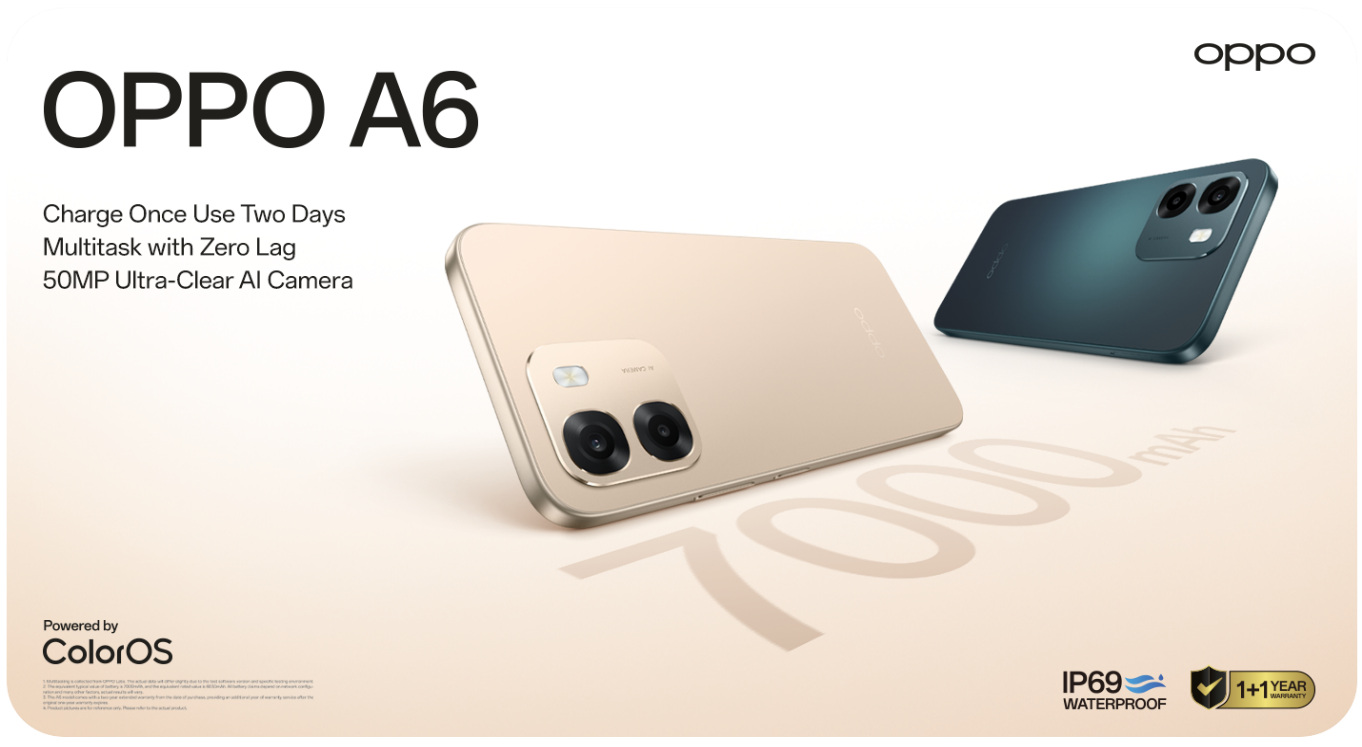
LAHORE – OPPO, a global leader in smartphone devices, is thrilled to announce the launch of the OPPO A6 4G in Pakistan, which is now available for pre-order. The OPPO A6 4G features a long-lasting battery, powerful multitasking capabilities, and an advanced AI camera. It also comes with a 2-year warranty, reflecting OPPO’s commitment to providing reliable, high-quality smartphones to its users.

Power That Lasts All Day – Charge Once, Use Two Days

With a massive 7000mAh battery, the OPPO A6 4G only needs one charge to last up to two days. Stream videos, browse social media, or game without worrying about running out of power. Thanks to its reverse charging feature, the A6 4G can even power other devices on the go, acting as a portable power hub for earphones, smartwatches, or tablets etc. Its efficient power management keeps the battery healthy over time, ensuring consistent performance for all your daily activities.

Multitasking With Zero Lag
The OPPO A6 4G is built for seamless multitasking. Equipped with OPPO’s optimized ColorOS 15 and Snapdragon 685 4G chipset, the device enables smooth switching between apps, uninterrupted streaming, and efficient performance even under heavy workloads. To maximize performance, the OPPO A6 introduces the SuperCool VC System for enhanced heat dissipation and consistently smooth operation

Whether for work, study, or entertainment, the A6 4G ensures a fluid experience, keeping pace with the fast-moving lifestyle of today’s users.

Capture Smarter with AI Camera
The OPPO A6 4G’s AI-enhanced camera elevates photography to a new level, making flagship-level AI features accessible to all and helping users take stunning photos effortlessly. With AI Eraser, unwanted objects can be removed in a single tap, while Dual View Video lets you record from both front and rear cameras simultaneously. Not only this, but you can also capture breathtaking underwater shots or poolside adventures without additional gear, taking your photography to new depths.

With 50MP Main Camera, the phone also includes AI Portrait Retouching, AI Recompose, and AI Perfect Shot, ensuring sharper, well-composed, and professional-looking photos in any scenario. With these AI-powered tools and rugged design, the OPPO A6 4G is ready to turn every moment into a professional-grade memory, whether on land or under water.

Flagship-Inspired Design and Durability
The OPPO A6 4G combines sleek, modern design with exceptional durability, ensuring a worry-free experience through life’s daily adventures. Its refined unibody design offers a comfortable grip and a vibrant display, while SGS-certified IP66, IP68, and IP69 protection allows the device to endure everyday challenges.

“At OPPO, we believe cutting-edge technology should be accessible to everyone,” George Long, CEO of OPPO Pakistan, remarked. “The OPPO A6 4G ensures smooth performance and brings a premium design for every segment. We are proud to offer a device that combines long-lasting power, lag-free performance, and AI-powered photography—all backed by our commitment to quality.”

To make the user experience truly worry-free, OPPO offers a 2-year official warranty with the A6 4G, double the standard smartphone warranty available in the market. This extended protection reflects OPPO’s continued commitment to durability, quality, and after-sales excellence.

Availability
The OPPO A6 4G is now available in Aurora Gold and Sapphire Blue colors for pre-order in Pakistan, from OPPO’s official stores and online. So, grab the OPPO A6 4G now and experience power, performance, and style in one sleek package with 2-year warranty.
Continue Reading

Uncategorized

Naseem Shah continues his partnership with TECNO for its upcoming Spark 40 series

Published

on

Lahore – TECNO has officially announced that Pakistan’s star fast bowler Naseem Shah will continue as the brand ambassador for its popular Spark 40 Series.

Known for his passion, determination, and youthful energy, Naseem Shah perfectly reflects the spirit of TECNO’s Spark series – bold, inspiring, and committed to excellence. Just as cricket fans admire Naseem for his dedication and fearless performances, young Pakistani consumers have embraced the Spark series for its innovative features, stylish designs, and exceptional value for money.

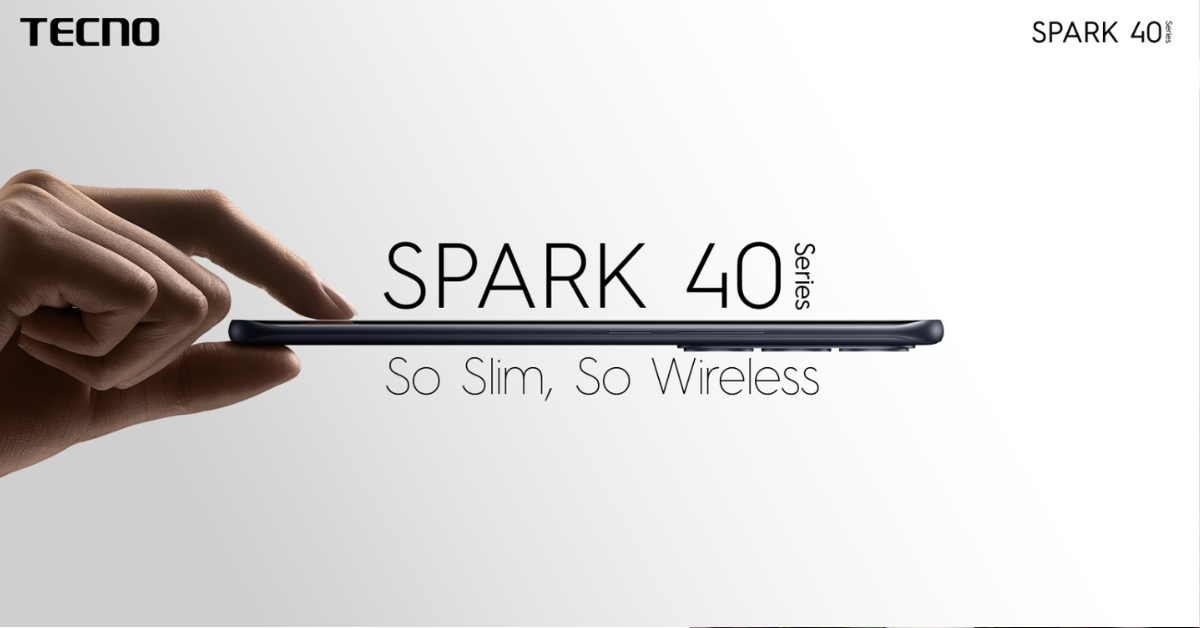
Carefully designed for the youth of Pakistan who seek both innovation and style, the Spark 40 Series features an ultra-slim and lightweight design for all-day comfort. The addition of 30W Magnetic Wireless Charging introduces a new level of convenience, offering fast, cable-free charging that fits seamlessly into modern lifestyles.

At its core is the world’s first MediaTek Helio G200 processor, delivering outstanding speed, efficiency, and smooth multitasking for gaming, streaming, and productivity. This performance is complemented by a 144Hz Ultra Bright 3D AMOLED Display with an impressive 4500-nit Peak Brightness, ensuring vibrant colors and fluid visuals even under direct sunlight.

Over the years, the Spark series has become one of the most loved smartphone ranges among Pakistan’s youth by offering advanced technology at accessible prices. With the upcoming Spark 40 Series, TECNO continues its mission to empower young users with smartphones that enhance productivity, inspire creativity, and elevate everyday life.

The official launch of the TECNO Spark 40 Series will take place on 15th August 2025. Stay tuned for more details on how TECNO is set to redefine the mid-range smartphone experience.


Continue Reading

Uncategorized

IWMI for solar irrigation to protect Balochistan’s water resources

Published

on

ISLAMABAD – With groundwater levels of Balochistan declining and aquifers facing increasing stress, stakeholders have called for adopting clean energy solutions that not only reduce operational costs for farmers but also support the long-term resilience of water resources.

To help with this, the International Water Management Institute (IWMI) introduced two new digital tools: Solar Suitability Mapping (SSM) and the Solar Irrigation Pump Sizing Tool (SIP-ST). These tools are designed to assist farmers and policymakers in making informed decisions about utilising solar power for irrigation.

The tools were introduced during two workshops held in Balochistan. These workshops were organised by IWMI with support from the European Union, the Government of Balochistan, and CGIAR’s Climate Action and Policy Innovation programs.

The first workshop focused on how solar-powered irrigation can replace expensive and harmful diesel or electric tubewells. Experts said solar energy is not just cheaper, it also helps the environment and can make farming more stable in the long term.

Dr Mohsin Hafeez from IWMI said, “Solar irrigation is more than just saving energy. It helps farmers deal with water shortages and climate change. But for this to work, we need strong cooperation between science, policy, and local communities.”

Dr Sardar Mohazzam from the National Energy Efficiency and Conservation Authority (NEECA) also spoke about the strong link between water and energy. He said switching to solar irrigation is a smart and necessary step for places like Balochistan that are facing serious resource problems.

The second workshop focused on using water more efficiently. With more than 90% of Pakistan’s freshwater going to agriculture, experts said it’s important to get the most benefit from every drop. IWMI shared its experience from Punjab and proposed building a similar Water Productivity Atlas for Balochistan.

Dr Muhammad Ashraf from IWMI said, “Data without action is useless. We want to give Balochistan the tools and knowledge it needs to build a better, more climate-friendly future.” The workshops ended with a clear message: solving the water crisis in Balochistan will take teamwork, strong data, and long-term planning.

Continue Reading

Trending

Copyright © 2026