Connect with us

Pakistan

Leather industry leadership drives global expansion and cross-border business transformation

Published

on

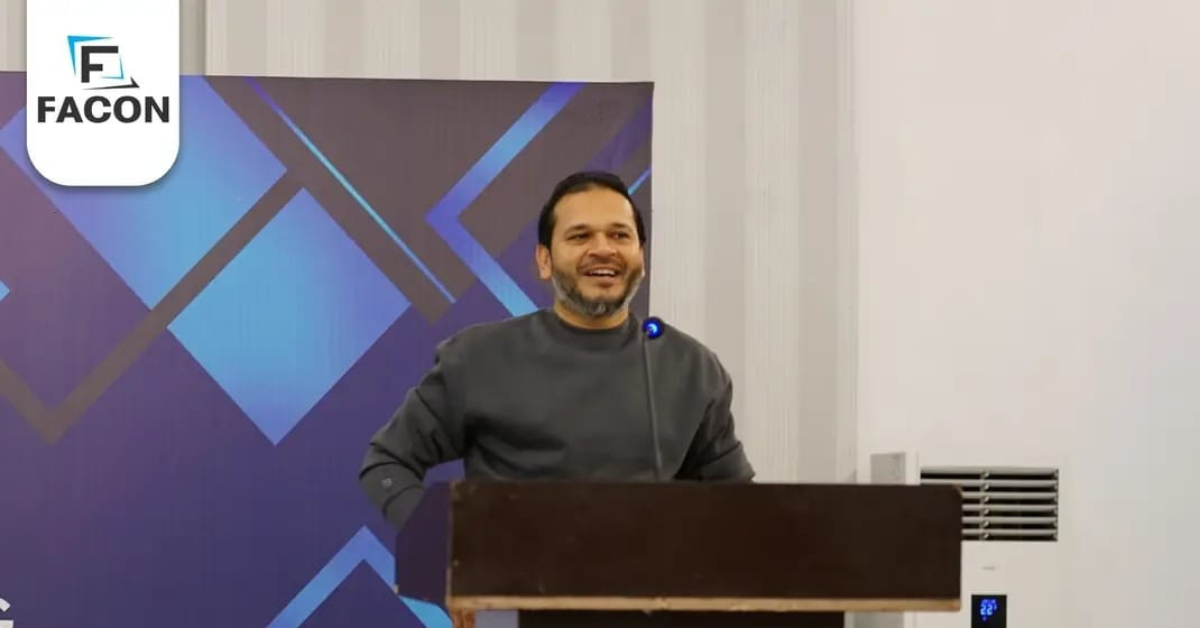
LAHORE – In Pakistan’s thriving leather markets, Adnan Siddiqui, Director of Karachi-based FACON and founder of Trendy Jacket, had a vision: to showcase Pakistani craftsmanship globally through premium leather jackets and accessories.

But vision alone wasn’t enough. Despite Pakistan’s leather goods exports reaching $98.697 million with 5.1% growth, Adnan faced the challenges that stifle countless Pakistani entrepreneurs: unreliable international payments, transaction delays, and constant non-payment risks.

The broader context was equally daunting. Pakistan’s e-commerce sector hit $7.7 billion in 2024 with 17% annual growth forecasted, yet SMEs still wrestled with payment barriers, connectivity issues, and trust gaps. For Adnan, these weren’t abstract statistics; they were daily obstacles limiting his international potential.

“I watched opportunity after opportunity slip away,” Adnan recalls. “Customers loved our products, but payment hassles made lasting relationships nearly impossible.”

The breakthrough came when Adnan became an early adopter of Payoneer over a decade ago. This strategic partnership provided the complete cross-border payments ecosystem he needed:

  • Global receiving accounts for seamless Amazon and marketplace payments
  • Multi-currency management across 12 accounts without conversion delays
  • Physical payment cards for instant fund access
  • Real-time FX conversion for maintained cash flows

“The beauty wasn’t just in the platform’s ease,” Adnan explains. “It was in how it freed me to focus on creating exceptional leather products.”

The transformation was dramatic. Daily vendor and courier payments replaced monthly cycles, directly improving customer satisfaction and fulfillment speed. Most remarkably, Adnan’s business grew tenfold, expanding across the United States, Europe, Canada, and Australia.

“When I started, cross-border growth was more of a dream,” Adnan reflects. “Now young entrepreneurs enter the market with confidence, knowing they can compete globally from day one.”

His advice to emerging entrepreneurs: prioritize long-term value and consistent quality over short-term profits.

As Pakistan’s e-commerce market heads toward PKR 500 billion by 2026 with 18-22% annual growth, Adnan’s journey from local leather business to global enterprise offers a powerful roadmap for entrepreneurs ready to transform international dreams into reality.


Pakistan

How to get Sindh motorcyclists’ Rs2000 subsidy on petrol

Published

on

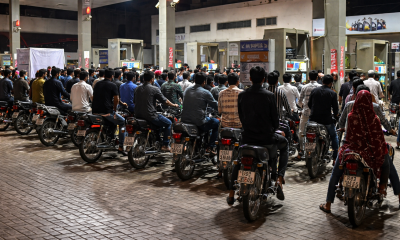
KARACHI – Motorcycle owners will be required to register through the Excise Department’s digital application by providing their CNIC and bank account details. Authorities have also allowed a 15-day window for citizens to transfer ownership of motorcycles into their own names in order to qualify

According to the government, payments will be made directly to verified bank accounts of eligible owners between April 15 and April 20, with each beneficiary receiving Rs2,000 per motorcycle. The initiative is aimed at providing short-term relief to commuters amid rising fuel costs, officials said.

Earlier, Sindh government announced a petrol subsidy of Rs2,000 for registered motorcycle owners, citing rising fuel costs and their impact on daily commuters. The move follows a sharp increase in fuel prices across the country, with petrol rising to Rs458.41 per litre and high-speed diesel to Rs520.35, significantly increasing transportation expenses.

Sindh Chief Minister Murad Ali Shah said motorcyclists were among the most affected groups amid escalating global oil prices, which he linked to geopolitical tensions, including the US-Israel war on Iran.

Addressing a press conference, he noted that Sindh has approximately 6.7 million registered motorcycles, underlining the scale of the initiative. The chief minister said the subsidy would be provided through a structured registration and verification process to ensure transparency.

Continue Reading

Business

CBD Pulse emerges as Punjab’s strongest signal to global investors

Published

on

 LAHORE – In today’s competitive global economy, where investors favour stability, growth potential, and quick returns, Central Business District Punjab (CBD Punjab) emphasises this message through CBD Pulse: Punjab is prepared for investment, and the moment to invest is now.

CBD Pulse is not just another promotional campaign; it is a strategic investment signal aimed at attracting serious investors, visionary developers and international partners. It reflects real momentum driven by execution and showcases a pipeline of high-value urban assets positioned to generate strong, long-term returns.

At a time when investors prioritize transparency and stability, CBD Punjab distinguishes itself through structured planning, regulatory clarity and rapid on-ground development. CBD Pulse brings this ecosystem into focus, highlighting premium commercial districts, high-yield real estate opportunities and modern infrastructure built to meet global standards.

What sets CBD Pulse apart is simple it is grounded in visible progress, not future promises. From accelerated development across key corridors to the rollout of strategically located projects, CBD Punjab is turning ambition into tangible results. The approach is clear prioritize speed, ensure delivery and maximize value creation.

For institutional investors, developers and strategic stakeholders, CBD Pulse offers a compelling advantage early entry into a rapidly growing urban market. With Pakistan’s urban expansion accelerating and demand for organized commercial infrastructure increasing, CBD Punjab is uniquely positioned to capture this growth at scale.

The initiative also reflects a strong pro-investment environment, backed by government support, streamlined procedures and investor-focused policies. These elements reduce barriers to entry while strengthening investor confidence an essential factor for both local and international participants.

CBD Pulse is designed to keep investors informed and engaged. Through regular updates, data-driven insights and direct communication channels, it ensures decision-makers have timely access to critical information. In fast-moving markets, timing and access are everything and CBD Pulse delivers both.

More than just infrastructure, CBD Pulse represents a shift in perception. It positions Punjab as a credible, competitive investment destination on the global stage. The objective is clear: attract capital, enable growth, and deliver measurable outcomes.

For those looking to invest in the future of urban Pakistan, the opportunity is open but not indefinitely. Early movers are best positioned to benefit as CBD Punjab continues to expand and unlock new value. CBD Pulse is more than an initiative it is a call to action. The investments made today will shape the skyline of tomorrow.

Continue Reading

Pakistan

Beyond the Aurat March: What Feminism Really Means!

Published

on

LAHORE – When we hear the word feminism, what usually comes to mind? Rights, independence, equality? At its core, feminism is meant to stand for fairness and justice, yet in our society, the term has often been misunderstood, misused, or even exploited. Broadly speaking, there are two types of women who call themselves feminists. The first group genuinely strives for equality in their professional roles, personal lives, and societal standing.

For them, feminism is about demanding respect and recognition, not superiority. The second group, however, uses feminism in the wrong way. For them, calling themselves feminist has become trendy or “cool.” They use it as a shield to justify going off track, behaving disrespectfully, or unfairly targeting men. To these women, hating men equals feminism, which is far from its true meaning.

This misuse creates injustice for men, who sometimes become victims when faced with such distorted versions of feminism.The problem arises when feminism is twisted into a tool for privilege rather than equality.

For some, it becomes a reason to demand advantages without responsibility, a trend to bash men while ignoring the challenges men face such as mental health struggles, financial pressures, or societal expectations, and even a justification for rudeness and disrespect disguised as empowerment. This distorted narrative not only damages men but also misguides younger generations, especially through social media, where radicalized voices dominate and influence perceptions.
Every year, events like the Aurat March become controversial. While raising voices for rights and justice is never wrong, many banners, slogans, and behaviors displayed during such events do not resonate with our cultural and religious values.

We live in an Islamic state where modesty is emphasized, and our youth are increasingly influenced by the wrong portrayal of feminism, confusing rebellion with empowerment. It is crucial to remember that Islam grants women immense respect and rights, but within defined boundaries. Women are encouraged to cover themselves, care for their families, and maintain dignity in society. At the same time, Islam elevates women by granting them inheritance rights, the right to education, respect as mothers, and recognition as equal partners in society. True equity lies in following this balance: rights with responsibilities, freedom with respect, and equality with values.
The debate over feminism, however, is not confined to Pakistan; it is global. According to IPSOS, 32% of men worldwide believe feminism does more harm than good, and 20% of women share this view. A King’s College London survey found that 16% of Gen Z men (ages 16–29) consider feminism harmful, higher than the 13% of men over 60 who feel the same. Globally, men are more likely than women to believe feminism has caused men to lose economic, social, or political power. On social media platforms like X (formerly Twitter), nearly 50% of posts about feminism are negative, and anti-feminist accounts often use insults and stereotypes three times more frequently than feminist accounts.

Even corporations have commodified feminism, using slogans like “The Future is Female” to market products. This selective adoption of feminist language reinforces stereotypes rather than addressing real issues of gender equality.
The essence of feminism is not about hating men, seeking privileges, or promoting disrespect. It is about equity, justice, and opportunity for all, values already embedded in Islam and universally acknowledged human rights. If feminism is to achieve its true purpose, it must be reclaimed from misuse, distortion, and commercialization. Only then can it inspire a healthier society where both men and women coexist with dignity, fairness, and respect.

Continue Reading

Trending

Copyright © 2026