Connect with us

Pakistan

Pakistan’s gold imports down 47.79pc during July-May FY26

Published

on

LAHORE – Pakistan’s gold imports declined by 47.79 per cent during the first 11 months of fiscal year 2025-26 compared to the corresponding period last year, according to data released by the Pakistan Bureau of Statistics (PBS).

Gold imports stood at $16.09 million during July-May FY26, down from $30.82m recorded in the same period of FY25.

In volume terms, the country imported 306 kilogrammes of gold during the period under review, compared to 391kg a year earlier, representing a decline of 21.65pc.

Despite the overall contraction, gold imports posted strong growth in May on both a yearly and monthly basis.

On a year-on-year basis, imports rose by 228.38pc to $3.04m in May 2026 from $927,000 in the same month last year.

Similarly, import volumes increased by 125.93pc, rising to 20kg from 9kg in May 2025.

Compared to April 2026, gold imports increased by 28.33pc in value terms from $2.37m to $3.04m in May.

Import volumes also registered month-on-month growth, climbing 35.56pc to 20kg in May from 15kg in April, indicating a recovery in gold purchases despite the broader decline recorded during the fiscal year.

Continue Reading

Pakistan

Another fuel price cut likely as global oil prices slide

Published

on

LAHORE – The government is reviewing petroleum prices amid a decline in international crude oil rates, raising expectations of further relief for consumers in the coming days.

Prime Minister’s Adviser on Political and Public Affairs Rana Sanaullah said a committee had been tasked with assessing the impact of falling global oil prices and determining whether another reduction in domestic fuel prices was warranted.

He said international crude prices had retreated after easing tensions in the Middle East reduced concerns over potential disruptions to energy supplies through the Strait of Hormuz, a key global oil transit route.

According to Sanaullah, the government adopted a weekly petroleum pricing mechanism during the recent regional crisis to respond more effectively to volatility in international markets.

He said oil marketing companies had imported fuel at elevated prices to ensure uninterrupted supplies across the country during the period of uncertainty.

Responding to criticism regarding profits earned by oil companies during the price surge, Sanaullah said fluctuations in international markets affected both gains and losses for businesses operating in the sector.

“There are times when companies benefit and there are times when they face losses,” he said, adding that market realities should be taken into account when assessing the performance of oil marketing firms.

The adviser stressed that Pakistan’s petroleum pricing system operated under an established framework and cautioned against unnecessary intervention that could disrupt market operations.

At the same time, he said the government would monitor the financial position of oil companies and consider appropriate measures if firms faced undue pressure as prices declined.

Sanaullah also warned that strict action would be taken against any company found attempting to create artificial shortages or disrupt fuel supplies.

With international crude prices continuing to soften, market observers expect the government to announce a further reduction in petrol and diesel prices in its upcoming review, potentially providing additional relief to consumers.

Continue Reading

Pakistan

NA allows PTA taxes on imported phones to be paid in instalments

Published

on

LAHORE – The National Assembly has approved a provision in the Finance Bill 2026-27 allowing individuals to pay taxes on imported mobile phones in instalments, a move aimed at reducing the upfront cost of device registration.

Under the new measure, consumers registering imported smartphones through the Pakistan Telecommunication Authority’s (PTA) Device Identification, Registration and Blocking System (DIRBS) will be permitted to clear applicable taxes through a government-prescribed instalment plan.

The legislation stipulates that all instalments must be paid within the same financial year in which the device is imported.

The facility will be available for both new and used imported mobile phones and is set to take effect from July 1, 2026, following the enforcement of the Finance Act 2026-27.

The government is expected to issue separate notifications outlining the payment procedure, eligibility requirements and other operational details.

Continue Reading

Pakistan

Pakistan electricity system ‘operating beyond recorded solar capacity’: Report

Published

on

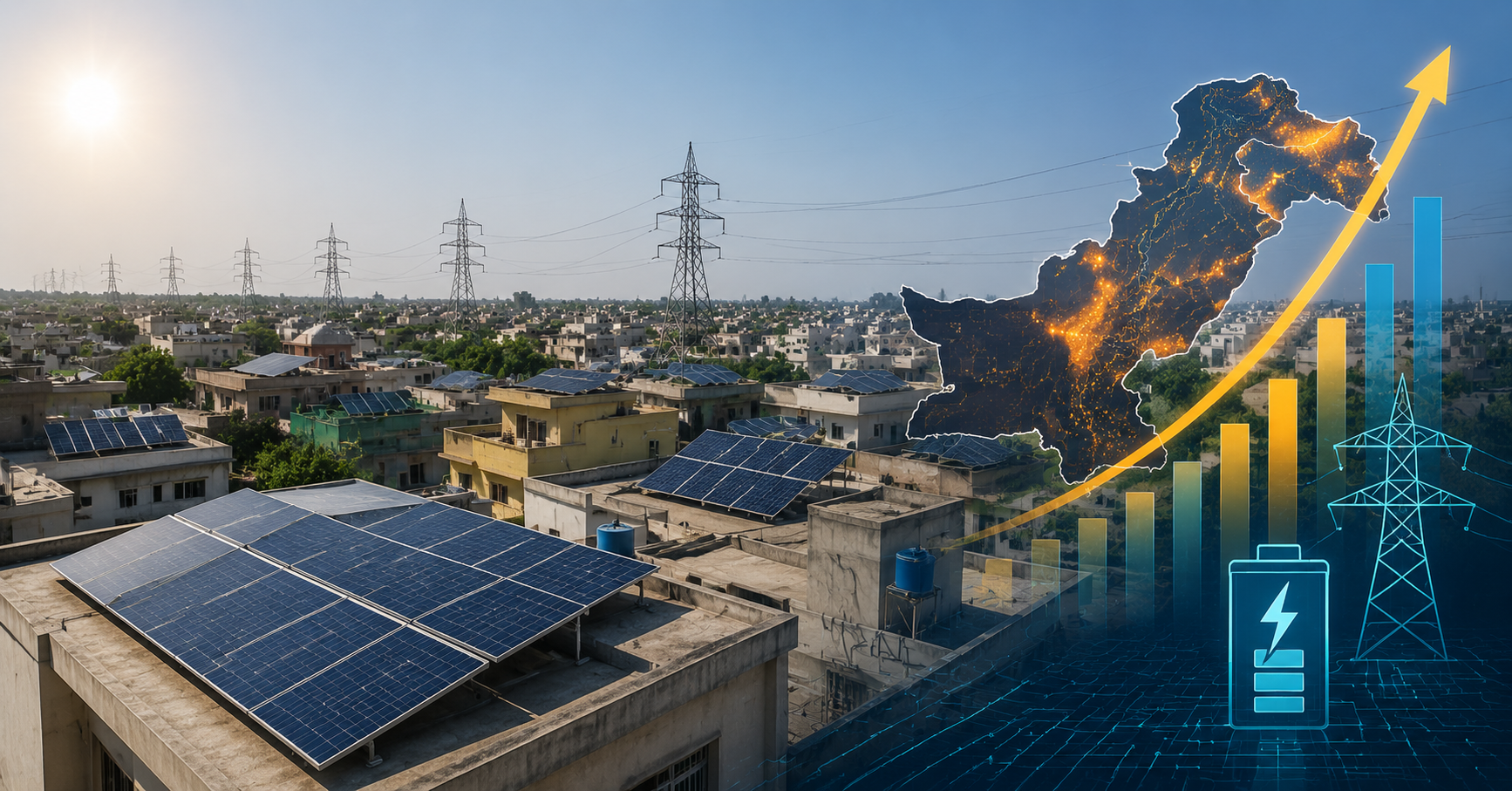
ISLAMABAD – Pakistan’s electricity sector is facing a significant data gap in rooftop solar adoption, with actual installed capacity estimated to be nearly twice the officially documented figures, according to a new report.

A joint study by HeraldX and Renewables First, titled “The Uncounted Gigawatts: Distributed Solar Mapping and Grid Impact Analysis in Pakistan”, uses artificial intelligence and power system modelling to evaluate the scale and operational impact of distributed solar generation.

The report estimates that national rooftop and distributed solar capacity stands at around 38 gigawatts, significantly higher than what is reflected in official datasets.

In Lahore, the AI model identified 177MW of rooftop solar capacity compared to an official estimate of 95MW, pointing to substantial gaps in reporting and registration, particularly for systems outside or partially outside net-metering frameworks.

The study notes that this unrecorded capacity is already influencing grid behaviour, despite remaining largely invisible to planners and distribution companies.

Using PSS/E simulation software, researchers compared grid performance under recorded and actual solar penetration levels, finding increased reverse power flows and a rise in transformer loading from 34 per cent to 76 per cent during daytime conditions.

Voltage levels were also found to exceed Grid Code 2023 compliance thresholds under both scenarios, indicating mounting stress on distribution infrastructure.

The report further states that while a simulated 10MW battery energy storage system helped improve voltage stability and reduce reverse flows, it also led to power factor deterioration in lower solar penetration conditions, suggesting storage alone cannot address the challenge.

According to the researchers, the AI model was trained on Pakistan-specific rooftop imagery to improve accuracy, unlike generic international datasets.

The report calls for urgent adoption of updated monitoring systems and planning tools, warning that the widening gap between recorded and actual solar capacity poses risks for distribution companies and grid operators.

Continue Reading

Trending

Copyright © 2026