Connect with us

World

King Charles discloses personal tax payments since ascending throne

Published

on

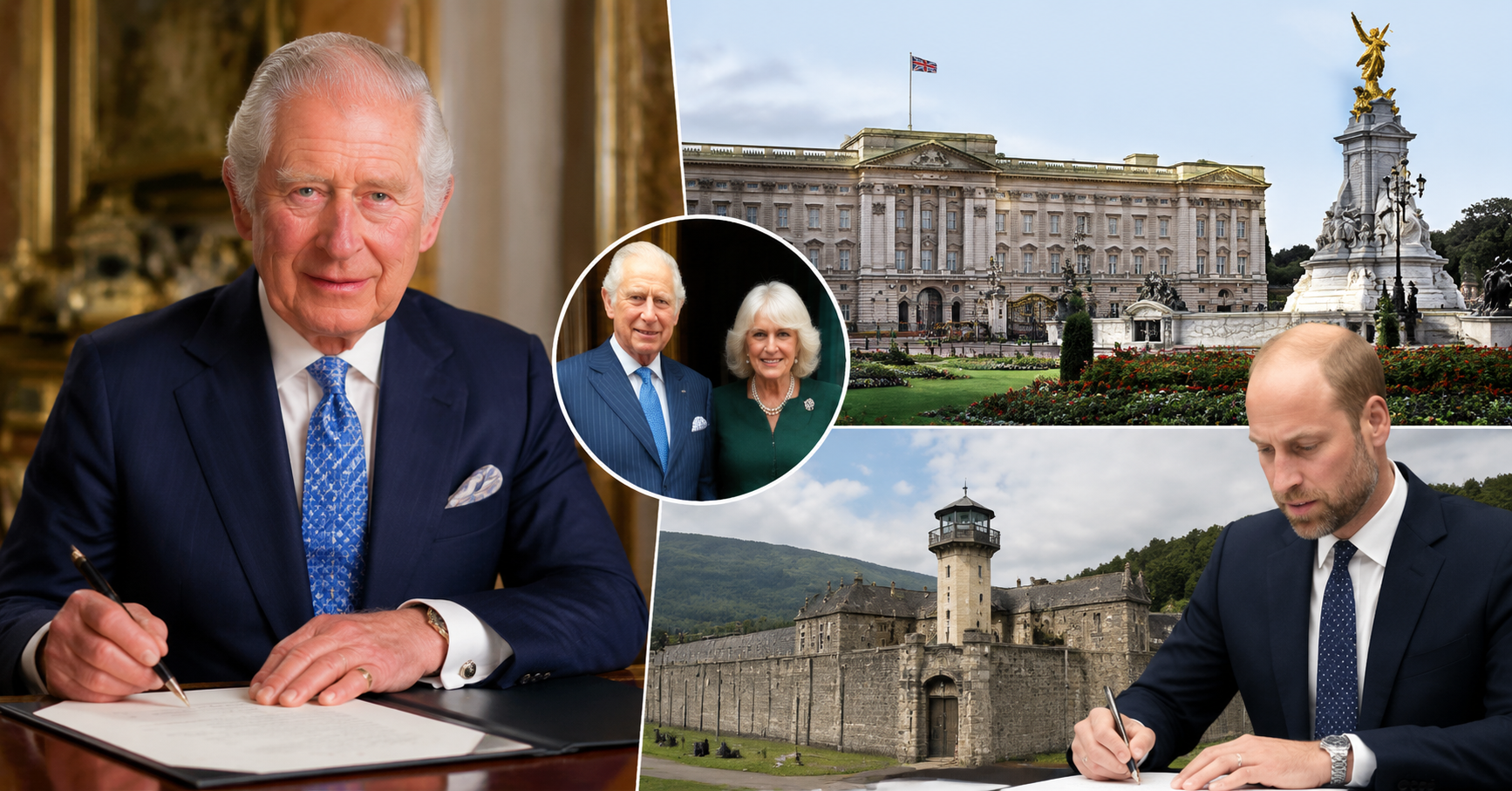
LONDON –  Britain’s King Charles has become the first reigning monarch to publicly disclose details of his personal tax contributions, with Buckingham Palace releasing the information amid renewed scrutiny of royal finances and property arrangements.

According to palace officials, the king has paid more than $41 million in personal taxes since ascending the throne in 2022.

The disclosure came as the Royal Household responded to public discussion surrounding the monarchy’s finances and the management of royal properties.

Palace officials also confirmed that King Charles and Queen Camilla would not move into Buckingham Palace after the completion of its taxpayer-funded renovation project. Instead, the couple will continue to reside at Clarence House.

Buckingham Palace will remain the monarchy’s principal administrative headquarters and venue for official engagements, including state ceremonies, receptions and meetings, officials said.

Separately, Prince William released details of financial plans for the Duchy of Cornwall, outlining a long-term strategy focused on housing developments, environmental initiatives and community investment across several regions.

The Prince of Wales also said that income generated from Dartmoor Prison, which provides annual rental revenue to the duchy, would be directed towards supporting local communities.


Continue Reading

World

SpaceX Share Drop Reduces Musk’s Wealth to Around $950bn

Published

on

ISLAMABAD – Elon Musk has fallen below the $1 trillion net worth mark just weeks after briefly becoming the first person to reach the milestone, following a sharp decline in the valuation of his business interests.

A significant drop in the value of SpaceX shares erased an estimated $240 billion from Musk’s paper wealth, reducing his net worth to around $950bn by late June, according to market estimates.

Despite the decline, Musk remains the world’s wealthiest individual by a substantial margin, with his fortune still far exceeding that of other billionaires.

The reversal highlights the volatility of wealth tied largely to corporate valuations. Most of Musk’s fortune is linked to ownership stakes in his companies, meaning fluctuations in share prices can have a dramatic effect on his net worth.

Musk crossed the trillion-dollar threshold earlier this month following a surge in the valuation of SpaceX after its highly anticipated public listing. The development marked a historic milestone and further widened the gap between him and the rest of the global rich list.

However, a subsequent decline in SpaceX’s market value, coupled with weaker performance in Tesla shares, pushed his estimated wealth back below the trillion-dollar mark within weeks.

Analysts say investor confidence in SpaceX remains strong despite the recent pullback, citing the company’s long-term ambitions in space exploration, satellite communications, artificial intelligence and future missions to the Moon and Mars.

Over the past two years, Musk’s fortune has grown rapidly alongside gains in the value of his technology ventures. Market estimates suggest his wealth stood at just over $400bn in early 2025 before climbing sharply on the back of rising valuations across his businesses.

The largest portion of Musk’s fortune is derived from his stake in SpaceX and its associated ventures, including Starlink, xAI and X. He also holds a significant ownership stake in Tesla, while maintaining interests in Neuralink and The Boring Company.

Because much of his wealth exists in the form of company equity rather than liquid assets, even modest shifts in market sentiment can translate into gains or losses worth tens of billions of dollars.

The latest decline serves as a reminder of how quickly paper fortunes can fluctuate, particularly when they are concentrated in a small number of high-growth technology companies.

Continue Reading

World

International Oil Markets under pressure on easing supply concerns

Published

on

LONDON – International oil prices have edged closer to the $70 per barrel mark, hitting their lowest levels in nearly two years amid continued downward pressure in global markets.

Before the latest decline, oil was last seen below $70 per barrel in September 2024.

At the time of reporting, West Texas Intermediate (WTI) crude was trading at $74.4 per barrel, down 2 per cent, while Brent crude stood at around $78 per barrel, falling 2.5pc.

Crude oil produced from United Arab Emirates reserves also slipped to $71 per barrel, marking a decline of nearly 3pc over the past 12 hours.

Market analysts linked the downturn to shifting supply expectations and easing concerns over disruptions in key shipping routes, including the Strait of Hormuz.

Sentiment has also been influenced by ongoing diplomatic engagements involving Iran and the United States in Switzerland, where negotiations on broader regional tensions are underway.

Reports of a temporary deadlock in talks have further contributed to volatility, with markets closely watching developments in the fragile diplomatic process.

Oil prices have remained on a bearish trajectory since the start of the discussions, as investors weigh geopolitical risks against improving supply flows.

Continue Reading

Latest

Iran prioritises ‘jihad’ over talks but pursues diplomacy with caution

Published

on

GENEVA – Iran said on Sunday that negotiations with the United States were not its preferred course of action, even as senior officials from both countries gathered in Switzerland for a fresh round of talks aimed at advancing a preliminary agreement reached earlier this week.

Hojjatoleslam Abdollah Haji Sadeghi, the Supreme Leader’s representative to the Islamic Revolutionary Guard Corps (IRGC), said Tehran would engage in diplomacy “with power and caution” but stressed that negotiations were not Iran’s primary option.

“Our primary option is the field of jihad, whether on the battlefield or in the streets,” Iranian media quoted him as saying, adding that Tehran was not concerned about the prospect of talks failing.

The negotiations follow a memorandum of understanding (MoU) signed on June 18 that laid the groundwork for a ceasefire and a broader diplomatic process between Washington and Tehran.

Iranian Foreign Ministry spokesman Esmaeil Baqaei said discussions in Switzerland would focus on ensuring implementation of commitments contained in the agreement, particularly provisions related to the cessation of hostilities, Iran’s oil exports and the release of frozen assets.

Tehran has also indicated that alleged Israeli violations of the Lebanon ceasefire will feature prominently in the talks.

“The Zionist regime continues to violate its commitments in Lebanon; this issue will be the main topic of discussion,” an Iranian foreign ministry spokesman said.

President Masoud Pezeshkian described the understanding reached with Washington as being largely in Iran’s interest, saying it would allow the country to regain access to financial resources currently held abroad.

Speaking in Tehran, Mr Pezeshkian expressed optimism that $6 billion in Iranian funds frozen in Qatar would be released as negotiations progressed. He also reiterated that Iran had no intention of developing nuclear weapons, describing that position as consistent with the country’s longstanding policy.

The Iranian president further accused Israel of opposing the diplomatic process and attempting to prolong instability in the region.

Meanwhile, US Vice President JD Vance arrived in Switzerland to participate in the talks, expressing hope that progress could be achieved on both Iran’s nuclear programme and the situation in Lebanon.

“I think we’re going to hopefully make progress on the nuclear issue and the Lebanon ceasefire issue,” Mr Vance told reporters before departing for Switzerland.

The negotiations come against the backdrop of renewed tensions over the Strait of Hormuz after Iran’s Revolutionary Guards warned of risks to shipping following Israeli military actions in Lebanon. However, US officials said commercial traffic through the strategic waterway continued uninterrupted.

Iran’s delegation is being led by senior officials including Foreign Minister Abbas Araghchi and parliamentary speaker Mohammad Bagher Ghalibaf, while the US team includes Mr Vance and senior envoy Steve Witkoff.

Pakistani officials are also participating in the discussions alongside representatives from Qatar, reflecting Islamabad’s role in facilitating the initial agreement between Washington and Tehran.

Technical-level negotiations are expected to continue beyond Sunday, with officials from both sides indicating that talks would proceed for as long as necessary.

Continue Reading

Trending

Copyright © 2026