Key points:
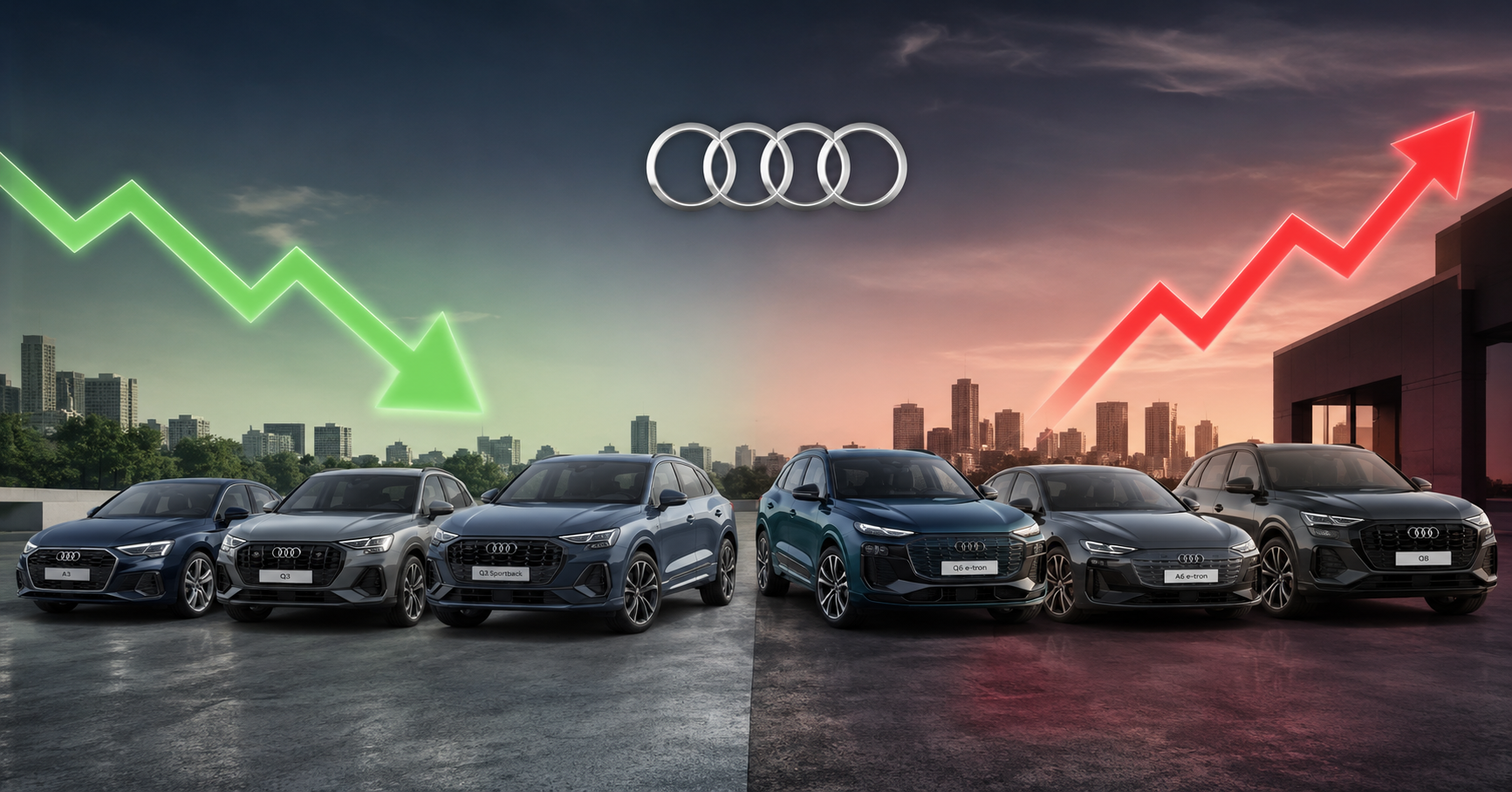
- Audi Pakistan has revised prices following tax adjustments announced in the Budget 2026-27.
- Seven variants have become cheaper, with reductions ranging from Rs150,000 to Rs8.15 million.
- Audi A6 Sportback e-tron Executive received the biggest price cut of Rs8.15 million.
- Audi Q6 SUV e-tron Performance is now Rs5.8 million cheaper.
- Audi A3, Q3 and Q3 Sportback have also received significant price reductions.
- Audi Q8 55 TFSI quattro is the only model to become more expensive, with its price increasing by Rs15.1 million.
LAHORE – Audi Pakistan has revised the prices of its vehicle lineup following tax adjustments introduced in the federal Budget 2026-27, reducing prices for seven variants while substantially increasing the price of one model.
According to the latest price list issued by the company, buyers can now save between Rs150,000 and Rs8.15 million on selected Audi vehicles. However, the Audi Q8 55 TFSI quattro is the only model in the lineup to receive a price increase, becoming Rs15.1 million more expensive.
Which Audi model received the largest price cut?
The largest reduction has been announced for the Audi A6 Sportback e-tron Executive, whose price has been lowered from Rs42 million to Rs33.85 million, representing a saving of Rs8.15 million. Another significant revision has been made to the Audi Q6 SUV e-tron Performance, which now costs Rs36.2 million, down from Rs42 million.
Audi has also reduced prices for its entry-level models. The Audi A3 Sedan S line TFSI is now priced at Rs20.8 million, making it Rs3.7 million cheaper than before. Similarly, the Audi Q3 SUV and Audi Q3 Sportback have become more affordable after price reductions of Rs3.75 million and Rs3.9 million, respectively.
Read more: Obsession star Navarrette to get Marvel role truth about rumours
Meanwhile, the Signature variants of the Audi Q6 SUV e-tron and Audi A6 Sportback e-tron have received relatively modest reductions of Rs150,000 each. While most of Audi’s lineup has become more affordable, the Audi Q8 55 TFSI quattro has moved in the opposite direction. Its price has increased by Rs15.1 million, making it the only model to record a price hike.
What caused the Audi price cut?
Although Audi has not provided a detailed explanation, the price reductions suggest that recent tax measures may have lowered the cost of importing or selling several models, particularly electric vehicles. In contrast, the significant increase in the Q8’s price indicates that different tax or import-related factors may now apply to that variant.
| Model |
Old Price (Rs) |
New Price (Rs) |
Difference |
Status |
| Audi A3 Sedan S line TFSI |
24.5 Million |
20.8 Million |
-3.7 Million |
Price Reduced |
| Audi Q3 SUV |
Not Specified |
Not Specified |
-3.75 Million |
Price Reduced |
| Audi Q3 Sportback |
Not Specified |
Not Specified |
-3.9 Million |
Price Reduced |
| Audi Q6 SUV e-tron Performance |
42 Million |
36.2 Million |
-5.8 Million |
Price Reduced |
| Audi Q6 SUV e-tron Signature |
Not Specified |
Not Specified |
-150,000 |
Price Reduced |
| Audi A6 Sportback e-tron Executive |
42 Million |
33.85 Million |
-8.15 Million |
Price Reduced |
| Audi A6 Sportback e-tron Signature |
Not Specified |
Not Specified |
-150,000 |
Price Reduced |
| Audi Q8 55 TFSI quattro |
Not Specified |
Not Specified |
+15.1 Million |
Price Increased |