Audi Pakistan has revised prices following tax adjustments announced in the Budget 2026-27.
Seven variants have become cheaper, with reductions ranging from Rs150,000 to Rs8.15 million.
Audi A6 Sportback e-tron Executive received the biggest price cut of Rs8.15 million.
Audi Q6 SUV e-tron Performance is now Rs5.8 million cheaper.
Audi A3, Q3 and Q3 Sportback have also received significant price reductions.
Audi Q8 55 TFSI quattro is the only model to become more expensive, with its price increasing by Rs15.1 million.
LAHORE – Audi Pakistan has revised the prices of its vehicle lineup following tax adjustments introduced in the federal Budget 2026-27, reducing prices for seven variants while substantially increasing the price of one model.
According to the latest price list issued by the company, buyers can now save between Rs150,000 and Rs8.15 million on selected Audi vehicles. However, the Audi Q8 55 TFSI quattro is the only model in the lineup to receive a price increase, becoming Rs15.1 million more expensive.
Which Audi model received the largest price cut?
The largest reduction has been announced for the Audi A6 Sportback e-tron Executive, whose price has been lowered from Rs42 million to Rs33.85 million, representing a saving of Rs8.15 million. Another significant revision has been made to the Audi Q6 SUV e-tron Performance, which now costs Rs36.2 million, down from Rs42 million.
Audi has also reduced prices for its entry-level models. The Audi A3 Sedan S line TFSI is now priced at Rs20.8 million, making it Rs3.7 million cheaper than before. Similarly, the Audi Q3 SUV and Audi Q3 Sportback have become more affordable after price reductions of Rs3.75 million and Rs3.9 million, respectively.
Meanwhile, the Signature variants of the Audi Q6 SUV e-tron and Audi A6 Sportback e-tron have received relatively modest reductions of Rs150,000 each. While most of Audi’s lineup has become more affordable, the Audi Q8 55 TFSI quattro has moved in the opposite direction. Its price has increased by Rs15.1 million, making it the only model to record a price hike.
What caused the Audi price cut?
Although Audi has not provided a detailed explanation, the price reductions suggest that recent tax measures may have lowered the cost of importing or selling several models, particularly electric vehicles. In contrast, the significant increase in the Q8’s price indicates that different tax or import-related factors may now apply to that variant.
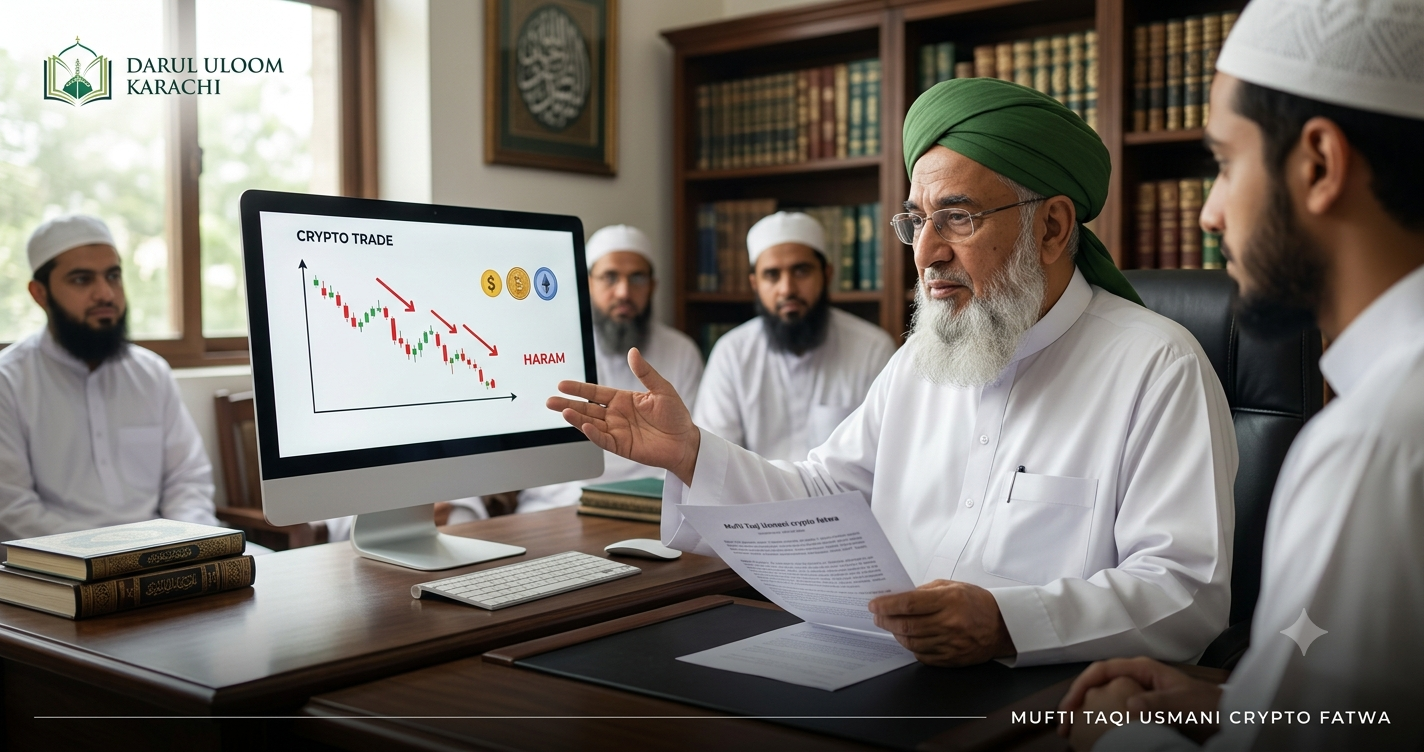
Religious Ruling: Prominent scholar Mufti Muhammad Taqi Usmani issued a fatwa declaring digital currency trading impermissible (haram).
Broad Scope: The Mufti Taqi Usmani crypto fatwa covers all digital assets, including standard cryptocurrencies, tokens, and stablecoins like USDT.
Legal Definition: According to the decree, digital currencies do not meet the foundational Islamic criteria to be classified as real wealth or property.
Market Influence: Although the ruling is a religious opinion rather than a state law, it will likely impact Muslim investors across Pakistan.
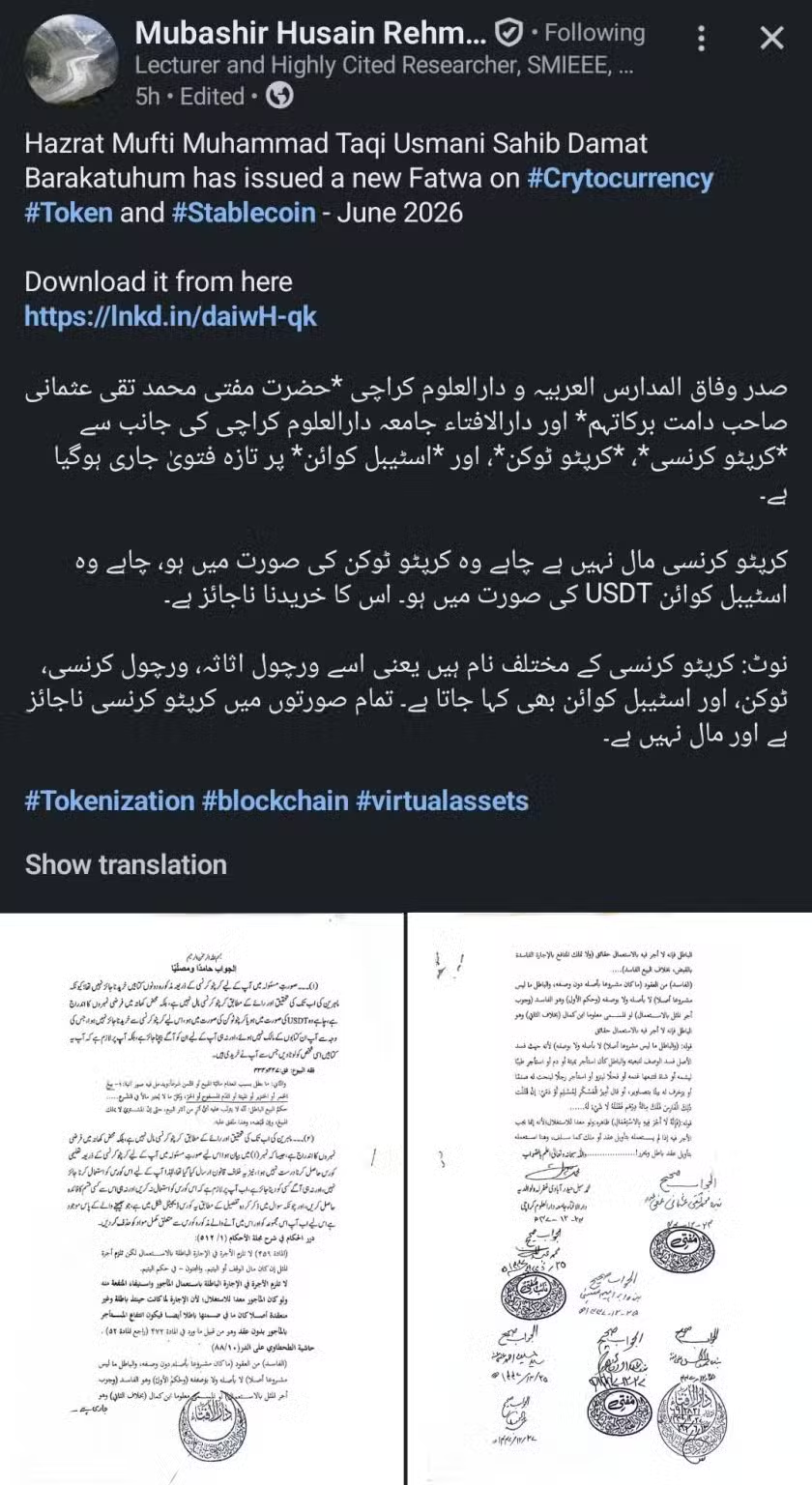
ISLAMABAD – Pakistan’s leading Islamic scholar, Mufti Muhammad Taqi Usmani, has issued a definitive religious decree regarding digital asset trading. Published by scholars affiliated with Darul Uloom Karachi, the formal declaration clarifies that cryptocurrency operations are impermissible under Islamic jurisprudence. Therefore, practicing Muslims are advised to avoid buying, selling, or investing in these virtual markets.
The ruling takes a strict stance on the fundamental nature of decentralized digital networks. Specifically, the decree concludes that digital assets lack physical backing, intrinsic utility, or state authorization. For this reason, they fail to meet the Islamic legal definition of true wealth (mal). Consequently, any financial transactions involving these assets are considered void from a religious perspective.
Total Ban Covers Tokens and Stablecoins
Furthermore, the declaration stresses that changing the names or branding of digital assets does not alter their religious status. The Mufti Taqi Usmani crypto fatwa explicitly groups all virtual assets into a single financial category. This means the restriction applies uniformly across the entire Web3 ecosystem.
“Cryptocurrency is known by different names, including virtual currency, token, and stablecoin. In all these forms, cryptocurrency is not considered wealth, and therefore it is not permissible,” the official statement clarifies.
As a result, the scope of this fatwa extends far beyond mainstream decentralized coins like Bitcoin and Ethereum. It explicitly restricts the use of blockchain-based utility tokens and dollar-pegged stablecoins such as Tether (USDT).
Overview of the Religious Decree
Attribute
Decree Details
Issuing Authority
Mufti Muhammad Taqi Usmani / Darul Uloom Karachi
Focus Keyphrase
Mufti Taqi Usmani crypto fatwa
Legal Classification
Impermissible (Haram / Not Recognized as Wealth)
Assets Affected
Bitcoin, Ethereum, Altcoins, Custom Tokens, and Stablecoins (e.g., USDT)
Legal Status in Pakistan
Religious advisory opinion (Not a binding statutory state law)
Institutional Backing and Public Impact
The formal document carries multiple official endorsements from respected senior scholars at Darul Uloom Karachi. While this fatwa functions strictly as a religious guidance framework rather than a government-enforced law, its societal impact remains massive.
Because Mufti Taqi Usmani is highly respected globally in Islamic banking and finance circles, his opinions carry immense weight. Consequently, this declaration is expected to significantly shape public sentiment and curb crypto adoption rates among retail investors in Pakistan.
What is the main message of the Mufti Taqi Usmani crypto fatwa?
The fatwa states that cryptocurrency trading is impermissible (haram) under Islamic law because digital currencies do not qualify as real wealth or property.
Does this ruling also apply to stablecoins like USDT?
Yes. The decree explicitly mentions stablecoins and tokens, stating that changing the terminology or tying a coin to a fiat currency does not change its religious ruling.
Is cryptocurrency now illegal in Pakistan because of this fatwa?
No. A fatwa is a formal religious opinion and legal advisory for Muslims. It is not a state law enacted by the government of Pakistan, though it strongly influences public financial choices.
The image is AI-generated and used for illustration purposes only
Key points:
Market Shock: Crude markets reacted instantly, causing global oil prices to spike by approximately 6 percent.
Ceasefire Ended: The market rally triggered after the US declared its interim diplomatic accord with Iran officially over.
Hormuz Threat: Consequently, authorities raised the shipping threat level in the Strait of Hormuz to “Severe” after attacks on vessels.
Sanctions Return: In addition, the US revoked critical waivers that previously permitted limited Iranian oil exports.
KARACHI – The momentum behind global oil prices intensified rapidly on Wednesday as energy markets reacted to major geopolitical developments. Specifically, crude benchmarks jumped by about 6 percent immediately after US President Donald Trump declared the interim ceasefire with Iran over. Therefore, Brent crude climbed significantly to $78.58 per barrel. Meanwhile, West Texas Intermediate (WTI) surged to $74.76 per barrel during active trading.
This sudden price spike occurred directly after overnight military strikes between the United States and Iran. As a result, the diplomatic framework that temporarily stabilized the region has completely collapsed. Furthermore, Washington cancelled trade waivers that previously allowed Iran to export limited amounts of petroleum.
Strategic Corridors Impacted by Global Oil Prices
Risks Rise as Global Oil Prices React to Strait Closures
Because of the heightened military risks, shipping activity in the Strait of Hormuz has become extremely cautious. However, essential tanker traffic through the narrow waterway continues to move forward. For instance, a supertanker chartered by ExxonMobil successfully proceeded through the corridor with 2 million barrels of crude oil. Conversely, other commercial ships chose to turn back or drop anchor to await further security updates.
According to latest tracking data, six tankers were operating in the area during the escalation. This caution follows recent drone and missile attacks against three commercial vessels near the Omani coast. Two of these targeted ships were transporting vital energy cargoes, including a Qatari LNG carrier and a Saudi crude tanker.
Consequently, the Joint Maritime Information Center (JMIC) officially raised the maritime threat level for the Strait of Hormuz to “Severe.” The agency warned that deliberate hostile action against shipping is now highly likely. Therefore, the advisory strongly urges all regional vessel operators to maintain extreme vigilance.
Market Impact Data Table
Market Indicator
Current Status & Details
Focus Keyphrase
Global oil prices
Brent Crude Price
$78.58 per Barrel (+6%)
WTI Crude Price
$74.76 per Barrel (+6%)
Primary Catalyst
Termination of US-Iran interim ceasefire agreement
Choke Point Status
Strait of Hormuz threat level raised to “Severe”
Shipping Impacts
Targeted energy carriers include Saudi and Qatari vessels
Frequently Asked Questions (FAQs)
Why did global oil prices spike suddenly?
Prices spiked because the United States declared its interim ceasefire agreement with Iran officially over following overnight military exchanges. This ended the diplomatic framework that previously protected oil markets.
What is happening to shipping routes in the Strait of Hormuz?
While some tankers continue to navigate the waterway, the threat level has been upgraded to “Severe.” This upgrade followed specific maritime attacks on energy vessels near the Omani coast.
Will Iranian oil exports be blocked completely?
Yes. Alongside ending the ceasefire, the US revoked the special waivers that previously allowed Iran to legally sell limited amounts of crude oil to international buyers.
PESHAWAR – A tragic Peshawar triple murder has left a local community in shock. A man allegedly shot and killed his parents and his brother on Tuesday morning. The incident followed a domestic dispute in the Sarband area.
According to the Sarband Police Station, the shooting occurred during the early hours of the day. The suspect opened fire on his father, mother, and brother inside their residence. He then fled the scene to evade arrest.
Neighbors reported the gunfire to the authorities. A police contingent quickly arrived at the location to secure the area. Officers then transported the victims’ bodies to a nearby medical facility for mandatory postmortem examinations.
Investigation And Search Operation Underway
Following the horrific Peshawar triple murder, law enforcement authorities registered a formal case. They immediately launched a targeted search operation in the surrounding localities. The main goal is to apprehend the fleeing suspect.
Forensic teams are currently gathering evidence from the residence. Meanwhile, investigators are interviewing neighbors to determine the exact cause of the violence.
Local leadership has expressed deep concern over the incident. Officials are urging citizens to resolve domestic grievances through community mediation.
Rising Domestic Violence Concerns In KP
This deadly shooting marks the second major triple killing in the province within a single week. These incidents raise serious questions about the escalation of domestic conflicts. On July 3, three individuals, including two women, were fatally shot in an alleged honor killing in the Matta Mughal area of Shabqadar.
In that earlier case, no immediate family members stepped forward to file a complaint. Therefore, the state took legal action and registered the First Information Report (FIR) on behalf of the public.