What is the NEPRA tariff?
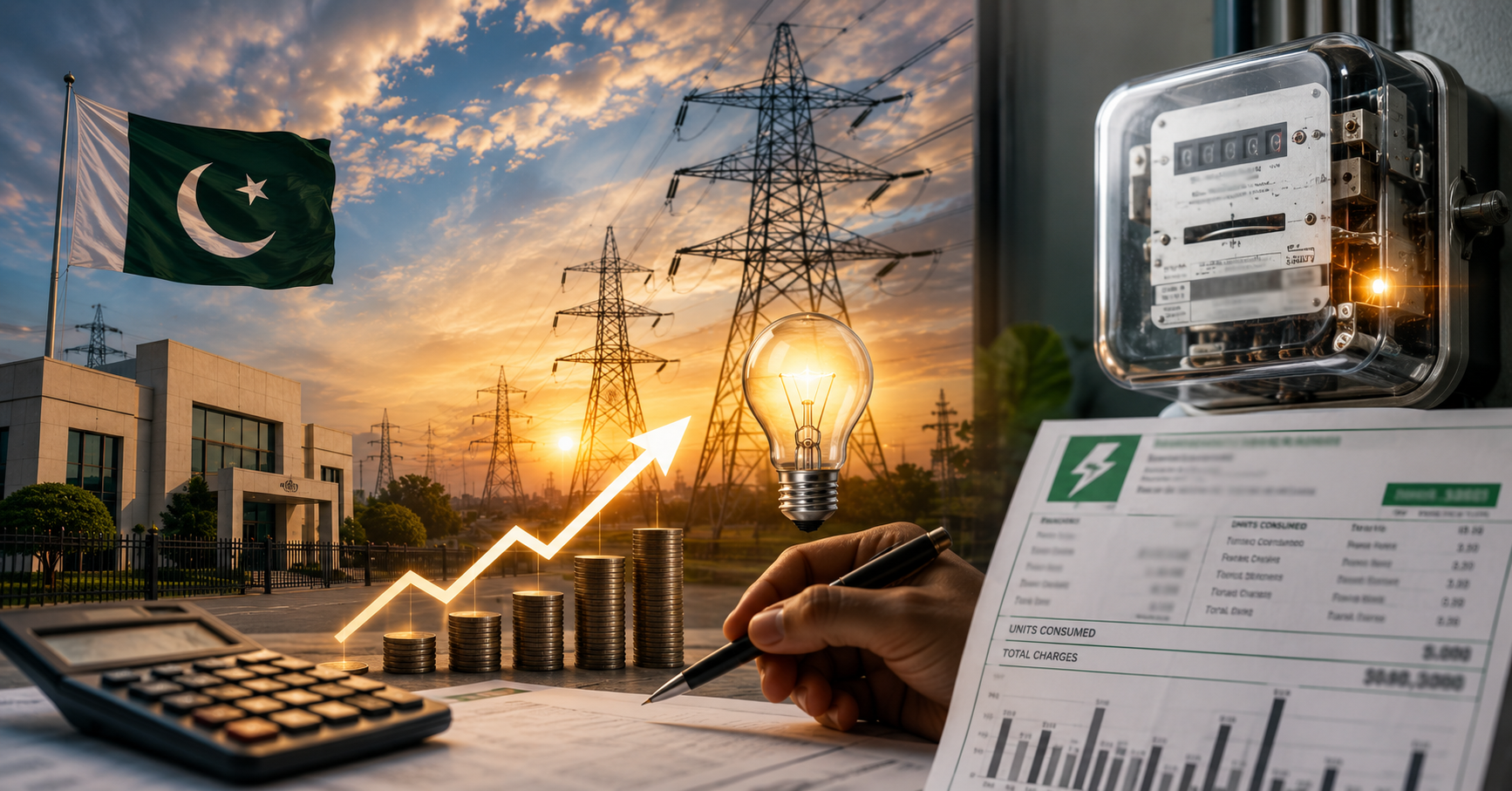
An electricity bill includes a number of charges the consumer has to pay; however, the NEPRA tariff plays a vital role in framing the majority of the price. It is approved by the National Electric Power Regulatory Authority (NEPRA), Pakistan’s independent power regulator.
All over the country the power is supplied by distribution companies (DISCOs) and consumers pay for the distribution cost as well which is a part of the NEPRA tariff.
The NEPRA tariff is said to be designed in order to cover the costs of generating, transmitting, and distributing electricity and to protect consumers from unjustified charges.
How NEPRA determines tariffs?
NEPRA examines the financial amount needed by power companies, it also conducts public hearings, and considers the input from stakeholders. The building blocks of NEPRA tariff are as follows:
- Power generation cost: The cost required to make electricity using renewable or non-renewable sources such as hydropower, natural gas, coal, nuclear, solar, wind, and imported fuels.
- Transmission cost: The cost of providing electricity from power plants to distribution companies.
- Distribution cost: The maintenance cost of local electricity grids, substations, transformers, and customer services.
- Capacity payments: Payments made to power producers for keeping generation capacity available, regardless of whether electricity is actually produced.
- System losses: The loss suffered while electricity is being transmitted or distributed.
- Return on investment (ROI): An already set approved rate of return for utilities to encourage investment in Pakistan’s power sector.
Is NEPRA tariff different depending on the consumer?
The answer is a strong yes, NEPRA approves different tariff structures that vary on the category of consumer. The consumer categories that influence this change are as follows:
- Residential consumers
- Commercial consumers
- Industrial consumers
- Agricultural consumers
- Bulk electricity consumers
- Public sector institutions
It is pertinent to mention here that tariffs also vary according to electricity consumption slabs, voltage level, and time-of-use (peak and off-peak hours) for eligible consumers.
Why do NEPRA tariffs change?
As mentioned before, there are a number of reasons as to why it has to change but all of them are equally important. There is a need to revise the tariff continuously due to the change in international fuel prices, the devaluation of the rupee, and rising inflation, influencing the operational cost requiring additional funds to keep the power sector running.
The policy changes made by the government are a strong factor as well. On 7th January 2026, the government of Pakistan, under the NEPRA Act, asked NEPRA to keep the tariff unchanged, reversing NEPRA’s decision to lessen the tariff by Rs. 0.62.
Why is the NEPRA tariff important?
The NEPRA tariff serves as a determinant for the electricity prices being charged to millions of consumers and keeps the power sector of Pakistan stable and reflects changes in fuel costs, operational expenses, and broader economic conditions.



 Fashion4 months ago





 Pakistan2 weeks ago