Connect with us

Latest

You won’t be able to use WhatsApp on these phones from November

Published

on

WhatsApp is a popular messaging software used by millions of people around the world to interact with friends, family, and coworkers on a regular basis. However, due to the model of their phones, many of them will no longer be able to utilise the app.
According to the publication, the app will not work on both iPhone and Android devices, thus impacted users will have to either buy a new phone or upgrade their smartphone’s software.
More than 40 distinct smartphone models will be unable to use WhatsApp, according to the publication, and the deadline for updating the software is November 1.
According to the magazine, Android users must have Android 4.1 or later, while iPhone users must have iOS 10 or later to use WhatsApp.
The following is a list of phones that will no longer be able to handle WhatsApp as of November.

iPhone

  • iPhone 5
  • iPhone 6S Plus
  • iPhone SE

Samsung

  • Galaxy Trend Lite
  • Galaxy Trend II
  • Galaxy SIII
  • Galaxy S3 Mini
  • Galaxy Xcover 2
  • Galaxy Core
  • Galaxy Ace 2

LG

  • Lucid 2
  • Optimus F7
  • Optimus F5
  • Optimus L2 II Dual
  • Optimus L5
  • Best L5 II
  • Optimus L5 Dual
  • Best L3 II
  • Optimus L7
  • Optimus L7 II Dual
  • Best L7 II
  • Optimus F6, Enact
  • Optimus L4 II Dual
  • Optimus F3
  • Best L4 II
  • Best L2 II
  • Optimus Nitro HD
  • Optimus 4X HD
  • Optimus F3Q

ZTE

  • ZTE V956
  • Grand X Quad V987
  • Grand Memo

Sony

  • Xperia Miro
  • Xperia Neo L
  • Xperia Arc S

Huawei

  • Ascend G740
  • Ascend Mate
  • Ascend D Quad XL
  • Ascend D1 Quad XL
  • Ascend P1 S
  • Ascend D2

Other smartphones

  • Alcatel
  • Archos 53 Platinum
  • HTC Desire 500
  • Caterpillar Cat B15
  • Wiko Cink Five
  • Wiko Darknight
  • Lenovo A820
  • UMi X2
  • Run Fl1
  • THL W8

Continue Reading
Click to comment

You must be logged in to post a comment Login

Leave a Reply

Latest

ECC backs Rs194 Billion package to improve power sector finances

Published

on

ISLAMABAD – The Economic Coordination Committee (ECC) on Wednesday approved a Rs194 billion financial package for power distribution companies (Discos), aimed at improving the sector’s financial health and addressing outstanding subsidy-related obligations.

According to official details, the package includes a Rs52 billion equity injection, the reallocation of Rs97.65 billion in subsidies, and the adjustment of Rs44.2 billion in arrears.

The ECC approved the transfer of Rs97.649 billion from the tariff differential subsidy allocation earmarked for K-Electric to the Inter-Disco Tariff Differential Subsidy, enabling the government to meet subsidy requirements across public-sector distribution companies.

The committee also approved the settlement of Tariff Differential Subsidy (TDS) arrears claims of Rs44.198 billion for the Tribal Areas Electricity Supply Company (Tesco), addressing pending subsidy obligations linked to the utility.

Officials said the measures are intended to provide financial support to distribution companies, improve subsidy management, and strengthen the balance sheets of utilities facing persistent losses due to low recoveries, electricity theft and high power generation costs.

Continue Reading

Latest

Nuclear inspections could resume soon after progress in Iran talks: JD Vance

Published

on

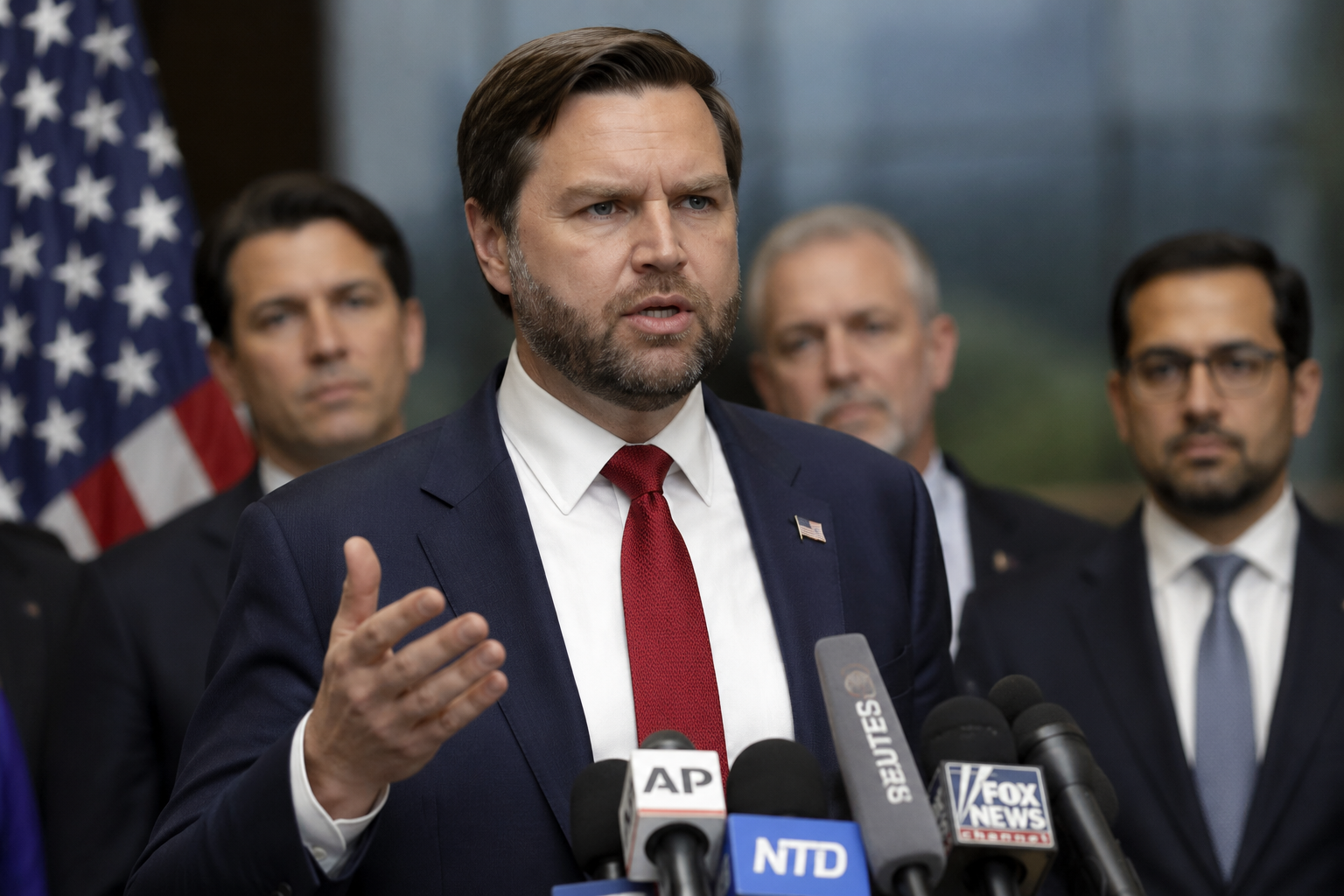
ISLAMABAD – WASHINGTON and Tehran reported progress on multiple contentious issues following high-level negotiations in Switzerland, with both sides agreeing to continue technical discussions aimed at reaching a broader agreement in the coming weeks.

Speaking after the talks, US Vice President JD Vance said the discussions had resulted in understandings on several key issues, including the return of international nuclear inspectors, mechanisms governing Iran’s frozen assets and arrangements intended to preserve navigation through the Strait of Hormuz.

According to Vance, technical teams from both countries remained engaged after lengthy overnight negotiations and would continue working on the details of the preliminary understandings reached during the meeting.

He said the United States hoped inspections by the International Atomic Energy Agency (IAEA) could resume shortly, describing the development as a positive step towards a more comprehensive settlement.

The talks took place in Bürgenstock, Switzerland, where mediators sought to build on recent diplomatic efforts aimed at reducing regional tensions and establishing a framework for future negotiations.

Prime Minister Shehbaz Sharif welcomed the outcome of the meeting, saying the discussions had generated momentum towards a negotiated settlement between the two countries.

In a statement, he said participants had agreed to establish a high-level oversight mechanism and pursue a roadmap designed to facilitate a final agreement within the next two months.

The premier also acknowledged the role played by Qatar and Switzerland in supporting the diplomatic process, while reiterating Pakistan’s commitment to dialogue and peaceful conflict resolution.

Iran, however, offered a more cautious assessment of the discussions.

Foreign Ministry spokesman Esmaeil Baghaei said the nuclear issue had only been touched upon briefly and insisted that substantive negotiations on Tehran’s nuclear programme had not yet begun.

Nevertheless, he described the talks as productive and said the parties had agreed on several measures intended to create conditions for future negotiations.

Among the issues discussed were maritime security in the Strait of Hormuz, the possible release of Iranian assets held abroad and arrangements related to regional ceasefire efforts, particularly in Lebanon.

Baghaei said technical experts would continue consultations on the implementation of the understandings reached in Switzerland, expressing hope that all parties would demonstrate seriousness in moving the process forward.

The negotiations, facilitated by Pakistan and Qatar, concluded after nearly 18 hours of discussions, with both sides indicating a willingness to maintain diplomatic engagement despite persistent differences on key issues.

Continue Reading

Latest

5.4-magnitude earthquake jolts Islamabad, KP and parts of Punjab

Published

on

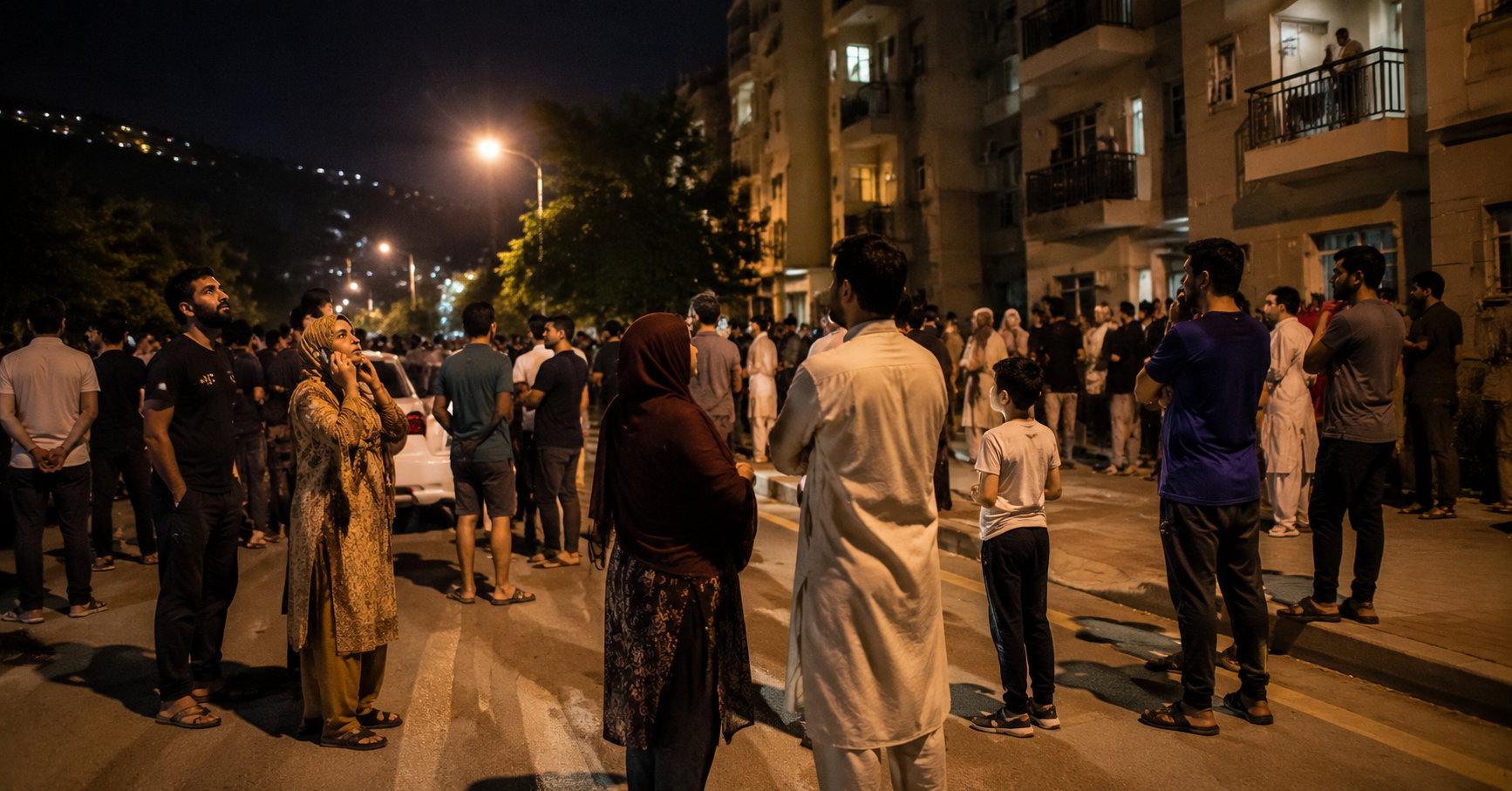
ISLAMABAD – A moderate earthquake measuring 5.4 on the Richter scale was felt in Islamabad and several cities across Khyber Pakhtunkhwa and Punjab on Monday, prompting residents to leave their homes and offices in panic.

According to the National Seismic Monitoring Centre, the earthquake originated in Afghanistan’s Hindu Kush region and occurred at a depth of 215 kilometres.

Tremors were reported in Islamabad, Peshawar, Buner, Bajaur, Faisalabad, Dera Ismail Khan, Khushab, Battagram, Mansehra, Swat, and Abbottabad, among other areas.

Residents in several cities rushed outdoors and recited prayers as the tremors were felt.

Authorities said there were no immediate reports of casualties or damage to property.

The latest earthquake comes days after similar tremors were recorded in various parts of the country, reflecting the region’s vulnerability to seismic activity due to its proximity to major tectonic fault lines.

Pakistan frequently experiences earthquakes, particularly in its northern and western regions, which lie along the boundary of the Indian and Eurasian tectonic plates.

Continue Reading

Trending

Copyright © 2026