Connect with us

Pakistan

CBD NSIT City: Driving Pakistan’s digital transformation forward

Published

on

 A Bold Vision for Digital Pakistan

LAHORE – In the vibrant heart of Lahore, where heritage intersects with ambition, a new chapter in Pakistan’s digital story is unfolding. The Central Business District (CBD) NSIT City, envisioned as the country’s largest IT park, stands as a symbol of Pakistan’s digital aspirations.

More than an infrastructure project, it represents a strategic shift toward positioning the nation as a serious player in the global technology economy, but turning that vision into reality will demand more than ambition; it will require consistent execution, inclusivity, and sustained political and economic will.

Building Pakistan’s Innovation Hub

Backed by the Punjab government, CBD NSIT City is being developed as a modern, technology-driven hub equipped with office towers, incubation centers, residential spaces, and advanced digital connectivity. It seeks to attract both local innovators and foreign investors, aligning with Pakistan’s broader goal of moving from a consumption-driven economy to one based on innovation, tech exports, and knowledge creation.

The timing is significant. Pakistan’s digital economy is gaining momentum, with IT exports reaching $2.6 billion in 2022–2023. With 64% of the population under 30 and more than 600,000 active freelancers, the country ranks as the world’s third-largest freelance market. Lahore, already home to promising startups like Bykea and Finja, is well placed to emerge as a regional innovation hub. CBD NSIT City could serve as the platform that helps transform that potential into long-term progress.

Bridging Infrastructure and Opportunity

For that to happen, however, the project must deliver more than physical infrastructure. It needs dependable energy, efficient regulations, and a business-friendly ecosystem the ingredients that have fueled global success stories like Bangalore and Shenzhen.

Yet, the road ahead is not without obstacles. Pakistan’s major infrastructure projects have often suffered from bureaucratic inefficiencies, cost overruns, and delays. Without transparent governance and technocratic oversight, even the most visionary initiatives risk stagnation.

Talent retention is another key challenge. With over 65% of young Pakistanis expressing a desire to move abroad, the country must invest in better pay scales, digital skills training, and career growth opportunities to retain its brightest minds and strengthen the local IT industry.

Sustaining Investor Confidence

Attracting sustained foreign investment will be equally critical in Pakistan’s volatile economic environment. Policy consistency, investor protection, and regulatory clarity will be essential to building and maintaining global confidence.

What makes CBD NSIT City particularly promising is its location and timing. Integrated into Lahore’s urban core, it is designed to foster collaboration between startups, academia, and investors, a dynamic ecosystem model that has driven innovation across global tech capitals.

A Defining Moment for the Future

Beyond technology and infrastructure, the project’s true potential lies in its ability to inspire trust in governance, in local talent, and in Pakistan’s ability to deliver on its promises. If approached with transparency, inclusivity, and sustained focus, CBD NSIT City could become more than a development milestone; it could serve as the cornerstone of Pakistan’s digital transformation.

Lahore has always been a city of ideas, energy, and reinvention. With the right leadership and policy continuity, CBD NSIT City can channel that spirit into something lasting a thriving, connected, and forward-looking digital Pakistan.


 

Pakistan

Pakistan loses $1.6bn annually to e-commerce checkout inefficiencies: Report

Published

on

ISLAMABAD – Pakistan’s rapidly growing e-commerce sector is incurring significant financial losses at the checkout stage, with inefficiencies in payment systems costing businesses an estimated $1.61 billion annually, according to a new white paper by Payoneer.

The report highlights that merchants across Asia collectively lose around $72bn each year due to checkout-related challenges, with Pakistan representing a notable share of this gap.

A major portion of the losses in Pakistan — approximately $0.97bn — stems from cart abandonment, which accounts for over 60 per cent of the total. Analysts attribute this to friction during the checkout process, including unexpected charges, payment declines, and lack of pricing transparency.

Settlement delays contribute a further $0.46bn in losses, while $0.18bn is lost due to foreign exchange (FX) costs and other payment-related inefficiencies, the report noted.

Despite strong consumer demand, many transactions fail to convert into completed purchases, limiting revenue realisation for businesses. The issue is particularly acute for cross-border sellers, as international customers increasingly expect localised payment options and pricing in their own currencies.

Industry experts say complex payment systems involving multiple intermediaries further erode merchant margins, while delays in settlement cycles restrict cash flow, affecting businesses’ ability to fulfil orders and expand operations.

The findings point to structural weaknesses in Pakistan’s digital trade ecosystem, where financial infrastructure has yet to keep pace with the country’s expanding participation in global e-commerce.

Experts suggest that improving checkout processes, streamlining payment channels, and ensuring faster settlement could help address these inefficiencies. Introducing localised payment methods and transparent pricing, along with reducing fragmentation in banking relationships, may enhance conversion rates and unlock liquidity for businesses.

As Pakistan seeks to strengthen its position in Asia’s digital economy, addressing these bottlenecks could transform lost value into tangible growth for exporters and online sellers.

Continue Reading

Pakistan

Imran Amin highlights quality, sustainability, timely delivery aligned with Punjab govt vision

Published

on

Lahore – April 21, 2026: CEO CBD Punjab, Imran Amin, toured the CBD Walk and CBD Lake projects to evaluate ongoing development efforts and monitor progress firsthand. He carried out a thorough inspection of both projects, reaffirming CBD Punjab’s dedication to delivering projects on schedule and to high standards.

CEO CBD Punjab Imran Amin was accompanied by senior officials including Director Project Management Asif Iqbal, Director Engineering Umar Hayat, Director Construction Asif Babar, Director Architecture & Planning Sameer Aftab Sial, and project contractors.

During the briefing, it was shared that construction work on CBD Walk is progressing ahead of schedule, while maintenance work is underway at CBD Lake to further enhance its sustainability and long-term functionality. Plans are also in place to install dancing fountains to elevate the aesthetic appeal of the area.

Director Architecture & Planning Sameer Aftab Sial briefed the CEO on the exterior design of the structure and the selection of tiles, highlighting the project’s modern and visually appealing outlook.

Expressing satisfaction over the pace of development, CEO CBD Punjab Imran Amin emphasized the importance of maintaining high construction standards. He stated, “This project, aligned with the vision of the Chief Minister Punjab, will emerge as a significant asset, contributing to Lahore’s social and economic landscape.”

The visit reflects CBD Punjab’s continued focus on delivering innovative, sustainable, and high-quality urban development projects.

Continue Reading

Pakistan

How to get Sindh motorcyclists’ Rs2000 subsidy on petrol

Published

on

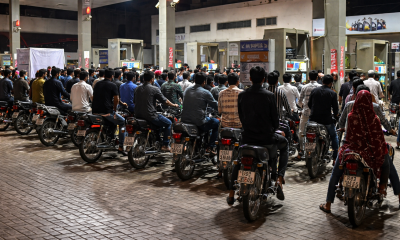
KARACHI – Motorcycle owners will be required to register through the Excise Department’s digital application by providing their CNIC and bank account details. Authorities have also allowed a 15-day window for citizens to transfer ownership of motorcycles into their own names in order to qualify

According to the government, payments will be made directly to verified bank accounts of eligible owners between April 15 and April 20, with each beneficiary receiving Rs2,000 per motorcycle. The initiative is aimed at providing short-term relief to commuters amid rising fuel costs, officials said.

Earlier, Sindh government announced a petrol subsidy of Rs2,000 for registered motorcycle owners, citing rising fuel costs and their impact on daily commuters. The move follows a sharp increase in fuel prices across the country, with petrol rising to Rs458.41 per litre and high-speed diesel to Rs520.35, significantly increasing transportation expenses.

Sindh Chief Minister Murad Ali Shah said motorcyclists were among the most affected groups amid escalating global oil prices, which he linked to geopolitical tensions, including the US-Israel war on Iran.

Addressing a press conference, he noted that Sindh has approximately 6.7 million registered motorcycles, underlining the scale of the initiative. The chief minister said the subsidy would be provided through a structured registration and verification process to ensure transparency.

Continue Reading

Trending

Copyright © 2026