Connect with us

Latest

Microsoft introduces secure collaboration for digital learning in Pakistan

Published

on

Microsoft ensures secure collaboration for digital learning in Pakistan

LAHORE – “Today, as more and more people across the globe, including Pakistan are required to stay home due to government lockdown interventions, we are seeing a massive shift towards remote learning.

This has meant the growth in the usage of collaborative tools such as Microsoft’s Teams to create virtual classrooms wherein educators can communicate with their students in real-time”. This statement has been issued by Microsoft recently.

According to the South African activist and former president Nelson Mandela, ‘Education is the most powerful weapon which you can use to change the world’. Investment in education is one of the biggest investments any country can make for its current and future generations. Currently, around 420 million people across the world would be lifted out of poverty with secondary education consequently improving the quality of life globally by more than half.

In emerging markets alone, over 1.5 million students and teachers are leveraging Microsoft Teams as the remote learning platform during this period. Through such platforms, educators can connect with and support students in much the same way they could in person with live meetings wherein they are able to show video, share presentations, and even invite external speakers for virtual field trips. But, as students and educators move online, naturally there is an increase in the risks to security and safety.

In Pakistan, Microsoft has observed that as we adjust to the new normal and governments take the much needed next steps towards safely re-opening the economies and adopting possible return to school strategies, blended learning will play a key role in ensuring that some of the non – essential aspects of learning that do not require face to face interaction are enabled while ensuring the online safety and security of students.

Pakistani educational institutions, therefore, need to take steps to ensure that digital learning environments are safe by setting up concrete policies and restrictions when using these tools to guard students’ safety, while also ensuring that online classrooms remain engaging and giving educators the tools they need to create a focused learning environment. When educators set up meetings to teach students a link is created which participants can use to enter these meetings. Sharing these links online to reach students can seem like a quick and easy way to communicate with students when and how to enter live meetings but this also opens meetings up to anyone who sees the link.

Online classrooms introduce a new dynamic for both teachers and students alike, making managing disruptions and curbing inappropriate messaging, a task which educators need to perform in new ways. Now, these disturbances can also appear in the form of unauthorized users with disruption often being their main goal.

To manage disruptions while ensuring the safety of students, administrators should limit students’ ability to schedule meetings, initiate private calls, and monitor chat sessions to remove inappropriate messaged in channel meetings. This can be done by restricting meeting roles for students within a meeting. Educators can control the learning environment further in Teams by creating meetings for classes within specific channels which allows them to disable student-to-student chat if necessary and allows them to track class discussions in context. Other functionalities such as being able to blur video backgrounds, mute participants, and control who can present during the meeting are key for ensuring safe learning for students with Teams.

We have entered an unexpected and often challenging time where in just over a month the education landscape has completely transformed. But as we have also seen, technology is a powerful tool that can be used to overcome these challenges and sometimes even improve on functions such as learning. With technology, education can be interactive, engaging, and controlled as long as we ensure digital security to protect students and staff online.

As a way to support educational institutions as they work to do so, Microsoft has created a more in-depth guide to serve as a foundation to their safety plans, and thus help to give teachers, students, and parents’ peace of mind while also making learning more productive.

Continue Reading
Click to comment

You must be logged in to post a comment Login

Leave a Reply

Latest

ECC backs Rs194 Billion package to improve power sector finances

Published

on

ISLAMABAD – The Economic Coordination Committee (ECC) on Wednesday approved a Rs194 billion financial package for power distribution companies (Discos), aimed at improving the sector’s financial health and addressing outstanding subsidy-related obligations.

According to official details, the package includes a Rs52 billion equity injection, the reallocation of Rs97.65 billion in subsidies, and the adjustment of Rs44.2 billion in arrears.

The ECC approved the transfer of Rs97.649 billion from the tariff differential subsidy allocation earmarked for K-Electric to the Inter-Disco Tariff Differential Subsidy, enabling the government to meet subsidy requirements across public-sector distribution companies.

The committee also approved the settlement of Tariff Differential Subsidy (TDS) arrears claims of Rs44.198 billion for the Tribal Areas Electricity Supply Company (Tesco), addressing pending subsidy obligations linked to the utility.

Officials said the measures are intended to provide financial support to distribution companies, improve subsidy management, and strengthen the balance sheets of utilities facing persistent losses due to low recoveries, electricity theft and high power generation costs.

Continue Reading

Latest

Nuclear inspections could resume soon after progress in Iran talks: JD Vance

Published

on

ISLAMABAD – WASHINGTON and Tehran reported progress on multiple contentious issues following high-level negotiations in Switzerland, with both sides agreeing to continue technical discussions aimed at reaching a broader agreement in the coming weeks.

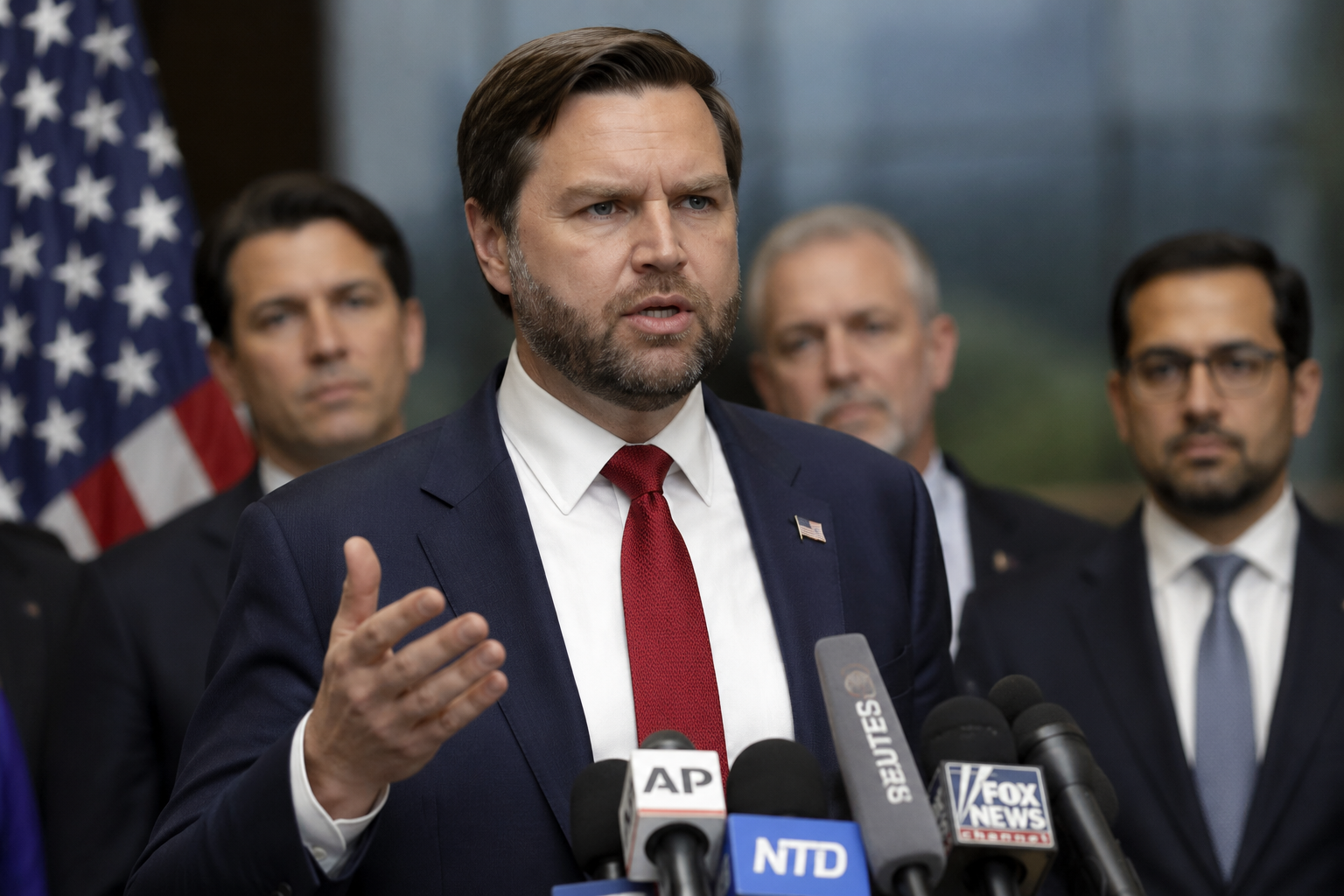
Speaking after the talks, US Vice President JD Vance said the discussions had resulted in understandings on several key issues, including the return of international nuclear inspectors, mechanisms governing Iran’s frozen assets and arrangements intended to preserve navigation through the Strait of Hormuz.

According to Vance, technical teams from both countries remained engaged after lengthy overnight negotiations and would continue working on the details of the preliminary understandings reached during the meeting.

He said the United States hoped inspections by the International Atomic Energy Agency (IAEA) could resume shortly, describing the development as a positive step towards a more comprehensive settlement.

The talks took place in Bürgenstock, Switzerland, where mediators sought to build on recent diplomatic efforts aimed at reducing regional tensions and establishing a framework for future negotiations.

Prime Minister Shehbaz Sharif welcomed the outcome of the meeting, saying the discussions had generated momentum towards a negotiated settlement between the two countries.

In a statement, he said participants had agreed to establish a high-level oversight mechanism and pursue a roadmap designed to facilitate a final agreement within the next two months.

The premier also acknowledged the role played by Qatar and Switzerland in supporting the diplomatic process, while reiterating Pakistan’s commitment to dialogue and peaceful conflict resolution.

Iran, however, offered a more cautious assessment of the discussions.

Foreign Ministry spokesman Esmaeil Baghaei said the nuclear issue had only been touched upon briefly and insisted that substantive negotiations on Tehran’s nuclear programme had not yet begun.

Nevertheless, he described the talks as productive and said the parties had agreed on several measures intended to create conditions for future negotiations.

Among the issues discussed were maritime security in the Strait of Hormuz, the possible release of Iranian assets held abroad and arrangements related to regional ceasefire efforts, particularly in Lebanon.

Baghaei said technical experts would continue consultations on the implementation of the understandings reached in Switzerland, expressing hope that all parties would demonstrate seriousness in moving the process forward.

The negotiations, facilitated by Pakistan and Qatar, concluded after nearly 18 hours of discussions, with both sides indicating a willingness to maintain diplomatic engagement despite persistent differences on key issues.

Continue Reading

Latest

5.4-magnitude earthquake jolts Islamabad, KP and parts of Punjab

Published

on

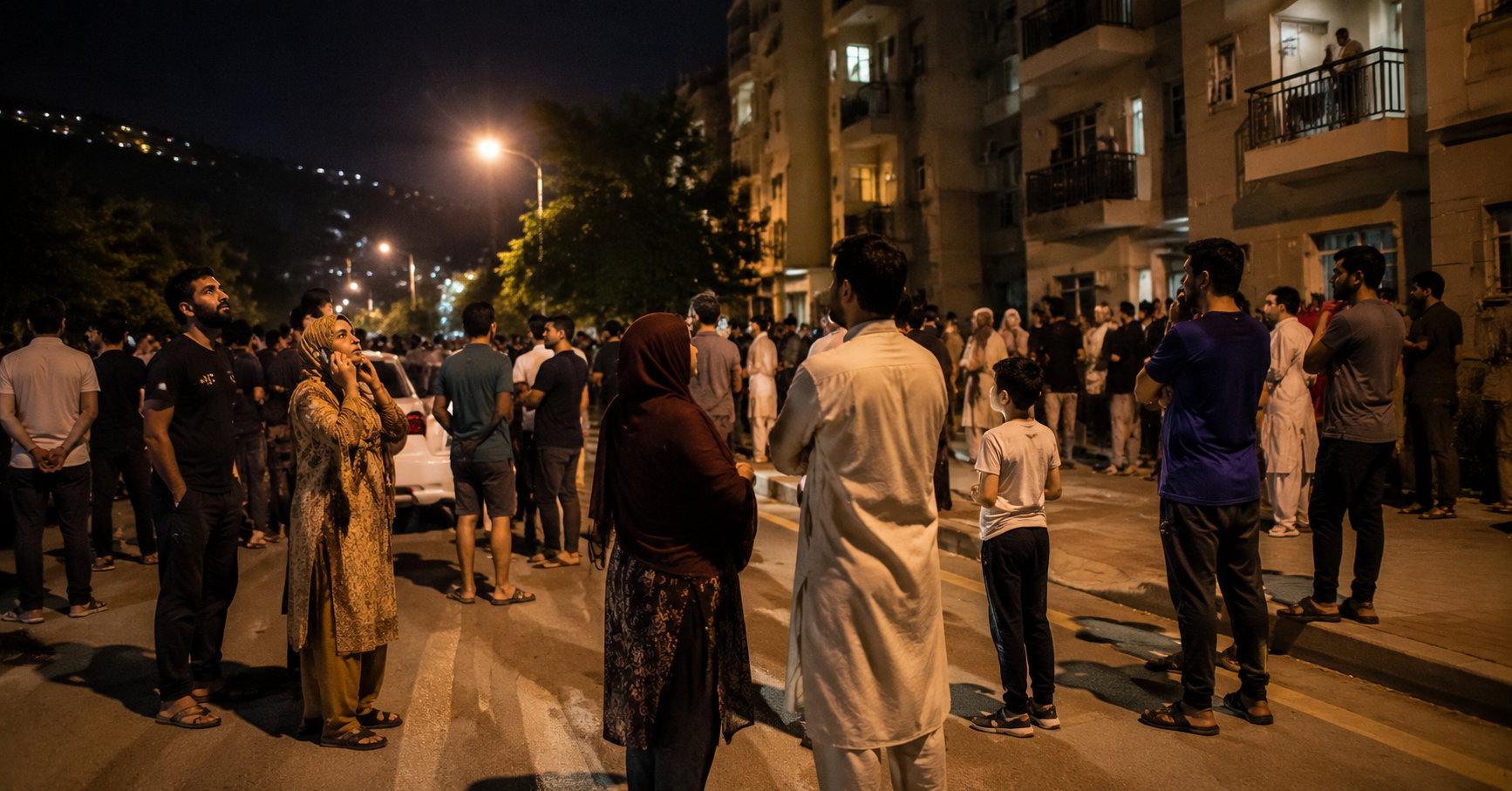
ISLAMABAD – A moderate earthquake measuring 5.4 on the Richter scale was felt in Islamabad and several cities across Khyber Pakhtunkhwa and Punjab on Monday, prompting residents to leave their homes and offices in panic.

According to the National Seismic Monitoring Centre, the earthquake originated in Afghanistan’s Hindu Kush region and occurred at a depth of 215 kilometres.

Tremors were reported in Islamabad, Peshawar, Buner, Bajaur, Faisalabad, Dera Ismail Khan, Khushab, Battagram, Mansehra, Swat, and Abbottabad, among other areas.

Residents in several cities rushed outdoors and recited prayers as the tremors were felt.

Authorities said there were no immediate reports of casualties or damage to property.

The latest earthquake comes days after similar tremors were recorded in various parts of the country, reflecting the region’s vulnerability to seismic activity due to its proximity to major tectonic fault lines.

Pakistan frequently experiences earthquakes, particularly in its northern and western regions, which lie along the boundary of the Indian and Eurasian tectonic plates.

Continue Reading

Trending

Copyright © 2026