Connect with us

Latest

$40 billion investment for Pakistan by World Bank

Published

on

ISLAMABAD – The World Bank (WB) plans to invest $40 billion in Pakistan from 2026 to 2035 under its Country Partnership Framework (CPF). According to government documents, the Ministry of Economic Affairs is currently developing a comprehensive implementation framework to support this initiative. This framework aligns with the government’s priorities and the National Economic Transformation Plan, Uraan Pakistan.


This comes with a change by the World Bank because, for the very first time the WB adopted a  10-year framework instead of the usual five-year strategy period. Pakistan is set to receive $20 billion in the first phase from the World Bank’s International Development Association (IDA) and International Bank for Reconstruction and Development (IBRD). These funds are for education, health, climate change mitigation, and air quality improvement.


Furthermore, this framework includes plans to boost investment for the private sector and for the sustainable development of projects. The International Finance Corporation (IFC) will provide additional funds amounting to $20 billion to support economic growth and the creation of jobs.


In April, the World Bank (WB) approved $108 million for two projects aimed at improving access to social services, markets, and jobs in Khyber Pakhtunkhwa (KP). Additionally, the international lender sanctioned an extra $78 million for the Khyber Pakhtunkhwa Rural Accessibility Project (KPRAP) and $30 million for the Khyber Pakhtunkhwa Integrated Tourism Development Project (KITE). This funding will help both projects achieve their objectives of enhancing access to health and education services, as well as increasing market and job opportunities. Furthermore, it aims to improve resilience against natural disasters in the province.

A statement from Najy Benhassine, the Country Director of WB, said:

“By rehabilitating critical rural road infrastructure and enhancing disaster preparedness, KPRAP and KITE projects are not only improving access to essential services like health and education, but also fostering climate, economic resilience and creating job opportunities for local communities,”the statement said.


Business

Pakistan Banks Association elects Zafar Masud as chairman, forms 16-member executive committee
Published

on

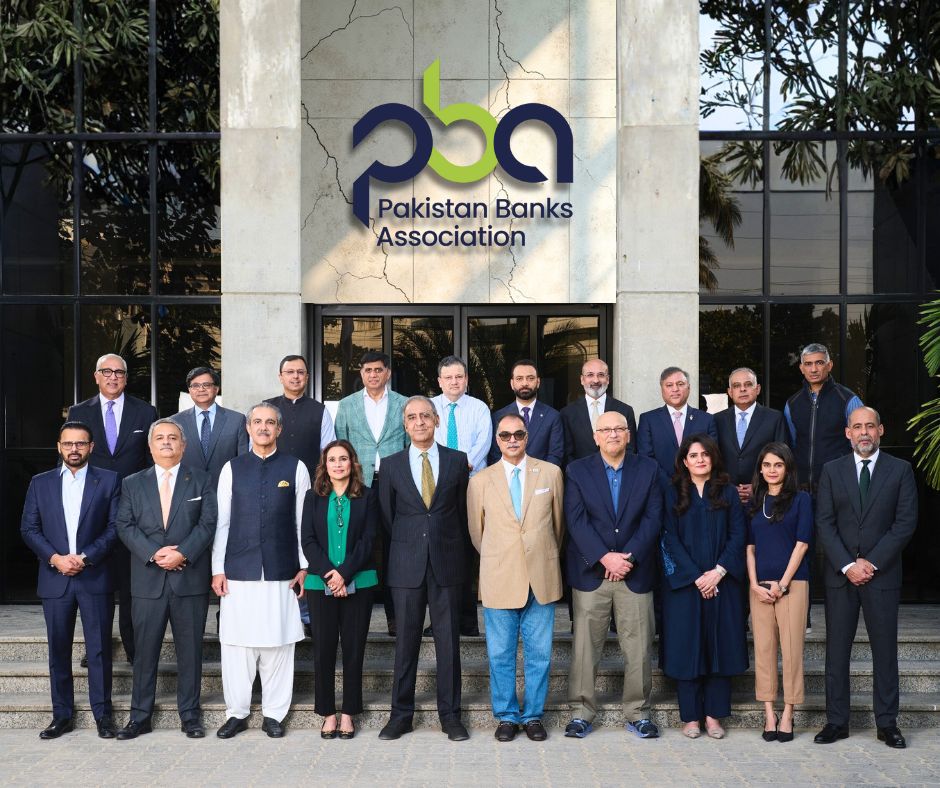
KARACHI – On December 28, 2025, the Pakistan Banks Association (PBA) formed a new 16-member Executive Committee, which includes two women and eight new member banks, reflecting a move towards increased inclusivity and wider industry representation.

Following the elections, the Executive Committee unanimously elected Mr. Zafar Masud, President and Chief Executive Officer of The Bank of Punjab, as Chairman of the PBA. Commenting on his election, Mr. Masud said the newly constituted Executive Committee represents an important evolution in the Association’s governance.

He noted that the expanded and more diverse membership strengthens the PBA’s ability to advance a National Economic Agenda, with a focus on bridging credit gaps in priority sectors, accelerating financial inclusion through digital channels, and supporting Pakistan’s sustainable economic recovery.

The leadership team also includes Mr. Nassir Salim, President and Chief Executive Officer of Habib Bank Limited, as Senior Vice Chairman, and Mr. Yousaf Hussain, President and Chief Executive Officer of Faysal Bank Limited, as Vice Chairman.

Mr. Nassir Salim emphasized the importance of resilience and strong compliance frameworks amid global headwinds, while Mr. Yousaf Hussain highlighted modernization, technology adoption, and agility as key priorities to ensure the banking sector remains innovative and regionally competitive.

Commenting on the milestone, Mr. Muneer Kamal, Chief Executive Officer and Secretary General of the PBA, said that the expansion of the Executive Committee, including the historic inclusion of female representation, reflects the Association’s commitment to diversity and modern governance.

Under the new leadership, the PBA aims to deepen collaboration with the State Bank of Pakistan, the Ministry of Finance, and the Federal Government to support infrastructure development, expand private sector credit for agriculture and SMEs, and advance the country’s digital transformation.

Continue Reading

Business

Saudi carrier flyadeal opens new office in Islamabad

Published

on

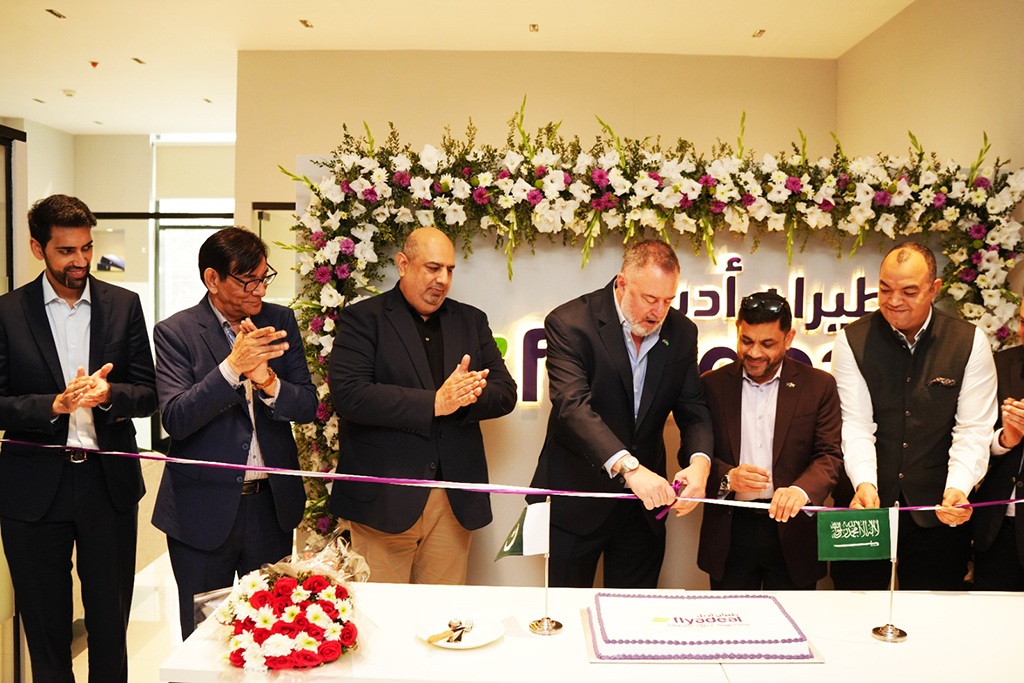
ISLAMABAD – flyadeal, Saudi Arabia’s rapidly expanding low-cost airline, has opened a new dedicated sales and marketing office in Islamabad, highlighting its swift growth in Pakistan. During a brief visit to Pakistan’s capital, flyadeal CEO Steven Greenway reaffirmed the airline’s dedication to becoming a key player in the country’s vibrant air travel industry.

flyadeal launched non-stop scheduled flights from Saudi Arabia to Pakistan in February, connecting  Riyadh and Jeddah to the country’s commercial hub of Karachi, which signalled the airline’s first move into South Asia.

Since then, flyadeal has significantly scaled up frequency, now operating 18 non-stop services each week between the two countries serving a total of five gateway cities in Pakistan – Karachi, Peshawar, Sialkot, Lahore and Islamabad.

“Our Pakistan flights have proved a great success since our entry, bringing affordable low fares and reliable punctual services to this exciting market,” said Greenway.

“Having expanded from one to five cities across the country in the space of just eight months, thanks to regulatory and travel industry support, it’s only a matter of time before we grow further with much-needed additional capacity and provide the travelling public with wider reach and greater choice of non-stop flights bridging both countries.”

flyadeal has partnered with leading general sales agent Matchless Travel to serve the travel trade and members of the public across Pakistan through its nationwide network of offices.

Farooq Ahmad, flyadeal Head of Sales, added: “flyadeal has developed a great relationship with Pakistan’s travel agency community, quickly building confidence within the trade of our value-added product offering. Our dedicated sales office in Islamabad complements the efforts of Matchless by providing increased brand presence and awareness.”

Following the sales office opening, flyadeal’s senior management team from the head office in Jeddah and Karachi hosted Islamabad’s travel trade to a thank-you dinner.

All flyadeal services to and from Pakistan are operated with Airbus A320 family aircraft in a single 186-seat Economy Class configuration. The flights cater to a mix of business, leisure, pilgrim and migrant worker traffic, as well as the large outbound Pakistani expatriate community living in the Kingdom. Jeddah-bound flights serve as the gateway to the Saudi holy city of Makkah.

flyadeal operates scheduled flights from bases in Riyadh, Jeddah and Dammam to more than 30 domestic and international seasonal and year-round destinations in the Middle East, Europe, North Africa and South Asia with a modern fleet of 43 Airbus A320 family aircraft.

Effective 1 January 2026, flyadeal will add Madinah as its fourth base in the Kingdom, a strategic move to enhance air travel options to and from the Holy city. 


Continue Reading

Gold

Ways to check the purity of gold: Methods and Facts

Published

on

LAHORE – In Pakistan, uncertainty always looms over the minds of people. Some people remain unsure whether the gold they bought is pure or not, so in case of such a scenario, here is what you can do.

Ways to verify your gold:

  • Check Official Markings

Look for engraved markings on the inner side of the jewelry; it may say 24k, 22k, 21k, or 18k. In Pakistan, 21k means 87.5% purity; on the other hand, 24k means 99.9% purity and is mostly used as investment bars.

  • Professional Ways to Test

If you remain unsure about your gold, then you should consider visiting major gold markets such as Karachi’s Sarafa Bazaar or Lahore’s Liberty Market.

Three such ways include:

Electronic Gold Testers: In today’s modern world, jewelers use handheld electronic devices to measure the electrical conductivity to provide the user with immediate karat reading.

XRF Spectrometry: This method is widely regarded as the best and most accurate way; most high-end gold laboratories use X-Ray fluorescence to get the exact elemental composition of the item.

Touchstone Test: This is known as the Kasauti Test, the gold is rubbed against a dark stone(Kasauti), and the streak is then compared with known purity needles, or it is treated with acid.

  • Test at Home

Magnet Test: Gold is not attracted to magnets if the item is powerfully attracted towards a powerful magnet, then it is likely that it contains some sort of base metals, most probably iron or nickel.

Floating Test: Gold remains a dense element if gently placed in a bowl filled with water and sinks all the way to the bottom. Then, it can be considered pure gold. However, if the gold item floats or sinks slowly, it is most likely fake gold or the item is gold-plated.

Vinegar Test: By applying a few drops of vinegar on the item, you can check its purity because pure gold retains its shine, but fake gold loses it altogether.

Ping Test: This is a sound test. First of all, take the gold item in your hand and gently strike it against another metal. Pure gold produces a high-pitched ringing sound, whereas base metals produce a “thud” sound.

Note: It is pertinent to mention here that methods to test at home aren’t completely reliable, and the results shouldn’t be considered as the final results, as there are chances that they can be influenced by other factors. That’s why it is better to follow the other ways mentioned in the article.

  • Precautionary measures before buying

Before buying the gold item, request a certificate of confirmation of the purity of the gold being bought. Before paying the price for the gold, verify the daily price of the gold from the Jewellers Association or upfront.pk to avoid being overcharged for lower-quality gold.


Continue Reading

Trending

Copyright © 2026