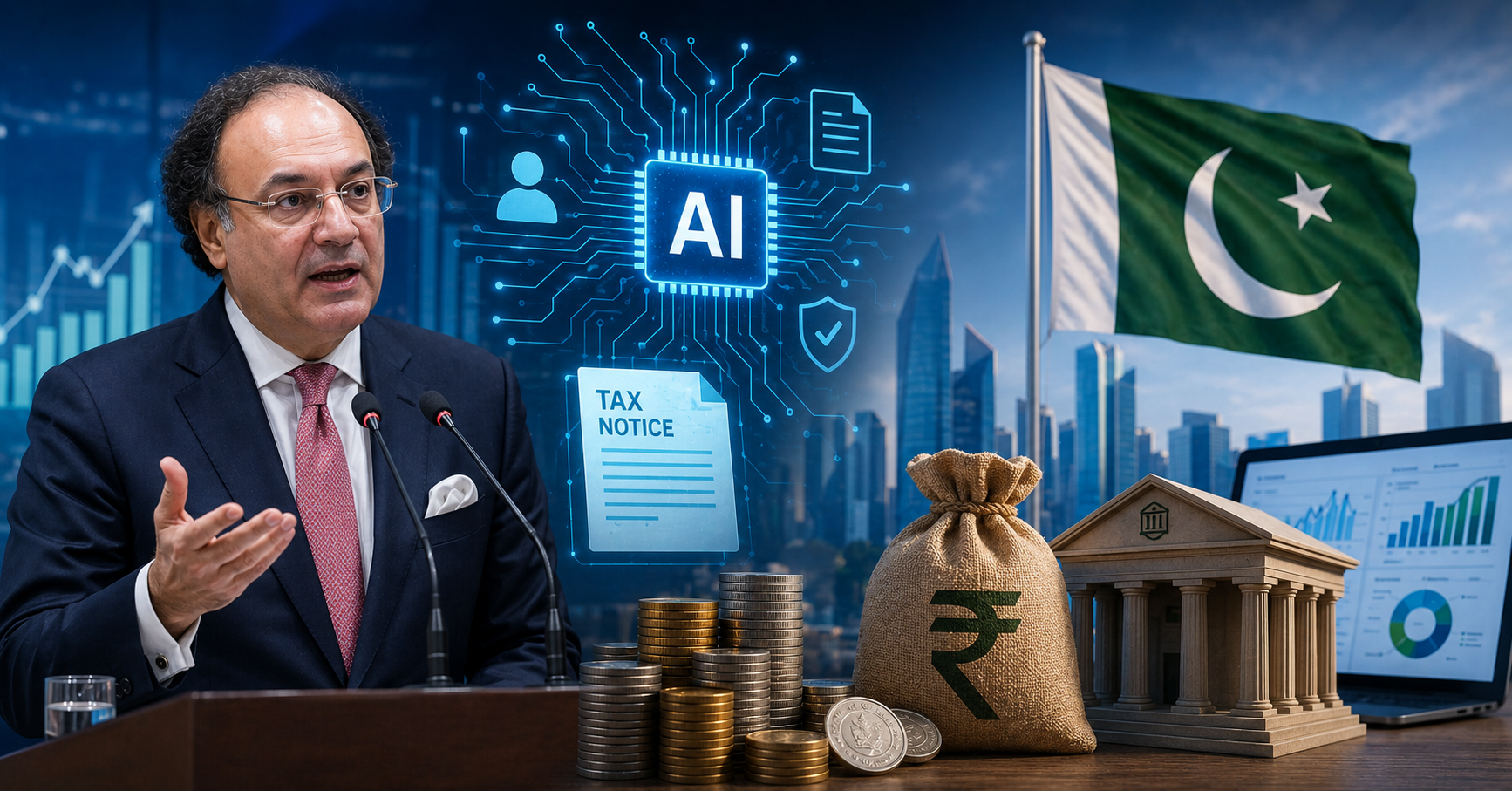
LAHORE – Finance Minister Muhammad Aurangzeb on Tuesday said Parliament had approved a new tax administration model that would rely on artificial intelligence (AI) and technology to reduce human intervention
Addressing the Pakistan Banking Summit 2026 in Karachi, the minister said the new framework marked a fundamental shift in tax administration by introducing a technology-led engagement model aimed at improving transparency and efficiency.
“The new structure represents a new engagement model between the tax administration and taxpayers, where human intervention will be minimal,” he said, adding that the AI-driven system would also issue tax notices.
Aurangzeb said Pakistan’s external sector had remained resilient, supported by record inflows of workers’ remittances, which he expected to reach between $41 billion and $42bn during the current fiscal year.
Reviewing the country’s economic performance, he said the previous fiscal year had concluded with a primary budget surplus, the lowest fiscal deficit on record, a debt-to-GDP ratio below 70 per cent and economic growth of 3.7pc, driven largely by a recovery in large-scale manufacturing.
Referring to exports, the finance minister said the recent decline had been concentrated in food-related shipments, while value-added exports, particularly from the textile sector, continued to post year-on-year growth.
He also projected Pakistan’s foreign exchange reserves to reach approximately $18.4bn by the end of the fiscal year, exceeding earlier estimates.
Aurangzeb said the government had prioritised diversifying its sources of external financing, describing the planned issuance of a Panda Bond in China’s domestic capital market as a significant step after several years of preparation.
Commenting on the Pakistan Stock Exchange, he said the growth in investor participation was more important than headline market levels, noting that younger investors, including members of Generation Z, were increasingly entering the market alongside improving corporate profitability.
The finance minister said this year’s federal budget had, for the first time, been prepared under the leadership of the Tax Policy Office following its transfer to the finance division.
He said the government’s fiscal strategy focused on promoting export-led growth through measures including the withdrawal of advance tax and super tax, subsidised low-cost financing and continuation of tariff reforms. He added that the government would also introduce a medium-term tax strategy.





 Fashion4 months ago



 Pakistan2 weeks ago