Connect with us

Pakistan

Fake News – A subtle Reality

Published

on

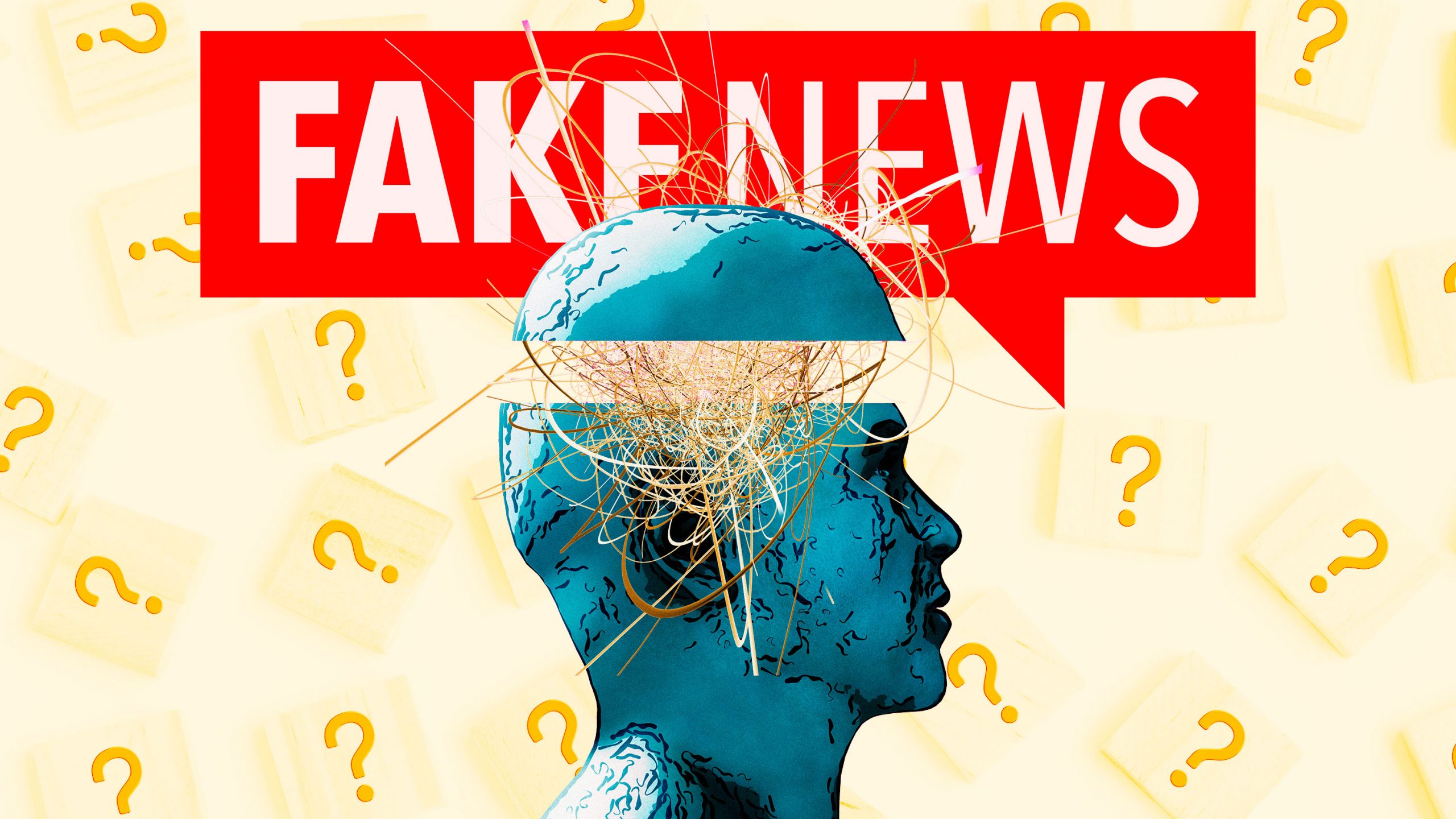
‘ExxonMobil close to hitting huge oil reserves in Pakistan, bigger than Kuwait’s,’ was something that kept the Pakistani social media users excited for a few days before the mammoth discovery turned out to be another fake news, a few years back.

With the advent of electronic media and an ever-speedy social media, the menace of fake news is posing a threat to the credibility of all mediums of media and the hazards increase many folds for a society like Pakistan, with a literacy rate hovering around 58 percent.

At one end, the culture of fake news is inflicting damage on the journalism industry, on the other end, it also serves the purpose of political forces because ‘fakeness’ has become a new alternative to performance and a tool employed to overpower the rivals.

The Birth

Though propaganda and dissemination of incorrect news against the rivals by corporate firms are in place from the decade, fake news is relatively a new phenomena and it is conjoined with the rise of social media and penetration of internet across the globe.

The term fake news was not in use to that extent just two years back, however, it made headlines across the digital media when the real estate tycoon Donald J Trump was ascending the political ladder.

It was Buzzfeed’s media editor, Craig Silverman, who first found a slew of websites promoting fake content originating from Eastern European town called Veles in mid 2016s.

Interestingly, the fake news term was coined at the same time and it has a special link with Donald Trump’s presidential campaign, because most of the fakery supported him, though he opts the same term for media bashing now.

“Pope Francis Shocks World, Endorses Donald Trump for President” and “FBI Agent Suspected in Hillary Email Leaks Found Dead in Apparent Murder-Suicide” were some of the headlines that lured in Americans and paved the way for Trump’s victory over a period of few months before November 2016.

Some of the pro-Trump groups also shared such news to portray the Republican in a favorable light and Hillary otherwise, however, the same US leader has virtually declared war on fake news now.

The US leader took a strong exception to the epidemic of factually incorrect news and tweeted ‘THE MOST DISHONEST & CORRUPT MEDIA AWARDS OF THE YEAR,’as 2018 dawned;45th president actually announced the names, with the in rush crashing the GOP website.

But fake news is not just limited to political arenas; it is deep-rooted in social media algorithms, advertising systems, and marketing, with the propagandists minting a lot of money.

The science behind the promotion of fake news is simple maths. The web developers design a simple web portal (basically news related), hire a few sub-editors or do it on their own, cogitate what’s hot in town, design news and post it on Facebook and other social media platforms. As the headline is catchy, shocking and surprising, the social media buffs rally behind each other to visit the page and here comes the magic.

As many and many users visit the website, so does its ratings go ballistic, with an increased share in advertisement revenues. Even if the users sense the authenticity of the story, they have already been deceived, leaving them high and dry to simply spew venom against the admin or leave a few snared comments.

Popular Fake News

One of the most recent fake news was about the former Pakistani President Pervez Musharraf donating Rs 460 million to the fund initiated for the relief activities in the aftermath of the Corona outbreak.

Another fake news on the global sphere was regarding the Oil-rich Kingdom, Saudi Arabia and it was about the assassination of Crown Prince, Muhammad bin Salman (MBS), who, according to the news carried by Russian and Iranian media outlets, was gunned down in March 2018.

MBS has been subjected to fake news for a couple of times as a photo purporting him as dead, with King Salman among the pallbearers, was uploaded on the internet, stirring concerns in the Arab world.

Investigations have revealed that these stories were not truthful and were just to stir suspense and chaos.

What Stats Say

The rise of fake news is vividly observed in charts and datasheets devised by digital marketers and social media advocacy groups.

The crime category topped the list in 2017 followed by politics when it comes to the number of fake stories published on the internet, says a study by Buzzfeed.

The 2018 Edelman Trust Barometer delved further into the impacts of fake news and how people perceive it. As per the survey, Fifty-nine percent of people said they were unsure what they see in the media is true and what isn’t, while nearly seven in 10 said they worry about fake news being used as “a weapon.”

Is Pakistan Prone?

The scourge of fake news is plaguing West at a much rapid pace but Pakistani social media users are also being misguidedly gripped by the epidemic.

With the advent of election season, political forces used the Fake news tool and traded barbs with their foes, however, even after the conclusion of practice, there seems no end to it.

What exacerbates the misery is the fact that now mainstream TV shows are vulnerable to fake news and flash factually incorrect content on their screens.

Pakistan Tehreek-e-Insaf leader AamirLiaquat rebelled against his party over political grievances.

One of his statements ‘I won the elections on my own instead of Imran Khan’s [clout]’ stumped the internet and even invited comments from his fellows, however, the statement was not rooted in truth, though it was displayed by a mainstream TV channel.

When Imran Khan swept to power on a populist anti-corruption wave in the country, a mainstream news channel reported that the Saudi government has welcomed Imran Khan’s victory by displaying his image on the Kingdom Tower in Riyadh, in a  flagrant contradiction with the truth.

During the times of Coronavirus we are listening to multiple fake news, one of which is Pakistani Premier Imran Khan being tested positive for the virus; this was aired in the form of a ticker by a foreign media outlet.

The list goes on…

Experts believe that the fake news syndrome is engulfing the credibility of media outlets.

Ali Raza, a renowned face in digital marketing dishes in on the matter as ‘fake news will ruin site credibility in the long run which will have serious consequences on blog authority, search and social traffic and its credibility among visitors.’

Fighting fakeness

Even though it might seem difficult, fake news can be debunked on a personal level, without having to move an inch away from the laptop and a working internet connection.

Firstly to check the authenticity of any image, upload it on Google image and a reverse search will display a couple of results. Sometimes the picture is not photo-shopped, but the caption is faulty. Google reverse image search would tell you the truth.

Fake news about renowned personalities can be checked by going through the official accounts of individuals in question. As fake news go viral about politicians and celebrities, they themselves issue clarifications through their verified pages.

Moreover, twitter can be exciting for debunking fake news. A simple Google search style search in the micro-blogging site would display results with comments by renowned Twitterati, with many of them separating the fact from the myth.

What Lies Ahead

Facebook, Twitter, and other social media platforms are in the hunt for propaganda websites and to debunk the fake news syndrome, however, the drive would take a few more years to be fully in place.

The best methodology to combat fake news lies under the keyboard of the reader, a bone for simple investigation can distill myths from actual happenings.

A thumb rule for fighting fake news is to develop an understanding that every “overexciting” news, be it relates to politics or art or culture or virtually to any other genre, is not true.

What needs to be done on the mega level is to develop a comprehensive strategy to deal with the challenge, before any catastrophe happens on mass level owing to the same culture that has sensitized people on multiple occasions.

Fake news, has up till now, damaged merely the credibility of digital platforms but the bigger question is that are we waiting for the culture to cause physical damage and engulf humans?

Article by: Syeda Mariya Bukhari

The author is an MPhil scholar with a keen interest in sociology, psychology, literature, and arts.

Pakistan

Beyond the Aurat March: What Feminism Really Means!

Published

on

LAHORE – When we hear the word feminism, what usually comes to mind? Rights, independence, equality? At its core, feminism is meant to stand for fairness and justice, yet in our society, the term has often been misunderstood, misused, or even exploited. Broadly speaking, there are two types of women who call themselves feminists. The first group genuinely strives for equality in their professional roles, personal lives, and societal standing.

For them, feminism is about demanding respect and recognition, not superiority. The second group, however, uses feminism in the wrong way. For them, calling themselves feminist has become trendy or “cool.” They use it as a shield to justify going off track, behaving disrespectfully, or unfairly targeting men. To these women, hating men equals feminism, which is far from its true meaning.

This misuse creates injustice for men, who sometimes become victims when faced with such distorted versions of feminism.The problem arises when feminism is twisted into a tool for privilege rather than equality.

For some, it becomes a reason to demand advantages without responsibility, a trend to bash men while ignoring the challenges men face such as mental health struggles, financial pressures, or societal expectations, and even a justification for rudeness and disrespect disguised as empowerment. This distorted narrative not only damages men but also misguides younger generations, especially through social media, where radicalized voices dominate and influence perceptions.
Every year, events like the Aurat March become controversial. While raising voices for rights and justice is never wrong, many banners, slogans, and behaviors displayed during such events do not resonate with our cultural and religious values.

We live in an Islamic state where modesty is emphasized, and our youth are increasingly influenced by the wrong portrayal of feminism, confusing rebellion with empowerment. It is crucial to remember that Islam grants women immense respect and rights, but within defined boundaries. Women are encouraged to cover themselves, care for their families, and maintain dignity in society. At the same time, Islam elevates women by granting them inheritance rights, the right to education, respect as mothers, and recognition as equal partners in society. True equity lies in following this balance: rights with responsibilities, freedom with respect, and equality with values.
The debate over feminism, however, is not confined to Pakistan; it is global. According to IPSOS, 32% of men worldwide believe feminism does more harm than good, and 20% of women share this view. A King’s College London survey found that 16% of Gen Z men (ages 16–29) consider feminism harmful, higher than the 13% of men over 60 who feel the same. Globally, men are more likely than women to believe feminism has caused men to lose economic, social, or political power. On social media platforms like X (formerly Twitter), nearly 50% of posts about feminism are negative, and anti-feminist accounts often use insults and stereotypes three times more frequently than feminist accounts.

Even corporations have commodified feminism, using slogans like “The Future is Female” to market products. This selective adoption of feminist language reinforces stereotypes rather than addressing real issues of gender equality.
The essence of feminism is not about hating men, seeking privileges, or promoting disrespect. It is about equity, justice, and opportunity for all, values already embedded in Islam and universally acknowledged human rights. If feminism is to achieve its true purpose, it must be reclaimed from misuse, distortion, and commercialization. Only then can it inspire a healthier society where both men and women coexist with dignity, fairness, and respect.

Continue Reading

Pakistan

CEO CBD Punjab and Ruda Imran Amin meets with CM’s advisor Ali Mustafa Dar to discuss AI integration and tokenization.

Published

on

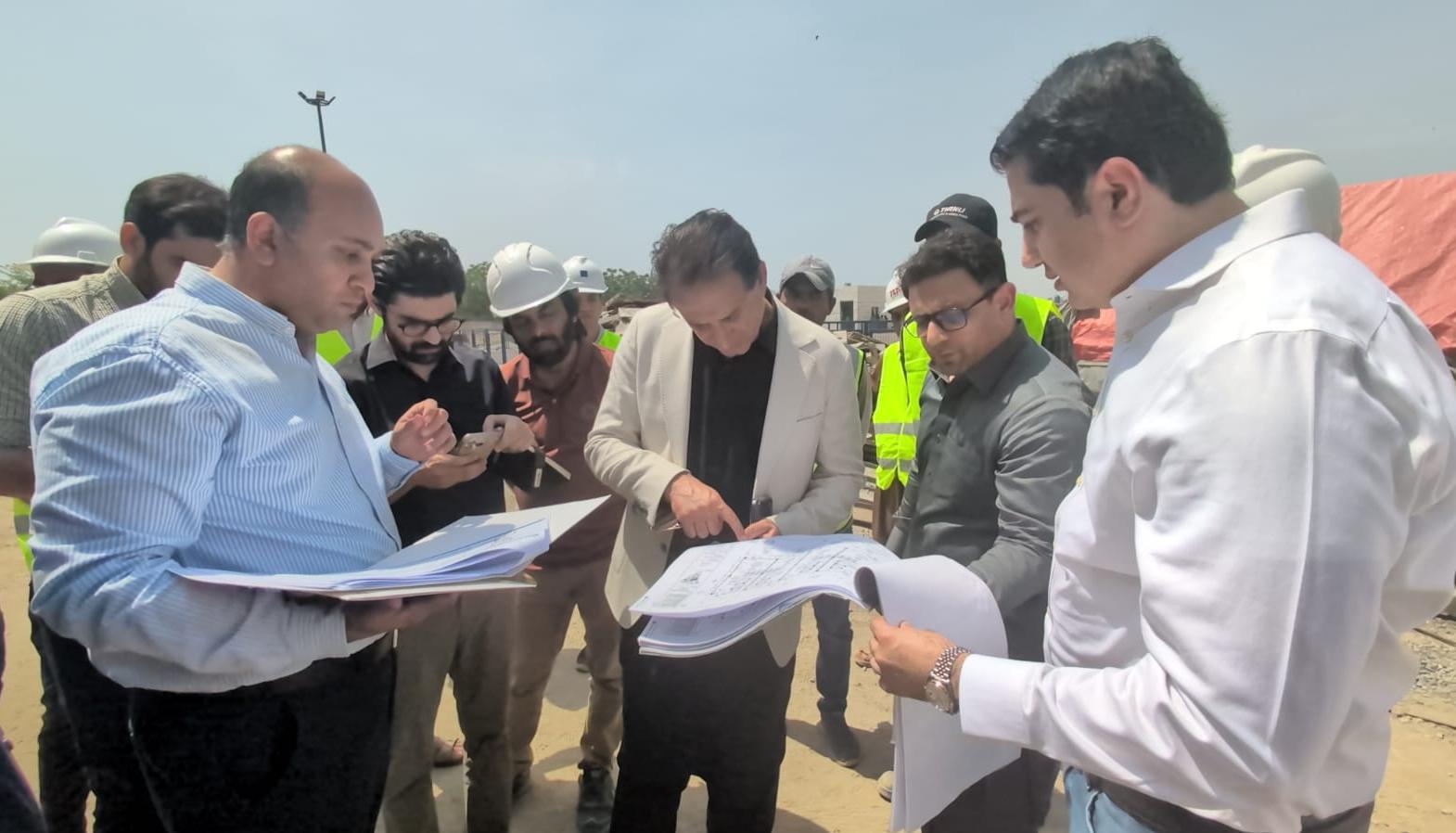
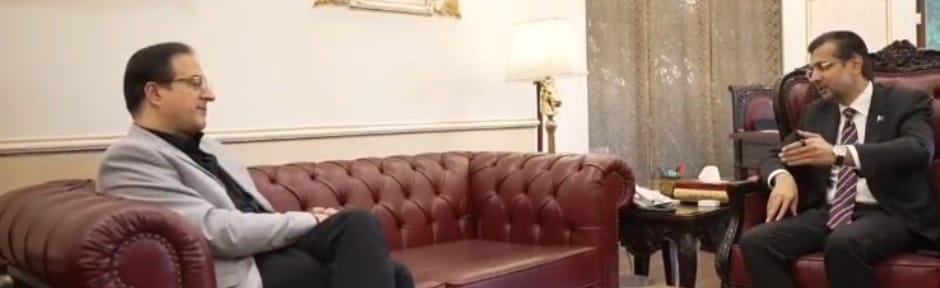
LAHORE – Imran Amin, CEO of Punjab CBD and RUDA, met with Ali Mustafa Dar, Advisor to the Punjab Chief Minister on AI and Special Initiatives, in Lahore. The high-level meeting focused on the strategic integration of Artificial Intelligence (AI) and tokenization frameworks within the ongoing and upcoming projects of CBD Punjab and RUDA.

The meeting focused on utilizing AI-driven governance to refine urban planning and enhance data-driven decision-making. Both officials evaluated the implementation of AI for smart infrastructure, digital service delivery, and predictive analytics to streamline operational efficiency and transparency across all development projects.

A key highlight of the meeting was the exploration of asset tokenization frameworks aimed at increasing transparency accessibility and investor participation in large-scale urban development projects. The concept of digital asset tokenization was discussed as a forward-looking approach to modernize real estate investment mechanisms and create secure technology-backed financial ecosystems.

Ali Mustafa Dar appreciated the proactive approach of CBD Punjab and RUDA in embracing AI and innovative financial technologies. He assured full support from his office in facilitating policy guidance, technical collaboration, and pilot initiatives to position Punjab as a leading hub for smart and technology-enabled urban development.

CEO CBD Punjab & RUDA Imran Amin briefed the Advisor on the ongoing progress of CBD Punjab & RUDA, emphasizing their vision to transform urban development through vertical growth, sustainability, and smart-city principles. He reiterated the commitment of both authorities to adopt emerging technologies that align with the Government of Punjab’s digital transformation agenda.

The meeting concluded with a mutual understanding to establish a structured roadmap for AI integration and tokenization pilots within selected projects of CBD Punjab & RUDA.

Continue Reading

Pakistan

Leather industry leadership drives global expansion and cross-border business transformation

Published

on

LAHORE – In Pakistan’s thriving leather markets, Adnan Siddiqui, Director of Karachi-based FACON and founder of Trendy Jacket, had a vision: to showcase Pakistani craftsmanship globally through premium leather jackets and accessories.

But vision alone wasn’t enough. Despite Pakistan’s leather goods exports reaching $98.697 million with 5.1% growth, Adnan faced the challenges that stifle countless Pakistani entrepreneurs: unreliable international payments, transaction delays, and constant non-payment risks.

The broader context was equally daunting. Pakistan’s e-commerce sector hit $7.7 billion in 2024 with 17% annual growth forecasted, yet SMEs still wrestled with payment barriers, connectivity issues, and trust gaps. For Adnan, these weren’t abstract statistics; they were daily obstacles limiting his international potential.

“I watched opportunity after opportunity slip away,” Adnan recalls. “Customers loved our products, but payment hassles made lasting relationships nearly impossible.”

The breakthrough came when Adnan became an early adopter of Payoneer over a decade ago. This strategic partnership provided the complete cross-border payments ecosystem he needed:

  • Global receiving accounts for seamless Amazon and marketplace payments
  • Multi-currency management across 12 accounts without conversion delays
  • Physical payment cards for instant fund access
  • Real-time FX conversion for maintained cash flows

“The beauty wasn’t just in the platform’s ease,” Adnan explains. “It was in how it freed me to focus on creating exceptional leather products.”

The transformation was dramatic. Daily vendor and courier payments replaced monthly cycles, directly improving customer satisfaction and fulfillment speed. Most remarkably, Adnan’s business grew tenfold, expanding across the United States, Europe, Canada, and Australia.

“When I started, cross-border growth was more of a dream,” Adnan reflects. “Now young entrepreneurs enter the market with confidence, knowing they can compete globally from day one.”

His advice to emerging entrepreneurs: prioritize long-term value and consistent quality over short-term profits.

As Pakistan’s e-commerce market heads toward PKR 500 billion by 2026 with 18-22% annual growth, Adnan’s journey from local leather business to global enterprise offers a powerful roadmap for entrepreneurs ready to transform international dreams into reality.

Continue Reading

Trending

Copyright © 2026