Connect with us

Latest

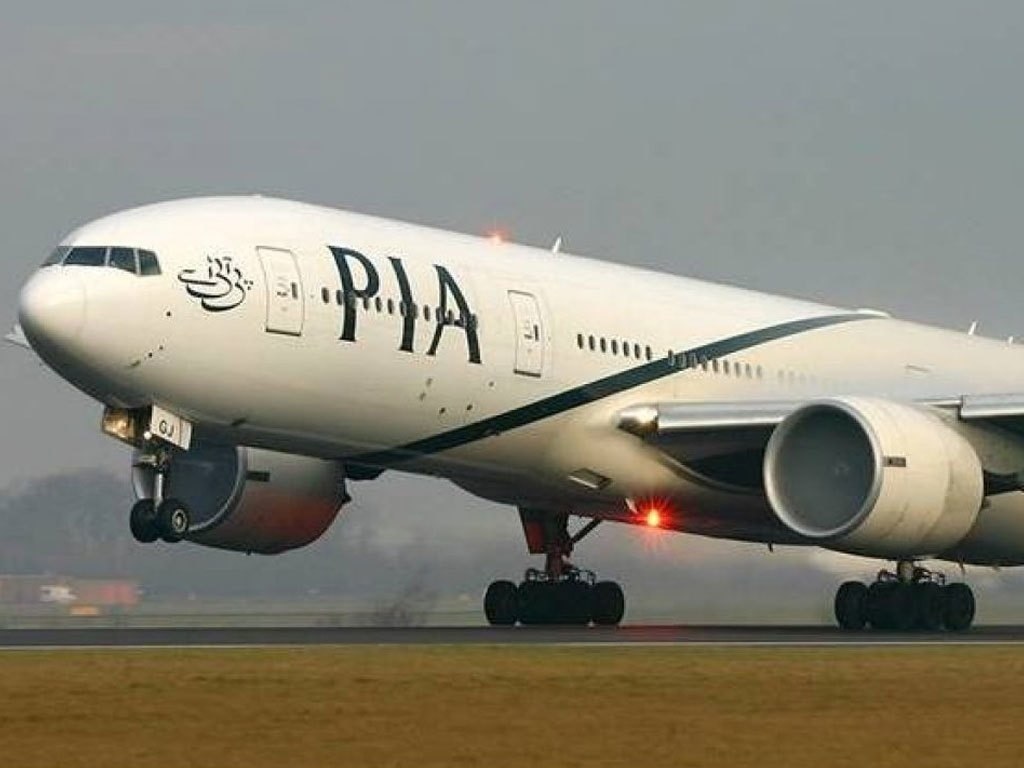
‘AirlineRatings’ declares PIA the worst airline in term of safety

Published

on

President Dr Arif Alvi says the government is extending all kinds of support to IT sector and laws have been made to facilitate the growth of this sector.

An International independent body ‘AirlineRatings’ in its study has declared National Flag carrier (PIA) the worst airline globally in terms of safety.

It is worth mentioning here that ‘AirlineRatings’ rated 230 airlines on the basis of four criteria: fatalities, incidents, audits, and COVID compliance and the best airlines receive seven stars.

The American based this world-first, www.airlineratings.com delivers expert safety ratings for more than 435 airlines around the world.
PIA has received the lowest one-star rating from the study. Along with Pakistan International Airlines, there are 6 other airlines that have got one star rating in terms of safety and those are Air Algerie, Sriwijaya Air, Scat, Iran Aseman Airlines, Airblue and Blue Wing.
According to the AirlineRatings, airlines get three stars if they avoid fatalities over the long term, two stars if they avoid serious incidents, and one star if they pass audits and are in compliance with Covid. The best airlines get 7 star rating.

On its second landing attempt in Karachi in 2020, a Pakistan International Airlines Airbus A320 crashed in a crowded place, killing 100 people. In addition to runway incursions and loss of separations, PIA has experienced several incidents involving smoke indicators and engine failures in recent years.

Shoukat Jamshed a former President of Society of Aircrafts Engineers Pakistan (SAEP) said that although PIA and CAA’s higher management are responsible for poor safety standards of PIA but CAA plays major role in safety of the aircrafts. He was of the view that after Gen. ® Zia ul Haq rule a race of clearing aircraft earlier was started due to which safety was compromised. He believed that officials hired from Air Force were not much conversant with the technicalities of commercial aviation and they were involved in number game. Examination system of pilots was also faulty and not transparent, he claimed. “I firmly believe that in the latest incident of crash in Karachi pilot was 100 percent at fault and crash happened due to human error”.

Former Flight Enginner PIA stated that AirlineRatings classifies airlines in-flight services, Inflight Entertainment System, Punctuality consumer friendly ticketing reservation systems etc also. The legacy left behind by AM Arshad Malik and his management is that PIA has been rated 1 Star which is the lowest and other than compliance with COVID19 and IOSA certification which every IATA member possess. Compare this to the legacy of Rafique Saigol and AM Nur Khan under whom PIA was considered leading airlines of Asia with best performance in every field. AM Nur Khan understood that he lacks experience in commercial aviation and did not bring a team from PAF. He chose a team of qualified professionals with experience in commercial aviation. The PIA A320 crash in a crowded area where residences were allowed to be built by CAA in violation of height restrictions resulted in 100 fatalities. This matter was grossly mishandled by both PIA and PCAA and Aviation Minister and there was no need to raise the issue of Fake Licences. The DG CAA has the power to suspend or cancel any license and there was no need to raise this matter in NA and bring into disrepute the whole aviation industry of Pakistan.

The Federal Government extended AM Arshad all financial support but PIA today is in shambles. Either PIA should be privatised or a professional appointed with no political interference as was offered by Zulfiqar Ali Bhutto to Nur Khan and an independent board with powers to hire and fire and then only can PIA be resurrected from the pits it has descended to. He was of the view that the Fed Government must review its Aviation Policy and rationalise this so called Open Sky policy if Pakistan’s aviation industry is to survive. CAA must be restructured and should no longer be an organisation for rehabilitation of retired uniformed and civil officers or political cronies.
Sriwijaya Air which is an Indonesian based airlines, lost 62 passengers and crew members last January after one of their Boeing 737-500 aircraft crashed shortly after takeoff from Jakarta.

The ATR 72-200 of Iran Aseman Airlines crashed into the Zagros Mountains in Iran in 2018, killing all 66 people onboard.
Following the incident of Pakistan International Airlines Flight 8303 in 2020, PIA was banned from flying to EU and USA. There are currently 96 airlines on the EU’s blacklist and airlines from over 20 countries are banned in USA.
Airlineratings.com has information on over 30 types of aircraft from the latest Boeing 787 to the A380 and smaller jets.


Continue Reading
Click to comment

You must be logged in to post a comment Login

Leave a Reply

Latest

ECC backs Rs194 Billion package to improve power sector finances

Published

on

ISLAMABAD – The Economic Coordination Committee (ECC) on Wednesday approved a Rs194 billion financial package for power distribution companies (Discos), aimed at improving the sector’s financial health and addressing outstanding subsidy-related obligations.

According to official details, the package includes a Rs52 billion equity injection, the reallocation of Rs97.65 billion in subsidies, and the adjustment of Rs44.2 billion in arrears.

The ECC approved the transfer of Rs97.649 billion from the tariff differential subsidy allocation earmarked for K-Electric to the Inter-Disco Tariff Differential Subsidy, enabling the government to meet subsidy requirements across public-sector distribution companies.

The committee also approved the settlement of Tariff Differential Subsidy (TDS) arrears claims of Rs44.198 billion for the Tribal Areas Electricity Supply Company (Tesco), addressing pending subsidy obligations linked to the utility.

Officials said the measures are intended to provide financial support to distribution companies, improve subsidy management, and strengthen the balance sheets of utilities facing persistent losses due to low recoveries, electricity theft and high power generation costs.

Continue Reading

Latest

Nuclear inspections could resume soon after progress in Iran talks: JD Vance

Published

on

ISLAMABAD – WASHINGTON and Tehran reported progress on multiple contentious issues following high-level negotiations in Switzerland, with both sides agreeing to continue technical discussions aimed at reaching a broader agreement in the coming weeks.

Speaking after the talks, US Vice President JD Vance said the discussions had resulted in understandings on several key issues, including the return of international nuclear inspectors, mechanisms governing Iran’s frozen assets and arrangements intended to preserve navigation through the Strait of Hormuz.

According to Vance, technical teams from both countries remained engaged after lengthy overnight negotiations and would continue working on the details of the preliminary understandings reached during the meeting.

He said the United States hoped inspections by the International Atomic Energy Agency (IAEA) could resume shortly, describing the development as a positive step towards a more comprehensive settlement.

The talks took place in Bürgenstock, Switzerland, where mediators sought to build on recent diplomatic efforts aimed at reducing regional tensions and establishing a framework for future negotiations.

Prime Minister Shehbaz Sharif welcomed the outcome of the meeting, saying the discussions had generated momentum towards a negotiated settlement between the two countries.

In a statement, he said participants had agreed to establish a high-level oversight mechanism and pursue a roadmap designed to facilitate a final agreement within the next two months.

The premier also acknowledged the role played by Qatar and Switzerland in supporting the diplomatic process, while reiterating Pakistan’s commitment to dialogue and peaceful conflict resolution.

Iran, however, offered a more cautious assessment of the discussions.

Foreign Ministry spokesman Esmaeil Baghaei said the nuclear issue had only been touched upon briefly and insisted that substantive negotiations on Tehran’s nuclear programme had not yet begun.

Nevertheless, he described the talks as productive and said the parties had agreed on several measures intended to create conditions for future negotiations.

Among the issues discussed were maritime security in the Strait of Hormuz, the possible release of Iranian assets held abroad and arrangements related to regional ceasefire efforts, particularly in Lebanon.

Baghaei said technical experts would continue consultations on the implementation of the understandings reached in Switzerland, expressing hope that all parties would demonstrate seriousness in moving the process forward.

The negotiations, facilitated by Pakistan and Qatar, concluded after nearly 18 hours of discussions, with both sides indicating a willingness to maintain diplomatic engagement despite persistent differences on key issues.

Continue Reading

Latest

5.4-magnitude earthquake jolts Islamabad, KP and parts of Punjab

Published

on

ISLAMABAD – A moderate earthquake measuring 5.4 on the Richter scale was felt in Islamabad and several cities across Khyber Pakhtunkhwa and Punjab on Monday, prompting residents to leave their homes and offices in panic.

According to the National Seismic Monitoring Centre, the earthquake originated in Afghanistan’s Hindu Kush region and occurred at a depth of 215 kilometres.

Tremors were reported in Islamabad, Peshawar, Buner, Bajaur, Faisalabad, Dera Ismail Khan, Khushab, Battagram, Mansehra, Swat, and Abbottabad, among other areas.

Residents in several cities rushed outdoors and recited prayers as the tremors were felt.

Authorities said there were no immediate reports of casualties or damage to property.

The latest earthquake comes days after similar tremors were recorded in various parts of the country, reflecting the region’s vulnerability to seismic activity due to its proximity to major tectonic fault lines.

Pakistan frequently experiences earthquakes, particularly in its northern and western regions, which lie along the boundary of the Indian and Eurasian tectonic plates.

Continue Reading

Trending

Copyright © 2026