Connect with us

Latest

Subaltern Articulation of Hegemonic COVID-19

Published

on

The world history has many stains of fatal pandemics in its collective memory. For so many times humanity was ravaged by different epidemics and paid a heavy toll in the form of human lives and economic imbalance. For instance, in 430 B. C, an epidemic smashed the people of Athens for almost five years. History echoed black death(1346-1353), a horrible episode of world history when humanity bowed to its knees once again. It was estimated that half of the population of Europe was wiped out due to this black death.

In 1973 yellow fever in Philadelphia, then in 1918, Spanish flu, AIDS, Swine flu, west African Ebola, and many more tells the story of human struggle for its survival.

Today, our global village is experiencing another pandemic, COVID-19. Thanks to the Lord who has blessed this era with information technology which has become a source to communicate even minute details about the pandemic, collective as well as individual experiences, different stages of this disease, its nature, cure, precautions, etc. but this extra awareness is adding complication in the prevailed human misery in form of thousands and hundreds of conspiracy theories. We are having the bulk of unscanned details about the pandemic so many hypotheses, so-called theories, personal opinions and analysis from many known as well as unknown resources, which are not only about its medical and scientific reality rather narratives constructed in its political perspective.

The appearance of COVID-19 on the dominant, persuasive stage of the world and its interpretation for the rest of the world is an example of the relationship of hegemony with Subaltern. The term hegemony is coined and popularized in the 1930s by Italian Marxist Antonio Gramsci who actually investigated why the ruling class is so successful in promoting its own interest.  “Domination is exerted not by force, nor even necessarily by active persuasion, but by a more Subtle and inclusive power over the economy and overstate apparatuses such as education and the media, by which the ruling class’ Interest is presented as the common interest and thus comes to be taken for granted.(Gramsci, 1971,p.68).

This consent is caused by the prestige which the dominant group enjoys because of its position, social, political as well as economical. Subaltern population, naturally internalize those specific patterns of thought, modes of life, rules, and beliefs even at the cost of their own benefits unknowingly.

What actually is subaltern?.  Gayatri Chakravorty Spivak explains the term, “subaltern is not a classy word for oppressed, for the other, for somebody who’s not getting a piece of pie…. Everything that has limited or no access to the cultural imperialism is subaltern… a space of difference…”(Spivak, 1992,p.17). She further continues, “…. subaltern is too popular as gender is to sex, class to poverty, state to nation. One word inclines to reasonableness, the other to cachexia… the reasonable and rarefied definition of the word subaltern is: to be removed from all lines of social mobility”(Spivak, 2005,p.475).

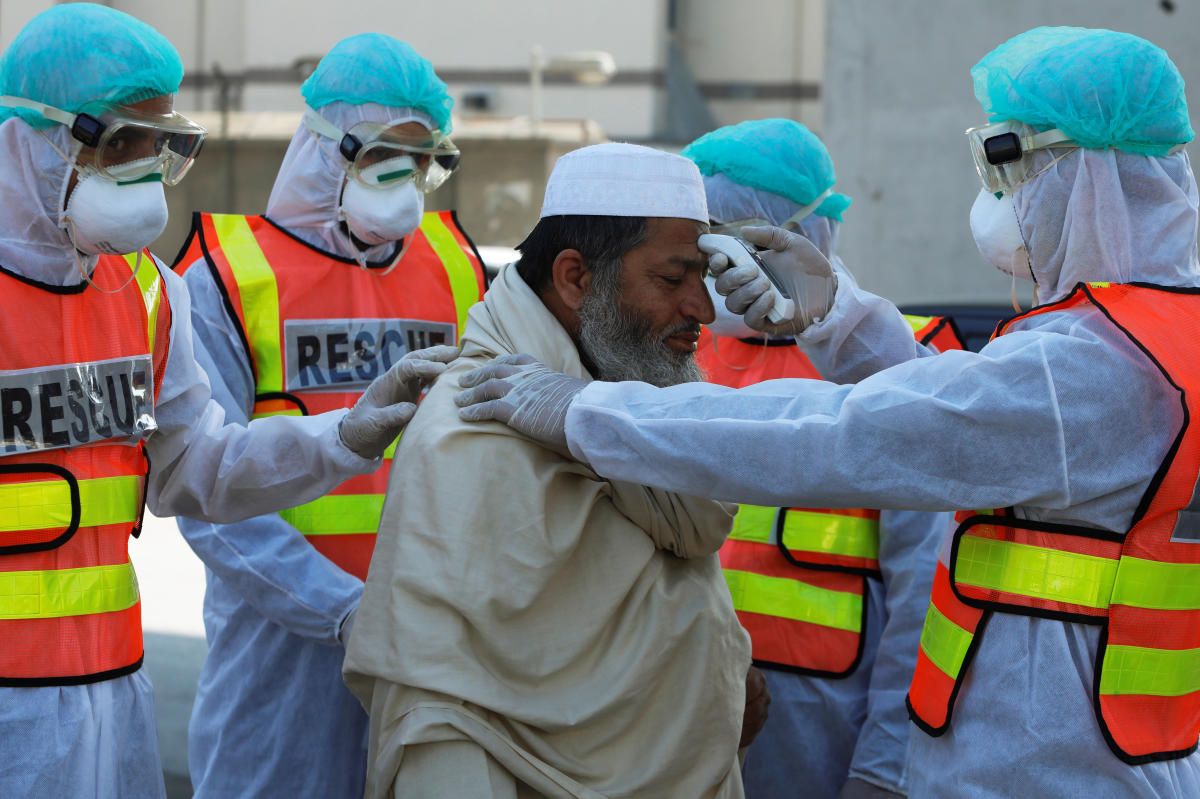
It would not be wrong to say that COVID-19 is hegemonic, as it is interpreted from the powerful, hegemonic, and developed nations of the world to the weak, subaltern, underdeveloped nations. This prestigious pandemic comes from the developed nations to underdeveloped poor countries, by getting the name of COVID-19 from hegemonic centers of the world. While all state apparatuses and institutes operate in the general interest of hegemonic powers, whether it is a national level or international, a power-play can be observed which is very much active and operational to highlight the hegemonic priorities of the powerful. The presence of power cannot be denied when knowledge and interpretations about this pandemic are being generated through different sources of communication, which are somehow partial towards hegemon.

At the subaltern level, poor, marginalized sectors of the world are the target of the disease, as they have internalized the fear and knowledge but they are reluctant to choose between the death due to disease or hunger caused by the lockdown. For several times, the pandemic is given an impression of a tool used by some supposed powers to achieve the economic and political control of the word but this is not the concern of subaltern. They are in a circle of day to day life, who cares for these all political conspiracies?. Paradoxically, the world hegemon needs subaltern’s consent to influence power because the nature of war has been changed. It is not necessary to implement power through coercive forces rather just make them believe that this is a natural and only available course of action that goes in the general interest of the “hegemonic fraction of the dominant group”(Mahon, 1979,p.162). A net of conspiracies is woven around the collective mind of subaltern because it is in the interest of these captive agents to muddle this tangled situation.

The role of all state institutions including religion, media, health, education, different law and force agencies is very favorable to achieve the targets of this natural flow of power that is from the center to margin, imperial to insignificant, heroic to unheroic, director to actor and from hegemon to a subaltern, which is a total loss and at the end of an epidemic this loss would be weighed to negotiate between the beneficiaries. So hegemon would gain and loss would be on the part of subaltern.

In this scenario, it is no more a simple situation of natural disaster in form of the epidemic, rather an unending lust of power, desire to rule on the stage of the world by giving directions to all participants, a silent tussle between world hegemons, propagating knowledge, constructing narratives, a power show or in short a reality show can be traced as well. But this is a parallel reality that when the actual fact of exploitation of subaltern was being noticed, it would become a site of resistance because it is a vicious circle of knowledge, power, domination, consent, and dissent.

The writer is working as an English lecturer at Govt Postgraduate College for Women, Sahiwal.


Business

Pakistan Banks Association elects Zafar Masud as chairman, forms 16-member executive committee

Published

on

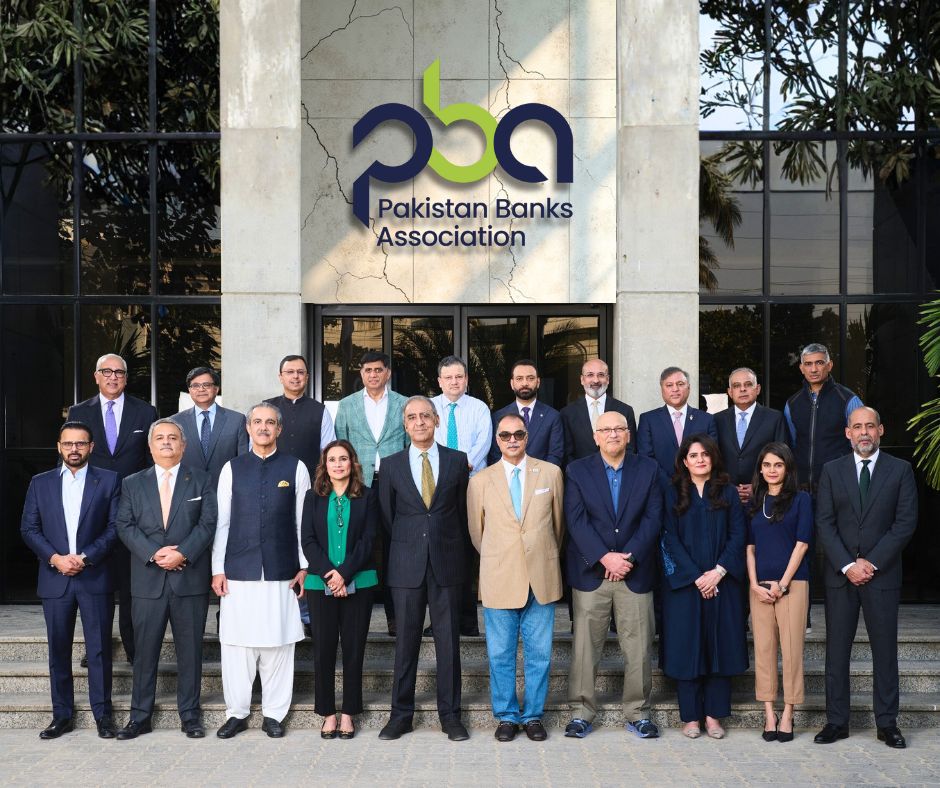
KARACHI – On December 28, 2025, the Pakistan Banks Association (PBA) formed a new 16-member Executive Committee, which includes two women and eight new member banks, reflecting a move towards increased inclusivity and wider industry representation.

Following the elections, the Executive Committee unanimously elected Mr. Zafar Masud, President and Chief Executive Officer of The Bank of Punjab, as Chairman of the PBA. Commenting on his election, Mr. Masud said the newly constituted Executive Committee represents an important evolution in the Association’s governance.

He noted that the expanded and more diverse membership strengthens the PBA’s ability to advance a National Economic Agenda, with a focus on bridging credit gaps in priority sectors, accelerating financial inclusion through digital channels, and supporting Pakistan’s sustainable economic recovery.

The leadership team also includes Mr. Nassir Salim, President and Chief Executive Officer of Habib Bank Limited, as Senior Vice Chairman, and Mr. Yousaf Hussain, President and Chief Executive Officer of Faysal Bank Limited, as Vice Chairman.

Mr. Nassir Salim emphasized the importance of resilience and strong compliance frameworks amid global headwinds, while Mr. Yousaf Hussain highlighted modernization, technology adoption, and agility as key priorities to ensure the banking sector remains innovative and regionally competitive.

Commenting on the milestone, Mr. Muneer Kamal, Chief Executive Officer and Secretary General of the PBA, said that the expansion of the Executive Committee, including the historic inclusion of female representation, reflects the Association’s commitment to diversity and modern governance.

Under the new leadership, the PBA aims to deepen collaboration with the State Bank of Pakistan, the Ministry of Finance, and the Federal Government to support infrastructure development, expand private sector credit for agriculture and SMEs, and advance the country’s digital transformation.

Continue Reading

Business

Saudi carrier flyadeal opens new office in Islamabad

Published

on

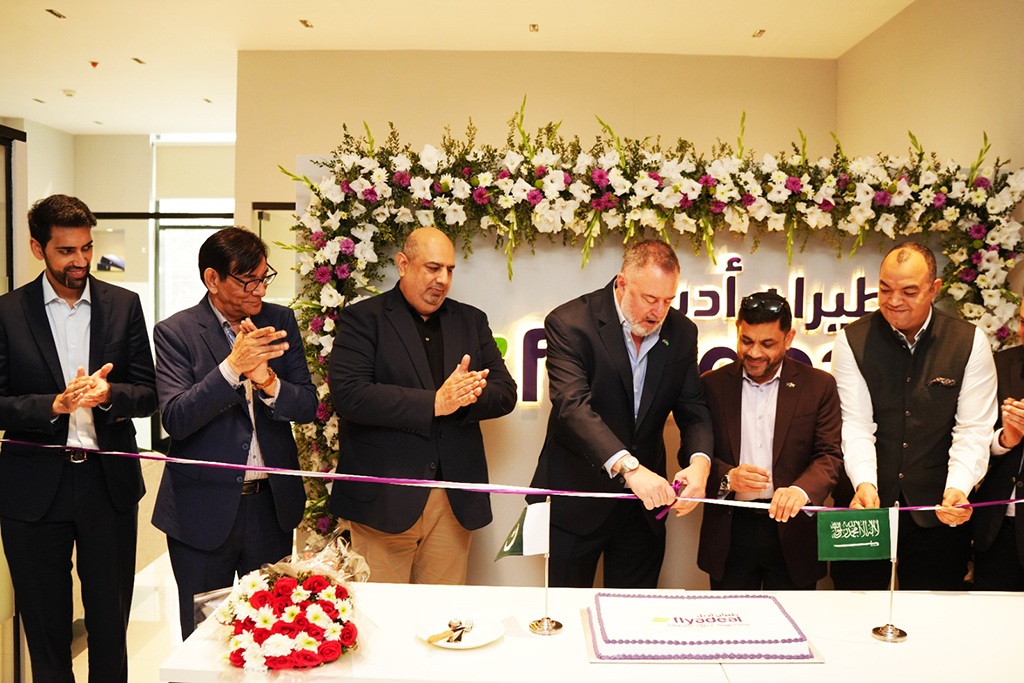
ISLAMABAD – flyadeal, Saudi Arabia’s rapidly expanding low-cost airline, has opened a new dedicated sales and marketing office in Islamabad, highlighting its swift growth in Pakistan. During a brief visit to Pakistan’s capital, flyadeal CEO Steven Greenway reaffirmed the airline’s dedication to becoming a key player in the country’s vibrant air travel industry.

flyadeal launched non-stop scheduled flights from Saudi Arabia to Pakistan in February, connecting  Riyadh and Jeddah to the country’s commercial hub of Karachi, which signalled the airline’s first move into South Asia.

Since then, flyadeal has significantly scaled up frequency, now operating 18 non-stop services each week between the two countries serving a total of five gateway cities in Pakistan – Karachi, Peshawar, Sialkot, Lahore and Islamabad.

“Our Pakistan flights have proved a great success since our entry, bringing affordable low fares and reliable punctual services to this exciting market,” said Greenway.

“Having expanded from one to five cities across the country in the space of just eight months, thanks to regulatory and travel industry support, it’s only a matter of time before we grow further with much-needed additional capacity and provide the travelling public with wider reach and greater choice of non-stop flights bridging both countries.”

flyadeal has partnered with leading general sales agent Matchless Travel to serve the travel trade and members of the public across Pakistan through its nationwide network of offices.

Farooq Ahmad, flyadeal Head of Sales, added: “flyadeal has developed a great relationship with Pakistan’s travel agency community, quickly building confidence within the trade of our value-added product offering. Our dedicated sales office in Islamabad complements the efforts of Matchless by providing increased brand presence and awareness.”

Following the sales office opening, flyadeal’s senior management team from the head office in Jeddah and Karachi hosted Islamabad’s travel trade to a thank-you dinner.

All flyadeal services to and from Pakistan are operated with Airbus A320 family aircraft in a single 186-seat Economy Class configuration. The flights cater to a mix of business, leisure, pilgrim and migrant worker traffic, as well as the large outbound Pakistani expatriate community living in the Kingdom. Jeddah-bound flights serve as the gateway to the Saudi holy city of Makkah.

flyadeal operates scheduled flights from bases in Riyadh, Jeddah and Dammam to more than 30 domestic and international seasonal and year-round destinations in the Middle East, Europe, North Africa and South Asia with a modern fleet of 43 Airbus A320 family aircraft.

Effective 1 January 2026, flyadeal will add Madinah as its fourth base in the Kingdom, a strategic move to enhance air travel options to and from the Holy city. 


Continue Reading

Gold

Ways to check the purity of gold: Methods and Facts

Published

on

LAHORE – In Pakistan, uncertainty always looms over the minds of people. Some people remain unsure whether the gold they bought is pure or not, so in case of such a scenario, here is what you can do.

Ways to verify your gold:

  • Check Official Markings

Look for engraved markings on the inner side of the jewelry; it may say 24k, 22k, 21k, or 18k. In Pakistan, 21k means 87.5% purity; on the other hand, 24k means 99.9% purity and is mostly used as investment bars.

  • Professional Ways to Test

If you remain unsure about your gold, then you should consider visiting major gold markets such as Karachi’s Sarafa Bazaar or Lahore’s Liberty Market.

Three such ways include:

Electronic Gold Testers: In today’s modern world, jewelers use handheld electronic devices to measure the electrical conductivity to provide the user with immediate karat reading.

XRF Spectrometry: This method is widely regarded as the best and most accurate way; most high-end gold laboratories use X-Ray fluorescence to get the exact elemental composition of the item.

Touchstone Test: This is known as the Kasauti Test, the gold is rubbed against a dark stone(Kasauti), and the streak is then compared with known purity needles, or it is treated with acid.

  • Test at Home

Magnet Test: Gold is not attracted to magnets if the item is powerfully attracted towards a powerful magnet, then it is likely that it contains some sort of base metals, most probably iron or nickel.

Floating Test: Gold remains a dense element if gently placed in a bowl filled with water and sinks all the way to the bottom. Then, it can be considered pure gold. However, if the gold item floats or sinks slowly, it is most likely fake gold or the item is gold-plated.

Vinegar Test: By applying a few drops of vinegar on the item, you can check its purity because pure gold retains its shine, but fake gold loses it altogether.

Ping Test: This is a sound test. First of all, take the gold item in your hand and gently strike it against another metal. Pure gold produces a high-pitched ringing sound, whereas base metals produce a “thud” sound.

Note: It is pertinent to mention here that methods to test at home aren’t completely reliable, and the results shouldn’t be considered as the final results, as there are chances that they can be influenced by other factors. That’s why it is better to follow the other ways mentioned in the article.

  • Precautionary measures before buying

Before buying the gold item, request a certificate of confirmation of the purity of the gold being bought. Before paying the price for the gold, verify the daily price of the gold from the Jewellers Association or upfront.pk to avoid being overcharged for lower-quality gold.


Continue Reading

Trending

Copyright © 2026