Connect with us

Business

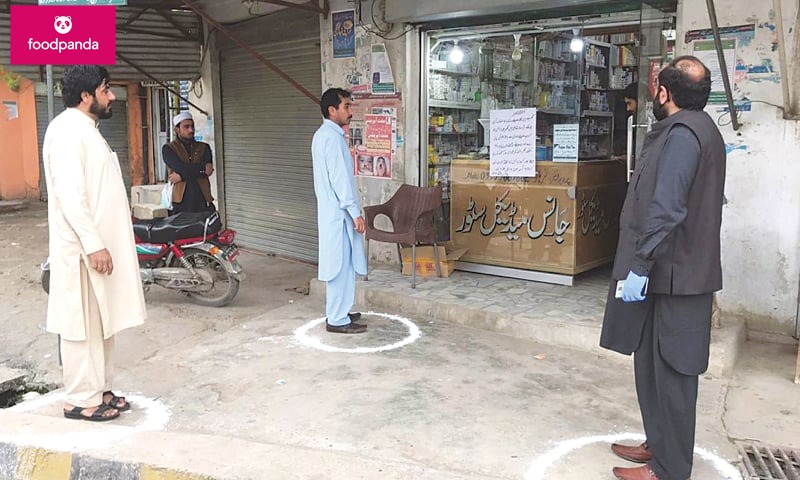
Social distancing – the key to conquering coronavirus

Published

on

Today, as the world grinds to a halt in response to the coronavirus, scientists and historians are studying the 1918 outbreak for clues to the most effective way to stop a global pandemic. The rise of globalization, urbanization, and larger, more densely populated cities can facilitate a virus’ spread across a continent in a few hours. In all this chaos, there are an internet-based industry that’s been waiting for the right time to serve humanity.

With this virus, just like any other contagious illness, precautions and multiple restrictions have been put in place. The last global pandemic to kill more people than the World War was the Spanish Flu back in 1918 that took the lives of over 100 million people worldwide. In 1918, a researcher named Richard Hatchett coined the term ‘social distancing’. The term, now a phrase that anyone in this century is very familiar with, shows how alike we are to our predecessors. In the 2000s, several papers re-analyzed Spanish flu data to show the efficacy of social distancing measures—and the US Centers for Disease Control and Prevention later incorporated them into their outbreak guidance.

The phrases ‘Flattening the curve’ is a textbook example created by medical practitioners, when a virus can not be contained anymore. Today, health carers struggle to handle the surge people who are affected by a coronavirus and have advised the world to fatten the curve. With fewer people sick at once, services aren’t overwhelmed and deaths diminish. This buys time for doctors to treat the flood of patients and researchers to develop vaccines and antiviral therapies. However, just like after the Spanish Flu pandemic, the world recovered, new businesses surfaced and people were put back to work, the same will happen now. The difference between 1918 and the current day is one powerful force called the internet.

Companies and businesses, especially in Pakistan have taken leaps in recent years with the surfacing of applications, 3-step to your door and home-delivery services. Food delivery giants such as foodpanda along with international restaurant franchises, online grocery services, and purely online business platforms are an essential need at this time. Applications like these not only make a life for the consumer easier but also allow for safety precautions to be implemented at a global level while also helping businesses (especially those in the food sector) stay afloat in this turbulent time.

In Pakistan, companies especially those that operate online could be the means to an end during these turbulent times. Should the government of Pakistan permit online delivery platforms like foodpanda, Daraz to resume service? Not only will it help flatten the curve, but ensure that social distancing practices are being implemented on a global level. In 1918, the studies found, the key to flattening the curve was social distancing. And that likely remains true a century later, especially in Pakistan with their current battle against coronavirus.


Business

All about Budget 2026-27 approvals with key fiscal, tax and development changes

Published

on

ISLAMABAD – The National Assembly has approved the federal budget for FY2026-27 without opposition, introducing wide-ranging fiscal, tax and development measures effective from July 1, 2026.

The government has set GDP growth target at 4% with inflation projected at 8.2%, while FBR revenue target has been fixed at Rs15,264 billion, up 17.6% year-on-year. Total federal expenditure stands at Rs18,771 billion, including Rs8,054 billion for debt servicing.

Defence allocation has been raised to Rs3,000 billion, while the Public Sector Development Programme is set at Rs1,000 billion, with overall development spending at Rs3,675 billion.

Social protection under BISP has been increased to Rs838 billion, covering 12 million families and education stipends for 9.2 million children. The PM Apna Ghar scheme has been allocated Rs71 billion.

Tax relief measures include reductions in income tax for salaried individuals, proposed removal of the 10% surcharge, and business tax cuts including lower super tax.

Relief has also been extended to exporters, IT sector, property transactions, and foreign card payments, while some levies such as Capital Value Tax on financial assets are proposed for abolition.

Development priorities include transport, energy, water, housing, and urban infrastructure, with major projects such as ML-1 Karachi–Rohri, Diamer-Bhasha Dam, Mohmand Dam, and K-IV receiving funding.

Salary and pension hikes of 7% each and a 10% increase in minimum wage have been proposed, alongside EV incentives, privatization of state entities, and expansion of digital economy initiatives.

Further details of implementation and tax procedures will be issued through official notifications.

Area Original Finance Bill Standing Committees Version
Imported mobile phones No facility to pay PTA/DIRBS tax in installments Individuals may be allowed to pay imported phone tax in installments, provided installments are cleared before the end of the financial year
Mobile phone tax rates Existing Ninth Schedule rates were not revised Rates are still not reduced or revised; only the installment facility is added
Petroleum levy framework Proposed detailed rules for petroleum and carbonated support levies, including reporting, recovery and late-payment surcharge The entire proposed amendment package has been removed
Life insurance and takaful payouts Tax exemption applied only after completing seven years Exemption will apply after four years. The 10% tax will now cover payouts after one year but before four years
Social media income tax 5% for resident persons on the ATL and 5% for non-residents Rate follows tax return filing status only, removing ATL/non-resident distinction from the rate wording
Section 6A fixed-tax regime Tax became adjustable where turnover exceeded Rs. 200 million Persons with turnover up to Rs. 200 million may also opt out through a final and irrevocable certificate for Tax Year 2027
Failure to integrate with FBR Up to 5% of expenditure could be disallowed Disallowance reduced to 3% of expenditure
Export-oriented businesses No corresponding exemption Super tax under Section 4C will not apply where export proceeds exceed 80% of total turnover
Private equity and venture-capital funds No new exemption in the original proposal Income exemption introduced where at least 90% of accounting income is distributed, subject to conditions
Airline imports Sales tax exemption was limited to PIA Exemption extended to aircraft and parts imported or leased by any Pakistan-registered airline, effective July 1, 2027
Coal imported for power producers No special 1% minimum value-addition rate Minimum value-addition tax fixed at 1% where imported coal is supplied directly and exclusively to IPPs
FBR sharing tax return data FBR could share sectoral sales-tax return data among registered businesses under non-disclosure agreements This proposed power has been removed
Customs penalty Certain customs penalty proposed to rise from Rs. 500,000 to Rs. 10 million Increase reduced to Rs. 5 million
Independent scrutiny committees No provision for a chartered accountant as a member Committees may co-opt a chartered accountant as a non-voting member; limitation periods are also protected during committee review
Appointment of external auditors Taxpayer had not stated right to object to FBR’s first nominee Taxpayer may object within 15 days; then FBR may appoint another auditor at its discretion


Continue Reading

Business

OPPO joins hands with Ufone/PTCL Group to expand access to 5G-ready devices

Published

on

LAHORE – Smartphone manufacturer OPPO Pakistan and telecommunications provider Ufone/PTCL Group have entered into a strategic partnership aimed at promoting 5G-ready devices and strengthening collaboration in Pakistan’s evolving digital landscape.

The agreement was formalised during a signing ceremony held in Lahore on Monday, with representatives from both organisations describing the move as a step towards accelerating the adoption of next-generation mobile technology in the country.

According to a statement, the partnership will focus on several areas, including the distribution of 5G-enabled smartphones, co-branded device and data packages, dedicated retail experiences and joint marketing initiatives designed to increase consumer awareness of emerging technologies.

Under the agreement, customers will have access to bundled offers pairing OPPO’s latest 5G-compatible smartphones with Ufone’s mobile network services. The companies also plan to establish dedicated 5G experience zones and shop-in-shop outlets to showcase devices and connectivity solutions.

Officials said the collaboration combines OPPO’s smartphone portfolio with Ufone/PTCL Group’s nationwide network infrastructure and retail presence, with the goal of expanding access to advanced digital services and improving customer experiences.

The partnership comes as Pakistan prepares for wider deployment of 5G technology, which is expected to enhance mobile internet speeds, support emerging digital applications and strengthen the country’s broader digital ecosystem.

Both companies said the agreement reflects a shared commitment to innovation and digital transformation, while creating opportunities for future collaboration in connectivity, technology and consumer engagement.

The initiative is expected to support efforts aimed at increasing the availability of 5G-ready devices and services, helping consumers benefit from next-generation mobile technology as the country moves towards a more connected future.

Continue Reading

Business

New Token Tax regime to affect cars up to 1300cc in capital

Published

on

ISLAMABAD – The federal government has decided to implement revised token tax rates for vehicles in Islamabad from July 1 under the Finance Bill 2026-27, according to official sources.

The excise and taxation department in the capital collects token tax from vehicle owners as part of the annual registration and taxation system, which helps maintain vehicle records and generate government revenue.

Token tax is an annual levy payable by vehicle owners within a stipulated period, with failure to comply resulting in penalties and legal complications.

Under the revised structure, a fixed one-time token tax of Rs10,000 will be imposed on vehicles with engine capacities of up to 1,000cc. This category includes models such as Suzuki Alto, Cultus and Kia Picanto.

For vehicles in the same category manufactured before 2010, the token tax will be set at Rs20,000.

Vehicles with engine capacities between 1,001cc and 1,300cc will be subject to tax calculated at 0.3 per cent of their invoice value. In addition, a federal token tax rate of 0.25pc of the invoice value will also apply from July 1.

According to the Finance Bill, vehicles manufactured before 2010 will be charged a fixed token tax of Rs2,500, while those manufactured in or after 2010 will be taxed at Rs6,200.

The revised rates will come into effect from the start of the new fiscal year as part of broader taxation measures outlined in the federal budget framework.

Continue Reading

Trending

Copyright © 2026