Connect with us

Editorial

The hidden cost of electricity theft in Pakistan that everyone pays

Published

on

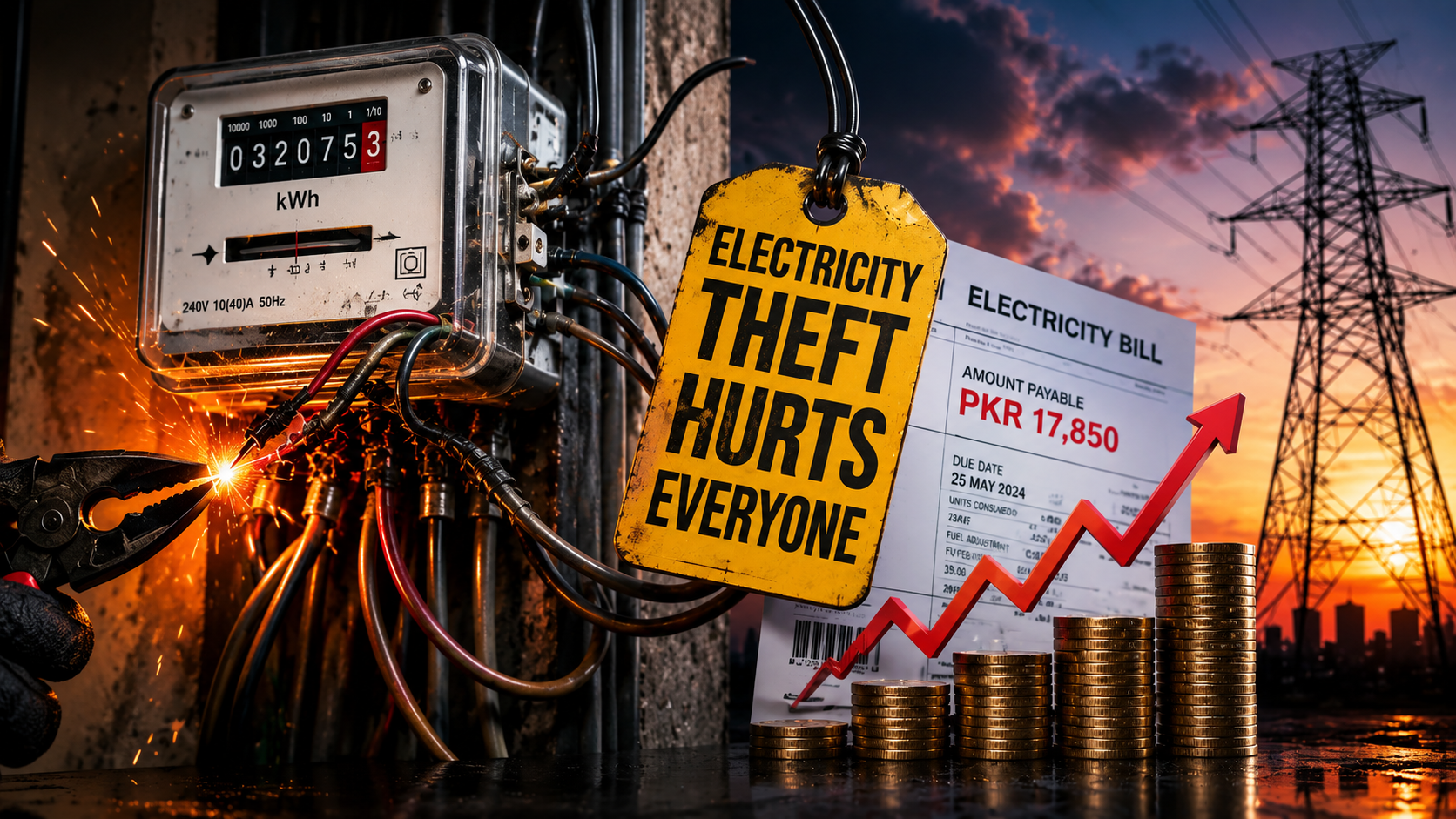
Electricity Theft Costs Everyone
This Image is Ai generated and used for Illustration purposes only.

KARACHI – When electricity bills arrive every month, many Pakistanis immediately look at rising tariffs, fuel adjustments, and household consumption. However, another major challenge continues to affect the country’s power sector: electricity theft in Pakistan. 

Many people consider electricity theft only a problem for power companies. However, its impact reaches far beyond utility offices. It affects honest consumers, puts pressure on the national grid, creates serious safety risks, and slows economic progress. 

Therefore, understanding the real cost of electricity theft is important for every citizen because the consequences affect households, businesses, industries, and public institutions across Pakistan. 

What Is Electricity Theft in Pakistan? 

Electricity theft in Pakistan refers to the unauthorised use of electricity without proper approval or billing from the relevant electricity distribution company. 

Although the issue often appears to be a financial problem, it creates wider challenges for the entire energy system. Electricity generation requires investment in fuel, infrastructure, transmission networks, and maintenance. When consumers use electricity without proper billing, the power sector loses important revenue needed for improvements. 

Moreover, these losses affect the ability of companies and authorities to strengthen electricity services and improve reliability. 
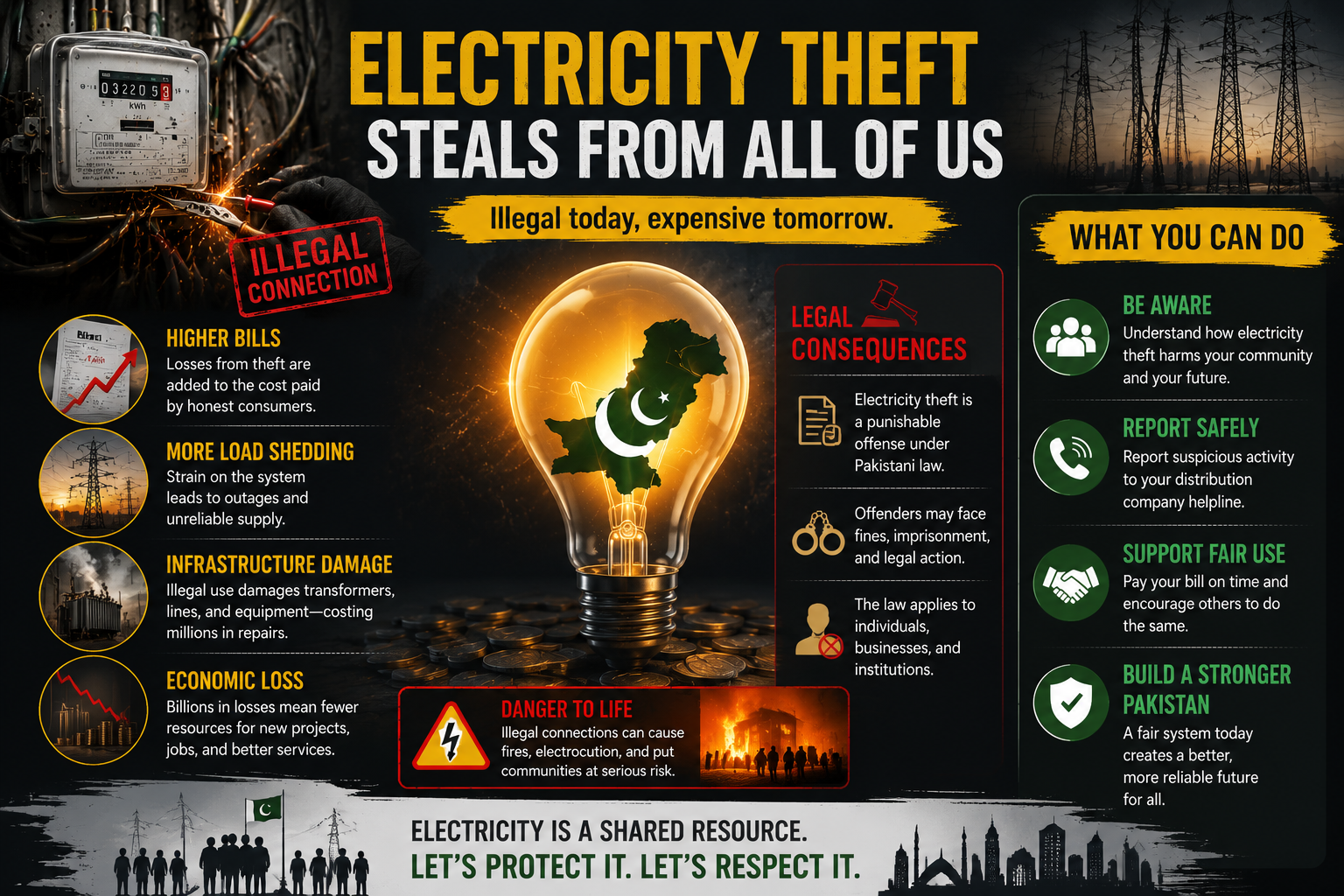
Electricity Theft Awareness Poster

This Image is Ai generated and used for Illustration purposes only.

Why Electricity Theft Increases the Burden on Consumers 

Honest Consumers Face the Financial Impact 

One of the biggest effects of electricity theft in Pakistan is the pressure it creates on consumers who regularly pay their bills. 

When electricity distribution companies face revenue losses, they struggle to maintain infrastructure and invest in better services. As a result, consumers may experience wider challenges within the electricity system. 

Furthermore, a financially weaker power sector finds it more difficult to introduce modern technologies, upgrade networks, and improve customer facilities. 

Electricity Theft Adds Pressure to the National Grid 

Pakistan’s electricity network serves millions of homes, businesses, schools, and hospitals. Therefore, maintaining a stable system requires careful planning and efficient management. 

Electricity theft adds unnecessary pressure to distribution networks. In addition, when infrastructure faces extra stress, companies may find it harder to provide consistent electricity services. 

While several factors contribute to power shortages and outages, reducing electricity losses remains an important step toward creating a stronger electricity system. 

How Electricity Theft Creates Safety Risks 

Financial losses are not the only concern linked to electricity theft. More importantly, unsafe practices around electrical infrastructure can create serious risks for communities. 

Fire and Equipment Damage 

Electrical systems require professional handling and strict safety standards. However, unauthorised interference can increase the chances of fires, equipment failures, and damage to public infrastructure. 

Consequently, such incidents can affect entire neighbourhoods and create additional risks for residents and emergency workers. 

Risk of Electrocution 

Electricity infrastructure carries significant dangers when people interfere with it without proper training. 

Therefore, citizens should never attempt to inspect or handle electrical systems themselves. Instead, they should report concerns through official channels where trained personnel can respond safely. 

The Economic Impact of Electricity Theft in Pakistan 

A reliable electricity system plays a major role in Pakistan’s economic growth. 

Industries depend on stable electricity to continue production, while businesses need dependable power to operate effectively. Similarly, hospitals, schools, and government institutions require uninterrupted electricity for essential services. 

However, electricity theft reduces the financial resources available for improving the energy sector. As a result, it can slow infrastructure development and limit investment opportunities. 

Additionally, reducing electricity losses can help create a more efficient power system that supports economic activity. 

Fighting Electricity Theft Requires Collective Action 

Authorities, electricity companies, regulators, and citizens all have important roles in reducing electricity theft in Pakistan. 

Role of Government and Electricity Companies 

Government institutions and electricity distribution companies can improve the situation by focusing on: 

  • Transparent billing systems.  
  • Better customer support services.  
  • Stronger monitoring and enforcement.  
  • Investment in modern electricity infrastructure.  
  • Public awareness campaigns.  

At the same time, regulators such as NEPRA can continue promoting accountability and improvements within the power sector. 

Role of Citizens 

Citizens also contribute to building a fair electricity system. 

For example, consumers can support lawful electricity use, pay bills on time, and report suspected issues through official complaint channels. 

However, people should avoid direct confrontation or attempting to investigate electrical issues themselves because electricity-related incidents can be dangerous. 

Pakistan Power Sector Performance Metrics (NEPRA Annual Evaluation) 

Metric  Official Value / Benchmark  Details & Financial Impact 
Transmission & Distribution (T&D) Losses  17.55% (DISCOs average)  Exceeds NEPRA allowable limits; results in an extra financial loss of ~Rs. 265 billion above target. 
Electricity Cost Lost to Network  ~Rs. 910 Billion  Total monetary value of electricity lost within ex-WAPDA distribution networks alone. 
Unrecovered Billing Rate  ~3.5% unrecovered  Represents the shortfall in bill collections relative to total electricity billed. 
Total Cumulative Financial Loss  Over Rs. 1 Trillion  Combined impact of T&D losses and recovery shortfalls across DISCOs and K-Electric. 
Debt Servicing Surcharge (DSS)  ~Rs. 233 Billion  Operational inefficiency burden passed directly on to end consumers. 
Worst Performing DISCOs (Loss Shortfalls)  PESCO: Rs. 87.5bn 

QESCO: Rs. 52.4bn 

SEPCO: Rs. 36.0bn 

LESCO: Rs. 35.2bn 

Primary regional contributors to financial losses beyond targets set by the regulator. 


Building a Safer and Fairer Electricity Future 

Pakistan’s energy challenges require long-term solutions. Although electricity theft remains a major concern, improving awareness and cooperation can help reduce its impact. 

Therefore, authorities should continue improving transparency, strengthening infrastructure, and educating citizens about the importance of responsible electricity use. 

At the same time, consumers should recognise that protecting the electricity system benefits everyone. A reliable power network supports homes, businesses, education, healthcare, and economic development. 

Conclusion 

Electricity theft in Pakistan is not only a challenge for electricity companies. It affects every consumer by weakening the power system, creating safety risks, and limiting economic growth. 

However, reducing electricity theft requires cooperation between authorities, companies, and citizens. Through better awareness, transparent systems, responsible behaviour, and effective enforcement, Pakistan can move towards a safer and more reliable electricity future. 

Ultimately, protecting electricity resources means protecting the interests of every Pakistani household. 

Read More: 

Editorial

Scope of Valorant in Pakistan and its Esports growth

Published

on

Valorant esports: Pakistan rising

LAHORE – The scope of Valorant in Pakistan is expanding rapidly. Young gamers are increasingly drawn to this tactical first-person shooter. Since its launch in 2020, Valorant has become a global esports phenomenon. Moreover, it offers competitive ladders that motivate players to improve their skills. 

Local tournaments and online leagues are contributing to its popularity. Consequently, players in Pakistan now have avenues to showcase talent and gain recognition. 

Scope of Valorant in Pakistan and its Esports growth

This Image is Ai generated and used for Illustration purposes only.

Why Valorant Appeals to Pakistani Gen Z

Valorant combines strategy, teamwork, and reflexes. Therefore, it naturally attracts competitive-minded youth. The game’s popularity has been amplified by social media and streaming platforms. 

Moreover, Pakistani Gen Z sees the game as more than entertainment. It represents opportunities for esports careers, content creation, and international competition. Consequently, Valorant is shaping a new generation of professional gamers. 


How Local Esports Events Boost the Scope of Valorant in Pakistan 

Events like the Pakistan Esports League (PEL) and Konnect by HBL Aur Khelo have introduced live Valorant competitions. These tournaments offer cash prizes and professional exposure. 

In addition, LAN events in major cities such as Lahore and Karachi allow players to gain practical experience. These competitions enhance the scope of Valorant in Pakistan by preparing players for larger, international events. 


Streaming, Reels, and Social Media Engagement 

Social media has a huge impact on Valorant’s popularity. Twitch, YouTube, and TikTok allow players to stream matches and share highlights. Consequently, Pakistani youth can follow professional gameplay and learn new strategies. 

Furthermore, viral content like memes, clips, and reels creates community engagement. Therefore, online exposure has made Valorant an aspirational game for young Pakistanis. 


Challenges and Future Opportunities 

Despite rapid growth, the scope of Valorant in Pakistan faces challenges. Infrastructure is still developing. Many players lack access to high-speed internet and professional coaching. Moreover, sponsorship and funding for local teams remain limited. 

However, the ongoing international Valorant tournaments, such as the Valorant Champions Tour (VCT), show that Pakistani players could compete globally. In addition, grassroots support and increasing brand interest are gradually improving conditions. 


Why Valorant Can Shape Careers in Pakistan 

The competitive nature of Valorant provides multiple career paths. Players can become professional competitors, content creators, or esports coaches. Moreover, high-profile tournaments with cash prizes make esports a viable profession. 

Consequently, the game’s rising profile ensures that the scope of Valorant in Pakistan is not just about playing—it is about building long-term careers. 


Conclusion: A Bright Future for Valorant in Pakistan 

Valorant has grown from a niche title into a major competitive game in Pakistan. Its appeal among Gen Z, expanding local tournaments, and global esports opportunities highlight its potential. 

The scope of Valorant in Pakistan is strong, and as infrastructure and support improve, Pakistani players are poised to leave a mark on the international stage. For young gamers, Valorant offers excitement, community, and professional opportunities. 


Key Points 

  • The scope of Valorant in Pakistan is growing due to competitive gameplay and social media exposure.  
  • Local tournaments such as PEL and Konnect by HBL Aur Khelo provide practical experience and cash prizes.  
  • Streaming platforms like Twitch and YouTube enhance community engagement and skill development.  
  • Challenges include limited infrastructure, sponsorship, and professional coaching opportunities.  
  • Valorant offers career paths beyond playing, including professional competition, content creation, and coaching.  
  • International esports events like VCT provide Pakistani players with global exposure. 


Read More: 

Continue Reading

Editorial

Why Pakistani Gen Z’s are admiring CJP protests in India

Published

on

Pakistani Gen Z admiration with CJP protests
This Image is Ai generated and used for Illustration purposes only.

LAHORE – Pakistani Gen Z admiration with CJP protests has taken social media by storm. The Cockroach Janta Party (CJP), a youth-led satirical protest movement in India, has gained attention for its unique blend of humor, memes, and activism.  

Young Pakistanis are sharing clips, creating commentary, and engaging online with content from the movement. The fascination stems from a combination of entertainment, creativity, and the sense of shared frustrations with governance and opportunities that resonate across borders. 

Why Pakistani Gen Z's are admiring CJP Protests in India

This Image is Ai generated and used for Illustration purposes only.

What Is the Cockroach Janta Party? 

The CJP began as a satirical response to corruption, exam paper leaks, and systemic inefficiencies in India. Young protesters embraced the “cockroach” label—originally intended as an insult—to symbolize resilience and defiance. Videos of chants, creative placards, and peaceful sit-ins quickly went viral on TikTok, Instagram, and YouTube. 

Pakistani youth were drawn to the movement because it combines activism with humor and relatable energy. The creativity of the protesters, paired with the viral content, made it more appealing than traditional news coverage. 


Why Pakistani Gen Z Is Paying Attention 

Shared Youth Frustrations 

Many young Pakistanis see parallels between their own struggles and those highlighted by CJP. Challenges like exam stress, limited employment opportunities, and frustration with institutions resonate with the narrative of the Indian youth movement. 

Social Media Bridges Borders 

The virality of CJP content has made it instantly accessible. Reels, memes, and short clips allow Pakistani youth to follow the movement in real-time. This digital immediacy gives them a sense of participation, even from thousands of kilometers away. 

Humor and Creativity as Protest Tools 

CJP’s unique style—combining satire, memes, and playful yet pointed activism—resonates with the Gen Z digital culture in Pakistan. Pakistani youth admire the courage and cleverness of the movement, which uses humor to critique serious issues, making activism both entertaining and impactful. 


Memes, Reels, and Viral Engagement 

The CJP protests exemplify how modern activism is increasingly visual and shareable. Memes, TikTok clips, and Instagram stories allow Pakistani youth to not just observe but engage with the movement. Pakistani Gen Z admiration with CJP protests is fueled by this participatory culture, where content is remixable, shareable, and interactive. 


Admiration or Entertainment? 

While some might argue that Pakistan’s Gen Z is merely enjoying the spectacle, the admiration goes deeper. It reflects a recognition of creativity, courage, and youth empowerment. By following CJP, Pakistani youth are connecting to ideas of accountability, digital activism, and civic engagement, even in a different national context. 


Conclusion: Cross-Border Youth Energy 

The popularity of the CJP movement among Pakistani youth shows how digital culture is creating cross-border solidarity. Pakistani Gen Z admiration with CJP protests highlights the influence of humor, creativity, and activism in capturing youth attention. In a world connected by social media, youth movements no longer remain confined by geography—they inspire, resonate, and engage audiences far beyond their origin. 


Key Points:

  • Pakistani Gen Z admiration with CJP protests is growing across social media.  
  • The CJP movement uses satire, memes, and humor to highlight corruption and systemic failures.  
  • Shared frustrations between youth in Pakistan and India fuel empathy and engagement.  
  • Social media amplifies reach, making distant protests feel personal and participatory.  
  • The movement reflects a broader trend of Gen Z valuing creativity, digital activism, and cross-border engagement. 


Read More: 

Continue Reading

Editorial

Why Is Buying Imported Cars in Pakistan Becoming Unaffordable?

Published

on

Rising costs of imported cars in Pakistan
This Image is Ai generated and used for Illustration purposes only.

KARACHI – From flashy new models to classic imports, Pakistan’s car buyers often face one universal frustration: why importing cars is so expensive in Pakistan. Whether it’s a righthanddrive (RHD) used car from Japan or a luxury import from Europe, the cost often ends up far higher than the purchase price overseas. 

For many Pakistanis, owning a foreignbuilt car is more than a matter of preference; it’s a status symbol. Yet this dream comes with a heavy price tag, and that has serious consequences for affordability, consumer choice, and the overall auto market. 

So why does importing a car into Pakistan cost so much more than simply shipping it over? The answer lies in a complex web of taxes, duties, fees, regulations, and economic conditions. 

Car import costs breakdown in Pakistan

This Image is Ai generated and used for Illustration purposes only.

 1.Sky‑High Import Duties and Taxes

One of the biggest reasons why importing cars into Pakistan is so expensive is import taxes. Pakistan imposes some of the highest duties on imported vehicles in the world. 

Whenever a car enters Pakistan, it faces multiple layers of taxation: 

  • Customs duty  
  • Regulatory duty  
  • Additional customs duty  
  • Federal excise duty  
  • Sales tax  
  • Withholding taxes  

Each of these adds to the final landed cost of the vehicle. For example, a used Japanese import that costs $5,000 overseas could end up costing more than double after all duties and taxes are applied at ports like Karachi or Port Qasim. 

Because duties are often calculated as a percentage of the car’s value (plus freight and insurance), even modest increases in one tax category can dramatically increase the final price. 

 2.Protectionist Policies for Local Industry

Another reason behind expensive car imports is government policy. 

For many years, Pakistan has pursued protectionist policies to support local automobile manufacturers. Higher duties on imported cars are intended to: 

  • Encourage consumers to buy locally assembled vehicles  
  • Protect domestic investment  
  • Support job creation in assembly and parts manufacturing  

However, these policies also reduce consumer choices and make imported cars less affordable. 

In practice, the cost of protecting local industry often falls on consumers. People who want a quality used car from Japan or Germany end up paying significantly more due to high import duties. 

 3.Inflation and Currency Devaluation

The strength of the Pakistani rupee plays a major role in car import costs. 

Pakistan has experienced episodes of currency depreciation over recent years. When the rupee weakens against the US dollar, import costs rise sharply because vehicles are priced in foreign currencies. 

For example, if the rupee loses value against the dollar: 

  • Importers must pay more rupees to buy the same vehicle overseas.  
  • Duties and taxes (which are calculated in rupee terms) also become more expensive.  
  • Higher shipping and insurance costs are passed down to buyers.  

In short, currency instability makes importing cars significantly more expensive for consumers. 

 4.High Freight and Logistics Costs

Shipping vehicles across oceans is not cheap. Although sea freight rates vary, higher oil prices, port fees, and freight handling costs all add to the total landed cost of an imported car. 

Importers must pay for: 

  • Ocean freight  
  • Insurance  
  • Port handling charges  
  • Customs clearance fees  
  • Transportation from port to the buyer  

Each of these logistics elements contributes to the final price tag that buyers see at dealerships. 

 5.Regulatory Compliance Costs

Pakistan has strict regulations on vehicle imports, especially for used cars. 

For example, many buyers import vehicles from Japan under age restrictions (usually not older than 35 years). These regulations are meant to ensure road safety and emissions standards, but they also limit supply and encourage smuggling or informal imports. 

Complying with legal requirements adds administrative costs, documentation fees, and sometimes delays, all of which translate into higher prices for consumers. 

 7.Black Market and Smuggling Premiums

Because legal import duties are so high, many preferred car models sometimes enter Pakistan through unofficial channels. 

Smuggled vehicles may avoid duties entirely, but they carry their own “premium”: 

  • Higher upfront cash costs  
  • Lack of official warranty  
  • Risks of fines or legal issues  

In effect, the presence of smuggled vehicles pushes legal importers to maintain high prices, because only buyers who can afford expensive official imports remain in the regulated market. 

 7. Impact of High Import Costs on Consumers

The consequences of expensive car imports in Pakistan are broad: 

Reduced Buyer Choices 

Many consumers avoid foreignbuilt vehicles entirely. They end up buying local brands (even if quality or features are inferior) simply because imported cars are too expensive. 

Higher Used Car Market Prices 

When import costs are high, demand for legally imported used vehicles increases. This pushes up prices in the domestic used car market. 

For example, a Toyota Corolla imported from Japan may cost more than a locally assembled version. 

Impact on MiddleClass Families 

Middleclass buyers, who once saw used imports as affordable options, can no longer afford them. As a result, mobility options shrink for middleincome earners. 

 8. How Does This Affect the Auto Industry in Pakistan?

Although protectionist taxes are intended to support local assembly plants, the overall industry also suffers: 

  • Reduced competition: Limited foreign competition can make local auto makers less inclined to improve quality or reduce prices.  
  • Lower investment: Foreign manufacturers may hesitate to enter Pakistan’s market due to tariff barriers, reducing technology transfer and economic growth.  
  • Consumer dissatisfaction: High prices reduce overall vehicle demand, slowing market growth.  

 9. Have Any Policies Tried to Fix This?

At various times, policymakers have attempted reforms to balance duties and improve affordability. These include: 

  • Duty rationalization talks  
  • Trade agreements with importing countries  
  • Duty reductions for electric vehicle imports  
  • Incentives for local parts manufacturing  

However, deeper structural reforms are required to lower overall import costs. 

 10. What Could Improve the Situation?

If policymakers and industry stakeholders want to reduce the cost of car imports in Pakistan, possible measures include: 

Rationalizing Taxes 

Reducing multiple layers of duty and simplifying the tax structure could make imported vehicles more affordable. 

Better Currency Stability 

Stronger currency policies can reduce rupee volatility and import cost inflation. 

Trade Agreements 

Negotiating more favorable trade terms with countries like Japan, Korea, and European suppliers could reduce tariffs. 

Support for Local Parts Manufacturing 

Expanding local components production could reduce the overall price of vehicles assembled in Pakistan. 


Key Points:  

  • High import duties: Multiple taxes and duties inflate costs.  
  • Protectionist policies: Aimed at supporting local industry, but costly for buyers.  
  • Currency devaluation: Weak rupee increases import expenses.  
  • Freight and logistics: Shipping costs add to the landed price.  
  • Regulatory compliance: Documentation and standards increase costs.  
  • Black market effects: Smuggling influences official market pricing.  
  • Consumer impact: Limited choices, higher used car prices, and reduced affordability.  
  • Industry impact: Lower competition and slower growth in auto sector.  


Conclusion: Can Pakistan Make Cars More Affordable? 

The high cost of importing cars in Pakistan stems from a combination of policy choices, taxes, currency issues, and market forces. For consumers, this translates into fewer choices and higher prices. For the industry, it means slower growth and limited foreign collaboration. 

Ultimately, addressing these issues requires thoughtful tax reforms, currency stability, and better trade policies.  

Read More: 

Continue Reading

About

Upfront has been reporting since 2020 influencing hundreds and thousands of users. Our social media handles witness more then 20 million users.


© 2020 upfront. All rights reserved.

Trending

Copyright © 2026