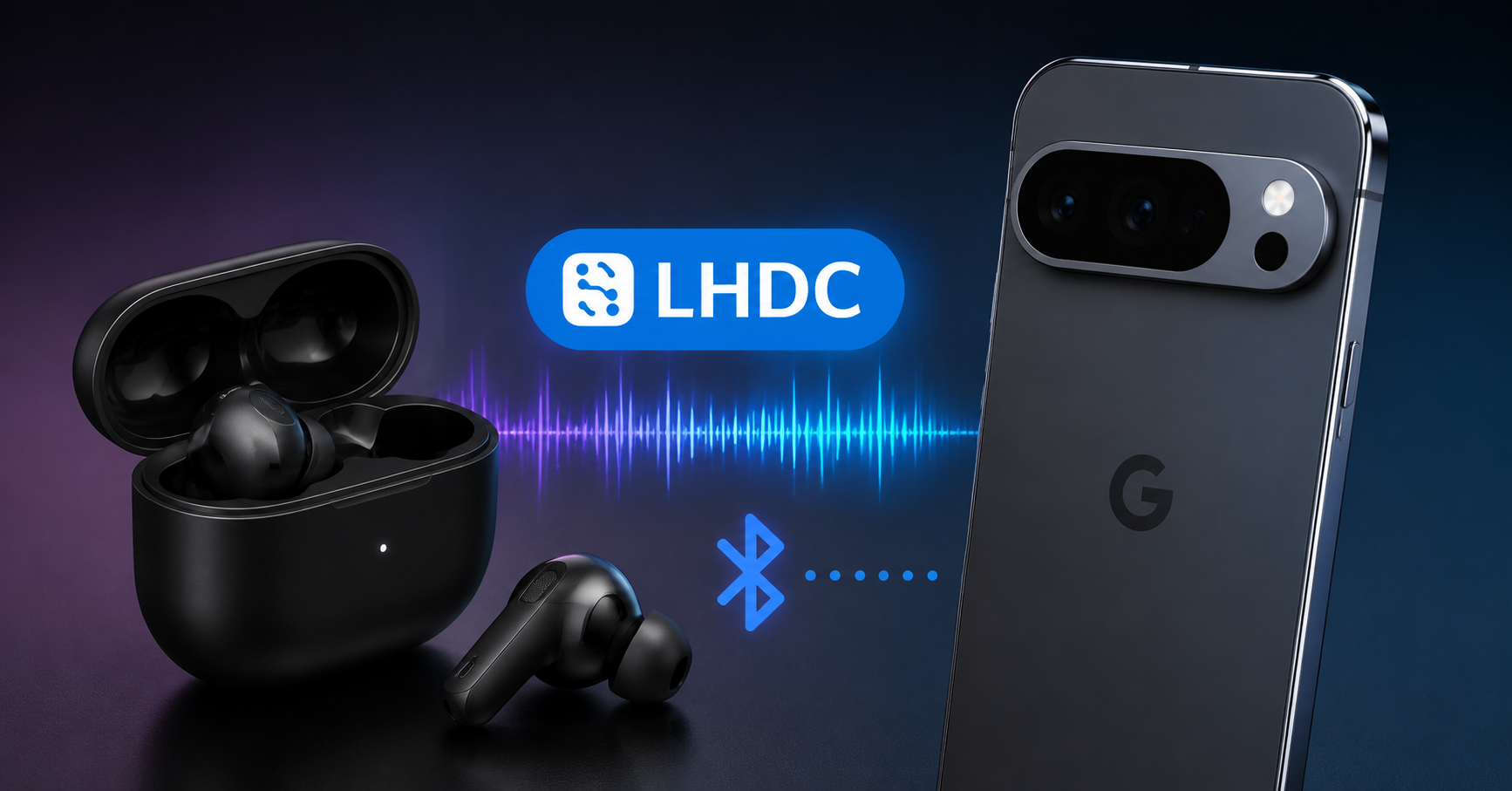
KARACHI – Google has introduced support for the LHDC (Low Latency High-Definition Audio Codec) on Pixel smartphones with Android 17, giving users another option for high-quality wireless audio playback over Bluetooth.
LHDC is a Bluetooth audio codec developed to deliver higher-quality sound while maintaining low latency. Although the technology has been available since 2018 and is already supported by several Android brands, Android 17 marks its arrival on Google’s Pixel devices.
The codec was certified by the Japan Audio Society (JAS) for Hi-Res Audio Wireless in 2024, joining other high-quality Bluetooth codecs such as LDAC and aptX Adaptive.
High-quality audio over Bluetooth
LHDC supports multiple audio modes, including playback at up to 24-bit/96kHz on Google Pixel devices. Some Android smartphones from other manufacturers can support playback up to 24-bit/192kHz using compatible hardware.
However, despite its Hi-Res certification, LHDC does not provide true lossless high-resolution audio over Bluetooth. Bluetooth bandwidth limitations mean audio must still be compressed before transmission.
Like other advanced Bluetooth codecs, LHDC uses variable bitrates that can range from around 160 kbps to 1,000 kbps. The bitrate automatically adjusts depending on the quality of the wireless connection to reduce interruptions during playback.
Performance depends on connection quality
The quality of Bluetooth audio is influenced by environmental conditions, including wireless interference and the distance between connected devices.
As a result, LHDC can lower its bitrate in crowded or signal-heavy environments to maintain a stable connection. While this helps prevent audio dropouts, it may also reduce overall sound quality compared to ideal listening conditions.
Device compatibility
To use LHDC, both the smartphone and the connected audio device must support the codec.
Android smartphones from several Chinese manufacturers already offer LHDC support, and Android 17 now extends compatibility to Google’s latest Pixel devices. However, Samsung Galaxy smartphones and Apple’s iPhone lineup currently do not support the codec.
Similarly, not all wireless earbuds are compatible. Products such as the OnePlus Buds Pro series and Nothing Ear (2) support LHDC, while Google’s own Pixel Buds Pro 2 do not.
Users can verify or manually select the Bluetooth codec through Android’s Developer Options, although the operating system typically chooses the most suitable codec automatically.
Streaming and audio sources
LHDC can be used with locally stored FLAC files as well as high-resolution music streaming services. Even when listening to standard CD-quality or high-bitrate compressed audio, the codec can help preserve audio quality by reducing unnecessary recompression during Bluetooth transmission.
While Android 17’s addition of LHDC does not replace existing codecs such as LDAC or LC3, it expands compatibility with a wider range of wireless headphones and earbuds, offering Pixel users another option for high-quality Bluetooth audio.