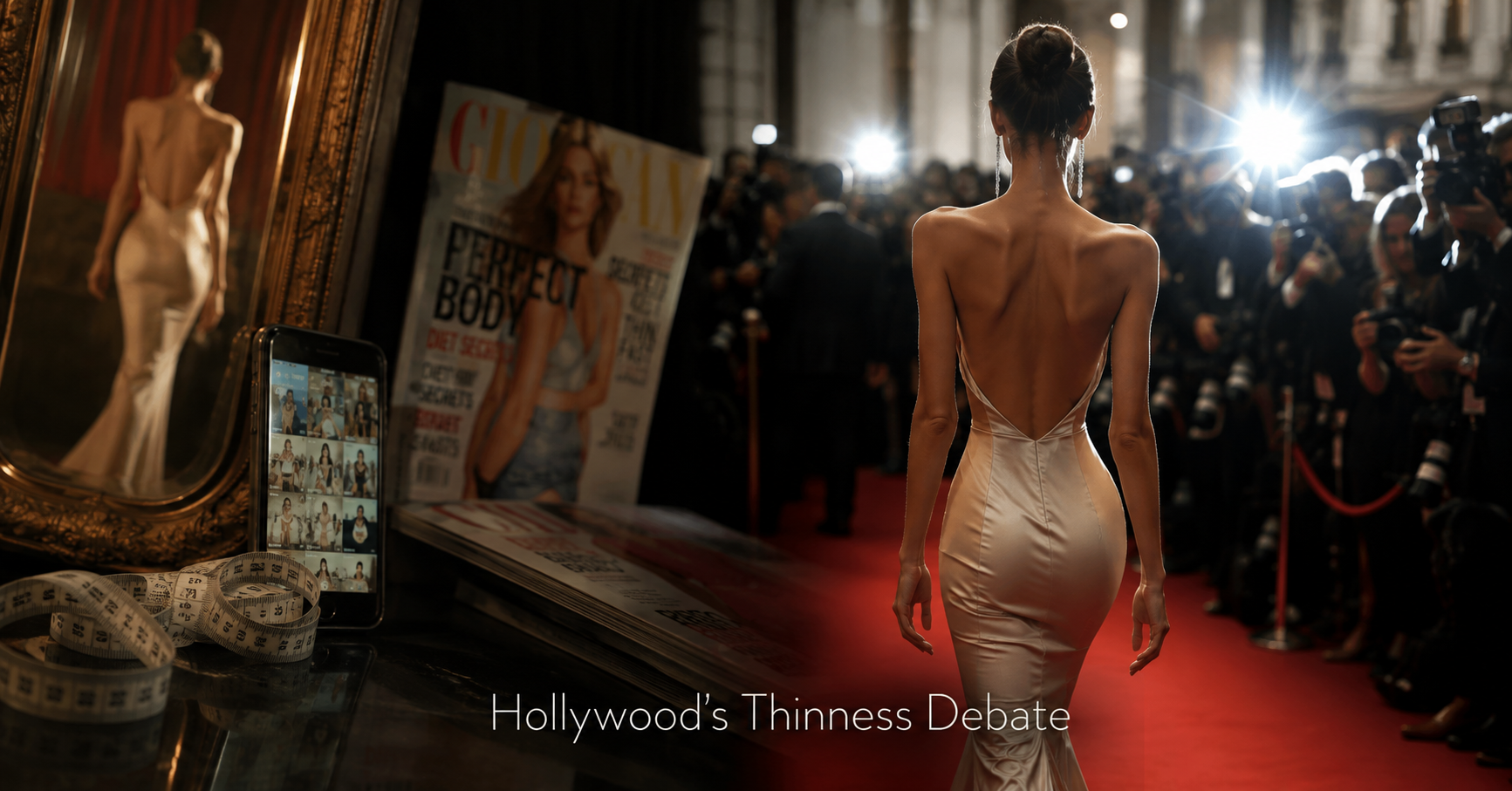
CALIFORNIA – For years, fashion and entertainment industries faced criticism for promoting body types that were difficult for most people to attain naturally.
While the conversation appeared to move towards greater body diversity, the emergence of new weight-loss drugs and renewed interest in very thin physiques has complicated that progress.
Filmmaker and writer Marti Noxon, who has previously addressed eating disorders through her work, argues that the renewed emphasis on extreme thinness could have serious consequences for people vulnerable to disordered eating.
A return to extreme thinness
Noxon recalls the pressure surrounding Hollywood’s awards season, when reports circulated about tailors altering runway gowns because even the smallest available sizes were considered too large for some actresses.
She argues that concerns over unrealistic beauty standards have taken on a new form. Instead of the curvier ideal that dominated parts of popular culture in recent years, extreme thinness appears to be gaining renewed visibility.
The issue, she says, is particularly complicated because bodies that combine very thin frames with pronounced curves are uncommon naturally and can sometimes reflect cosmetic procedures or other interventions.
Cosmetic surgery has also become increasingly normalised in popular culture. Noxon points to liposuction, breast augmentation and Brazilian butt lifts as examples of procedures that have become part of the wider conversation around appearance.
GLP-1 drugs add to the debate
The growing popularity of GLP-1 medications has added another dimension to discussions about body image and weight.
Noxon argues that some people who previously represented body acceptance and inclusivity have appeared significantly thinner after using weight-loss medications. She questions what this shift could mean for people who had previously felt represented by broader definitions of beauty.
The issue also has a socioeconomic dimension, she argues, because access to expensive weight-loss treatments can influence who is able to pursue a particular body type.
For younger people growing up surrounded by celebrity images and social media content, the renewed emphasis on thinness could reinforce the idea that being smaller is inherently better.
Read more: Chinese humanoid robot beats Usain Bolt’s 100m time
Concerns over eating disorders
Noxon’s concerns stem from her experience with anorexia and her work on the 2017 film To the Bone. The film follows a young woman struggling with an eating disorder.
She said the project faced resistance during development. Some felt eating disorders were too narrow a subject for a feature film. The movie was eventually released by Netflix and reached millions of viewers worldwide.
Noxon says the scale of eating disorders demonstrates that the issue is far from niche.
She also recalls efforts to avoid glamorising anorexia while making the film. The production limited images of the character’s body because repeatedly presenting extremely thin bodies can potentially affect vulnerable viewers.
Research has also raised concerns about the effect of weight-loss content on body image.
A 2020 study of diverse university students linked weight-loss content exposure to lower body appreciation, greater concern about negative appearance evaluations and more frequent binge eating.
Read more: LGS Students Win Global Future Space Scholars’ Meet 2026 in Beijing
Experts warn of the impact
Whitney Totter, chief executive of Project HEAL, said the shift towards extreme thinness was already affecting people seeking help for eating disorders.
She said social media, celebrity images and the growing visibility of GLP-1 medications could reinforce restrictive behaviour in vulnerable people.
Totter said the issue went beyond beauty standards. Images promoting extreme thinness could also affect mental health and increase the risk of eating disorders. Ariana Grande controversy renews discussion
The debate has also been fuelled by public reactions to images of celebrities, including Ariana Grande.
Following the release of Grande’s music video for “Petal”, social media users raised concerns about her appearance and health.
Noxon acknowledges that a person’s health and body remain deeply private matters and that individuals have the right to make decisions about their own bodies. At the same time, she argues that public figures and entertainers should consider the potential impact of the images they choose to place before large audiences.
For Noxon, the issue is therefore not about controlling a woman’s body. Rather, it is about examining how celebrity culture can influence people who may already struggle with body image.
Where should the line be drawn?
The debate leaves entertainment companies, celebrities and audiences with a difficult question: how can society avoid policing people’s bodies while still addressing images that may be harmful to vulnerable groups?
Noxon’s position is that people should generally refrain from judging other people’s bodies. But she also believes entertainers have a responsibility to consider the broader consequences of the content they create and promote.
Activist Shannon Watts, whose adult child has struggled with an eating disorder, similarly distinguishes between controlling someone’s appearance and showing genuine concern for their wellbeing.
The renewed debate over extreme thinness ultimately reflects a broader struggle over beauty standards and how quickly cultural ideas about the “ideal” body can change.
For people affected by eating disorders, however, these trends can have consequences that extend well beyond fashion, celebrity culture and the red carpet.
Read more: US pauses visa appointments worldwide amid Trump immigration crackdown
Key points:
- Extreme thinness is once again becoming a prominent beauty ideal in Hollywood and on the red carpet.
- The growing use of GLP-1 weight-loss drugs has intensified debate over body image, inclusivity and social pressure.
- Experts and eating-disorder advocates warn that repeated exposure to extremely thin bodies can affect body image and eating-disorder risk.
- Filmmaker Marti Noxon, who has spoken publicly about her own experience with anorexia, says entertainers should consider the impact of the images they promote.
- The debate raises questions about where concern for public health ends and policing people’s bodies begins.
- Hollywood’s changing beauty standards are once again drawing scrutiny, with extreme thinness becoming increasingly visible on red carpets and in celebrity culture.