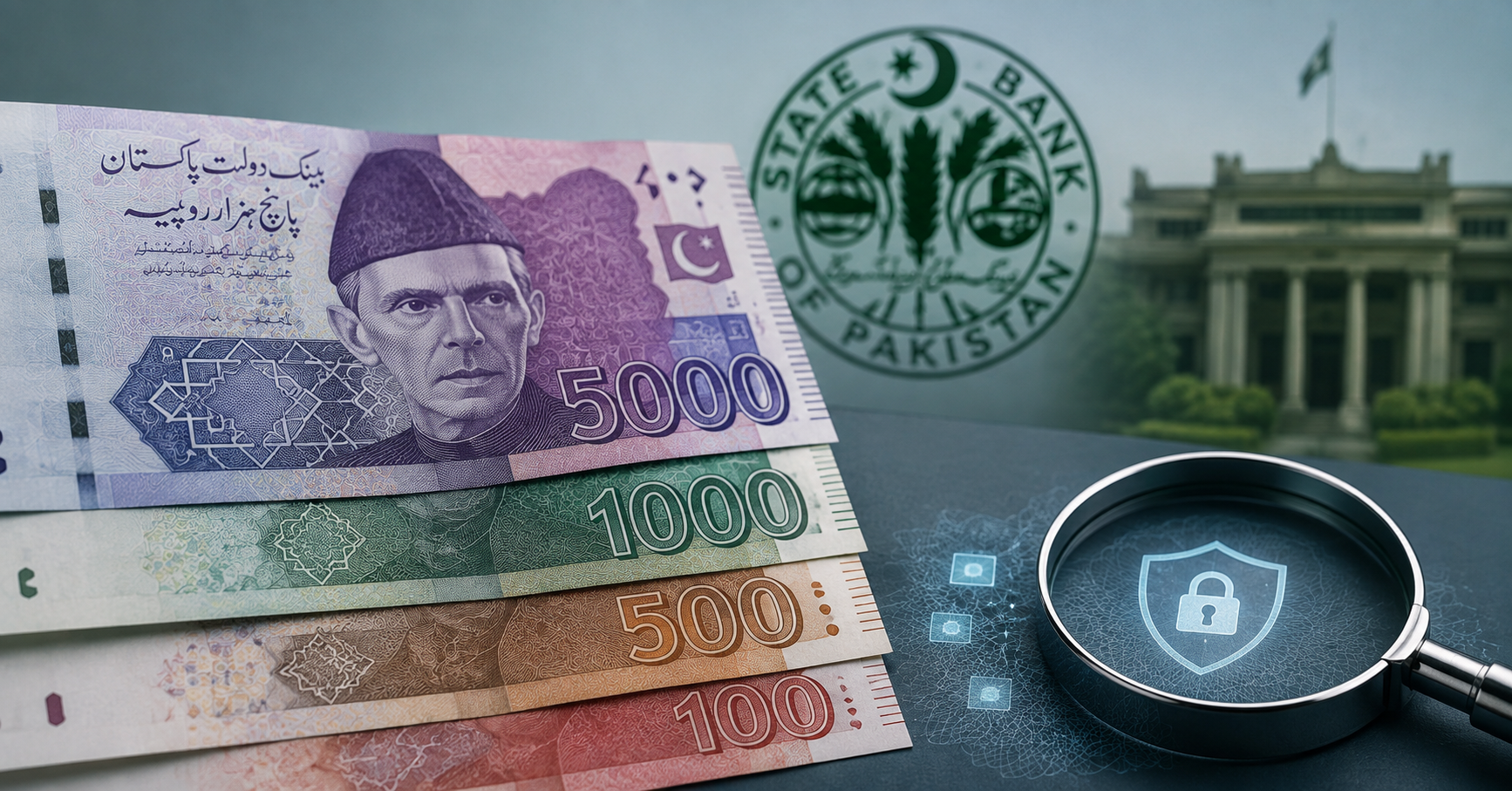
ISLAMABAD – The federal government has decided to phase out the Rs10 currency note, while the State Bank of Pakistan (SBP) is redesigning banknotes with additional security features, officials told a Senate committee on Tuesday.
The development came during a meeting of the Senate Standing Committee on Finance, chaired by Senator Saleem Mandviwalla. SBP officials briefed the committee on the redesign and production of new currency notes.
Rs10 note may be discontinued
SBP officials told the committee that the government was considering discontinuing the Rs10 note because its production cost was relatively high.
The proposal forms part of broader changes to Pakistan’s currency system as the central bank prepares redesigned banknotes with additional security features.
Officials also said the Rs5,000 note, which was designed around two decades ago, was now being redesigned with a lifespan of another 20 years in mind.
New banknotes to include security features
The officials said the redesigned currency would include additional security features to help strengthen the notes against counterfeiting.
They added that producing each Rs5,000 and Rs1,000 banknote currently costs around Rs14.
The designs have been submitted to a Cabinet subcommittee for approval. According to the SBP officials, the Cabinet committee is currently finalising the designs.
Senator Anusha Rahman warned that the approval process could cause further delays. She said any changes proposed by the Cabinet committee could require the designs to return to the relevant subcommittee for review.
Mandviwalla questions delay
Mandviwalla criticised the SBP over the lengthy process involved in designing and producing the new currency notes.
He recalled that he had given three Rs5,000 notes to the SBP deputy governor two years ago and said one of them was counterfeit. According to Mandviwalla, SBP officials failed to identify the counterfeit note and had not returned any of the three notes.
His remarks prompted laughter among committee members.
The committee chairman also questioned why the process had taken so long, particularly after a consultant had been hired for the designs and subsequently awarded the printing contract.
“The SBP has been unable to prepare new currency notes for two years. Its situation is even worse than that of the government,” Mandviwalla remarked.
Rahman also questioned why the central bank was not using artificial intelligence to accelerate the design process.
Senate committee concerned over further delays
Mandviwalla expressed concern that the new currency notes could remain pending until after the current committee’s term ends.
“At this pace, our term will end and the new notes will still not have been produced,” he remarked.
The SBP’s redesign process is now awaiting the completion of the Cabinet approval stage before the new banknotes can move towards production.
Key points:
- The government is considering discontinuing the Rs10 note because of its relatively high production cost.
- The Rs5,000 note, introduced around 20 years ago, is being redesigned for the next two decades.
- The SBP plans to add enhanced security features to the redesigned banknotes.
- SBP officials said the new designs had been submitted to a Cabinet subcommittee for approval.
- Senate committee members criticised the central bank over delays in designing and producing the new notes.
- SBP officials said producing each Rs5,000 and Rs1,000 note costs around Rs14.