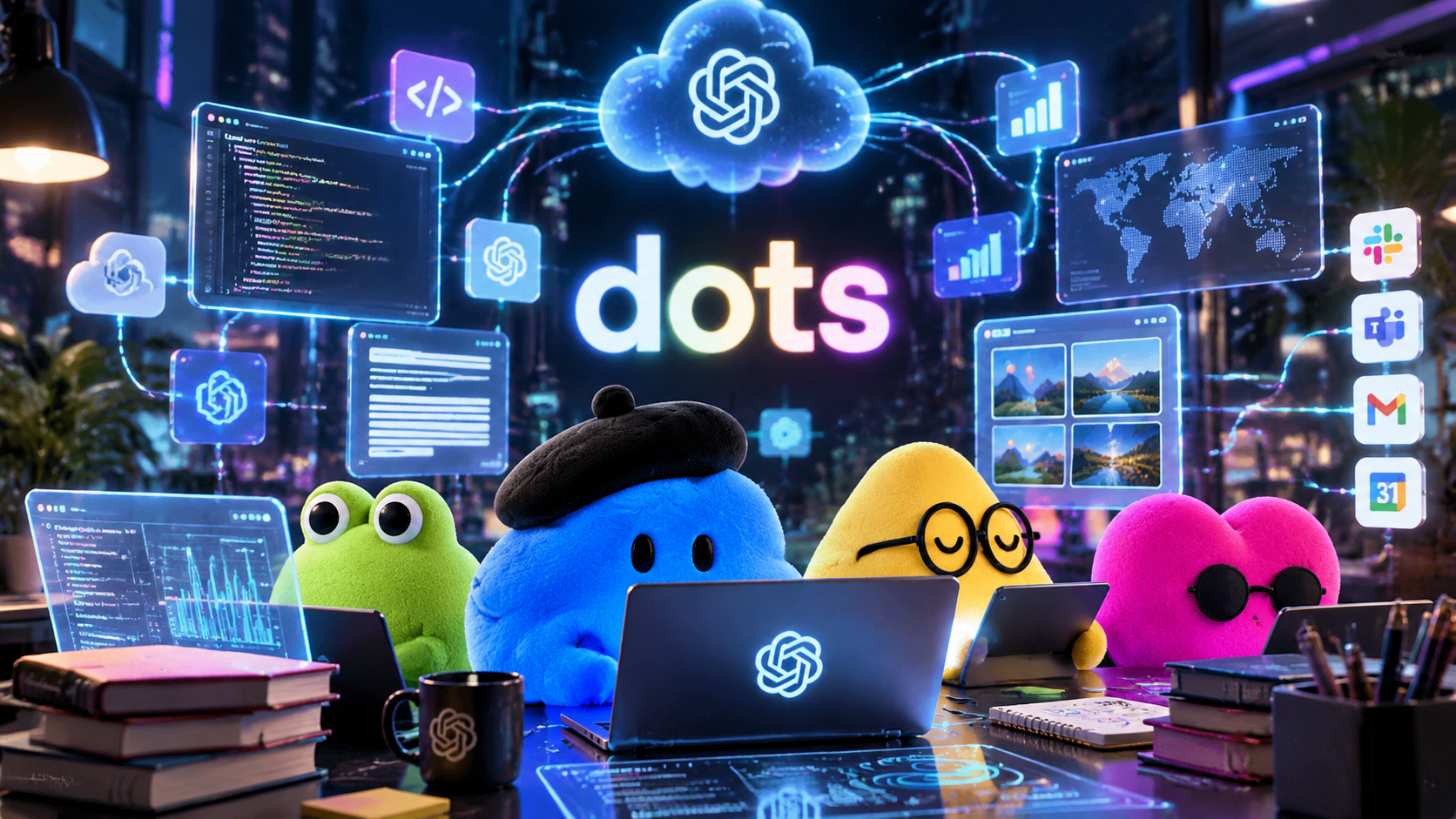
ISLAMABAD – OpenAI has introduced OpenAI Dots AI agents, a new generation of always-on artificial intelligence assistants designed to continue working toward user-defined goals without requiring constant prompts.
The announcement was made during OpenAI DevDay 2026, where the company presented Dots as a major step beyond traditional AI tools such as ChatGPT and Codex.
Unlike conventional AI assistants that respond only when users provide instructions, Dots are designed to operate continuously, complete tasks over time and take action based on previously defined goals.
According to OpenAI, each Dot receives its own cloud computer and browser, allowing it to continue working even after users log out.
What Are OpenAI Dots AI Agents?
OpenAI Dots AI agents are designed as personal digital workers that can manage ongoing tasks instead of handling only individual requests.
Users can create a primary Dot, assign it a name and provide instructions about the work they want completed.
The agents can monitor information, analyze updates, communicate through connected platforms and perform tasks over extended periods.
OpenAI says the long-term goal is to allow multiple Dots to collaborate as a team and handle complex workflows on behalf of users.
OpenAI Dots vs Traditional AI Assistants
| Feature |
Traditional AI Assistants |
OpenAI Dots AI Agents |
| User interaction
|
Requires new prompts
|
Works continuously toward goals
|
| Task duration
|
Short conversations or tasks
|
Long-term ongoing work
|
| Computer access
|
Limited tool usage
|
Dedicated cloud computer and browser
|
| Monitoring ability
|
Mostly manual
|
Can track changes automatically
|
| Collaboration
|
Individual assistant
|
Multiple Dots working together
|
| Business usage |
General assistance |
Specialist agents with tools and credentials |
What Can OpenAI Dots Do?
OpenAI demonstrated several possible uses for Dots across professional fields.
For software developers, a Dot could monitor customer feedback, identify issues and prepare possible fixes.
For researchers and scientists, a Dot could rerun analyses, review new information and investigate unexpected results as fresh data becomes available.
Businesses will also be able to create specialized Dots with their own identities, access permissions and tools.
OpenAI is working with Microsoft to connect these agents with Agent 365 security controls, allowing organizations to manage how AI workers operate within business environments.
OpenAI Dots Are Powered by GPT-6 Astra
The new AI agents run on GPT-6 Astra, which OpenAI describes as its most advanced model for reasoning, coding, research and computer-based tasks.
The model is designed to handle complex workflows by processing large amounts of information and producing longer outputs.
According to OpenAI, GPT-6 Astra supports:
| GPT-6 Astra Feature |
Details |
| Context window
|
1.05 million tokens
|
| Maximum output
|
Up to 128,000 tokens
|
| Main capabilities
|
Reasoning, coding, research and computer use
|
| Safety testing |
Evaluated on internal safety benchmarks |
OpenAI also shared internal benchmark results showing improvements in safety performance compared with previous models.
Safety Controls and User Approval
Because OpenAI Dots can perform tasks independently, the company has introduced controls to limit unwanted actions.
Users can create rules defining:
- Which tasks a Dot can complete automatically
- Which actions require approval
- What information the agent can access
- How connected apps are used
OpenAI said sensitive actions will continue to require explicit user permission.
These controls are designed to reduce risks associated with increasingly autonomous AI systems.
Availability of OpenAI Dots AI Agents
OpenAI Dots are initially available to selected users and organizations.
| User Type |
Availability |
| ChatGPT Pro users
|
Available in eligible markets
|
| Business Premium users
|
Available in eligible markets
|
| Enterprise users
|
Beta access when enabled by administrators
|
| Education users
|
Beta access when enabled
|
| Healthcare organizations |
Beta access when enabled |
OpenAI has also indicated that Dots will expand to additional platforms and communication tools, including Slack, Microsoft Teams and future text-message support.
The Future of Autonomous AI Agents
The launch of OpenAI Dots AI agents reflects a broader shift in artificial intelligence, moving from chat-based assistance toward autonomous digital workers.
Instead of simply answering questions, future AI systems are expected to monitor tasks, make decisions within limits and complete complex projects over time.
However, as AI agents become more independent, issues such as security, privacy, reliability and human oversight will remain important challenges.
OpenAI’s Dots represent another step toward a future where AI assistants are not only conversational but also active participants in everyday digital work.
Key Points :
- OpenAI launched Dots AI agents at DevDay 2026.
- Dots are designed to work continuously toward user goals.
- Each Dot receives its own cloud computer and browser.
- The agents are powered by GPT-6 Astra.
- Dots can work with platforms such as ChatGPT, Slack and Microsoft Teams.
- Businesses can create specialised AI agents with controlled access.
- OpenAI has added approval and safety controls for sensitive actions.
Read More:
For more such exclusive articles, follow Upfront .