Editorial
The hidden cost of electricity theft in Pakistan that everyone pays

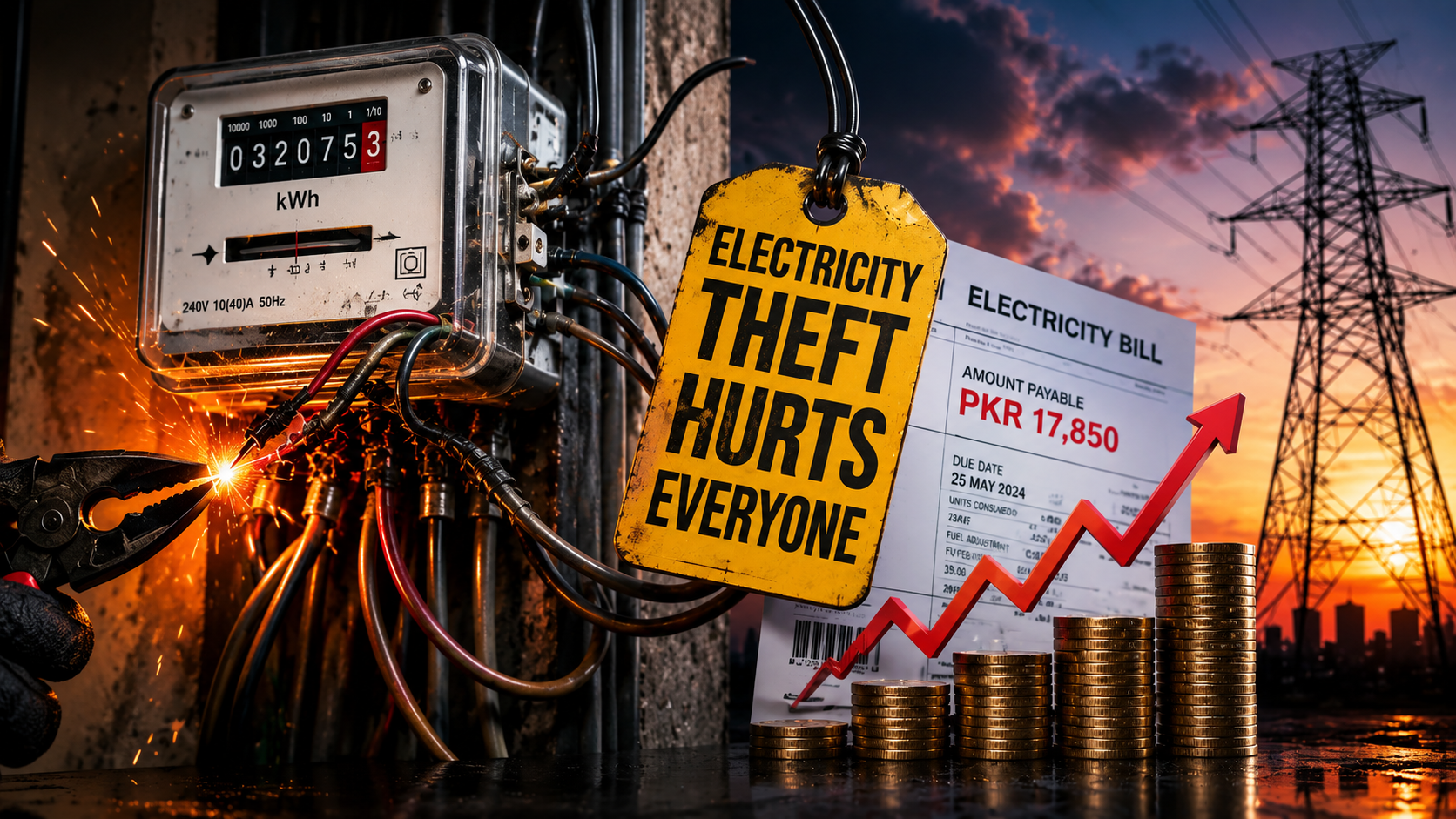
KARACHI – When electricity bills arrive every month, many Pakistanis immediately look at rising tariffs, fuel adjustments, and household consumption. However, another major challenge continues to affect the country’s power sector: electricity theft in Pakistan.
Many people consider electricity theft only a problem for power companies. However, its impact reaches far beyond utility offices. It affects honest consumers, puts pressure on the national grid, creates serious safety risks, and slows economic progress.
Therefore, understanding the real cost of electricity theft is important for every citizen because the consequences affect households, businesses, industries, and public institutions across Pakistan.
What Is Electricity Theft in Pakistan?
Electricity theft in Pakistan refers to the unauthorised use of electricity without proper approval or billing from the relevant electricity distribution company.
Although the issue often appears to be a financial problem, it creates wider challenges for the entire energy system. Electricity generation requires investment in fuel, infrastructure, transmission networks, and maintenance. When consumers use electricity without proper billing, the power sector loses important revenue needed for improvements.
Moreover, these losses affect the ability of companies and authorities to strengthen electricity services and improve reliability.
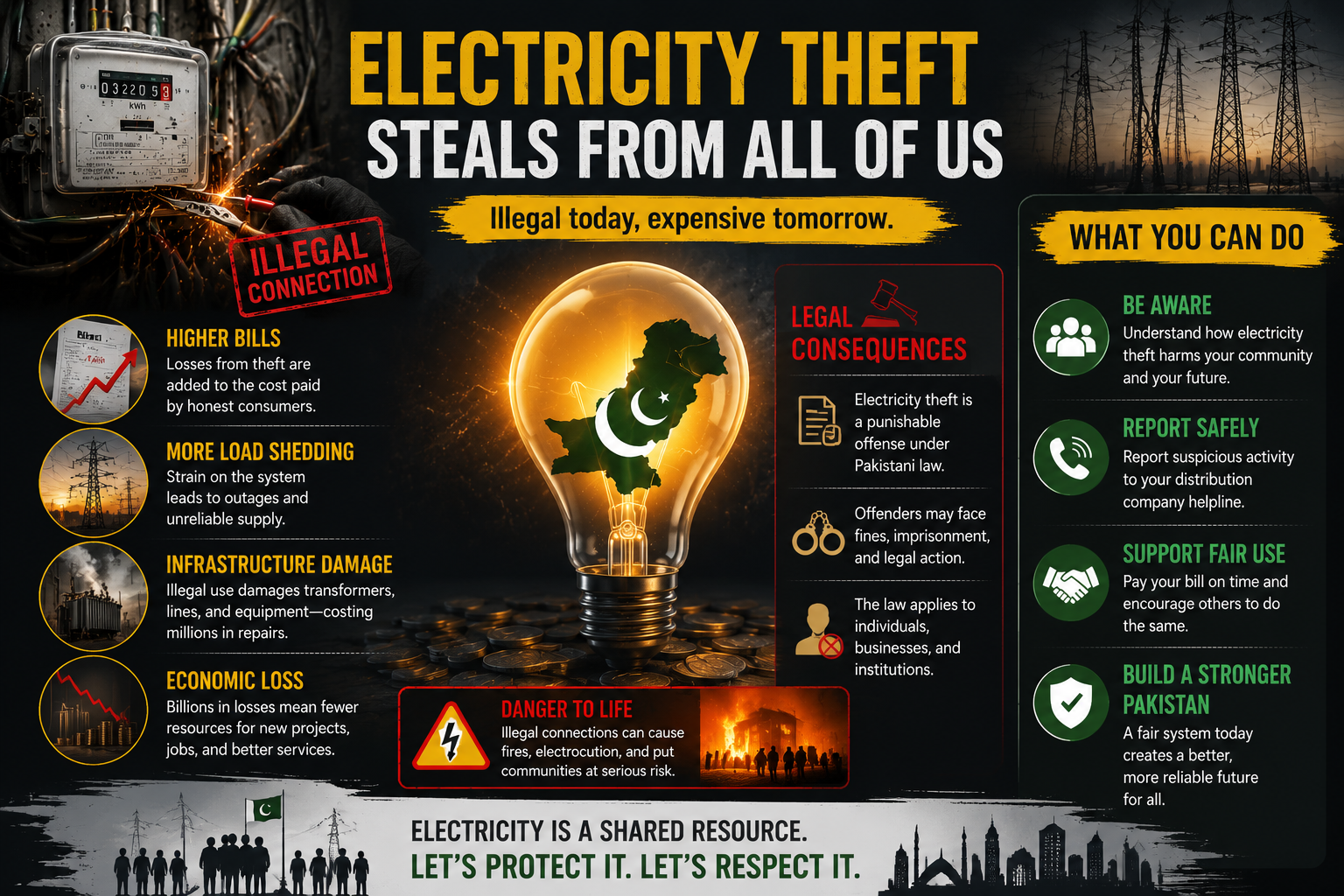
This Image is Ai generated and used for Illustration purposes only.
Why Electricity Theft Increases the Burden on Consumers
Honest Consumers Face the Financial Impact
One of the biggest effects of electricity theft in Pakistan is the pressure it creates on consumers who regularly pay their bills.
When electricity distribution companies face revenue losses, they struggle to maintain infrastructure and invest in better services. As a result, consumers may experience wider challenges within the electricity system.
Furthermore, a financially weaker power sector finds it more difficult to introduce modern technologies, upgrade networks, and improve customer facilities.
Electricity Theft Adds Pressure to the National Grid
Pakistan’s electricity network serves millions of homes, businesses, schools, and hospitals. Therefore, maintaining a stable system requires careful planning and efficient management.
Electricity theft adds unnecessary pressure to distribution networks. In addition, when infrastructure faces extra stress, companies may find it harder to provide consistent electricity services.
While several factors contribute to power shortages and outages, reducing electricity losses remains an important step toward creating a stronger electricity system.
How Electricity Theft Creates Safety Risks
Financial losses are not the only concern linked to electricity theft. More importantly, unsafe practices around electrical infrastructure can create serious risks for communities.
Fire and Equipment Damage
Electrical systems require professional handling and strict safety standards. However, unauthorised interference can increase the chances of fires, equipment failures, and damage to public infrastructure.
Consequently, such incidents can affect entire neighbourhoods and create additional risks for residents and emergency workers.
Risk of Electrocution
Electricity infrastructure carries significant dangers when people interfere with it without proper training.
Therefore, citizens should never attempt to inspect or handle electrical systems themselves. Instead, they should report concerns through official channels where trained personnel can respond safely.
The Economic Impact of Electricity Theft in Pakistan
A reliable electricity system plays a major role in Pakistan’s economic growth.
Industries depend on stable electricity to continue production, while businesses need dependable power to operate effectively. Similarly, hospitals, schools, and government institutions require uninterrupted electricity for essential services.
However, electricity theft reduces the financial resources available for improving the energy sector. As a result, it can slow infrastructure development and limit investment opportunities.
Additionally, reducing electricity losses can help create a more efficient power system that supports economic activity.
Fighting Electricity Theft Requires Collective Action
Authorities, electricity companies, regulators, and citizens all have important roles in reducing electricity theft in Pakistan.
Role of Government and Electricity Companies
Government institutions and electricity distribution companies can improve the situation by focusing on:
- Transparent billing systems.
- Better customer support services.
- Stronger monitoring and enforcement.
- Investment in modern electricity infrastructure.
- Public awareness campaigns.
At the same time, regulators such as NEPRA can continue promoting accountability and improvements within the power sector.
Role of Citizens
Citizens also contribute to building a fair electricity system.
For example, consumers can support lawful electricity use, pay bills on time, and report suspected issues through official complaint channels.
However, people should avoid direct confrontation or attempting to investigate electrical issues themselves because electricity-related incidents can be dangerous.
Pakistan Power Sector Performance Metrics (NEPRA Annual Evaluation)
| Metric | Official Value / Benchmark | Details & Financial Impact |
| Transmission & Distribution (T&D) Losses | 17.55% (DISCOs average) | Exceeds NEPRA allowable limits; results in an extra financial loss of ~Rs. 265 billion above target. |
| Electricity Cost Lost to Network | ~Rs. 910 Billion | Total monetary value of electricity lost within ex-WAPDA distribution networks alone. |
| Unrecovered Billing Rate | ~3.5% unrecovered | Represents the shortfall in bill collections relative to total electricity billed. |
| Total Cumulative Financial Loss | Over Rs. 1 Trillion | Combined impact of T&D losses and recovery shortfalls across DISCOs and K-Electric. |
| Debt Servicing Surcharge (DSS) | ~Rs. 233 Billion | Operational inefficiency burden passed directly on to end consumers. |
| Worst Performing DISCOs (Loss Shortfalls) | PESCO: Rs. 87.5bn
QESCO: Rs. 52.4bn SEPCO: Rs. 36.0bn LESCO: Rs. 35.2bn |
Primary regional contributors to financial losses beyond targets set by the regulator. |
Building a Safer and Fairer Electricity Future
Pakistan’s energy challenges require long-term solutions. Although electricity theft remains a major concern, improving awareness and cooperation can help reduce its impact.
Therefore, authorities should continue improving transparency, strengthening infrastructure, and educating citizens about the importance of responsible electricity use.
At the same time, consumers should recognise that protecting the electricity system benefits everyone. A reliable power network supports homes, businesses, education, healthcare, and economic development.
Conclusion
Electricity theft in Pakistan is not only a challenge for electricity companies. It affects every consumer by weakening the power system, creating safety risks, and limiting economic growth.
However, reducing electricity theft requires cooperation between authorities, companies, and citizens. Through better awareness, transparent systems, responsible behaviour, and effective enforcement, Pakistan can move towards a safer and more reliable electricity future.
Ultimately, protecting electricity resources means protecting the interests of every Pakistani household.
Read More:
Stay Connected with Upfront
Get the latest news, technology, business, sports and entertainment stories from Upfront.
Add Upfront as a preferred source on GoogleAdd Upfront to your preferred sources to see more of our stories across Google Search.