Connect with us

Latest

Full Sugar Inquiry Report 2020

Published

on

Full Sugar Inquiry Report 2020

ISLAMABAD – PTI government on Thursday declared the findings of the inquiry report on the sugar crisis public.
PM Imran Khan’s aide on accountability, made the much-awaited sugar inquiry report public in the federal capital.

Following the Federal Cabinet approval, the government on Thursday made the inquiry report of the Sugar Inquiry Commission public, which revealed that the major sugar mills groups had under-reported sales and committed fraud using different tactics.

View Here Complete Sugar Inquiry Report

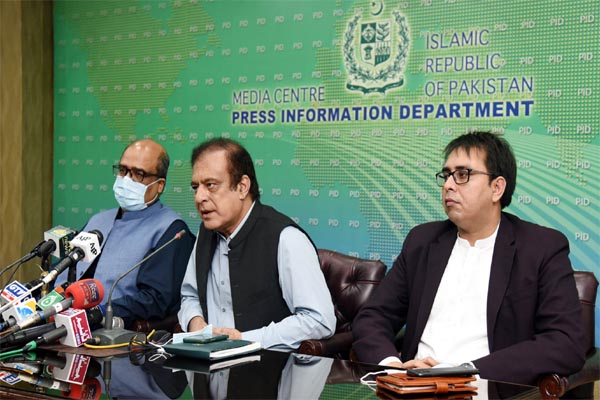
Briefing newsmen after the special cabinet meeting chaired by Prime Minister Imran Khan here, Minister for Information and Broadcasting Shibli Faraz flanked by Special Assistant to the PM on Accountability Shahzad Akbar and SAPM Shahbaz Gill, said the present government was firmly committed to accountability and transparency in governance.

He said in the past, only lip service was paid regarding sugar and flour crises, and no practical steps were taken to address the problem and find out the culprits. It was Prime Minister Imran Khan who ordered the inquiry as the common man was the main victim of the loot and plunders on account of the sugar and flour shortages.

The prime minister had also issued directives to the Cabinet Secretary to gather the details of the assets of unelected advisers and special assistants and made them public.

SAPM Shahzad Akbar said today was a very important day in the history of Pakistan as no government had ever made the reports of such inquiry commissions public in the past.
He said the Sugar Inquiry Commission was established to ascertain the reasons for the increase in the sugar prices in the last couple of years, and its detailed report was presented in the special cabinet meeting held today.

The commission’s report, he said, proved what PM Imran Khan had always maintained that “whenever a businessman comes into politics, he will always do business even at the expense of the poor.” The report would be available online following the prime minister’s orders, he added.

Shahzad Akbar said the report explicitly stated that the sugar mill owners not only purchased the product from the sugarcane growers at the price less than the support price announced by the government but also cut the weight of sugarcane by 15 to 30 percent.

He said the commission also found irregularities in the form of giving advance payments to farmers in the form of cash or commodity, which was akin to unregulated banking and they earned up to 35 per cent profit on the loaned amount.

Shahzad Akbar said a subsidy of Rs 29 billion was given to the sugar industry in the last five years.

He said it was found that the net total income tax paid by around 88 sugar mills of the country was mere Rs 10 billion after getting refunds. Six big industrial groups of Pakistan, which had a 51 percent share of the sugar industry and were acting as a ‘cartel’, and the forensic audit of their mills was conducted by the commission.

He said the audit of Alliance Sugar Mill from Rahim Yar Khan partially owned by Pakistan Muslim League- Quaid (PML-Q) senior leader Moonis Elahi, showed that between 2014 to 2018, it made a systematic cut of 11 to 14 percent of the amount it owed to the farmers, which translated to Rs 970 million. It was was a huge blow for the farmers.

The said mill under-reported its sales for several years and sold sugar to unnamed buyers, he said, adding the inquiry report mentioned violations of the Pakistan Penal Code committed by the mills.

Mentioning the JDW Sugar Mills in which Jahangir Tareen owned 21 percent shares, he said according to the report, the mill management was involved in double booking, under-reporting, and over-invoicing. It under-invoiced sales from bagasse and molasses, which resulted in 25 percent cost inflation. The mill was involved in forward sales, satta and benami sales.

He said the Al-Arabiya Sugar Mills owned by Salman Shehbaz Sharif was also audited, which found to be involved in a fraud of Rs 400 million through informal receipts and market manipulation.

Shahzad Akbar said the report revealed that certain sugar mills used informal receipts and it was ultimately the farmer, who was crushed because there was no official record. The mill owners showed the price of production to be more than the support price which meant that farmers earned less than the support price.

He said it was the first time that an “independent inquiry” had been conducted into the cost of production. He said in 2017-18, sugar mills determined the cost of production at Rs 51 per kilograms whereas as per the calculations of the commission it was estimated at Rs 38 instead.

Similarly in 2018-19, the sugar mills gave the cost price of one kg at Rs 52.60 while according to the report the estimated cost was Rs 40, he added.

The SAPM said the report also pointed out that the sucrose content as shown by the Pakistani mills’ owners (9.5pc to 10.5pc) was less than the international standard.

He said on the one hand, the inflated cost of production and market manipulation was being done and on the other, accounting fraud was also being committed by the sugar mill owners.

Shahzad Akbar said the report of the commission had also shown that the mill owners were maintaining two account books – one for the government and the other for themselves. There was an under-reporting on sugar procurement up to 25-30 percent, which was a scandal as no tax was evaded because of that factor.

He said the report revealed that the Omni Group in Sindh had specifically benefited from the subsidies given by Sindh Chief Minister Murad Ali Shah. The Omni Group was already getting subsidies from the Federal Government, but the Sindh Government gave it an additional subsidy.

Shahzad Akbar said the inquiry commission headed by Director General of Federal Investigation Agency Wajid Zia, in its forensic audit report, had recommended strengthening the regulatory framework and pushing the regulators to perform their assigned duties.

The commission noted that the failure of regulators right from the role of Sugarcane Commissioner up to policy-making level was quite obvious, and recommended to rectify the gaps and shortcomings in that regard.

Any fraud in sales tax by a sugar mill was impossible sans the connivance of Federal Board of Revenue (FBR) representative deployed at its premises, the SAPM said. The delivery, sales, and purchase mechanism of sugar mills should be regulated as no authentic record of their sales, exports, purchases or even production was available.

Shahzad Akbar said the cabinet decided that looted money should be recovered from the sugar mills and recommendation for a mechanism in that regard would be finalized after Eid ul Fitr.

He said the commission had determined the price of sugar by giving sugar mill owners a 15 percent margin of profit.

The mills were looting the farmers by showing 15 to 30 percent less weight of the sugarcane on the receipts of purchases, which were also not in proper form.

He said the commission determined the production cost of per kg sugar at Rs 38, Rs 40.60, and Rs 46.04 in the years 2017-18, 2018-19 and 2019-20whereas the mills were showing Rs 51, Rs 52.6 and Rs 62 per kg respectively.

He said the bye-products price was also shown less by sugar mills owners. He said over 100 billion was earned by the sugar mafia as windfall profit by market manipulations during the current year. Most of the sales were Benami, including in the names of truck drivers and others to devour taxes. Most of the mills committed fraud in the sale tax payments.

He said the crushing capacity had been enhanced by various mills without getting approval from the relevant authorities.

He said 68 percent sugar was exported to Afghanistan but the data of Pakistan and Afghanistan did not match. He elaborated that the weight lifting capacity of a truck was 15 to 20 tons whereas the sugar mills invoices showed that each truck carried some 70 to 80 tons of sugar to Afghanistan. The payment to sugar barons was done from Afghanistan through telegraphic transfers, he added.

He said the commission had recommended a thorough probe into the sugar export to Afghanistan.-APP


Continue Reading
Click to comment

You must be logged in to post a comment Login

Leave a Reply

Entertainment

Paramount’s $111bn Warner Bros deal blocked by States lawsuit

Published

on

The image is AI-generated and used for illustration purposes only

KARACHI – A coalition of US state attorneys general has filed a lawsuit seeking to block Paramount’s proposed $111 billion acquisition of Warner Bros. Discovery, arguing that the deal would significantly reduce competition in the entertainment industry.

The lawsuit, filed on Monday in a federal court in California, alleges that the merger violates US antitrust laws by combining two of Hollywood’s largest film studios. The states argue that the transaction would lead to higher prices, fewer theatrical releases and reduced quality and diversity of content.

Who filed the lawsuit?

The legal challenge was brought by attorneys general from Arizona, Colorado, Connecticut, Massachusetts, Minnesota, Nevada, New Jersey, New Mexico, New York, Oregon and Washington. They have asked the court to prevent Paramount from completing the deal while the case is being heard. If necessary, they also plan to seek a temporary restraining order.

Read more: What’s slowing your Windows 11 PC? Copilot can now help

According to the complaint, the merger would leave four major studios controlling more than 85 per cent of the US market for wide-release theatrical films. The states claim Paramount would hold more than 30pc of the blockbuster film distribution market, increasing its bargaining power over cinema operators.

The lawsuit argues that cinemas could be forced to surrender a larger share of ticket revenue while facing stricter conditions on discounts and complimentary tickets. As a result, theatres may increase ticket prices and reduce investment in premium experiences such as luxury seating, larger screens and upgraded concessions.

Read more: Punjab sales tax: Digital payments face tax increase

State officials also claim the merger would weaken competition in the licensing of basic cable television channels. Paramount and Warner Bros. Discovery currently rank among the largest providers of cable programming, with rights to major sporting events, including March Madness and Major League Baseball broadcasts.

California Attorney General Rob Bonta said the proposed merger would harm consumers, theatres and cable distributors by reducing competition and limiting content choices.

“The unlawful merger of these two entertainment behemoths would lead to higher prices, lower quality, and less content for film and television,” Bonta said.

What was Paramount’s reaction to Antitrust claims?

Paramount dismissed the lawsuit, calling it a flawed interpretation of US antitrust law. The company argued that the combined business would be better equipped to compete with dominant technology and streaming companies such as Netflix, Amazon, and Google.

According to Paramount, the merger would create a stronger media company capable of investing in premium content while offering more opportunities for creators, workers and consumers.

Read more: Pakistan wins three medals in Physics Olympiad

The company also warned that blocking the transaction would strengthen the market position of major technology firms rather than promote competition.

Justice Department Already Approved Deal

The legal action comes despite the US Department of Justice approving Paramount’s acquisition of Warner Bros. Discovery in June without requiring asset sales or other concessions.

However, the merger still requires approval from the Federal Communications Commission (FCC), UK competition regulators and the European Commission.

Regulators in China, South Africa, Saudi Arabia, Ukraine, Serbia and North Macedonia have already cleared the transaction, while several European countries have also approved foreign investment aspects of the deal.

Consumer Lawsuit Adds Pressure

The states’ lawsuit is not the only legal challenge facing Paramount.

Earlier this year, Paramount subscribers filed a separate lawsuit claiming the merger would reduce competition in streaming, theatrical distribution and news services. The plaintiffs argue the combined company could raise subscription prices, reduce content output and tighten control over licensing and distribution.

To address industry concerns, Paramount Chief Executive David Ellison has pledged to release at least 30 theatrical films annually with a minimum 45-day exclusive cinema window while continuing to operate Paramount and Warner Bros. as separate studios.

Read more: Korean skincare products launched in Pakistan here’s what you should know

Industry analysts, however, have questioned whether the company can sustain those commitments while managing an estimated $79 billion in debt following the merger.

Key Points:

  • A coalition of US states has filed an antitrust lawsuit to stop Paramount’s proposed $111 billion acquisition of Warner Bros. Discovery.
  • The states argue the merger would reduce competition in theatrical film distribution and cable television licensing.
  • Officials warn the deal could result in higher prices, fewer movies in cinemas, and less consumer choice.
  • Paramount rejects the allegations, saying the merger would strengthen competition against streaming giants such as Netflix, Amazon and Google.
  • The US Justice Department has already approved the transaction, but several regulatory reviews and legal challenges remain pending.

Continue Reading

Latest

Audi cuts prices of most models after Budget 2026-27 tax changes

Published

on

The image is AI-generated and used for illustration purposes only

Key points:

  • Audi Pakistan has revised prices following tax adjustments announced in the Budget 2026-27.
  • Seven variants have become cheaper, with reductions ranging from Rs150,000 to Rs8.15 million.
  • Audi A6 Sportback e-tron Executive received the biggest price cut of Rs8.15 million.
  • Audi Q6 SUV e-tron Performance is now Rs5.8 million cheaper.
  • Audi A3, Q3 and Q3 Sportback have also received significant price reductions.
  • Audi Q8 55 TFSI quattro is the only model to become more expensive, with its price increasing by Rs15.1 million.

LAHORE – Audi Pakistan has revised the prices of its vehicle lineup following tax adjustments introduced in the federal Budget 2026-27, reducing prices for seven variants while substantially increasing the price of one model.

According to the latest price list issued by the company, buyers can now save between Rs150,000 and Rs8.15 million on selected Audi vehicles. However, the Audi Q8 55 TFSI quattro is the only model in the lineup to receive a price increase, becoming Rs15.1 million more expensive.

Which Audi model received the largest price cut?

The largest reduction has been announced for the Audi A6 Sportback e-tron Executive, whose price has been lowered from Rs42 million to Rs33.85 million, representing a saving of Rs8.15 million. Another significant revision has been made to the Audi Q6 SUV e-tron Performance, which now costs Rs36.2 million, down from Rs42 million.

Audi has also reduced prices for its entry-level models. The Audi A3 Sedan S line TFSI is now priced at Rs20.8 million, making it Rs3.7 million cheaper than before. Similarly, the Audi Q3 SUV and Audi Q3 Sportback have become more affordable after price reductions of Rs3.75 million and Rs3.9 million, respectively.

Read more: Obsession star Navarrette to get Marvel role truth about rumours

Meanwhile, the Signature variants of the Audi Q6 SUV e-tron and Audi A6 Sportback e-tron have received relatively modest reductions of Rs150,000 each. While most of Audi’s lineup has become more affordable, the Audi Q8 55 TFSI quattro has moved in the opposite direction. Its price has increased by Rs15.1 million, making it the only model to record a price hike.

What caused the Audi price cut?

Although Audi has not provided a detailed explanation, the price reductions suggest that recent tax measures may have lowered the cost of importing or selling several models, particularly electric vehicles. In contrast, the significant increase in the Q8’s price indicates that different tax or import-related factors may now apply to that variant.

Model Old Price (Rs) New Price (Rs) Difference Status
Audi A3 Sedan S line TFSI 24.5 Million 20.8 Million -3.7 Million Price Reduced
Audi Q3 SUV Not Specified Not Specified -3.75 Million Price Reduced
Audi Q3 Sportback Not Specified Not Specified -3.9 Million Price Reduced
Audi Q6 SUV e-tron Performance 42 Million 36.2 Million -5.8 Million Price Reduced
Audi Q6 SUV e-tron Signature Not Specified Not Specified -150,000 Price Reduced
Audi A6 Sportback e-tron Executive 42 Million 33.85 Million -8.15 Million Price Reduced
Audi A6 Sportback e-tron Signature Not Specified Not Specified -150,000 Price Reduced
Audi Q8 55 TFSI quattro Not Specified Not Specified +15.1 Million Price Increased

Continue Reading

Education

Mufti Taqi Usmani declares crypto haram in new Fatwa

Published

on

Mufti Taqi Usmani Declares Crypto Haram in New Fatwa
This Image has been generated using Ai

Key points: 

  • Religious Ruling: Prominent scholar Mufti Muhammad Taqi Usmani issued a fatwa declaring digital currency trading impermissible (haram). 
  • Broad Scope: The Mufti Taqi Usmani crypto fatwa covers all digital assets, including standard cryptocurrencies, tokens, and stablecoins like USDT. 
  • Legal Definition: According to the decree, digital currencies do not meet the foundational Islamic criteria to be classified as real wealth or property. 
  • Market Influence: Although the ruling is a religious opinion rather than a state law, it will likely impact Muslim investors across Pakistan. 

ISLAMABAD – Pakistan’s leading Islamic scholar, Mufti Muhammad Taqi Usmani, has issued a definitive religious decree regarding digital asset trading. Published by scholars affiliated with Darul Uloom Karachi, the formal declaration clarifies that cryptocurrency operations are impermissible under Islamic jurisprudence. Therefore, practicing Muslims are advised to avoid buying, selling, or investing in these virtual markets. 

The ruling takes a strict stance on the fundamental nature of decentralized digital networks. Specifically, the decree concludes that digital assets lack physical backing, intrinsic utility, or state authorization. For this reason, they fail to meet the Islamic legal definition of true wealth (mal). Consequently, any financial transactions involving these assets are considered void from a religious perspective.
Fatwa by mufti taqi usmani

Total Ban Covers Tokens and Stablecoins 

Furthermore, the declaration stresses that changing the names or branding of digital assets does not alter their religious status. The Mufti Taqi Usmani crypto fatwa explicitly groups all virtual assets into a single financial category. This means the restriction applies uniformly across the entire Web3 ecosystem. 

“Cryptocurrency is known by different names, including virtual currency, token, and stablecoin. In all these forms, cryptocurrency is not considered wealth, and therefore it is not permissible,” the official statement clarifies. 

As a result, the scope of this fatwa extends far beyond mainstream decentralized coins like Bitcoin and Ethereum. It explicitly restricts the use of blockchain-based utility tokens and dollar-pegged stablecoins such as Tether (USDT). 

Overview of the Religious Decree 

Attribute  Decree Details 
Issuing Authority  Mufti Muhammad Taqi Usmani / Darul Uloom Karachi 
Focus Keyphrase  Mufti Taqi Usmani crypto fatwa 
Legal Classification  Impermissible (Haram / Not Recognized as Wealth) 
Assets Affected  Bitcoin, Ethereum, Altcoins, Custom Tokens, and Stablecoins (e.g., USDT) 
Legal Status in Pakistan  Religious advisory opinion (Not a binding statutory state law) 

Institutional Backing and Public Impact 

The formal document carries multiple official endorsements from respected senior scholars at Darul Uloom Karachi. While this fatwa functions strictly as a religious guidance framework rather than a government-enforced law, its societal impact remains massive. 

Because Mufti Taqi Usmani is highly respected globally in Islamic banking and finance circles, his opinions carry immense weight. Consequently, this declaration is expected to significantly shape public sentiment and curb crypto adoption rates among retail investors in Pakistan. 

What is the main message of the Mufti Taqi Usmani crypto fatwa? 

The fatwa states that cryptocurrency trading is impermissible (haram) under Islamic law because digital currencies do not qualify as real wealth or property. 

Does this ruling also apply to stablecoins like USDT? 

Yes. The decree explicitly mentions stablecoins and tokens, stating that changing the terminology or tying a coin to a fiat currency does not change its religious ruling. 

Is cryptocurrency now illegal in Pakistan because of this fatwa? 

No. A fatwa is a formal religious opinion and legal advisory for Muslims. It is not a state law enacted by the government of Pakistan, though it strongly influences public financial choices. 

 Read More : Saheefa Jabbar Khattak’s latest look sparks debate on social media. 

Continue Reading

About

Upfront influence about 20 million users and is the number one business and technology news network on the planet


© 2022 upfront. All Rights Reserved.

Trending

Copyright © 2026