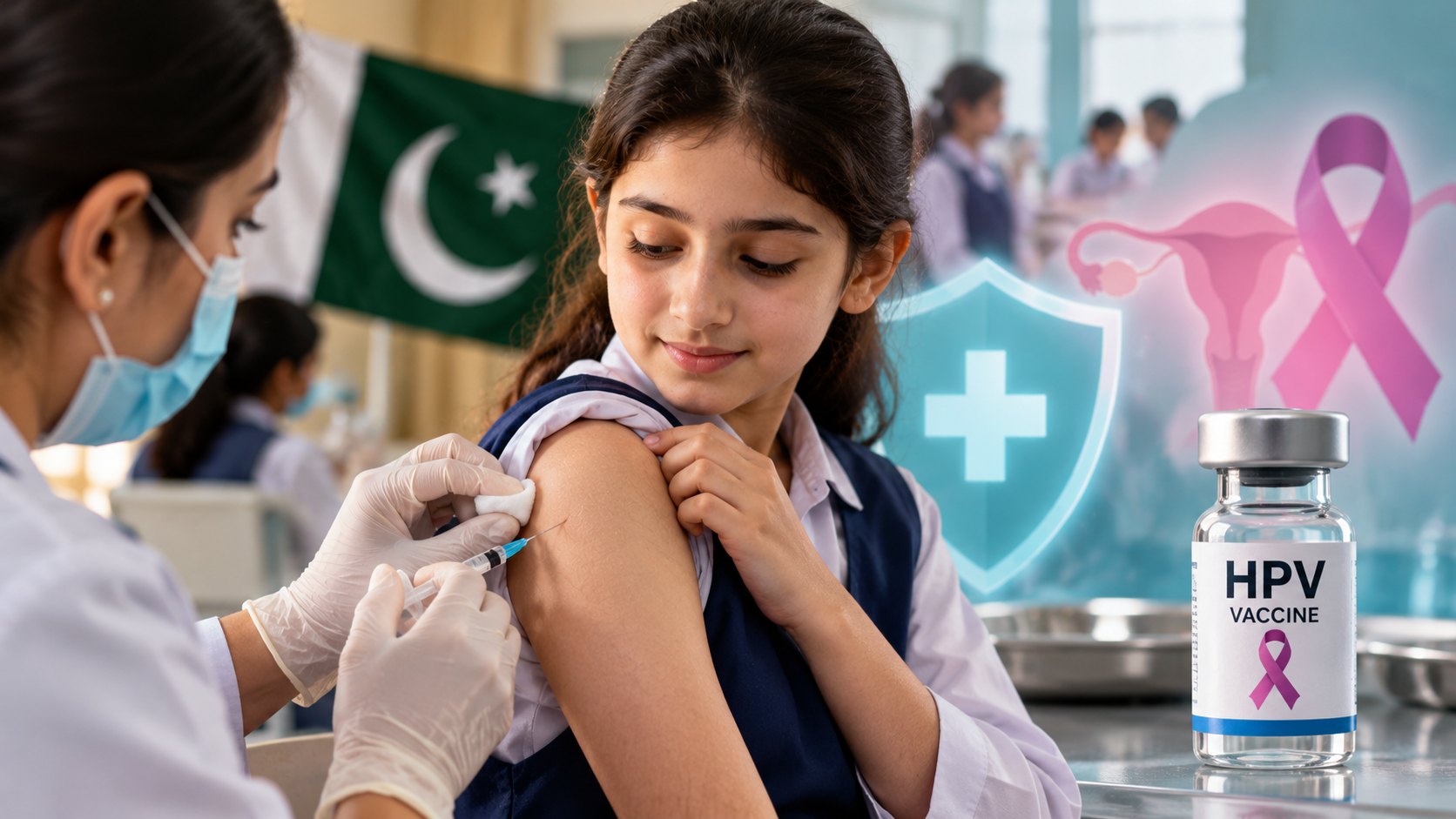
PESHAWAR – Health authorities in Pakistan are urging parents to consider the HPV vaccine in Pakistan for eligible girls as part of efforts to prevent cervical cancer.
The appeal comes as health officials continue to raise awareness about human papillomavirus and the role vaccination can play in reducing the risk of cervical cancer.
Pakistan launched its first national HPV vaccination campaign in September 2025, targeting girls aged 9 to 14. The initial campaign covered Punjab, Sindh, Islamabad Capital Territory and Azad Jammu and Kashmir. The vaccine was offered free through schools, madrassas and health facilities.
Health authorities are now continuing awareness efforts to encourage families to understand the benefits of vaccination and make informed decisions about their daughters’ health.
Why the HPV Vaccine in Pakistan Is Being Promoted
Human papillomavirus is a common infection and certain types can cause cervical cancer.
Persistent infection with high-risk HPV types is responsible for the vast majority of cervical cancer cases. WHO recommends HPV vaccination as an important tool for preventing the disease.
For this reason, vaccination is generally recommended during early adolescence.
WHO identifies girls aged 9 to 14 as the primary target group for HPV vaccination. The vaccine provides the greatest preventive benefit when given before exposure to HPV.
Pakistan Has Already Started National HPV Vaccination
Pakistan introduced the HPV vaccine in Pakistan through a nationwide campaign in September 2025.
The government, with support from WHO, Gavi and UNICEF, initially aimed to reach 13 million girls aged 9 to 14.
More than 49,000 health workers were trained to support the campaign. Vaccination teams worked through schools, health facilities, outreach locations and mobile teams to reach eligible girls.
WHO later reported that more than 9.6 million girls aged 9 to 14 had been protected during the campaign.
Pakistan HPV Vaccination Campaign
| Detail |
Information. |
| Target age |
9 to 14 years. |
| First national campaign |
September 2025. |
| Initial target |
13 million girls. |
| Girls protected |
More than 9.6 million. |
| Health workers trained |
More than 49,000. |
| Initial coverage |
Punjab, Sindh, AJK and Islamabad. |
| Vaccine availability |
Free for eligible girls during the campaign. |
The introduction of the vaccine marked a major development in Pakistan’s efforts to prevent cervical cancer.
Why Girls Are Vaccinated at a Young Age
The timing of the HPV vaccine in Pakistan is based on its preventive purpose.
HPV vaccination works best when it is given before a person is exposed to the virus. WHO therefore recommends routine vaccination for girls aged 9 to 14.
The recommendation is not about treating an existing HPV infection.
Instead, vaccination aims to provide protection before exposure and reduce the risk of HPV-related disease later in life.
Cervical Cancer Remains a Serious Health Concern
Cervical cancer continues to affect thousands of women in Pakistan.
WHO estimates that Pakistan records more than 5,000 new cervical cancer cases each year, with around 3,200 women dying from the disease annually.
These figures have made cervical cancer prevention an important part of Pakistan’s public health agenda.
The government has also committed to the broader WHO goal of eliminating cervical cancer as a public health problem by 2030. That strategy involves vaccination, screening and timely treatment.
Is the HPV Vaccine Safe
Health authorities and WHO describe HPV vaccines as safe and effective.
Pakistan’s Federal Directorate of Immunization has described the vaccine used in its campaign as safe, free and effective. The vaccine introduced through the national programme was also WHO prequalified.
WHO says data from clinical trials and post-marketing surveillance across several continents show that HPV vaccines are safe.
Parents who have questions about vaccination should discuss them with qualified healthcare professionals and use information from official health authorities.
HPV Vaccination Does Not Replace Screening
Receiving the HPV vaccine in Pakistan is an important preventive measure, but vaccination is not a replacement for cervical cancer screening.
Women can still require screening later in life because HPV vaccination does not protect against every possible cause of cervical cancer.
WHO’s cervical cancer elimination strategy combines HPV vaccination with screening and treatment.
This means Pakistan will need to strengthen all three areas to achieve long-term reductions in cervical cancer.
Misinformation Has Created Challenges
Pakistan’s first HPV vaccination campaign also faced misinformation and concerns among some communities.
WHO reported that health workers had to address questions from parents and counter false claims about the vaccine. Community engagement and awareness efforts helped improve acceptance during the campaign.
This makes accurate communication particularly important.
Parents should be able to receive clear information about the purpose of the vaccine, the recommended age and its role in cervical cancer prevention.
What Parents Should Know About HPV Vaccination
Parents considering the HPV vaccine in Pakistan should first confirm their daughter’s eligibility under the programme available in their area.
They should also seek information from qualified healthcare professionals if they have concerns about vaccination.
The vaccine is intended to prevent HPV-related disease. It is not a treatment for an existing HPV infection or cervical cancer.
Families should also remember that vaccination forms only one part of a wider approach to women’s health.
Pakistan Continues to Expand Awareness
Pakistan’s HPV vaccination programme is being developed in phases.
The initial national campaign covered four areas, while the planned rollout has included expansion to other provinces and regions. WHO’s original programme plan identified Khyber Pakhtunkhwa for introduction in 2026, followed by Balochistan and Gilgit-Baltistan in 2027.
The continued expansion means awareness will remain important as more families encounter the programme.
Health workers, schools and community leaders can all play a role in helping parents understand the purpose of HPV vaccination.
The Goal Is Prevention
The push for the HPV vaccine in Pakistan is ultimately linked to a broader effort to reduce cervical cancer among Pakistani women.
Vaccinating eligible girls can provide protection against HPV types that cause cervical cancer. However, achieving a lasting reduction in deaths will also require accessible screening and timely treatment.
Pakistan has already taken the first major step by introducing HPV vaccination nationally.
The next challenge is ensuring that eligible girls can access the vaccine and that parents receive accurate information before making decisions about their children’s healthcare.
For families, health authorities recommend getting reliable information from qualified healthcare professionals and official vaccination services.
Key Points:
- Health authorities are urging parents to consider HPV vaccination for eligible girls.
- The HPV vaccine in Pakistan was introduced through a national campaign in September 2025.
- The initial campaign targeted girls aged 9 to 14.
- More than 9.6 million girls were protected during the first campaign, according to WHO.
- More than 49,000 health workers were trained to support the campaign.
- WHO recommends HPV vaccination for girls aged 9 to 14.
- HPV vaccination works best when given before exposure to the virus.
- Cervical cancer prevention also requires screening and timely treatment.
- Parents with concerns about vaccination should consult qualified healthcare professionals.
- Pakistan is continuing efforts to expand HPV vaccination and cervical cancer prevention.
Read More:
For more such exclusive articles, follow Upfront .