Education
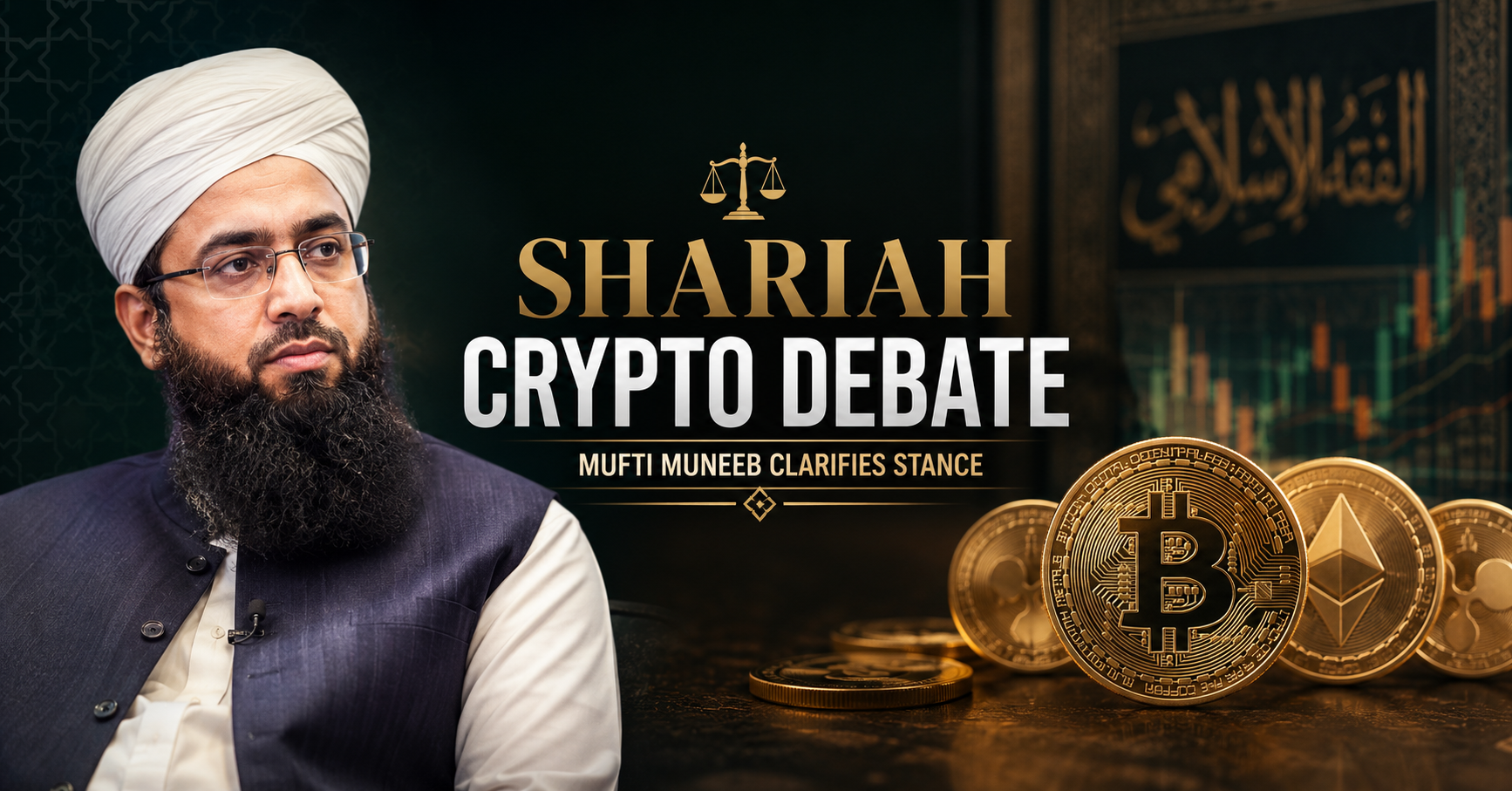
Shariah crypto debate: Mufti Muneeb Clarifies Stance

Key Points:
-
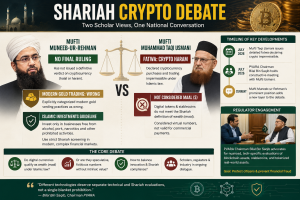
Mufti Muneeb Steps In: Senior Islamic scholar Mufti Muneeb-ur-Rehman has taken center stage by clarifying that he has not issued a final religious ruling on digital currencies.
-
Gold Stance Made Clear: While remaining neutral on crypto, Mufti Muneeb explicitly categorized modern gold trading practices as wrong.
-
Contrasting Fatwa: Concurrently, prominent scholar Mufti Muhammad Taqi Usmani officially declared cryptocurrency purchases and trading impermissible under Islamic law.
-
Regulator Engagement: Following the decree, Pakistan Virtual Assets Regulatory Authority (PVARA) Chairman Bilal Bin Saqib met with Mufti Taqi Usmani to advocate for nuanced, tech-specific evaluations.
LAHORE – A major discussion regarding digital finance has emerged as the Pakistan cryptocurrency Shariah debate gains significant momentum across the country. In a recent interview, senior Islamic scholar Mufti Muneeb-ur-Rehman shifted the conversation by clarifying that he has not yet issued a definitive religious verdict declaring cryptocurrency either permissible or impermissible.
However, Mufti Muneeb explicitly categorized modern gold trading practices as wrong. Addressing broader Islamic investments, Mufti Muneeb emphasized that Muslims must strictly invest in businesses free from prohibited activities like alcohol, pork, and narcotics. He noted that because modern financial markets remain highly complex, scholars must utilize rigorous Shariah screening criteria to properly evaluate compliance.
Contrasting Edicts and Regulatory Dialogues
The theological landscape grew more defined after renowned scholar Mufti Muhammad Taqi Usmani issued a detailed fatwa against virtual currencies. Specifically, the decree declared cryptocurrency trading and purchases impermissible under Islamic law.
According to the fatwa, digital tokens and stablecoins fail to meet the foundational Shariah definition of wealth ($maal$). Consequently, the ruling considers these assets to be entries of virtual numbers, making their use for commercial payments invalid.
Timeline of Key Developments
[July 2026] ➔ Mufti Taqi Usmani issues detailed fatwa declaring crypto impermissible.
 │
[July 2026] ➔ PVARA Chairman Bilal Bin Saqib holds constructive meeting with Mufti Usmani.
 │
[Current] ➔ Mufti Muneeb-ur-Rehman's prominent position adds a new layer to the debate.
Technical Regulation Versus Traditional Jurisprudence
This strict religious ruling prompted immediate action from state regulators working to integrate fintech into the formal economy. Specifically, Pakistan Virtual Assets Regulatory Authority (PVARA) Chairman Bilal Bin Saqib held a constructive meeting with Mufti Taqi Usmani to discuss the legal framework.
During the dialogue, Saqib argued that blockchain-based assets, stablecoins, and tokenized real-world assets represent a wide spectrum of distinct technologies. Therefore, he maintained that they deserve separate technical and Shariah evaluations rather than a single blanket prohibition. Ultimately, the newly highlighted perspective from Mufti Muneeb-ur-Rehman adds a highly anticipated layer of complexity to the ongoing state discussions surrounding non-fiat financial assets.
Did Mufti Muneeb-ur-Rehman ban cryptocurrency?
No. Unlike his definitive stance against gold trading, Mufti Muneeb clarified that he has withheld a final, clear religious ruling regarding the permissibility of cryptocurrency.
What is the core issue in the Pakistan cryptocurrency Shariah debate?
The central conflict revolves around whether digital currencies qualify as wealth ($maal$) under Islamic law, or if they are simply speculative, fictitious numbers lacking intrinsic value.
What was the conclusion of the meeting between PVARA and Mufti Taqi Usmani?
While the religious decree remains unchanged, both sides agreed on the fundamental goal of protecting citizens from financial fraud. The PVARA chief advocated for continued dialogue to evaluate different blockchain applications individually.
Read More : Mufti Taqi Usmani declares crypto haram in new Fatwa.
Stay Connected with Upfront
Get the latest news, technology, business, sports and entertainment stories from Upfront.
Add Upfront as a preferred source on GoogleAdd Upfront to your preferred sources to see more of our stories across Google Search.