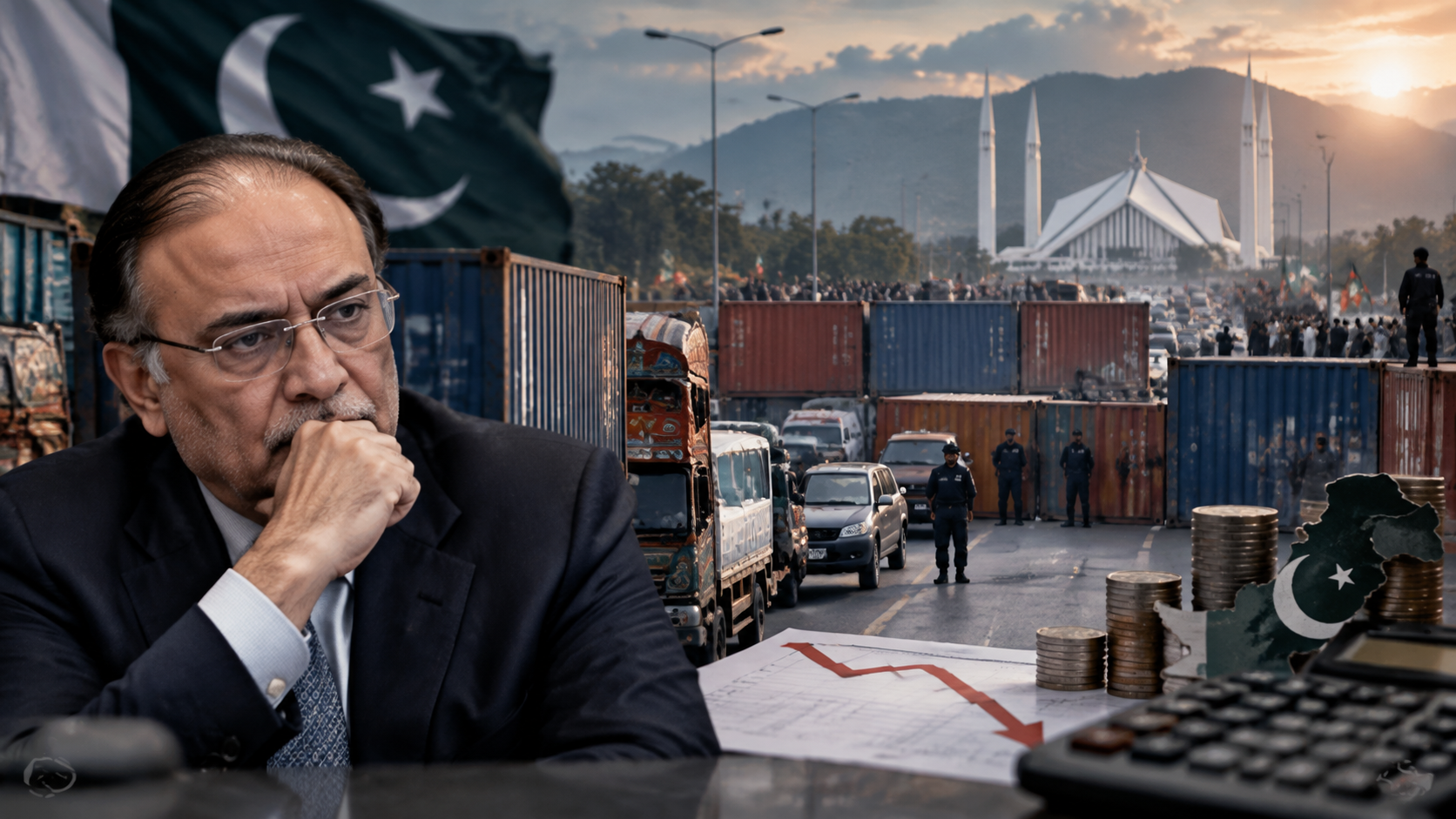
ISLAMABAD – The government’s estimate that protests, long marches and road blockades cost Pakistan Rs120 billion every day has sparked debate over the broader economic impact of political disruptions and the measures taken to control them.
Finance Minister Muhammad Aurangzeb recently highlighted the figure in a pre-recorded message, saying the estimate was prepared by a team led by Planning Minister Ahsan Iqbal.
According to the government’s calculation, daily losses include Rs86 billion from services, Rs25 billion from industry and Rs9 billion from agriculture.
There is little disagreement that prolonged disruptions can affect economic activity. Businesses face delivery delays, transport operations slow down, shops lose customers and daily wage workers can lose income when movement is restricted.
However, the estimate has also raised another question: how much does it cost to manage and contain such disruptions?
Government Counts Economic Losses From Protests
The government’s argument is that road blockades and large-scale demonstrations create significant pressure on the economy.
When major routes are closed, supply chains can be interrupted and businesses may struggle to move goods and workers.
Industries dependent on timely transportation can face delays, while small businesses often experience reduced customer activity during periods of uncertainty.
The services sector, which includes transport, trade and other commercial activities, accounts for the largest share of the government’s estimated daily losses.
Economic Impact Also Includes Security Measures
While calculating the cost of protests, another factor is the economic impact of security arrangements introduced during such events.
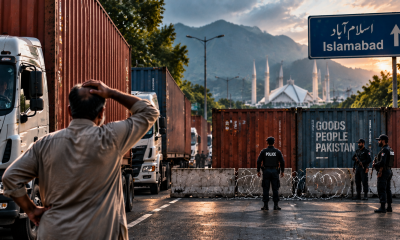
Authorities often deploy additional personnel, restrict movement around sensitive areas and place containers or barriers on roads to maintain law and order.
These measures can also affect normal economic activity.
Road closures can delay commercial vehicles, increase fuel consumption and slow down the movement of goods across cities.
For businesses already dealing with rising operational costs, such disruptions can create additional financial pressure.
Container Placement Becomes Part of Economic Debate
The use of containers as barriers during protests has become a common security measure in Pakistan.
However, transport representatives have repeatedly raised concerns about the financial impact of taking commercial containers off the road.
A transporters’ representative previously claimed that businesses suffered losses of around Rs280 million during a two-week Islamabad blockade, including costs linked to vehicle availability, delayed cargo and operational disruption.
Such losses highlight the challenge of balancing security requirements with economic activity.
Pakistan’s Economy Faces Cost Of Disruptions
The debate comes as Pakistan continues efforts to improve economic stability while managing inflation, business costs and external financial pressures.
In such an environment, delays in transportation, additional fuel consumption and interruptions to supply chains can have wider consequences.
Economists often point out that the economic cost of disruptions is not limited to direct losses. It can also include reduced investor confidence, delayed business decisions and uncertainty for markets.
Need For Complete Economic Assessment
The government’s Rs120 billion estimate focuses on the cost of protests and blockades themselves.
However, a complete assessment of economic impact would also need to consider the costs associated with maintaining security, deploying resources and managing traffic restrictions.
This includes expenses related to law enforcement, temporary infrastructure, delayed transportation and losses faced by affected businesses.
Understanding both sides of the calculation can provide a clearer picture of how political disruptions affect Pakistan’s economy.
Balancing Security And Economic Activity
Authorities have argued that preventing prolonged disruption is necessary to protect businesses, citizens and economic activity.
At the same time, businesses and transport operators have called for clearer planning to reduce the impact of security measures on commercial movement.
The discussion around the Pakistan protest cost Rs120 billion estimate shows the complexity of managing large-scale demonstrations in an economy where every working hour, shipment and fuel expense contributes to overall growth.
A complete economic calculation requires looking at both the losses caused by disruptions and the costs involved in responding to them.
Key Points :
- Finance Minister Muhammad Aurangzeb said protests and road blockades cost Pakistan Rs120 billion daily.
- The estimate was prepared by a team led by Planning Minister Ahsan Iqbal.
- Government figures include Rs86 billion in services, Rs25 billion in industry and Rs9 billion in agriculture losses.
- Business disruptions affect transport, supply chains and daily wage workers.
- Security measures, including road restrictions and containers, also create economic costs.
- Transporters have reported losses from vehicle seizures and delayed cargo movement.
- A complete assessment requires accounting for both protest-related losses and response costs.
Read More:
For more such exclusive articles, follow Upfront .