Connect with us

Pakistan

PPAF launches awareness campaign on coronavirus for rural communities

Published

on

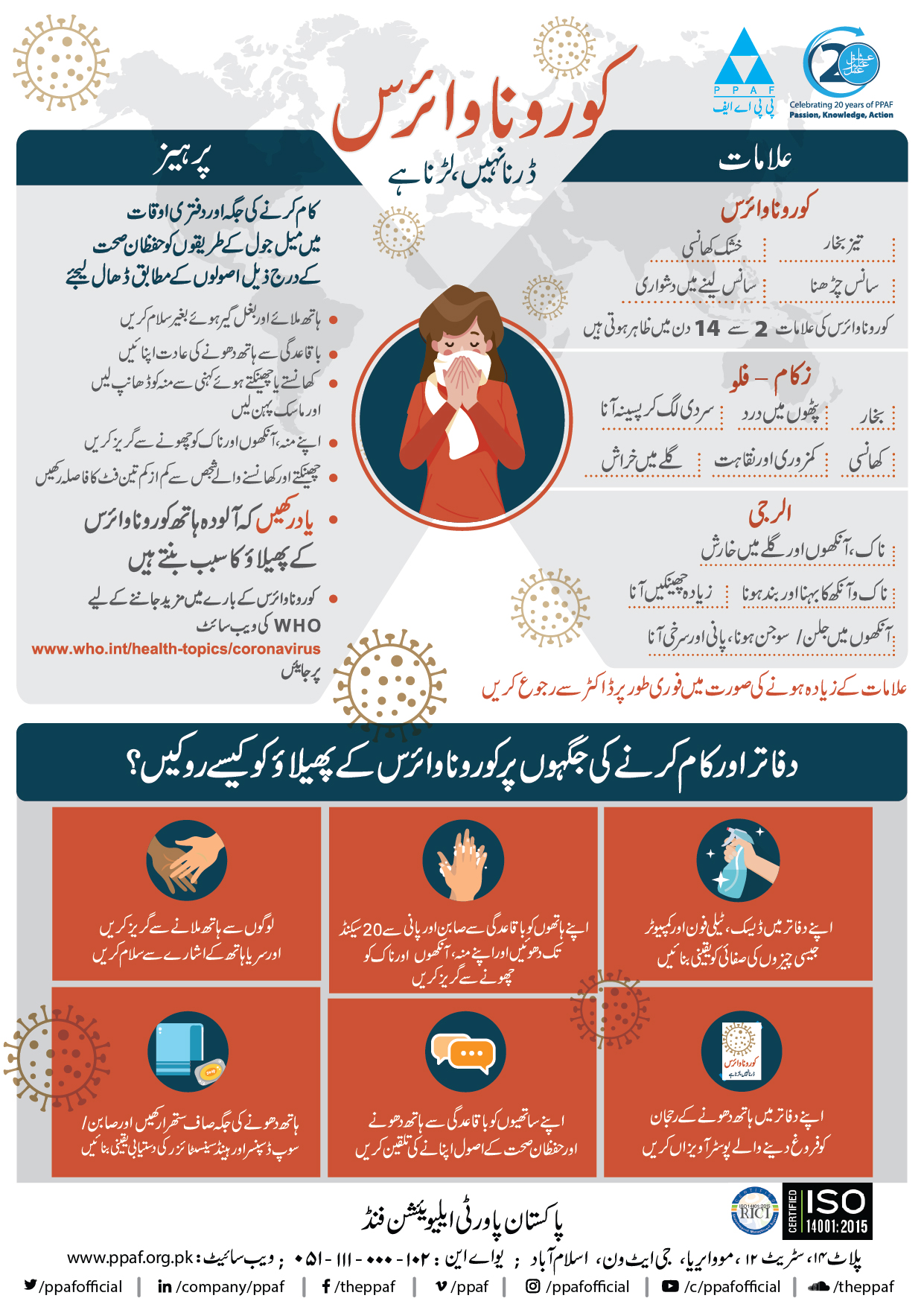
ISLAMABAD –  The pandemic of coronavirus has become a major public health challenge for Pakistan therefore actions are being taken at all levels to ensure the safety of people.  In order to make more people cognizant about the disease especially the rural population, Pakistan Poverty Alleviation Fund has started an awareness drive through which it shall share information about the virus in local languages including Sindhi, Baluchi and Pashto.

The objective of the drive is to educate communities about coronavirus on priority basis to help them combat the disease in an effective manner.

PPAF’s unique initiative of sharing information in local languages will help thousands of people in the rural areas of Pakistan whose native language is not Urdu. Through this drive, they will not only be able to better understand the implications of the disease but will also be equipped to protect themselves from this deadly disease.

Information about the symptoms, precautions and treatment of coronavirus will be disseminated through different platforms. On-field representatives of PPAF’s partner organizations in these areas will raise awareness amongst the communities through a live demonstration. Apart from on-field awareness sessions, the information will be shared on PPAF’s official website and on all social media platforms as the safety and well-being of partner organizations and communities is one of the top priorities of PPAF.

According to a report, 63% of Pakistan’s population lives in rural areas and most of the people do not have access to education, internet or smart devices thus their exposure is extremely limited. In order to make them aware of the situation, it is important that the communication around the disease is simple and in native languages.

As one of the largest sources of pro-poor spending in the country, the Pakistan Poverty Alleviation Fund is the lead agency for poverty reduction in Pakistan. It embodies the spirit of a public-private partnership to address the multi-dimensional issues of poverty with a view to achieving social and economic change. PPAF outreach extends throughout Pakistan as it has partnered with 130 organizations working in over 100,000 villages/settlements with more than 133,000 community organizations and 440,000 credit/common interest groups at the grassroots level in 137 districts.


 

Continue Reading
Click to comment

You must be logged in to post a comment Login

Leave a Reply

Pakistan

350,000 Google Career Certificates Open to Pakistanis

Published

on

350,000 Google Career Certificates Open to Pakistanis
This Image is Ai generated and used for Illustration purposes only.

ISLAMABAD – Google has expanded its Career Certificates program in Pakistan, offering a total of 350,000 scholarships nationwide. The initiative provides young professionals, students, and workforce entrants with the opportunity to gain in-demand digital skills and improve employability in an AI-driven economy. 

The milestone follows the addition of 150,000 new scholarships this year, demonstrating Google’s commitment to upskilling Pakistan’s workforce through accessible, globally recognized training. 

350,000 Google Career Certificates Open to Pakistanis

This Image is Ai generated and used for Illustration purposes only.

Online Learning for High-Demand Skills 

The program allows learners across Pakistan to access practical online courses in high-demand areas such as: 

  • Artificial Intelligence  
  • Data Analytics  
  • Cybersecurity  
  • Project Management  
  • Digital Marketing  
  • E-Commerce  

These online courses reduce barriers related to geographic location, limited training opportunities, and the high cost of traditional education. 


From Certification to Career Development 

Since 2022, Google has steadily expanded its digital learning initiatives in Pakistan. The latest expansion transforms the program from a set of individual courses into a comprehensive workforce development effort. 

Participants are encouraged not only to complete the certificates but also to apply these skills in employment, freelancing, entrepreneurship, and community development, bridging the gap between learning and practical career opportunities. 


Partnerships Strengthen Nationwide Impact 

Google’s rollout in Pakistan is supported by several local partners, including: 

  • TechValley  
  • Punjab Higher Education Commission (PHEC)  
  • Higher Education Department (HED)  

Involvement of government bodies ensures that the initiative is nationally relevant and accessible to a wide audience. 


Public Sector Participation Encourages Digital Adoption 

The Ministry of IT & Telecommunication (MoITT) has mandated that all ministry officials complete two Google Career Certificate courses, extending the skills drive into the public sector. This measure supports the integration of AI and digital tools in government operations, improving efficiency and digital literacy. 


Key Points: 

  • Google Career Certificates Pakistan program expands to 350,000 learners 
  • Training is offered in AI, Data Analytics, Cybersecurity, Digital Marketing, Project Management, and E-Commerce.  
  • Online courses reduce barriers for learners across the country.  
  • Program emphasizes applying skills in employment, freelancing, entrepreneurship, and community development.  
  • Partners include TechValley, PHEC, HED, and government ministries.  
  • MoITT requires ministry officials to complete two courses, integrating digital skills in public sector work.  

What is the Google Career Certificates Pakistan program?

It is a digital skills initiative that offers online, globally recognized certificates in AI, Data Analytics, Cybersecurity, Digital Marketing, Project Management, and E-Commerce. 

Who can apply for the certificates?

Students, young professionals, and workforce entrants across Pakistan can access these online courses. 

How many certificates are available in Pakistan?

The program has expanded to a total of 350,000 certificates nationwide. 

Do government officials participate in the program?

Yes, the Ministry of IT & Telecommunication requires all ministry officials to complete two courses to encourage digital adoption in the public sector. 

Read More: 

Continue Reading

Pakistan

PTA SIM Card Fines Imposed on Mobile Operators

Published

on

PTA SIM Card Fines Imposed on Mobile Operators
This Image is Ai generated and used for Illustration purposes only.

LAHORE – The PTA SIM card fines have been issued to Pakistan’s four major mobile operators for issuing SIM cards without the consent of national identity card holders. 

The Pakistan Telecommunication Authority (PTA) imposed a total penalty of Rs740 million, holding Zong, Jazz, Telenor, and Ufone responsible for serious violations of SIM registration regulations. 

This enforcement underscores the PTA’s commitment to protecting consumers and ensuring that all SIM registrations comply with national identity verification requirements. 

PTA SIM Card Fines Imposed on Mobile Operators

This Image is Ai generated and used for Illustration purposes only.

Breakdown of PTA SIM Card Fines by Operator 

According to the PTA: 

  • Zong was fined Rs155.6 million for violating SIM issuance rules.  
  • Jazz received a Rs116.7 million fine for unauthorized SIM registrations and inadequate oversight.  
  • Telenor was also penalized Rs116.7 million for breaches in SIM registration procedures.  
  • Ufone faced the largest penalty of over Rs233.4 million for multiple regulatory violations.  

These fines reflect the authority’s strict stance on compliance and its zero-tolerance policy toward illegal SIM issuance. 


Mobile Operators Held Responsible for Franchisee Violations 

The PTA clarified that mobile operators are liable for violations by their franchisees, including failures in biometric verification systems. Investigations revealed that franchise networks were inadequately monitored, which allowed unauthorized SIMs to be registered. 

Operators must now ensure proper supervision of all their retail outlets to prevent further non-compliance. 


PTA SIM Card Fines Emphasize Consumer Protection 

The PTA emphasized that issuing SIM cards without proper NIC verification can result in serious consequences, including: 

  • Identity theft  
  • Cyber fraud  
  • Financial crimes  

Strict enforcement of SIM registration rules is essential for both protecting consumers and strengthening national security. 


Payment and Compliance 

The regulator directed all four mobile operators to pay the PTA SIM card fines within the prescribed timeframe. Failure to comply, the PTA warned, will result in additional legal action. 

These measures highlight the authority’s proactive approach to enforcing telecom regulations and ensuring accountability in the mobile sector. 


Key Points:

  • PTA SIM card fines totaling Rs740 million were imposed on Zong, Jazz, Telenor, and Ufone.  
  • Zong: Rs155.6 million, Jazz: Rs116.7 million, Telenor: Rs116.7 million, Ufone: Rs233.4 million.  
  • Operators are liable for violations committed by their franchise networks.  
  • Unauthorized SIM registrations can lead to identity theft, cyber fraud, and financial crimes.  
  • Failure to pay fines will result in further legal action. 


Read More: 

Continue Reading

Business

PTA recommends giving licenses to Starlink, OneWeb: PTA Chairman

Published

on

The image is AI-generated and used for illustration purposes only

ISLAMABAD – The Pakistan Telecommunication Authority (PTA) has recommended issuing licenses to satellite internet providers, including Starlink, OneWeb, and Amazon’s Project Kuiper, as part of efforts to improve internet connectivity in remote areas and along the country’s motorway network.

Read more: Cristiano Ronaldo’s World Cup career ends after Spain defeat

The recommendation was shared during a meeting of the Senate Standing Committee on Cabinet Secretariat, where PTA Chairman Major General (R) Hafeez Ur Rehman briefed lawmakers on the country’s progress towards introducing satellite broadband services.

PTA Chairman on internet service in Pakistan

The PTA chairman said satellite internet has become an important solution for delivering reliable broadband services in underserved regions where expanding conventional telecom infrastructure is both expensive and technically challenging.

Read more: Why Does Electricity Go Out When It Rains in Pakistan?

According to the chairman, the PTA has completed the required technical and regulatory preparations and has forwarded its recommendations to the Ministry of Information Technology and Telecommunication for further consideration.

He pointed to Nepal as an example of a country that has successfully used satellite internet services to strengthen nationwide connectivity, particularly in geographically challenging areas.

The process of obtaining registration

The chairman explained that satellite internet providers will first need to obtain registration from the Space Activities Regulatory Board before they can apply for telecommunications licences from the PTA to launch commercial operations in Pakistan.

Read more: PIA may sell foreign assets to reduce financial liabilities

Pakistan has been working on a regulatory framework for satellite broadband as part of its broader strategy to extend high-speed internet access beyond urban centres and bridge the country’s digital divide.

If approved, the move could pave the way for global satellite internet providers to begin offering services in Pakistan, expanding broadband availability in areas where traditional fibre and mobile networks remain limited.

Category Details
Regulator Pakistan Telecommunication Authority (PTA)
Recommendation Licence satellite internet operators in Pakistan
Companies Starlink, OneWeb, Amazon Project Kuiper
Objective Expand internet access in remote areas and on motorways
Current Status Recommendations submitted to the Ministry of IT & Telecommunication
Registration Requirement Space Activities Regulatory Board approval
Commercial Licence Issued by PTA after regulatory registration
International Example Nepal’s satellite broadband deployment
Expected Impact Reduce the digital divide and improve nationwide broadband coverage

Key Points:

  • PTA has recommended licensing satellite internet providers including Starlink, OneWeb and Amazon’s Project Kuiper.
  • The proposal has been submitted to the Ministry of Information Technology and Telecommunication.
  • Satellite internet is intended to improve connectivity in remote regions and along motorways.
  • Operators will first require registration with the Space Activities Regulatory Board before obtaining PTA licences.
  • PTA cited Nepal as an example of successful satellite broadband deployment.
  • The initiative is part of Pakistan’s broader effort to expand high-speed internet access and reduce the digital divide.

Continue Reading

About

Upfront influence about 20 million users and is the number one business and technology news network on the planet


© 2022 upfront. All Rights Reserved.

Trending

Copyright © 2026