Connect with us

Sci&Tech

Who will supply display panels for the foldable iPhones?

Published

on

SEOUL – We have been seeing rumours of Apple’s foldables for many years. According to the last report, Apple’s foldables are in their testing phase and expected to be launched in September 2026.

According to a private news outlet, Samsung is building a separate production line for foldable OLED panels at its A3 plant in Asan, South Chungcheong Province.

It is expected that Samsung will be the only supplier for Apple’s foldable lineup. Apple was allegedly impressed by Samsung’s foldable display technology. Samsung is capable of producing 35,000 display units per month and 15 million per annum. However, it is reported that Apple will only make 6 to 8 million foldable phones in 2026. Samsung has reportedly signed a deal to supply foldable displays to Apple exclusively.

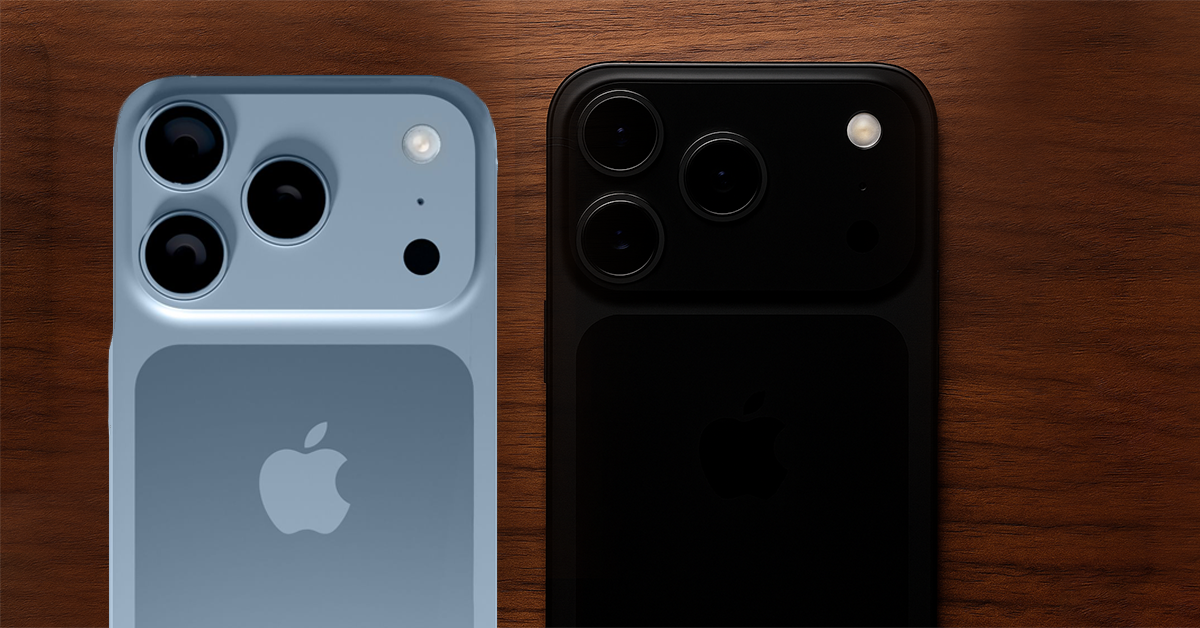
The image is AI-generated and used for illustration only.

However, if we talk about the foldable iPhone, it is expected that it will have a 5.5-inch cover screen, a 7.8-inch main screen, and an under-display camera. The device will be extra thin with a liquid metal hinge. The expected price is around $2300.

Apple Foldable iPhone Enters Prototype Testing Phase, Set for 2026 Launch -  PhoneWorld

Sci&Tech

Linux RefluXFS vulnerability to let attackers gain root priviliges

Published

on

The image is AI-generated and used for illustration purposes only

ISLAMABAD – Cybersecurity company Qualys has disclosed a critical Linux vulnerability that could allow attackers with a standard local user account to gain full administrative control of affected systems.

The vulnerability, tracked as CVE-2026-64600 and codenamed RefluXFS, affects the Linux kernel’s XFS filesystem and is believed to impact more than 16.4 million systems worldwide.

According to Qualys, the flaw is caused by a race condition within the XFS copy-on-write (CoW) implementation. A race condition occurs when two processes attempt to access or modify shared resources simultaneously, allowing attackers to exploit unexpected timing behaviour.

Vulnerability has existed since 2017

Qualys said the vulnerability has been present since Linux kernel version 4.11, released in 2017.

The issue affects XFS volumes that use reflinks, a storage optimisation feature that allows multiple files to share the same underlying data until modifications are made.

Affected operating systems include:

  • Red Hat Enterprise Linux
  • Oracle Linux
  • Amazon Linux
  • Fedora

Systems configured with XFS reflinks are considered vulnerable.

Attackers could obtain root privileges

Researchers warned that an attacker with access to a standard local account could exploit the flaw to overwrite protected system files.

Successful exploitation could result in root access, the highest privilege level available on Linux systems, allowing attackers to modify system files, install software, alter security settings and take full control of the affected machine.

Qualys also noted that the exploit can bypass several common Linux security protections.

Exploitation may remain undetected

According to the researchers, attacks exploiting RefluXFS can modify protected files without generating kernel log entries, making malicious activity more difficult to detect.

The changes also remain in place after a system reboot, increasing the potential impact of successful attacks.

Due to its severity, Qualys has classified RefluXFS as an emergency-priority vulnerability.

AI-assisted research process using Claude

Qualys said the vulnerability was identified during a security research project that used Anthropic’s Claude Mythos Preview to assist with manual code auditing.

Saeed Abbasi, head of the Qualys Threat Research Unit, said artificial intelligence accelerated the review process, while human researchers verified all findings before disclosure.

He added that the vulnerability underwent the company’s standard evidence verification and responsible disclosure procedures.

Organisations urged to install security updates

Qualys has advised organisations to install the latest kernel updates released by their Linux vendors without delay.

The company said systems should be rebooted after applying updates to activate the patched kernel.

It also recommended prioritising internet-facing servers and multi-tenant cloud environments, where exploitation could have wider consequences.

Qualys noted that there are currently no practical temporary mitigations, making security updates the only effective protection.

Key points:

  • Qualys has disclosed the critical Linux RefluXFS vulnerability (CVE-2026-64600).
  • The flaw could affect more than 16.4 million Linux systems worldwide.
  • Attackers with a normal local account may gain full root privileges.
  • The vulnerability has existed since Linux kernel version 4.11, released in 2017.
  • Red Hat Enterprise Linux, Oracle Linux, Amazon Linux and Fedora systems using XFS reflinks are affected.
  • Qualys recommends installing vendor security updates and rebooting systems immediately.
  • AI-assisted research using Anthropic’s Claude Mythos Preview helped identify the vulnerability.

Continue Reading

Sci&Tech

Philips gaming monitor comes with E-sports grade speed for $280

Published

on

The image is AI-generated and used for illustration purposes only

KARACHI – Philips has officially launched a new high-performance 27-inch gaming monitor in China, the 27M2N5500X, combining esports-grade speed with high resolution at an accessible $280 price point.  Philips gaming monitors are routinely distributed in Pakistan through authorized importers and tech retailers.

Esports-Grade speed and display quality

Built around a 27-inch Fast IPS panel, the display balances a sharp 2560 x 1440 (2K) resolution with visual responsiveness. It features a native 400Hz refresh rate that can be overclocked up to 425Hz. To eliminate motion blur during fast-paced competitive gameplay, the monitor features a 1ms gray-to-gray (GTG) response time and a 0.3ms Moving Picture Response Time (MPRT).

Read more: Paramount agrees to halt Warner Bros. deal

Color accuracy and visual enhancements

Despite its focus on high refresh rates, the 27M2N5500X maintains strong color performance:

  • Color Coverage: Features 10-bit color depth, covering 100% of the sRGB color space and 97% of the DCI-P3 spectrum.
  • Factory Calibration: Arrives factory-calibrated with a Delta E rating of less than 2.
  • Brightness & Contrast: Provides a typical brightness of 350 nits, a 1000:1 contrast ratio, and VESA DisplayHDR 400 certification.

Built-in AI tools

The monitor integrates several software additions aimed at competitive gamers, including an AI-assisted dynamic crosshair, a digital “Sniper Window” zoom tool, and Shadow Enhancement for dark areas. For eye protection during extended sessions, it features circular polarization alongside low blue light filters.

Read more: Messi’s retirement plans revealed by Argentina’s midfielder

The included ergonomic stand offers up to 130mm of height adjustment, along with tilt, swivel, and full pivot rotation, as well as 100 x 100mm VESA mounting support.

Connectivity includes one DisplayPort 1.4 port, two HDMI 2.1 ports, and a 3.5mm headphone jack, alongside Picture-in-Picture (PIP) and Picture-by-Picture (PBP) display modes.

Read more: Why Pakistani Gen Z’s are admiring CJP protests in India

Key points:

  • Philips has unveiled its new 27M2N5500X 27-inch esports gaming monitor in China, priced aggressively at $280.
  • Offers 10-bit color depth, covering 100% sRGB and 97% DCI-P3, pre-calibrated with a Delta E < 2.
  • Packed with AI-assisted crosshairs, a Sniper Window, Shadow Enhancement, and circular polarization for eye strain reduction.
  • With Philips products regularly distributed in Pakistan via local importers, a regional market release is expected in the coming months.

Continue Reading

Sci&Tech

Samsung introduces Robotics division for humanoid robots

Published

on

The image is AI-generated and used for illustration purposes only

ISLAMABAD – Samsung Electronics has established a dedicated robotics division as the technology giant accelerates its investment in artificial intelligence-powered robots. The newly created RX (Robotics eXperience) Division will oversee Samsung’s robotics strategy, product development and commercialization as the company seeks to make robotics one of its next major growth businesses.

New RX division to lead Samsung’s robotics strategy

Samsung said the RX Division will report directly to co-Chief Executive Officer Roh Tae-moon, who also heads the company’s Device eXperience (DX) Division.

The company stated that the new organization will manage its medium- and long-term robotics strategy while expanding research capabilities in South Korea and overseas. It will also bring together robotics teams that previously operated across different business units.

Samsung believes a unified structure will accelerate product development, improve commercialization and strengthen its overall robotics roadmap.

Samsung is targetting humanoid robots

Initially, Samsung will focus on developing humanoid robots for manufacturing facilities. The company plans to expand the technology into homes and retail environments after improving its reliability and commercial readiness.

Earlier this year, Samsung told investors that it aims to achieve tangible progress in humanoid robotics during 2026. The company also indicated that it may pursue additional investments and acquisitions to accelerate robotics research and commercialization.

Former Hyundai executive to lead robotics strategy

Samsung has appointed Executive Vice President Lee Dong-kun to head the Robotics Strategy Team.Lee previously worked at Hyundai Motor Group, where he managed robotics strategy, including projects involving Boston Dynamics. Samsung is also recruiting researchers specializing in autonomous robot control and robotic hand technologies to strengthen the RX Division.

Rainbow Robotics partnership

The new division builds on Samsung’s growing investment in South Korean robotics company Rainbow Robotics. Samsung became the company’s largest shareholder after acquiring an additional 267 billion won stake. Before the transaction, Samsung already held a 14.71 percent ownership interest.

Since then, both companies have collaborated on manufacturing robots, humanoid technologies and physical AI systems.

Samsung is planning new research centres

Samsung will establish the RX Division at its Seoul Research and Development Campus. The company also plans to build a robotics data factory at its Gumi facility to collect real-world operational data for improving robot artificial intelligence and control systems.

In addition, Samsung intends to expand robotics research through new hubs in the United States, China and Japan to access global talent and emerging technologies.

Robotics becomes Samsung’s next growth engine

Samsung is expanding beyond its traditional strengths in smartphones, consumer electronics and semiconductors by making robotics a strategic business priority. The company faces growing competition from Tesla, Chinese robotics manufacturers and several US startups developing humanoid robots.

By creating a CEO-level robotics division, Samsung has signalled that robotics will play a central role in its long-term growth strategy rather than remaining an experimental business.

Key points:

  • Samsung has established a new RX (Robotics eXperience) Division to lead its global robotics strategy.
  • The division will report directly to co-CEO Roh Tae-moon.
  • Samsung plans to prioritize humanoid robots for manufacturing before expanding into homes and retail.
  • The company aims to achieve tangible progress in humanoid robotics during 2026.
  • Former Hyundai Motor Group executive Lee Dong-kun will lead the Robotics Strategy Team.
  • Samsung will establish a robotics data factory in Gumi and expand research hubs in the US, China and Japan.
  • The initiative builds on Samsung’s investment in Rainbow Robotics and reflects its long-term AI ambitions.


Continue Reading

About

Upfront has been reporting since 2020 influencing hundreds and thousands of users. Our social media handles witness more then 20 million users.


© 2020 upfront. All rights reserved.

Trending

Copyright © 2026