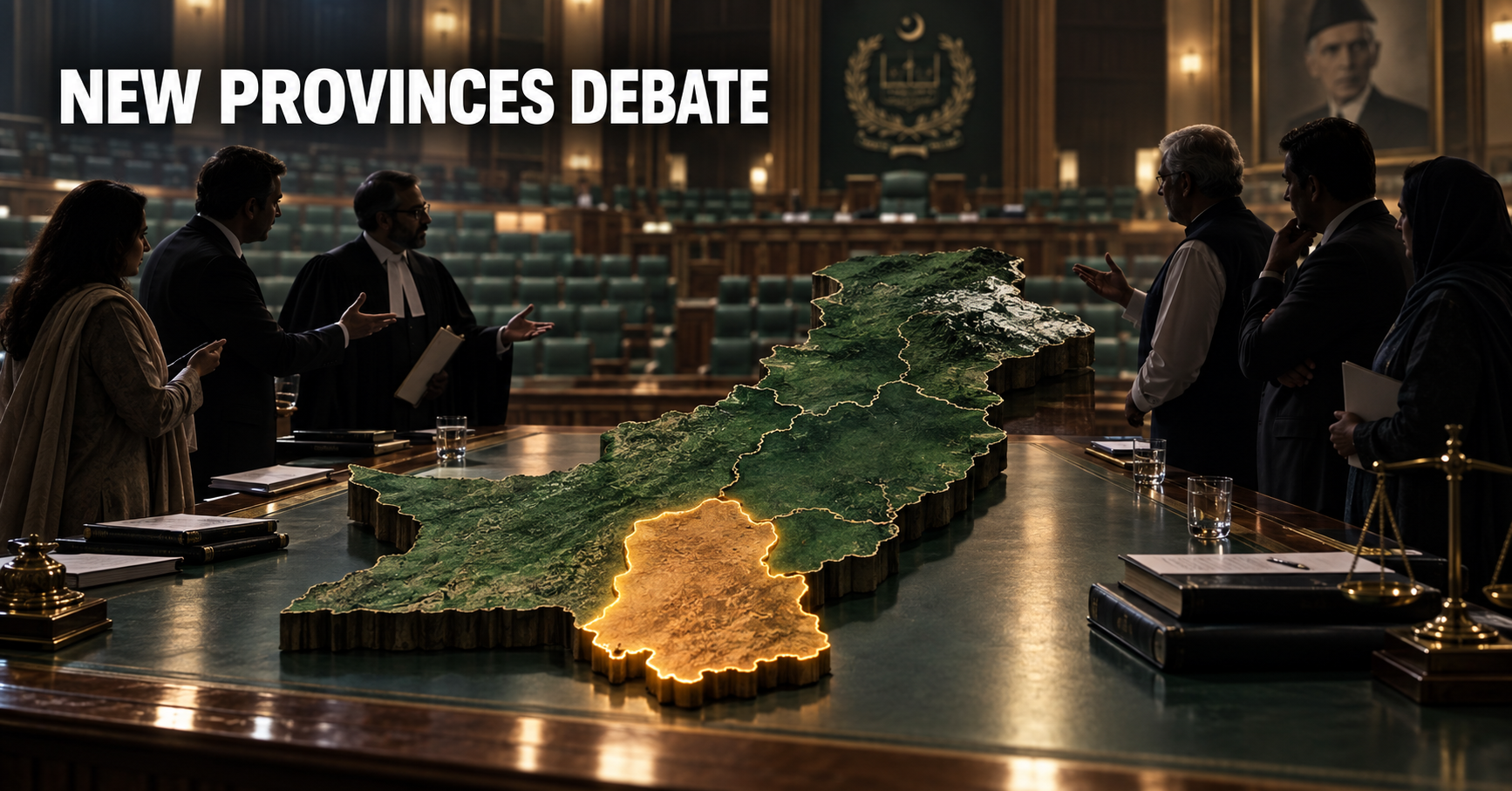
The proposal to create new provinces in Pakistan has triggered a fresh political debate, with strong opposition emerging from Sindh and support for smaller administrative units coming from some legal bodies.
The debate gained momentum after the interior minister recently spoke about the need to create new provinces as part of efforts to reset the country.
The remarks prompted a wave of reactions on social media. Several groups and individuals posted videos opposing the proposal. Some expressed anger, while others raised concerns about governance, administration and the possible political consequences of redrawing provincial boundaries.
Sindh emerges as main centre of opposition
The strongest resistance has emerged from Sindh, where any proposal to divide the province remains politically sensitive.
Several groups have argued that creating new provinces would not automatically resolve problems such as weak local administration, poor governance and inadequate public services.
Critics have also warned that redrawing provincial boundaries could create new political and ethnic tensions.
Lawyers, political activists, academics and civil society representatives have joined the debate.
The Lahore High Court Bar Association has opposed the proposal. The Sindh Assembly has also rejected attempts to divide Sindh after debating the issue for three days.
Legal bodies take different positions
The proposal has also produced differing views among Pakistan’s legal bodies.
The Punjab Bar Council has supported the creation of smaller provinces. The Supreme Court Bar Association has also backed the idea.
The Pakistan Bar Council, however, has called for the matter to be addressed through the constitutional process and with national consensus.
The differing positions show that the question of new provinces extends beyond political parties and has become a wider institutional debate.
Public response remains unclear
Despite the strong reactions visible on social media, the wider public response remains difficult to measure.
Social media posts can highlight public sentiment, but they do not necessarily represent the views of the wider population. A clearer picture would require broader public consultation and political debate.
For now, the proposal has reopened a long-running question about Pakistan’s administrative structure.
Supporters see smaller provinces as a possible way to improve governance and bring administration closer to citizens. Opponents fear that dividing existing provinces could create new political and ethnic disputes without addressing the country’s underlying governance problems.
The debate is therefore likely to require more than statements on social media. Any move towards creating new provinces would involve constitutional procedures, political negotiations and, ultimately, wider national consensus.
Key points:
- The proposal to create new provinces has triggered criticism on social media.
- Opposition has been particularly strong in Sindh.
- The Sindh Assembly has rejected attempts to divide the province.
- Lawyers, activists, academics and civil society groups have raised concerns.
- The Punjab Bar Council and Supreme Court Bar Association have backed smaller provinces.
- The Pakistan Bar Council has called for a constitutional process and national consensus.
- The broader public response to the proposal remains difficult to assess.