Editorial
Are buses worsening Lahore traffic jams?

Published
8 seconds agoon
By
Abdul Subhan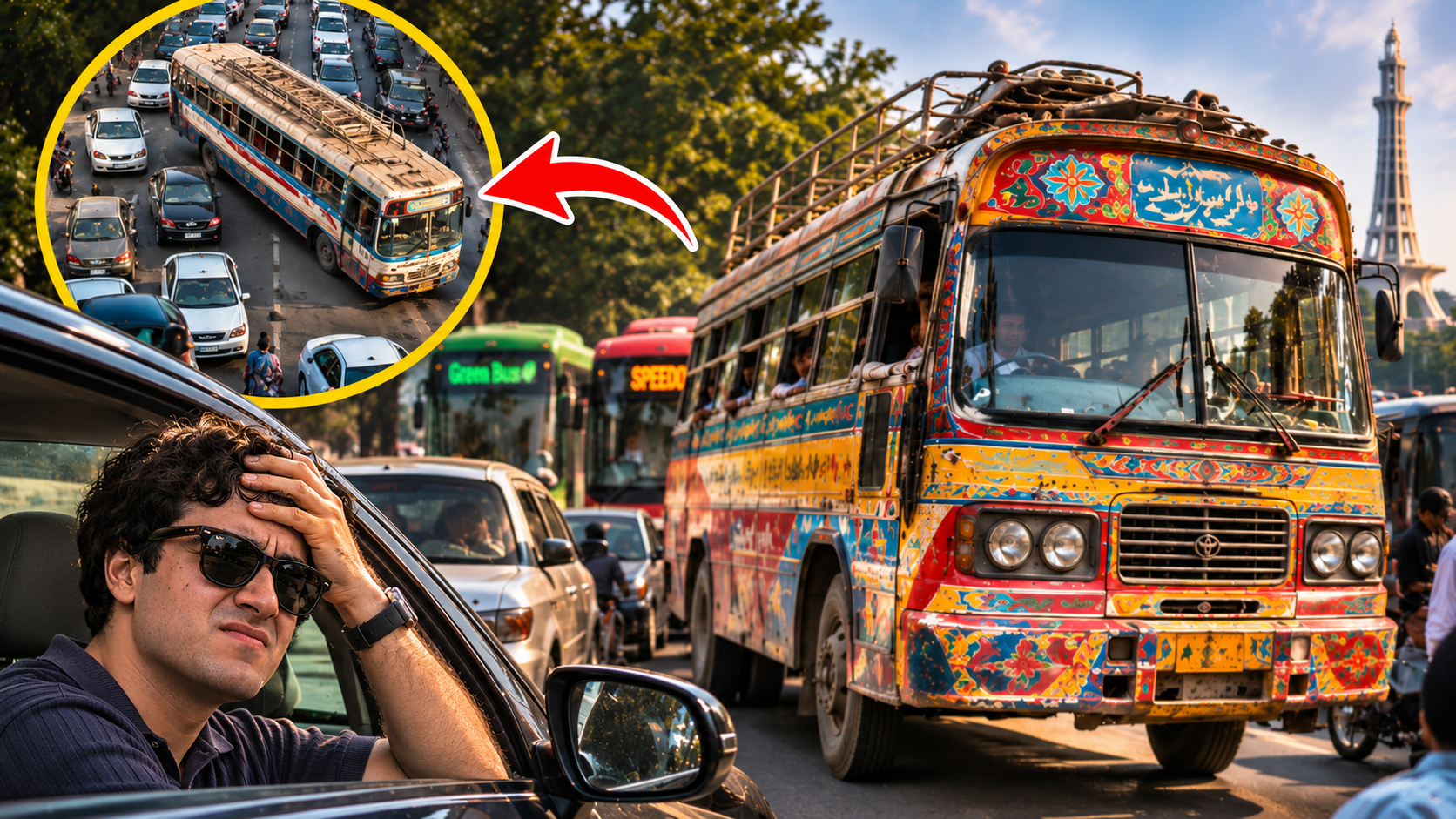
LAHORE – A five-minute journey can turn into nearly an hour of frustration when a passenger bus suddenly attempts a U-turn, stops in the middle of a busy road or blocks traffic while picking up passengers.
For motorists in Lahore, such situations raise an important question: are poorly managed buses making the city’s already serious traffic problems even worse?
From private passenger buses and wagons to government-backed Speedo and Green bus services, large vehicles share roads with cars, motorcycles and rickshaws. But the way these vehicles operate can make a significant difference to traffic flow and public safety.
The problem becomes particularly serious when a bus driver takes a dangerous turn or stops without warning. A single vehicle can block several lanes, forcing other motorists to brake or change direction.
For someone travelling to work, school or an important appointment, the delay can be exhausting.
Yet traffic congestion is only part of the concern. Reckless driving by heavy passenger vehicles can put lives at risk, especially those of motorcyclists and pedestrians.
How Buses Can Turn a Short Journey Into a Traffic Jam
Imagine driving along a busy Lahore road when a large private bus suddenly moves across several lanes to take a U-turn.
Vehicles approaching from behind must slow down or stop. Motorcyclists attempt to squeeze through narrow spaces, while drivers in other lanes struggle to move forward.
Within minutes, a queue begins to form.
A similar problem occurs when buses stop outside designated areas to collect passengers. Even a brief roadside stop can reduce the space available for other vehicles.
On narrow roads, the disruption can spread to nearby intersections.
These situations help explain the frustration described by commuters who say an otherwise short journey can take 30, 40 or even 50 minutes.
Such experiences are concerning, although there is no verified citywide study showing how frequently private buses make illegal U-turns or how much travel time they add.
The absence of that data should encourage closer monitoring rather than allow the problem to go unchecked.
Lahore Traffic Police Are Already Acting Against Illegal Bus Stops
The concern about unauthorized bus stops has a documented basis.
On October 15, 2026, Lahore’s Chief Traffic Officer, Syed Abdul Rahim Shirazi, ordered action against illegal bus stands and unauthorized passenger stops.
During visits to 32 Chowk, Shahdara, Lari Adda and Ravi Road, the CTO instructed officers to take action against drivers who park buses or pick up passengers at unauthorized locations.
According to a report, officials had registered 31 cases during 2026 against buses stopping at illegal holding points.
The report also stated that traffic police had issued more than 2,700 tickets during October for violations involving unauthorized bus stands and holding points.
These figures do not establish that buses cause most of Lahore’s congestion. However, they confirm that illegal stopping practices are a problem authorities have already identified.
The bigger question is why such violations continue despite enforcement.
Private Buses and Government Transport Are Not the Same
It is important to distinguish privately operated buses from government-backed transport services.
Private buses and wagons often operate on commercial routes. Their drivers must follow approved routes, carry the necessary permits and observe traffic regulations.
Some commuters complain that private buses stop wherever passengers are waiting or take unsafe turns to reach their destinations.
These reports need systematic investigation. Not every private operator behaves irresponsibly, and many drivers follow the rules.
However, repeated violations can create problems for everyone sharing the road.
Government-backed services such as Speedo buses operate through a more structured system.
The Punjab Mass transit Authority manages integrated feeder routes designed to connect passengers with the Lahore Metrobus and other transport services.
Its system includes route planning, designated stops, scheduling and vehicle monitoring.
These arrangements can improve traffic management when operators follow them.
But government-backed buses should not receive special treatment when their drivers violate road rules.
A Speedo bus stopping dangerously or changing lanes without care can create the same hazard as any other large vehicle.
Traffic laws should apply equally to public and private bus operators.
Are Green Electric Buses Adding to Lahore’s Traffic Problems?
Punjab’s Green Electric Bus service aims to provide cleaner and more accessible public transport.
According to the Punjab government’s Electric Bus programme, its initial Lahore fleet included 27 buses operating on a route connecting the Railway Station with Green Town.
Each bus has a stated capacity of up to 80 passengers.
That capacity is an important part of the wider traffic debate.
A well-used bus can transport dozens of passengers in a single vehicle. If those passengers would otherwise travel by car, motorcycle or rickshaw, public transport can reduce the number of vehicles competing for road space.
This does not mean buses have no impact on traffic.
Poorly placed stops, unsafe lane changes and badly designed intersections can create delays even for properly scheduled services.
The solution, however, is better planning and enforcement, not automatically removing buses from the roads.
Lahore needs reliable public transport that works alongside other vehicles rather than creating unnecessary conflict with them.
Rash Bus Driving Can Turn Traffic Problems Into Fatal Accidents
Traffic delays are frustrating, but unsafe driving raises a far more serious concern.
A passenger bus is much larger and heavier than an ordinary motorcycle or car. During a collision, that difference can expose people in smaller vehicles to severe injuries.
A driver who takes a sudden turn, changes lanes without checking or ignores traffic restrictions can leave other road users with little time to react.
Official accident figures show why road safety deserves attention.
According to figures reported, Lahore recorded more than 87,000 traffic crashes during 2025. These incidents claimed 452 lives, while more than 500 crashes involved buses.
Bus involvement does not necessarily mean that bus drivers caused those crashes.
More recently, Rescue 1122 reported 7,874 road accidents and 35 deaths in Lahore during October 2026.
These October figures cover all road vehicles and cannot establish how many crashes involved buses.
Nevertheless, they highlight the serious risks on Lahore’s roads.
In May 2026, Lahore’s traffic authorities established a dedicated accident analysis unit. Officials identified speeding, wrong-way driving and lane violations among the leading causes of crashes.
These are precisely the types of dangerous behavior that deserve strict attention when heavy passenger vehicles are involved.
Poorly Designed U-Turns Make the Situation Worse
Bus drivers are not the only ones responsible for dangerous turning situations.
Road design can also create problems.
In May 2026, The Express Tribune reported that Lahore had removed more than 130 traffic signals over the years as part of efforts to create signal-free corridors.
Authorities replaced many signals with U-turn arrangements.
However, residents and urban planners complained that several turning points were too narrow for smooth traffic movement.
Lahore Development Authority officials also acknowledged that some protected U-turns had limited turning space.
These design problems become especially important for large buses, which need more room to turn than motorcycles or small cars.
When a large vehicle struggles to complete a turn, it may briefly obstruct multiple lanes.
That can create a queue even when the driver uses an authorized turning point.
Authorities therefore need to examine both driver behavior and road design.
Widening an unsafe U-turn or changing a bus route may achieve more than repeatedly issuing fines at the same location.
Buses Are Not Lahore’s Only Traffic Problem
It would be misleading to blame buses for all the city’s traffic jams.
Lahore also struggles with a growing number of private vehicles, illegal parking, roadside encroachments and poor traffic planning.
An April 2025 report documented congestion on several major roads, including Multan Road, Canal Road and areas around Johar Town.
The report highlighted illegal parking, heavy vehicle movement and road bottlenecks as major concerns.
Similarly, research published in 2025 on urban mobility in Lahore identified dependence on private vehicles and poor transport infrastructure as barriers to smoother movement.
These problems often reinforce one another.
A bus stopping illegally may block a lane. Cars parked along the roadside reduce the remaining space. A nearby U-turn then becomes a bottleneck.
The result is a traffic jam that no single driver or vehicle category can fully explain.
This is why Lahore needs a broader transport strategy rather than placing the blame on one type of vehicle.
Traffic Rules Already Require Buses to Stop Properly
Punjab’s traffic regulations provide clear guidance for heavy vehicles.
According to the official Traffic Police Punjab road safety guidelines, bus drivers should use designated bus lanes where available and stop within marked bus bays.
Buses approaching an occupied stop should wait behind the first bus rather than stopping alongside it.
The Punjab Transport Company’s enforcement wing also has the responsibility to remove illegal bus stops and keep bus bays clear.
These rules are intended to prevent the exact types of obstruction that frustrate motorists.
The issue is not necessarily a lack of regulations.
It is whether authorities enforce them consistently and whether drivers face meaningful consequences for repeated violations.
What Lahore Must Do to Make Its Roads Safer
Lahore needs to address the problem through better planning and stronger accountability.
Traffic police should identify roads where buses frequently stop illegally, take unsafe turns or block intersections.
Authorities can use existing cameras and traffic monitoring systems to document repeated violations.
Private bus operators must ensure that their drivers hold valid licences and follow approved routes.
The Punjab Transport Authority should also examine whether poorly located stops or unsuitable routes contribute to risky driving.
For government-backed services, transport managers should use vehicle tracking and operational records to investigate complaints.
Road planners must improve turning points that cannot safely accommodate large vehicles.
Most importantly, enforcement should target dangerous conduct rather than discourage people from using public transport.
A city already struggling with congestion cannot solve the problem simply by forcing more commuters into private vehicles.
How Commuters Can Report Dangerous Bus Driving
Residents can report dangerous driving, unauthorized passenger stops and other public transport concerns through the Punjab Transport Authority’s complaint system, including its 1071 helpline.
Traffic-related problems can also be reported through the Punjab Traffic Police online complaint portal.
Where safe and possible, complainants should record the location, time, vehicle registration number and nature of the violation.
A photograph or video may help, but motorists should never use their phones while driving to collect evidence.
Such reports could help authorities identify repeated problems at specific intersections.
Lahore Needs Better Bus Management, Not Fewer Safe Buses
The debate over Lahore’s traffic problems should not become a campaign against public transport.
Private buses, Speedo services and Green Electric Buses all have a role in moving people across the city.
The problem begins when operators ignore traffic rules, authorities tolerate illegal stops or planners design roads without considering how large vehicles move.
A bus that carries dozens of passengers efficiently can help reduce congestion.
A bus that blocks an intersection through an unsafe turn or unauthorized stop can make congestion worse.
Both realities deserve recognition.
Lahore needs stronger enforcement, safer road design and better management of public and private transport.
No driver should have to spend an hour on a journey that should take minutes because another vehicle has blocked the road. More importantly, no commuter should lose their life because a heavy vehicle driver ignored basic safety rules.
The goal should be simple: buses must move people, not bring the entire road to a standstill.
Key Points:
- Illegal bus stops and risky turns can disrupt traffic, but no citywide study establishes buses as Lahore’s main cause of congestion.
- Lahore traffic police reported more than 2,700 tickets in October 2026 for violations involving unauthorized bus stands and holding points.
- Private buses and government-backed Speedo and Green buses operate under different management systems.
- Well-managed public transport can reduce reliance on private vehicles.
- Lahore recorded 7,874 road crashes and 35 deaths in October 2026 across all vehicle categories.
- Poorly designed U-turns, illegal parking and growing vehicle numbers also contribute to congestion.
- Better bus stops, route planning, driver monitoring and consistent enforcement could improve road safety and traffic flow.
Read More:
For more such exclusive articles, follow Upfront .
Stay Connected with Upfront
Get the latest news, technology, business, sports and entertainment stories from Upfront.
Add Upfront as a preferred source on GoogleAdd Upfront to your preferred sources to see more of our stories across Google Search.

I am Abdul Subhan, currently serving as the Managing Editor at Upfront.pk. I have developed practical skills in prompt engineering, content writing, photo and video editing, and AI-assisted productivity, publishing more than 1000 articles. These experiences have strengthened my creativity, communication, and problem-solving abilities while enabling me to contribute effectively to digital media and content management.