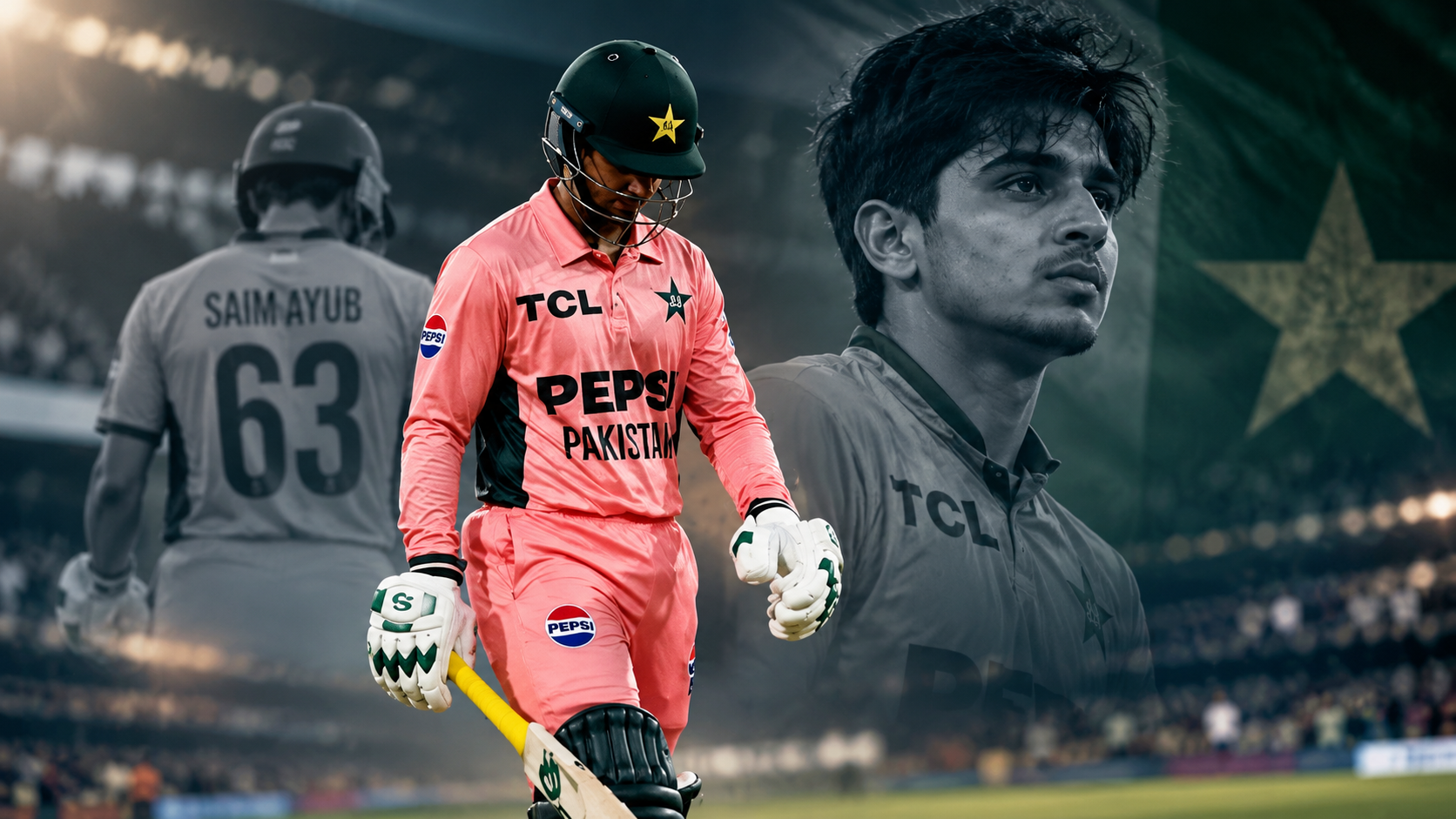
LAHORE – Pakistan opener Saim Ayub has been released from the national ODI squad midway through the ongoing tri-series against England and Sri Lanka, with the Pakistan Cricket Board (PCB) confirming the reason behind his unexpected departure.
The decision comes after the left-handed batter struggled to make an impact in the tournament, scoring just 21 runs in three matches.
The PCB announced on Monday, October 26, that Ayub had requested permission to return to domestic cricket to improve his batting form and rebuild his confidence.
The national selection committee has named Sahibzada Farhan as his replacement for the remaining matches.
Why Was Saim Ayub Released From ODI Squad?
According to the PCB, Ayub discussed his recent performances with Pakistan head coach Mike Hesson before expressing his desire to return to domestic cricket.
The board said the team management and selectors accepted his request, acknowledging the opener’s assessment of his current form.
In its official statement, the PCB said:
“Respecting Saim’s decision and appreciating his honest assessment of his current form, the team management and national selection committee have mutually agreed to accept this request.”
The announcement confirms that Ayub requested the move himself rather than being removed from the squad solely through a selection decision.
However, the PCB did not specify how long he would remain in domestic cricket or when he might return to the national team.
Saim Ayub Struggles With Batting Form in ODI Tri-Series
The decision follows a disappointing run of performances for Ayub in the ongoing three-nation tournament.
The 24-year-old managed only 21 runs across his opening three matches, failing to reach double figures in any innings.
Saim Ayub’s Batting Scores Before ODI Squad Exit
| Opponent |
Date |
Runs |
| Sri Lanka |
October 18 |
7 |
| England |
October 20 |
8 |
| England |
October 25 |
6 |
| Total |
Three matches |
21 |
His latest failure came during Pakistan’s dramatic one-wicket victory over England at Lahore’s Gaddafi Stadium on Sunday.
Ayub scored just six runs before losing his wicket to England debutant Henry Crocombe.
Pakistan later recovered from a difficult position through an unbeaten 113 from Shadab Khan, whose final-wicket partnership with Haris Rauf helped secure the victory.
Although Pakistan have won three consecutive matches, the inconsistent performances of their opening batters have raised questions about the team’s batting combination.
Sahibzada Farhan Replaces Saim Ayub in Pakistan ODI Squad
Following the decision to release Ayub, the PCB confirmed that Sahibzada Farhan would join the ODI squad for the remainder of the tri-series.
Farhan was not included in Pakistan’s original ODI squad announced earlier this month.
However, he recently captained Pakistan in the three-match T20I series against Sri Lanka and also led the national side at the Asian Games.
His inclusion provides the team management with another opening batting option ahead of the tournament’s final.
It remains to be seen whether Farhan will immediately enter Pakistan’s playing XI or whether the selectors will consider other combinations.
His selection comes at an important time as Pakistan prepare for the knockout stage of the competition.
PCB Makes Another Change to Pakistan Squad
The decision to release Saim Ayub follows another adjustment to Pakistan’s squad.
On October 25, the PCB announced that left-arm wrist-spinner Sufiyan Moqim had been released to return to domestic cricket because of the conditions expected at Lahore’s Gaddafi Stadium.
Young left-handed batter Maaz Sadaqat was subsequently added to the squad as cover for players dealing with minor fitness concerns.
The two changes give Pakistan additional batting options as the team management evaluates its combination for the remaining matches.
However, the selectors have not confirmed which players will feature in the next match.
When Is Pakistan’s Next ODI Tri-Series Match?
Pakistan have already qualified for the ODI tri-series final after winning their first three matches.
The team will next face Sri Lanka on Tuesday, October 27, at Gaddafi Stadium in Lahore.
The tournament, featuring Pakistan, England and Sri Lanka, follows a double round-robin format, with the top two teams advancing to the final.
The final is scheduled for October 31 at the same venue.
Pakistan’s remaining league fixture will give the team management an opportunity to assess its batting options before the title decider.
What Does Saim Ayub’s Exit Mean for His Pakistan Career?
The decision to return to domestic cricket could offer Ayub an opportunity to regain confidence away from the pressure of international competition.
The young opener has previously demonstrated his attacking ability, but his recent performances suggest he needs time to rediscover his rhythm.
Domestic matches could allow him to spend more time at the crease and address technical issues affecting his batting.
For now, the PCB has not announced a timeline for his international return.
With Sahibzada Farhan stepping into the squad, the immediate focus will shift towards Pakistan’s remaining fixtures and preparations for the October 31 final.
Ayub’s departure is therefore a temporary setback in his international career, although his future selection will depend on subsequent performances and the team’s requirements.
Key Points:
- Saim Ayub has been released from Pakistan’s ODI squad for the remainder of the tri-series.
- The opener requested to return to domestic cricket after discussions with head coach Mike Hesson.
- Ayub scored just 21 runs in three ODI tri-series matches.
- Sahibzada Farhan has been named as his replacement.
- Sufiyan Moqim was also released from the squad, while Maaz Sadaqat was added.
- Pakistan have qualified for the final after three consecutive victories.
- Pakistan face Sri Lanka on October 27 at Gaddafi Stadium, Lahore.
- The ODI tri-series final is scheduled for October 31.
- The PCB has not announced when Ayub will return to international cricket.
Read More:
For more such exclusive articles, follow Upfront .