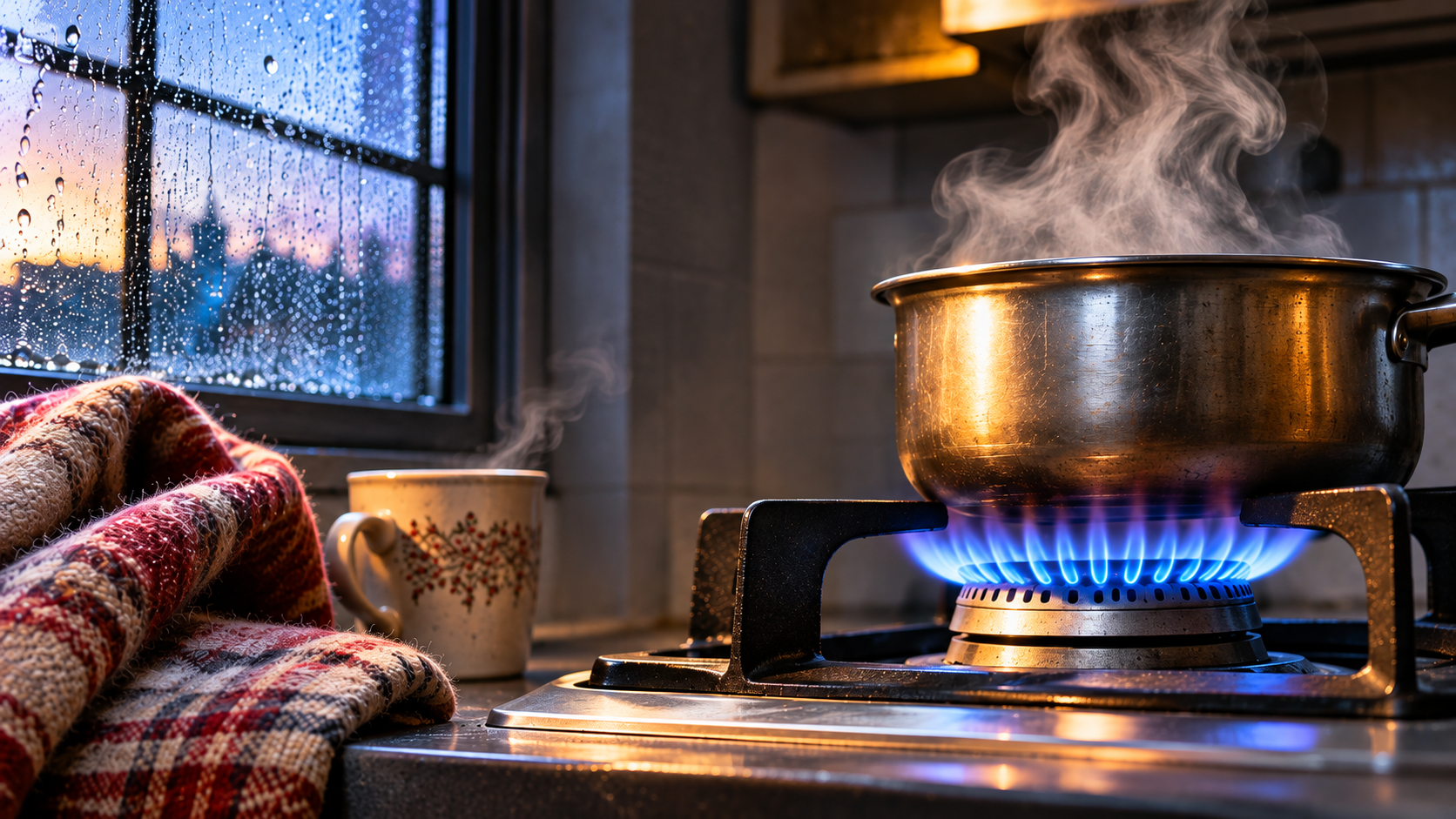
LAHORE – Winter has barely begun, but Pakistani households are already facing a familiar problem. Gas supply is once again restricted, forcing families to arrange their daily cooking around fixed hours.
On November 4, 2026, Sui Southern Gas Company (SSGC) announced three daily supply windows. Reports also described similar restrictions on the Sui Northern Gas Pipelines Limited (SNGPL) network.
Under the reported schedule, households have eight hours of planned gas availability and 16 hours outside the designated supply periods.
For families already struggling with household expenses, the restrictions raise an important question: why does Pakistan face the same gas shortage almost every winter?
Gas Supply in Pakistan Restricted to Cooking Hours
The winter schedule provides three daily windows for household gas supply.
| Meal |
Reported Gas Timings |
| Breakfast |
6:30 AM to 9:00 AM |
| Lunch |
12:00 PM to 2:30 PM |
| Dinner |
6:00 PM to 9:00 PM |
| Total |
8 hours daily |
SSGC officially confirmed these timings for Sindh and Balochistan.
The News and other outlets reported identical arrangements for SNGPL consumers in Punjab, Islamabad and Khyber Pakhtunkhwa. However, a November 7 review found no corresponding domestic timetable on SNGPL’s public notice pages.
The scheduled hours also do not guarantee that every household will receive adequate gas pressure throughout each window.
For consumers, this distinction matters. Having gas technically available means little if the flame is too weak to cook a meal.
Read More: Are buses worsening Lahore traffic jams?
Why Does Pakistan Face Gas Shortages Every Winter?
Pakistan’s gas problems become more serious when temperatures fall and households increase their consumption.
Petroleum Minister Ali Pervaiz Malik warned on November 3 that domestic gas demand could rise by another 400 to 500 million cubic feet per day during winter.
Meanwhile, Pakistan continues to depend on imported liquefied natural gas (LNG) to support its domestic supply.
That dependence has become more challenging because of disruptions affecting QatarEnergy, a major supplier to Pakistan.
According to Arab News, QatarEnergy extended its LNG supply suspension until December 29, creating uncertainty over fuel availability during the colder months.
The government says it will prioritise households and make alternative supply arrangements where necessary.
However, repeated winter restrictions reveal a deeper problem: Pakistan’s energy system remains vulnerable to seasonal demand, import disruptions and limited supply flexibility.
Read More: Why are WhatsApp messages stuck on Zong?
Families Face Higher Costs When Gas Runs Out
Gas shortages do not affect every household equally.
Families without reliable piped gas often depend on LPG cylinders or electric appliances for cooking.
These alternatives can increase monthly expenses.
For November 2026, the Oil and Gas Regulatory Authority (OGRA) set the official LPG price at approximately Rs294 per kilogram, bringing an 11.8-kilogram domestic cylinder to around Rs3,470.
Yet reports have described LPG sellers charging substantially more than the official rate amid supply disruptions.
This creates a difficult situation for families already managing rising living costs.
Even households with gas connections may need alternative arrangements when pressure drops or supply stops outside scheduled hours.
The burden is particularly heavy for people who cannot afford backup cooking equipment.
Read More : ChatGPT helped wife plan murder.
Why Gas Supply Needs More Than Temporary Fixes
The government’s decision to prioritise household cooking is understandable when supplies are limited.
But managing shortages through fixed schedules cannot become the only long-term solution.
Authorities need to improve gas supply planning, reduce network losses and strengthen arrangements for alternative energy sources.
Gas companies should also publish clear, accessible schedules and explain disruptions before they affect consumers.
Most importantly, announced cooking hours should come with reliable pressure and a working complaint system.
Consumers can report low pressure and gas supply problems through the Sui gas companies’ 1199 helpline.
Households should also turn off stove and heater valves when gas supply stops and ensure proper ventilation when using gas appliances.
Read More: National CERT warns of 10 Node.js security vulnerabilities.
Pakistan Cannot Keep Repeating the Same Winter Gas Crisis
For years, winter gas shortages have disrupted cooking, heating and everyday household routines.
The reasons may vary from one season to another, but the consequences remain familiar.
Families adjust their schedules, purchase alternative fuels and wait for authorities to announce another temporary arrangement.
Pakistan needs a long-term plan that addresses both energy supply and household affordability.
Gas should be a dependable household utility, not something families must organize their entire day around.
Until that changes, every winter risks bringing the same question that when will the gas finally arrive?
Key Points
- Pakistan’s November 2026 winter gas arrangements provide three scheduled cooking-time windows totalling eight hours daily.
- SSGC confirmed the schedule, while media outlets reported similar restrictions for SNGPL consumers.
- The government expects domestic demand to rise by 400 to 500 mmcfd during winter.
- Disruptions to imported LNG have increased pressure on Pakistan’s energy system.
- OGRA set the November LPG price at approximately Rs294 per kilogram, adding to concerns about alternative cooking costs.
- Better supply planning, reliable pressure and clear consumer information are essential.