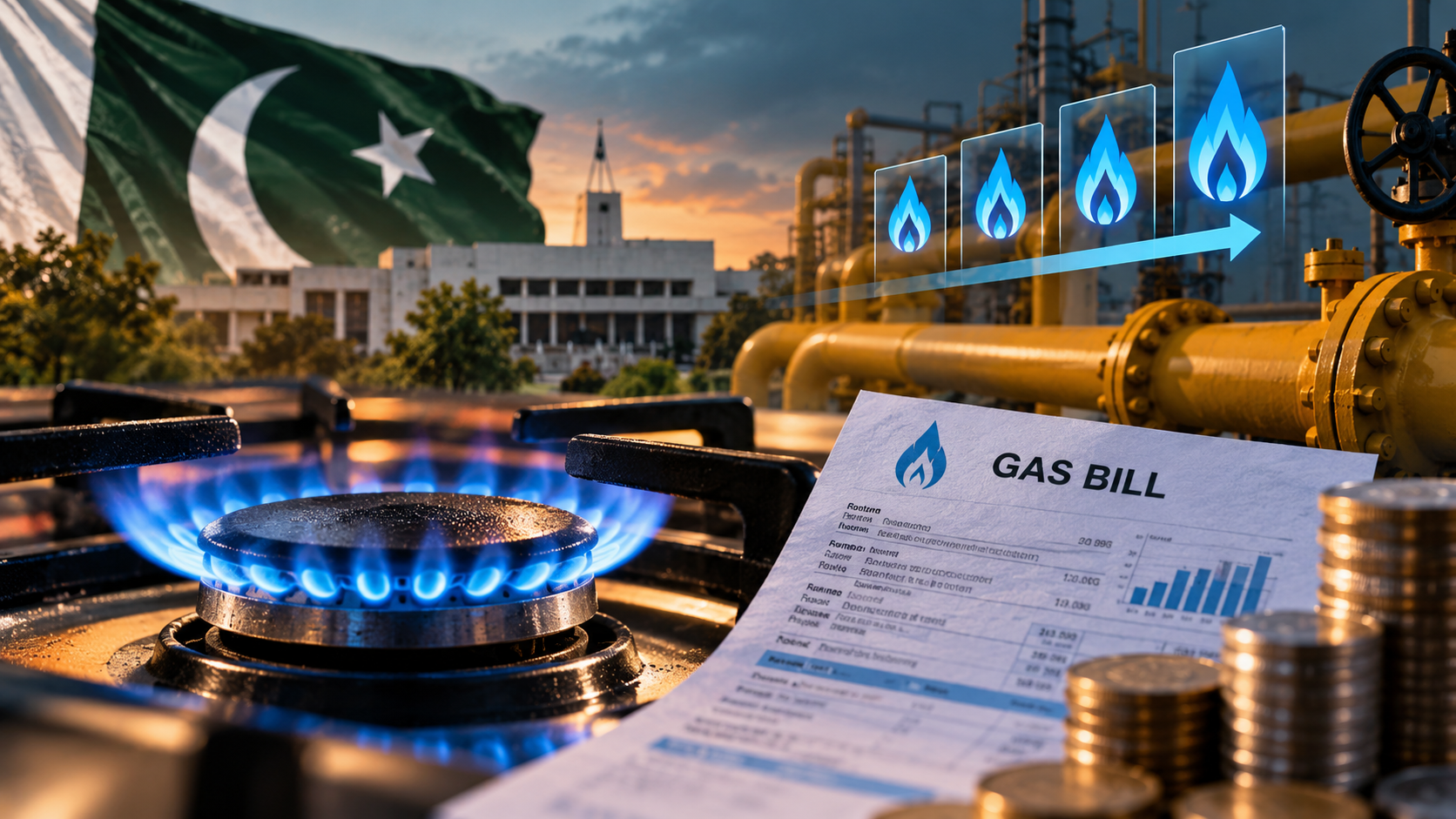
ISLAMABAD – The government is considering introducing additional gas tariff slabs in an effort to bring more domestic consumers into the protected category and provide cheaper gas to households.
The Cabinet Committee on Energy (CCOE) has directed the Petroleum Division to examine a more rational categorization of protected gas consumers. The proposal comes as the government attempts to address persistent financial pressures in the gas sector while protecting lower-income households.
The new gas tariff slabs in Pakistan are being considered against the backdrop of a large gas-sector circular debt burden and longstanding gaps between consumer tariffs and the cost of supplying gas.
The government has previously said that gas prices would remain unchanged for six months from January 2026 as part of measures to provide relief to consumers.
CCOE Reviews Pakistan Gas Circular Debt
The CCOE, chaired by Prime Minister Shehbaz Sharif, reviewed a summary concerning circular debt in the gas sector.
The Petroleum Division told the meeting that assessments by the World Bank and KPMG had identified delayed consumer gas price increases and the diversion of imported RLNG to domestic consumers as major contributors to the accumulation of debt between 2019 and 2023.
According to the latest government-related reporting, Pakistan’s gas-sector circular debt remained a major financial challenge in 2026. A recent report put the debt at around Rs3.6 trillion by March 2026, with late-payment surcharges accounting for a substantial portion of the outstanding amount.
Why New Gas Tariff Slabs Are Being Considered
The proposed restructuring of the protected category is intended to make the tariff system more targeted.
Under the current structure, domestic consumers are divided into protected and non-protected categories, with different rates applied according to consumption. The existing protected category is designed to shield lower-consumption households from the highest gas tariffs.
The government is now examining whether additional slabs could allow more consumers to qualify for comparatively lower rates without placing the entire cost of the subsidy on the wider gas system.
The International Monetary Fund has also stressed the importance of maintaining progressive gas tariffs while protecting vulnerable household consumers. Pakistan’s commitments under its IMF programme include semiannual gas tariff adjustments and measures to reflect the cost of imported RLNG diverted to the domestic sector.
Gas Circular Debt Has Multiple Causes
The Petroleum Division identified several factors behind the accumulation of gas-sector circular debt.
These include delayed revisions in consumer gas prices, differences between the revenue requirements determined by the Oil and Gas Regulatory Authority (OGRA) and actual recoveries by the Sui gas companies, outstanding receivables from the power sector and the diversion of RLNG to domestic consumers during winter.
Other factors include inadequate budgetary allocations for subsidies, pending GST refunds, litigation concerning gas-price notifications and declining demand from some high-value industrial consumers.
The government has also previously linked gas-sector debt to tariff under-recoveries and the increasing cost of imported LNG. The IMF has identified timely tariff adjustments and improved monitoring of circular debt as key elements of Pakistan’s gas-sector reform programme.
SNGPL and SSGC Recovery Issues
The CCOE was also briefed about recovery problems faced by Sui Southern Gas Company Limited (SSGC), particularly in Balochistan.
The Petroleum Division called for high-level engagement to address outstanding gas bills and improve collections.
Lower recoveries relative to gas supplies have contributed to financial pressure on the country’s gas utilities, limiting their ability to meet obligations and invest in their operations.
The government has also been working to improve the financial position of SNGPL and SSGC as part of broader efforts to contain the accumulation of gas-sector circular debt.
Government Seeks Rs160 Billion for Subsidy
During the CCOE meeting, the Petroleum Division requested several financial measures to address outstanding liabilities.
These included settlement of power-sector receivables against domestic gas, RLNG and oil supplies, settlement of a Rs42 billion RLNG actualization tariff relating to the power sector, and payment of Rs83 billion in GST refunds by the Federal Board of Revenue.
The division also sought a Rs160 billion budgetary allocation to eliminate cross-subsidies in the domestic sector and provide relief to industry.
The government is simultaneously seeking to finalize its Gas Circular Debt Management Plan (CDMP) with the IMF. The Finance Division told the meeting that the plan would be discussed with the Fund during the September loan programme review.
What the New Gas Slabs Could Mean for Consumers
If approved, the proposed new gas tariff slabs in Pakistan could change the way domestic consumers are classified and charged.
The key objective under discussion is to create a more rational protected category, potentially allowing more households to benefit from lower rates.
However, the proposal has not yet been finalized as a new tariff schedule. The CCOE has directed the Petroleum Division to examine the categorization before any changes are implemented.
This means consumers should not assume that existing gas rates or protected-category eligibility have already changed.
Government Faces Balancing Act
The proposed tariff changes highlight the government’s challenge of balancing consumer relief with the financial health of the gas sector.
Lower tariffs can provide relief to households, but if prices remain below the cost of supply for extended periods, the resulting gap can add to the financial liabilities of gas companies.
At the same time, sharp increases in household gas bills can place additional pressure on consumers, particularly lower-income families.
The government is therefore examining tariff restructuring alongside measures aimed at improving recoveries, settling outstanding receivables and controlling circular debt.
What Happens Next?
The Petroleum Division will examine the proposed restructuring of protected gas consumers following the CCOE’s directive.
Any new tariff slabs or changes to consumer categories would require the relevant regulatory and government processes before taking effect.
For now, the proposal represents an examination of the existing structure rather than a confirmed change in gas prices.
Key Points :
- Pakistan is considering new gas tariff slabs to expand the protected consumer category.
- The CCOE has asked the Petroleum Division to examine a more rational consumer categorization.
- The proposal comes amid persistent gas-sector circular debt.
- The government has identified delayed tariff revisions and RLNG diversion as major contributors to the debt buildup.
- The Petroleum Division requested Rs160 billion for eliminating domestic-sector cross-subsidies.
- It also sought Rs42 billion in RLNG tariff actualization and Rs83 billion in GST refunds.
- The government is working on a Gas Circular Debt Management Plan with the IMF.
- No new tariff structure has been formally announced yet. The proposal remains under examination.
Read More:
For more such exclusive articles, follow Upfront .