Education
Why Is the Scope of Medical Degree in Pakistan Declining?

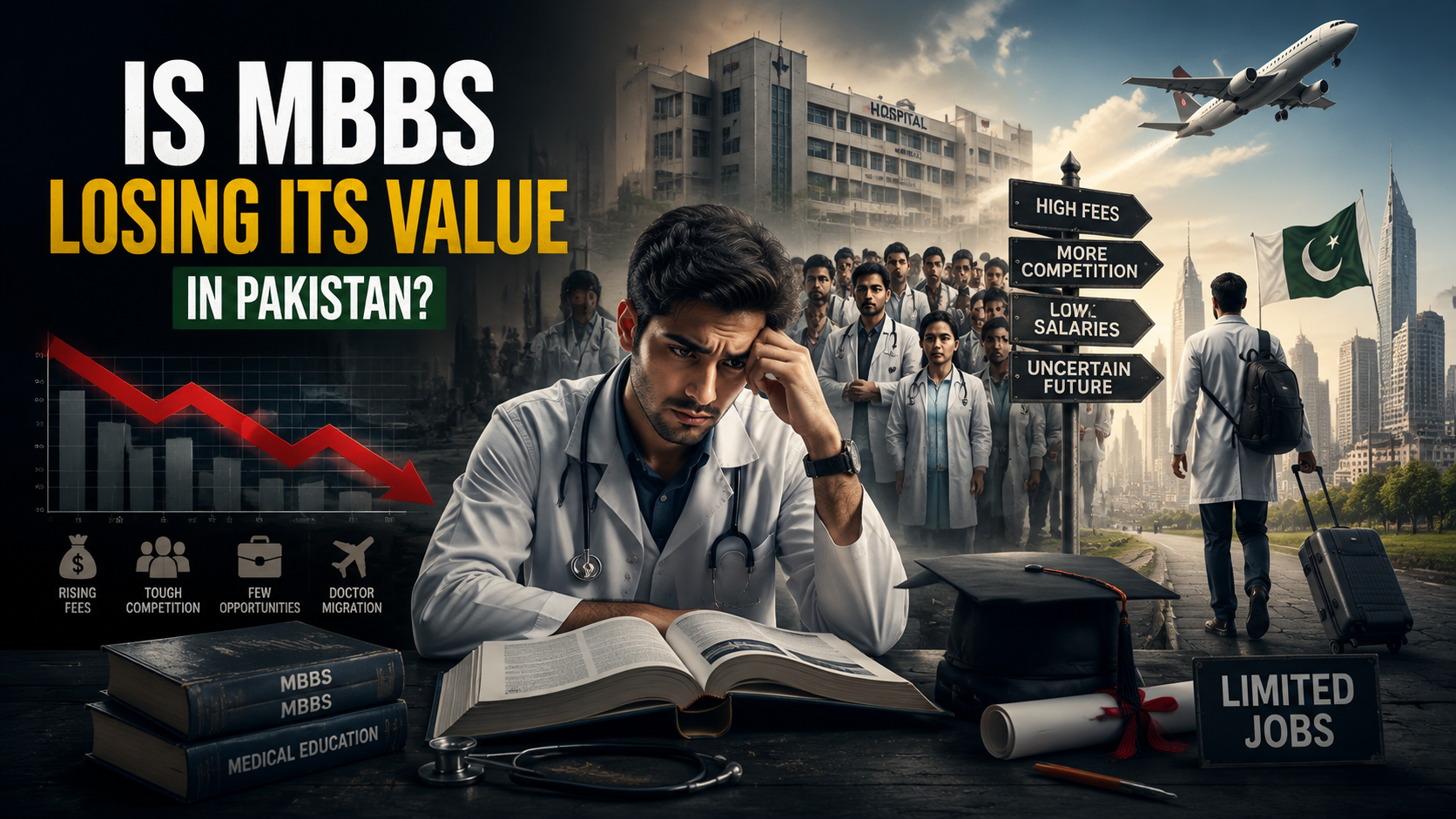
LAHORE – For decades, becoming a doctor was considered one of the safest and most respected career choices in Pakistan. Families invested years of effort and millions of rupees because an MBBS degree was seen as a guaranteed path toward financial stability and social respect.
However, the reality has started changing.
Today, many medical graduates are questioning whether spending five years studying medicine still guarantees a successful career. Increasing competition, limited training opportunities, rising education costs, and difficulties in finding well-paid jobs have created uncertainty among students.
The changing scope of medical degree in Pakistan has become a major concern for thousands of aspiring doctors and their families.
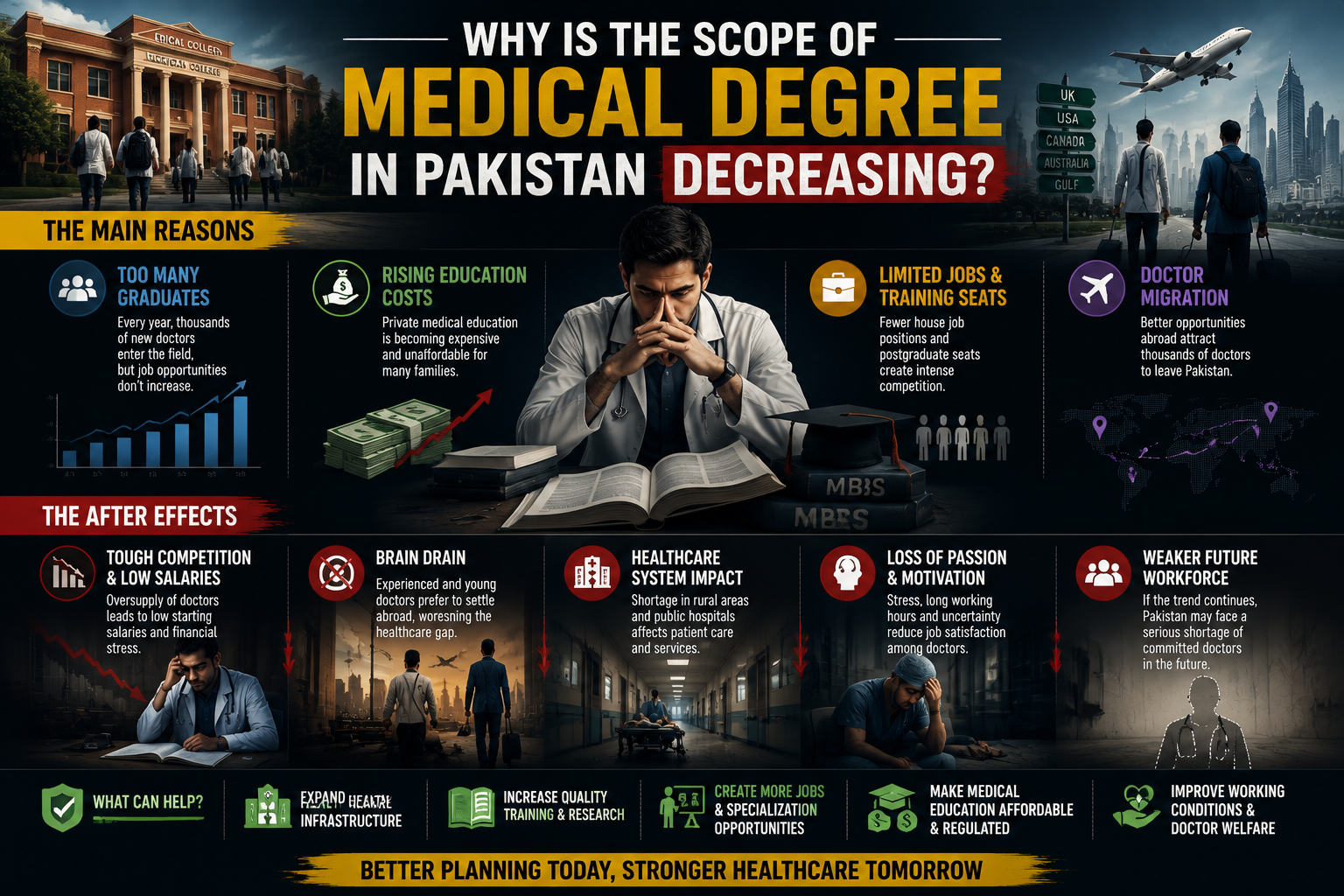
This Image is Ai generated and used for Illustration purposes only.
Is MBBS Still a Secure Career Option in Pakistan?
For many years, MBBS was considered a profession with guaranteed demand. Doctors were respected, employment opportunities were available, and specialization often led to better career prospects.
However, the situation has become more complicated.
Pakistan now produces a large number of medical graduates every year, while the number of quality training positions and employment opportunities has not increased at the same pace.
As a result, many young doctors face challenges such as:
- Limited house job opportunities
- Difficulty finding permanent positions
- Low starting salaries
- Delayed specialization
- Increased competition
The problem is not that Pakistan does not need doctors. The country still faces major healthcare challenges. Instead, the issue is a mismatch between the number of graduates entering the field and the opportunities available to them.
Why Is the Scope of Medical Degree in Pakistan Decreasing?
- Too Many Graduates and Limited Opportunities
One of the biggest reasons behind the changing medical career landscape is increasing competition.
Over the years, the number of medical colleges and medical seats has expanded. The Pakistan Medical and Dental Council (PMDC) maintains lists of recognized public and private medical colleges across the country.
However, expanding the number of graduates without creating enough:
- Hospitals
- Training positions
- Research opportunities
- Specialist jobs
creates pressure on the healthcare job market.
Consequently, many graduates struggle to find opportunities that match their qualifications.
Are Medical Graduates Facing Job Problems in Pakistan?
Why Are Young Doctors Struggling After MBBS?
Completing an MBBS degree is only the beginning of a doctor’s career journey.
After graduation, doctors usually require:
- House job training
- Postgraduate specialization
- Clinical experience
However, competition for these opportunities has increased.
Many young doctors complain about:
- Long working hours
- Low salaries during early career stages
- Limited postgraduate seats
- Uncertainty about career progression
Online discussions among medical graduates also frequently highlight concerns about job availability, low initial earnings, and increasing competition in the profession.
As a result, some graduates consider leaving Pakistan or switching career paths.
How Are Rising Medical Education Costs Affecting Students?
Has Becoming a Doctor Become Too Expensive?
Another major challenge is the increasing cost of medical education.
Private medical colleges have become increasingly expensive for many Pakistani families. Reports have highlighted concerns that private MBBS education costs can become unaffordable, especially for students who cannot secure government medical college admission.
Although authorities have discussed fee regulation, including proposals around private medical college tuition caps, affordability remains a major concern for students.
For many families, the financial calculation has changed.
A student may spend years and significant resources completing medical education, but the return on investment may take much longer than expected.
Why Are Pakistani Doctors Moving Abroad?
Is Brain Drain Reducing the Value of Medical Careers in Pakistan?
A significant number of Pakistani doctors choose to move abroad after graduation.
Popular destinations include:
- United Kingdom
- United States
- Gulf countries
- Australia
Doctors often seek:
- Better salaries
- Improved working conditions
- Advanced training opportunities
- Professional growth
While overseas opportunities can benefit individual doctors, large-scale migration creates challenges for Pakistan’s healthcare system.
The country invests in training doctors, but many eventually provide their services elsewhere.
Is Pakistan Producing More Doctors Than It Can Support?
Is There a Gap Between Medical Education and Healthcare Planning?
Pakistan’s healthcare system faces a unique contradiction.
On one hand, the country needs more healthcare professionals, especially in rural and underserved areas.
On the other hand, many newly qualified doctors struggle to find suitable career opportunities.
This shows that the problem is not simply the number of doctors.
Instead, Pakistan needs better planning involving:
- Hospital expansion
- Rural healthcare development
- Specialist training programs
- Research opportunities
- Better employment structures
Without proper planning, producing more graduates alone will not solve healthcare problems.
What Are the Effects of a Declining Medical Career Scope?
The changing medical career landscape affects both students and the healthcare system.
- Students May Avoid Medical Education
If students believe medicine no longer provides stable career opportunities, fewer talented individuals may choose the profession.
This could affect the future quality of healthcare workers.
- More Doctors May Leave Pakistan
Limited opportunities can encourage more graduates to search for careers abroad.
This increases pressure on Pakistan’s healthcare system.
- Healthcare Quality Could Face Challenges
When doctors face financial stress, poor working conditions, and limited growth opportunities, it can affect motivation and retention.
A strong healthcare system requires not only trained doctors but also a supportive professional environment.
Is Medical Degree Still Worth It in Pakistan?
Despite these challenges, medicine remains an important and respected profession.
Doctors continue to have opportunities through:
- Specialization
- Private practice
- Research
- Teaching
- International careers
However, students now need realistic expectations.
Choosing medicine only because of social pressure or the belief that it guarantees wealth may not be enough.
Future doctors need:
- Passion for healthcare
- Long-term commitment
- Awareness of career challenges
- Willingness to continue learning
What Can Pakistan Do to Improve the Future of Medical Education?
Pakistan needs reforms that connect medical education with healthcare requirements.
Important steps include:
Expanding Healthcare Infrastructure
More hospitals and training centers can create additional opportunities for graduates.
Improving Doctor Employment Conditions
Better salaries, working environments, and career pathways can help retain doctors.
Strengthening Medical Training
Quality education and practical clinical exposure should remain priorities.
Better Workforce Planning
The government needs accurate planning about how many doctors the country requires and where they are needed.
Key Points:
- Increasing competition: More medical graduates are entering the field, creating pressure on available opportunities.
- Limited jobs: Many doctors struggle with employment and postgraduate training opportunities after MBBS.
- Expensive education: Private medical education has become financially challenging for many families.
- Doctor migration: Many Pakistani doctors move abroad for better salaries and career growth.
- Healthcare planning issues: The country needs better coordination between medical education and healthcare demand.
- Changing expectations: MBBS is no longer viewed as an automatic guarantee of financial success.
- Need for reforms: Better hospitals, training programs, and employment structures are required.
Conclusion: Is the Golden Era of MBBS in Pakistan Ending?
The medical profession in Pakistan is not disappearing, but the traditional belief that an MBBS degree automatically guarantees success is changing.
The real challenge is not the value of medicine itself. Instead, it is the growing gap between the number of medical graduates and the opportunities available to them.
For Pakistan to protect the future of healthcare, it must focus on creating better career pathways for doctors while ensuring students receive quality medical education.
A medical degree will always carry respect, but in today’s Pakistan, passion alone is no longer enough. Proper planning, opportunities, and reforms are needed to restore confidence in the profession.
Read More:
Stay Connected with Upfront
Get the latest news, technology, business, sports and entertainment stories from Upfront.
Add Upfront as a preferred source on GoogleAdd Upfront to your preferred sources to see more of our stories across Google Search.