Connect with us

Latest

Spekit Raises $45M to Reinvent Training for Remote Teams

Published

on

Spekit Raises $45M to Reinvent Training for Remote Teams

KARACHI – Spekit, the brainchild of Pakistani powerhouse Zari Zahra and cofounder, Melanie Fellay, has announced raising $45 million in Series B funding led by Craft Ventures, with participation from Felicis, Operator Collective, Matchstick Ventures, Renegade Partners, Foundry Group and Bonfire Ventures, as covered by Forbes. Spekit is the leading platform for onboarding and training remote teams. Now, it becomes the first female-founded company to raise funding of this calibre in Pakistan, bringing the company’s total funds raised to $60 million.


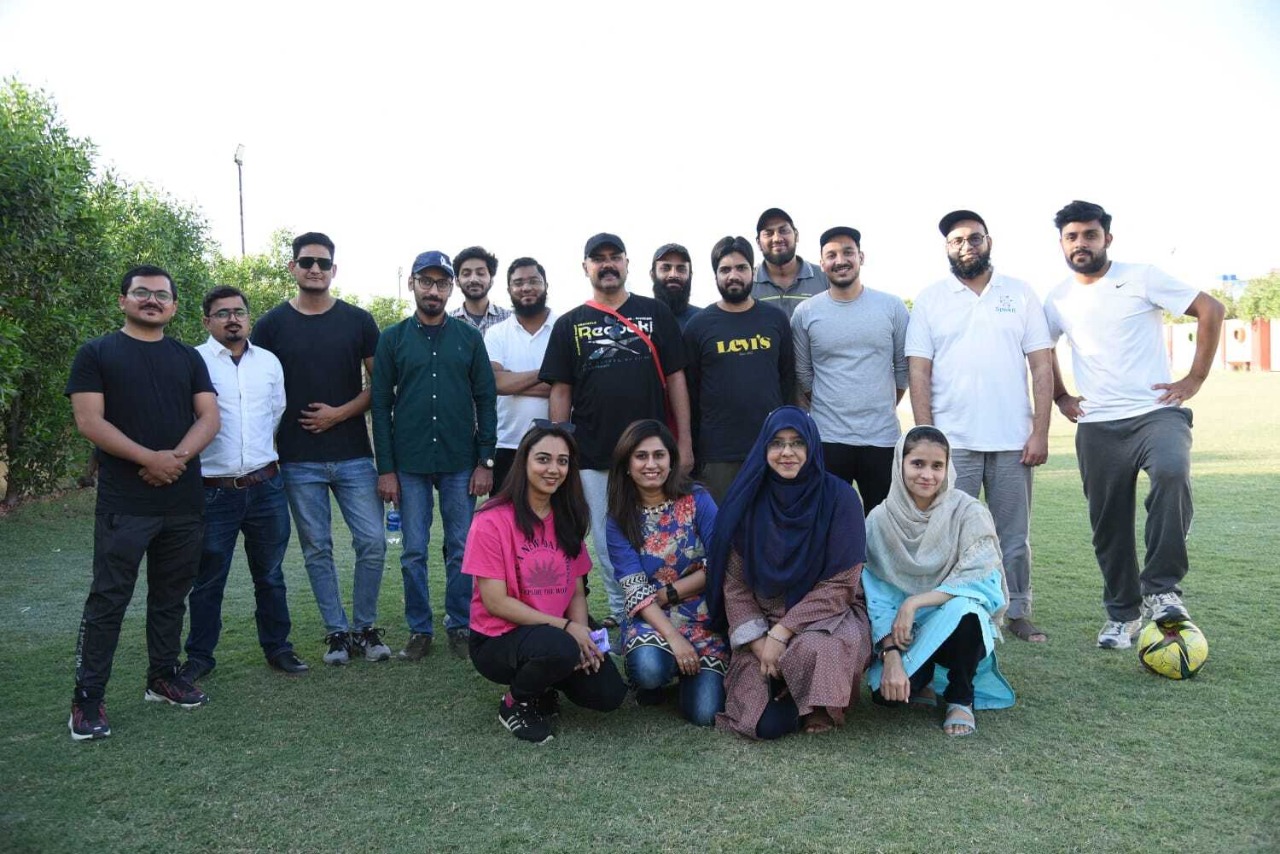
With hubs in Karachi and Denver,Spekitis attracting top-tier technical talent in Pakistan, eager to join the mission to reinvent how we learn at work. The company is rapidly expanding its presence in Pakistan and looking for new talent across software engineering, leadership and more. Since raising a $12.2M Series A funding round in March 2021, Spekit has tripled its employee headcount and grown revenue more than 300% year-over-year. Many of the world’s most innovative companies including Uber Freight, Snowflake, Outreach, Invesco and Southwest Airlines rely on Spekit to empower their employees with real-time knowledge and training, without disrupting their day-to-day workflows.


“Mel and I started this journey with our founding engineering team in Karachi and, while we’ve since expanded across the US, it’s clear that Silicon Valley is no longer the only place where world-class products are built. A key to achieving our growth has been leveraging the immense talent across both nations to build a collaborative, high-caliber team. This is both a competitive advantage and, on a personal level, a source of real pride for me as a Pakistani,” said Zari Zahra, Spekit’s Cofounder and Chief Product and Technology Officer. “We’re growing rapidly and intend to deepen our roots in Pakistan, as well as the US, by finding more talented people to help us build this iconic, market-defining platform.”


For the last three decades, companies have relied on PowerPoints, training sessions, learning management system courses and manuals to educate employees on products, roles and tools. But, between the global shift to remote work and the rapid pace of SaaS evolution, the workplace looks drastically different today than it did thirty years ago.Spekit replaces ineffective traditional training methods by surfacing bite-sized trainings, resources and guidance directly within the applications employees use every day. This alleviates the pain of searching for answers by making knowledge instantly accessible right when it is needed.


“We live in a world of ‘instant’ – one-click shopping, Uber rides and Google searches. Why should we settle for anything less at work? Spekit is creating the same ease of learning in our professional lives as we have in our personal lives. We’re building an intelligent and personalized learning engine that is built for this new age of remote work, constant innovation and change” said Spekit CEO and cofounder, Melanie Fellay. “The love customers have for our product and company wouldn’t be possible without our team in Pakistan and I’m continually impressed by the caliber of talent in the country.”

Teams leverage Spekit to reduce employee ramp time, introduce new tools, roll out process changes and eliminate time spent searching for answers. When enablement leaders at OwnBackup came to Spekit, they were in a period of hyper-growth after raising a $240 million Series E funding round and scaling from 300 to more than 500  employees. “Spekit gives our reps the product and process knowledge they need to master their roles, directly within the tools they use every day like Salesforce or Slack,” said Thomas Cheriyan, the Senior Director of Learning and Development at OwnBackup. “This saves the enablement team time answering repetitive questions, but, more importantly, drives the productivity of our reps so they can focus on what they’re best at – closing deals.”

“Spekit is pioneering the future of workplace learning with their native, just-in-time enablement platform,” said Brian Murray, Partner and COO at Craft Ventures. “Melanie and Zari are a powerhouse duo: clear vision, A+ product, cult-like customer happiness, and a buzzing team culture. We’re thrilled to join Spekit as they make the tools we use more accessible and powerful.”


With this infusion of capital, Spekit will focus on scaling both the team and the platform – leveraging data to design completely personalized learning experiences for employees that will propel them from novice to master, faster.


To learn more about Spekit and the future of employee training – visit www.spekit.com.

Continue Reading
Click to comment

You must be logged in to post a comment Login

Leave a Reply

Latest

ECC backs Rs194 Billion package to improve power sector finances

Published

on

ISLAMABAD – The Economic Coordination Committee (ECC) on Wednesday approved a Rs194 billion financial package for power distribution companies (Discos), aimed at improving the sector’s financial health and addressing outstanding subsidy-related obligations.

According to official details, the package includes a Rs52 billion equity injection, the reallocation of Rs97.65 billion in subsidies, and the adjustment of Rs44.2 billion in arrears.

The ECC approved the transfer of Rs97.649 billion from the tariff differential subsidy allocation earmarked for K-Electric to the Inter-Disco Tariff Differential Subsidy, enabling the government to meet subsidy requirements across public-sector distribution companies.

The committee also approved the settlement of Tariff Differential Subsidy (TDS) arrears claims of Rs44.198 billion for the Tribal Areas Electricity Supply Company (Tesco), addressing pending subsidy obligations linked to the utility.

Officials said the measures are intended to provide financial support to distribution companies, improve subsidy management, and strengthen the balance sheets of utilities facing persistent losses due to low recoveries, electricity theft and high power generation costs.

Continue Reading

Latest

Nuclear inspections could resume soon after progress in Iran talks: JD Vance

Published

on

ISLAMABAD – WASHINGTON and Tehran reported progress on multiple contentious issues following high-level negotiations in Switzerland, with both sides agreeing to continue technical discussions aimed at reaching a broader agreement in the coming weeks.

Speaking after the talks, US Vice President JD Vance said the discussions had resulted in understandings on several key issues, including the return of international nuclear inspectors, mechanisms governing Iran’s frozen assets and arrangements intended to preserve navigation through the Strait of Hormuz.

According to Vance, technical teams from both countries remained engaged after lengthy overnight negotiations and would continue working on the details of the preliminary understandings reached during the meeting.

He said the United States hoped inspections by the International Atomic Energy Agency (IAEA) could resume shortly, describing the development as a positive step towards a more comprehensive settlement.

The talks took place in Bürgenstock, Switzerland, where mediators sought to build on recent diplomatic efforts aimed at reducing regional tensions and establishing a framework for future negotiations.

Prime Minister Shehbaz Sharif welcomed the outcome of the meeting, saying the discussions had generated momentum towards a negotiated settlement between the two countries.

In a statement, he said participants had agreed to establish a high-level oversight mechanism and pursue a roadmap designed to facilitate a final agreement within the next two months.

The premier also acknowledged the role played by Qatar and Switzerland in supporting the diplomatic process, while reiterating Pakistan’s commitment to dialogue and peaceful conflict resolution.

Iran, however, offered a more cautious assessment of the discussions.

Foreign Ministry spokesman Esmaeil Baghaei said the nuclear issue had only been touched upon briefly and insisted that substantive negotiations on Tehran’s nuclear programme had not yet begun.

Nevertheless, he described the talks as productive and said the parties had agreed on several measures intended to create conditions for future negotiations.

Among the issues discussed were maritime security in the Strait of Hormuz, the possible release of Iranian assets held abroad and arrangements related to regional ceasefire efforts, particularly in Lebanon.

Baghaei said technical experts would continue consultations on the implementation of the understandings reached in Switzerland, expressing hope that all parties would demonstrate seriousness in moving the process forward.

The negotiations, facilitated by Pakistan and Qatar, concluded after nearly 18 hours of discussions, with both sides indicating a willingness to maintain diplomatic engagement despite persistent differences on key issues.

Continue Reading

Latest

5.4-magnitude earthquake jolts Islamabad, KP and parts of Punjab

Published

on

ISLAMABAD – A moderate earthquake measuring 5.4 on the Richter scale was felt in Islamabad and several cities across Khyber Pakhtunkhwa and Punjab on Monday, prompting residents to leave their homes and offices in panic.

According to the National Seismic Monitoring Centre, the earthquake originated in Afghanistan’s Hindu Kush region and occurred at a depth of 215 kilometres.

Tremors were reported in Islamabad, Peshawar, Buner, Bajaur, Faisalabad, Dera Ismail Khan, Khushab, Battagram, Mansehra, Swat, and Abbottabad, among other areas.

Residents in several cities rushed outdoors and recited prayers as the tremors were felt.

Authorities said there were no immediate reports of casualties or damage to property.

The latest earthquake comes days after similar tremors were recorded in various parts of the country, reflecting the region’s vulnerability to seismic activity due to its proximity to major tectonic fault lines.

Pakistan frequently experiences earthquakes, particularly in its northern and western regions, which lie along the boundary of the Indian and Eurasian tectonic plates.

Continue Reading

Trending

Copyright © 2026