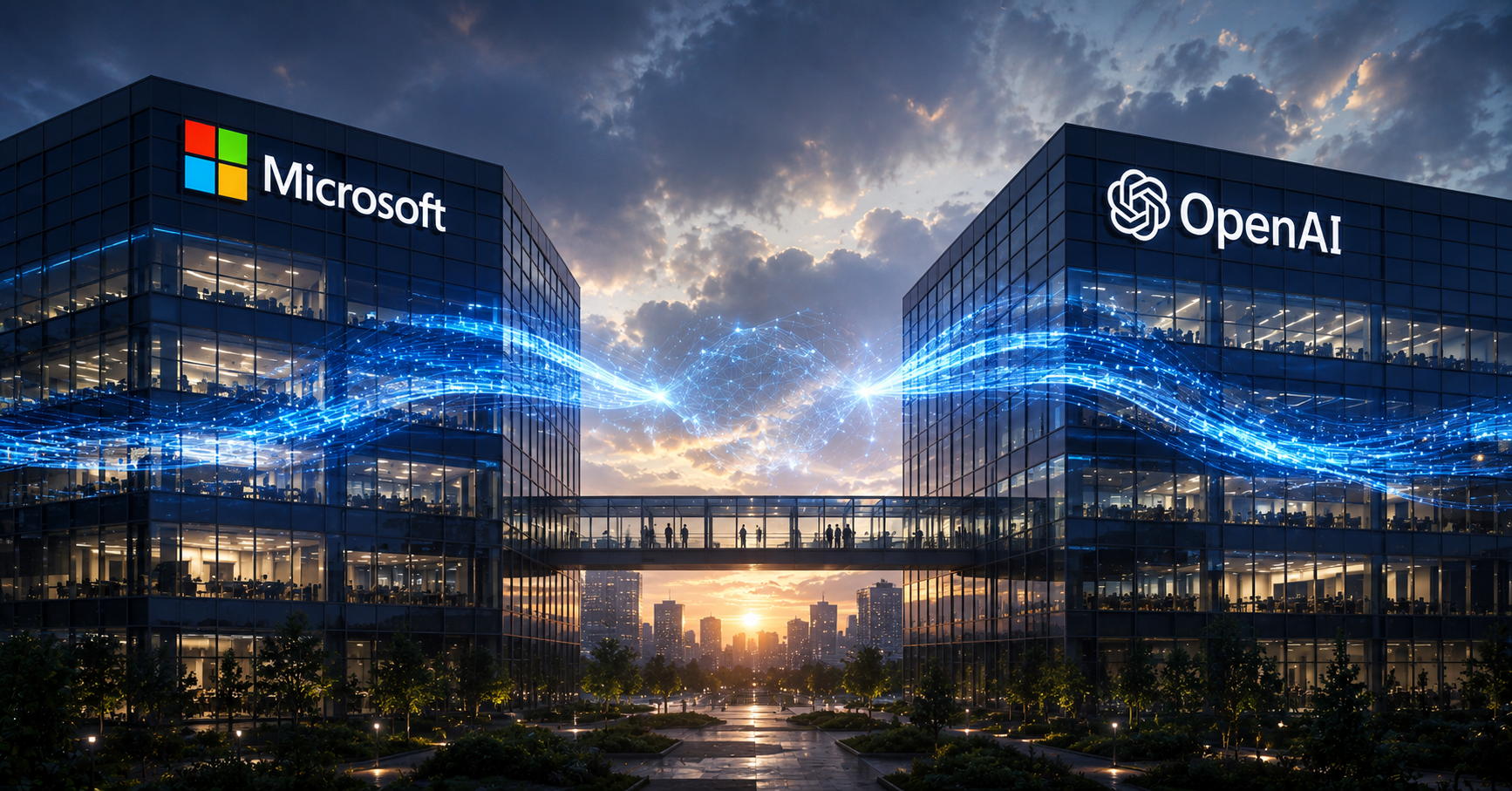
ISLAMABAD – Microsoft and OpenAI have revised their long-running partnership, ending Microsoft’s exclusive access to OpenAI’s artificial intelligence models and products while giving the AI company greater commercial and operational flexibility.
Under the updated agreement, Microsoft will continue to hold a licence to OpenAI’s intellectual property until 2032, but the arrangement is now non-exclusive. This means OpenAI is free to license its technology to other companies instead of limiting access to Microsoft.
Read more: Linux RefluXFS vulnerability to let attackers gain root priviliges
The revised deal also allows OpenAI to use cloud infrastructure from multiple providers for all of its products. However, Microsoft will remain OpenAI’s primary cloud partner, with new products expected to launch on Microsoft Azure first unless Azure is unable or chooses not to support them.
Previously, several OpenAI application programming interface (API) services were available exclusively through Azure.
The financial terms of the partnership have also changed. Microsoft will no longer pay OpenAI a share of the revenue it generates from OpenAI-related products.
Read more: Robert Downey Jr.’s Doctor Doom voice is the reason he became Doctor Doom
Meanwhile, OpenAI will continue sharing a portion of its revenue with Microsoft until 2030, although those payments will now be subject to a predetermined cap.
The companies have also removed provisions that linked parts of their agreement to OpenAI achieving artificial general intelligence (AGI).
Read more: Why Is the Scope of Medical Degree in Pakistan Declining?
The revised partnership comes as Microsoft broadens its artificial intelligence strategy beyond OpenAI. In recent months, the company has integrated AI models from competitors, including Anthropic’s Claude family of models, into parts of its Copilot ecosystem.
Despite the changes, Microsoft remains one of OpenAI’s biggest backers, having invested more than $13 billion in the company.
Microsoft shares fell more than 1% in early trading following news of the updated agreement.
Key points:
- Microsoft has ended its exclusive access to OpenAI’s models and products under a revised partnership.
- Microsoft will retain a non-exclusive licence to OpenAI’s intellectual property until 2032.
- OpenAI can now license its AI technology to other companies.
- OpenAI is free to use multiple cloud providers, although Microsoft Azure remains its primary cloud partner.
- Microsoft will no longer pay OpenAI a share of its OpenAI-related revenue.
- OpenAI will continue sharing revenue with Microsoft through 2030, subject to a payment cap.
- Microsoft remains one of OpenAI’s largest investors, having invested more than $13 billion.