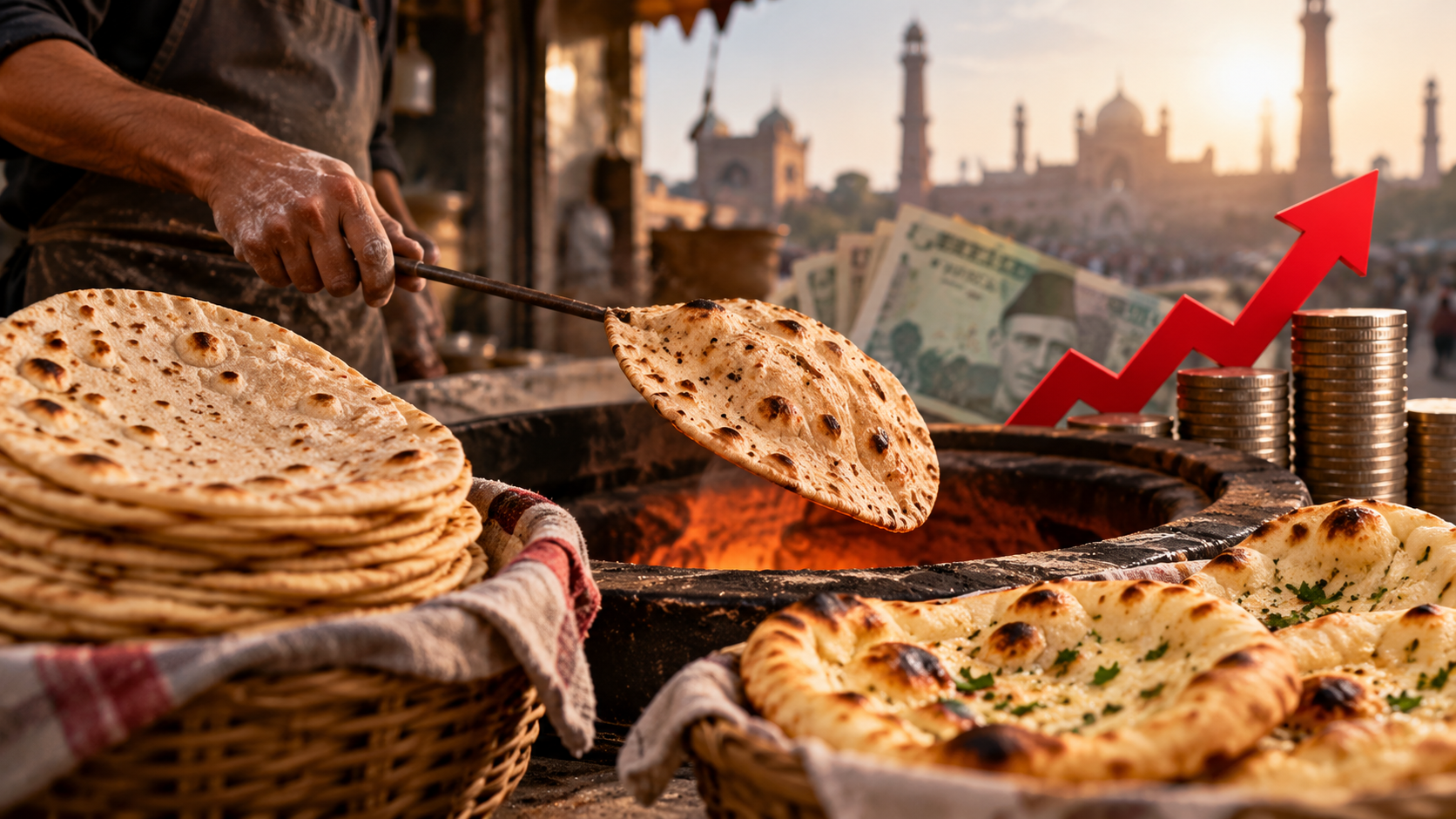
LAHORE – The prices of two of Pakistan’s most essential food items have come under renewed pressure, with roti selling for Rs20 and naan for Rs35 in Lahore as tandoor owners struggle with rising flour and fuel costs.
The latest developments have raised concerns about further increases in Lahore roti and naan prices after the reported suspension of subsidized flour supplies to tandoor operators.
The United Naan Roti Association has refused to comply with government-fixed rates, arguing that higher production costs have made it increasingly difficult to operate at the prescribed prices.
Association President Aftab Aslam Gul has urged the Punjab government to restore affordable flour and gas supplies to prevent additional pressure on businesses and consumers.
What Are the Latest Roti and Naan Prices in Lahore?
According to the association and recent market reports, a standard roti is being sold for Rs20, while naan costs Rs35 at tandoors in Lahore.
The naan price was increased by Rs5 earlier this month, rising from Rs30 to Rs35. The association had already reported roti selling for Rs20 at the time.
The latest statements therefore reflect continued pressure on existing market prices rather than a fresh increase in both items on October 28.
Latest Roti and Naan Prices in Lahore
| Item |
Reported Selling Price |
| Roti |
Rs20 |
| Plain naan |
Rs35 |
| Previous plain naan price |
Rs30 |
| Increase in naan price |
Rs5 |
These figures reflect prices reported by tandoor representatives and local media. They should not be confused with government-notified rates.
Why Are Lahore Roti and Naan Prices Increasing?
Tandoor owners have identified two major reasons behind the rising cost of preparing roti and naan: expensive flour and higher fuel expenses.
According to United Naan Roti Association President Aftab Aslam Gul, the Punjab Food Department previously supplied subsidized flour to tandoor operators.
He said the arrangement helped businesses sell bread at government-prescribed prices while managing their production costs.
However, the association claims that the suspension of those subsidized supplies has forced operators to purchase more expensive flour from the market.
Gul said a 10-kilogram flour bag previously cost Rs1,100 under the earlier arrangement, while a 15-kilogram bag now costs approximately Rs2,350.
The figures indicate a considerable difference in the per-kilogram costs cited by the association, although the two bags differ in quantity and may reflect different supply arrangements.
Tandoor owners argue that these expenses are making it increasingly difficult to maintain affordable prices for customers.
Rising LPG Costs Add Pressure on Tandoor Owners
Flour is not the only concern for businesses operating traditional tandoors.
The association has also highlighted the increasing cost of liquefied petroleum gas (LPG), which many operators use to prepare roti and naan.
Gas supply disruptions have reportedly forced some businesses to rely more heavily on LPG cylinders.
Earlier in October, association representatives said higher LPG expenses and an increase in the price of fine flour, commonly known as maida, had contributed to the decision to raise naan prices.
They reported an increase of approximately Rs3,000 in the cost of an 80-kilogram bag of maida.
With both flour and fuel becoming more expensive, tandoor owners say maintaining existing selling prices has become increasingly difficult.
Government Roti Price Still Lower Than Market Rate
Despite roti being sold for Rs20 at several tandoors, the Punjab government’s officially published price remains lower.
According to the Punjab Food, Supplies and Consumer Protection Department’s notified commodity rates for October 28, 2026, the listed price of roti in Lahore is Rs14.
The government’s notification issued in September 2025 fixed the maximum retail price of a 100-gram roti at Rs14, subject to any subsequent amendment or withdrawal.
This creates a difference of Rs6 between the officially listed rate and the Rs20 price reported at local tandoors.
Official Rate vs Reported Market Price
| Item |
Price |
| Government-notified roti price |
Rs14 |
| Reported roti selling price |
Rs20 |
| Difference |
Rs6 |
The current government commodity list does not specify a separate naan price.
The disagreement between tandoor owners and authorities raises questions about price enforcement and the financial challenges faced by businesses.
Naan Roti Association Refuses Government-Fixed Rates
The United Naan Roti Association has maintained that tandoor owners cannot continue operating at government-prescribed prices without affordable raw materials.
Association President Aftab Aslam Gul has called on the Punjab government to address the cost of flour and LPG before expecting businesses to maintain lower rates.
The association argues that subsidized flour previously made it possible to sell roti at official prices.
With that support reportedly unavailable, operators say they are struggling to cover their expenses.
However, the association’s refusal to accept government-fixed rates does not itself change the official price notification.
Any revision to regulated prices would require action by the relevant authorities.
Could Roti and Naan Become Even More Expensive?
Tandoor owners have warned that further increases in Lahore roti and naan prices may become difficult to avoid if flour and LPG costs continue rising.
However, no new citywide price increase beyond the currently reported rates has been confirmed.
The association is seeking government intervention to reduce the financial burden on businesses.
Restoring subsidized flour supplies or providing more affordable fuel could help ease operating costs.
Without such measures, tandoor owners fear that maintaining current prices will become increasingly difficult.
For consumers, the uncertainty is particularly concerning because roti and naan are everyday food items purchased by millions of households.
Higher Bread Prices Add to Household Expenses
The rising cost of roti and naan could place additional pressure on families already managing expenses for groceries, electricity, transport and other essentials.
For example, a household purchasing five rotis daily at Rs20 each would spend Rs100 per day, or approximately Rs3,000 over 30 days.
At the government’s listed rate of Rs14, the same quantity would cost Rs2,100 over 30 days.
That represents a difference of Rs900 in a month for just five rotis purchased daily.
The calculation illustrates why even a small change in the price of staple foods can have a noticeable effect on household budgets.
What Happens Next to Lahore Roti and Naan Prices?
The dispute between tandoor owners and the Punjab government remains unresolved as businesses continue demanding affordable flour and gas.
The association has urged authorities to restore subsidized supplies to help stabilize prices and prevent further increases.
Meanwhile, the official roti rate remains Rs14 in the Punjab government’s latest published commodity list, despite higher prices being reported in Lahore’s markets.
For now, consumers are paying Rs20 for roti and Rs35 for naan at tandoors charging the reported rates.
Whether those prices increase further will depend on flour availability, fuel costs and the outcome of discussions between the authorities and tandoor representatives.
Key Points:
- Roti is reportedly selling for Rs20 and naan for Rs35 in Lahore.
- Naan prices increased by Rs5 earlier in October 2026.
- Tandoor owners blame expensive flour and LPG for higher production costs.
- The United Naan Roti Association says subsidized flour supplies have been suspended.
- Association President Aftab Aslam Gul has demanded affordable flour and gas.
- A 15-kilogram flour bag reportedly costs Rs2,350, according to the association.
- Punjab’s official commodity list still shows roti at Rs14.
- Tandoor owners have warned that further price increases are possible if production costs remain high.
Read More:
For more such exclusive articles, follow Upfront .