Connect with us

Sci&Tech

Infinix Introduces always-on satellite connectivity and game-ready cooling at CES 2026

Published

on

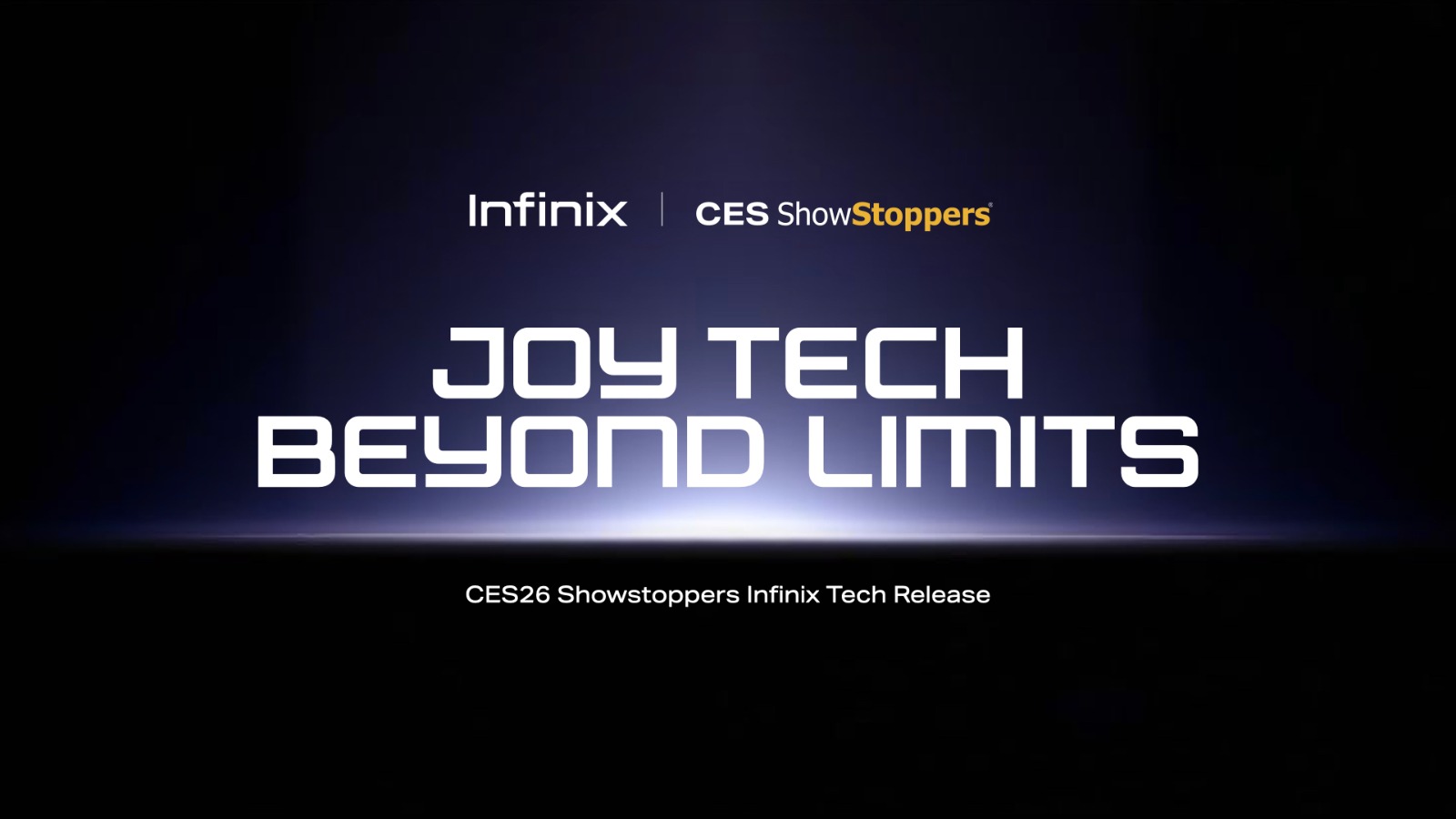
LAHORE – At CES Showstoppers 2026, Infinix, an innovation-driven technology brand, unveiled a portfolio of groundbreaking innovations, signaling a new phase of mobile technology evolution under its “Joyful Tech, Beyond Limits” philosophy.

From Infinix’s first global Satellite Communication solution to the industry’s first HydroFlow Liquid Cooling Architecture and Active Visual Backplate Technology for smartphones, Infinix is leaving a mark on the mobile tech world by breaking through the limits of connectivity, sustained performance, and personalized expression, entering a joyful new era of mobile innovation.

Satellite Communication with Roaming Convenience beyond Borders

Infinix is introducing satellite communication to a consumer-grade smartphone in an unprecedented way, marking another major move in pushing the boundaries of network versatility. With projected coverage of nearly two-thirds of the Earth’s surface, Infinix vastly expands satellite connectivity compared with existing offerings. Technically, Infinix Satellite Communication supports 4kbps transmission, enabling industry-leading dual-way, high-definition voice calls and short message service.

Built on a unified communication system, this ultra-convenient configuration requires no additional registration and seamlessly switches between mobile roaming and satellite connectivity. The system supports both Speaker Mode and Bluetooth headset calling, ensuring clear voice pickup even in windy conditions and keeping users connected in remote areas or unexpected signal dead zones.

With the NOTE 60 Series slated to be the first model featuring this solution, Infinix is vigorously driving a unified, Space-Air-Ground All-scenario Integrated Network. Democratizing the new technology to connect everything, everywhere, Infinix aims to lay a foundation for bleeding-edge technologies such as 6G networks, and immersive experiences like AR or real-time environmental AI.

Infinix NOTE 60 Series Arriving with Satellite Calling and Messaging

Active Cooling Technology Driving Joyful Gaming Performance

Infinix engineers have been hard at work developing the unique HydroFlow Liquid Cooling Architecture, one of the smartphone world’s most advanced liquid cooling solutions. At the center of this effort is the industry’s first Dual-Piezoelectric-Ceramic Single-Pump Technology.

Using electric current to drive high-frequency deformation of piezoelectric ceramics, the system drives fluorinated liquid at a high-speed flow rate of up to 6.5 ml/min—doubling the speed of conventional active liquid cooling systems. The liquid cooling channels are engineered to achieve 100% coverage of the mainboard’s core heat sources for unprecedented cooling precision and efficiency.

To further amplify this cooling power, Infinix introduces the world’s first piezoelectric fan technology designed for smartphones. Instead of bulky traditional blades, the system utilizes a 0.1mm ultra-thin vibrating sheet, which is only half the thickness of human hair, that pulses 25,000 times per second, creating a high-pressure, turbulent air jet that drives over 10x greater heat dissipation efficiency than traditional spinning blades. Thanks to the reliability of its solid-state structure, this fan operates in near silence for a comfortable user experience.

Integrating the HydroFlow Liquid Cooling Architecture with the Piezoelectric Fan, Infinix delivers an all-in-one integrated system that combines liquid and active air cooling to provide more stable performance and a cooler tactile experience. Looking ahead, Infinix continues to explore next-generation cooling solutions, including a Full-Chamber Immersive Cooling solution, where liquid directly contacts key components for rapid heat dissipation, highlighting its ambition to push cooling technology further for extreme performance.

All-in-One Integration Heat Dissipation and Cooling Architecture

To help users fully leverage the advantages of high performance and powerful cooling, Infinix is also highlighting an industry-first split controller featuring a large pressure-sensitive touchpad, bringing users an ultra-low-latency experience and boundless control. Infinix also introduced wireless magnetic triggers with mouse-grade micro-switches. This pioneering accessory suite transforms the device into a versatile immersive gaming station, allowing users to fully harness stable, high-performance capabilities enabled by the advanced cooling system for a competitive edge.

Infinix’s industry-first split controller with a massive pressure-sensitive touchpad and ultra-low-latency connectivity is designed for boundless control

Active Visual Backplate Technology Turns Colors Into Expression

Infinix is also entering an exciting new era of customization and expression through Active Visual Backplate Technology that brings “living” character to devices without additional power consumption. Through precise optical microstructures such as the Color-Changing Louvre, High-Frame-Rate Continuous Dynamic Grating, and Naked-Eye 3D Film, reflected light is actively manipulated into a back panel design that changes with viewing angles and environments. Simply rotating the phone lets users enjoy flowing colors, vivid and continuous animations, or mesmerizing 3D stereoscopic images on the back cover.

To further enhance interactivity, Infinix has implemented innovative smart materials, including Bistable Thermo-Chromatic Ink and Starry Photochromic Leather, to actively shift the pattern and color with changes in temperature and ambient light.

These dynamic visuals are on top of the advanced Monolithic Cold-carved Polymer structure, which seamlessly integrates the camera module into the rear panel for a more refined aesthetic and smoother touch. The combination of angle-dependent color shifts, 3D floating imagery, multi-frame animations, temperature-sensitive interactivity, and color-changing leather breathes living personality into Infinix products, with designs that are stunning at first glance and extraordinary upon closer inspection.

Infinix Active Visual Backplate Technologies

AI Modular Ecosystem from Work, Play, to Endless Creativity

Infinix is also introducing the AI ModuVerse system, highlighting five powerful Modu accessories. Integrating advanced hardware and AI technologies, the modules connect to Infinix’s smartphones via a unified magnetic interface to expand their functional possibilities and enable scenario-based specialization and performance enhancement in specific fields.

The AI ModuVerse includes — the Mic Modu for professional noise reduction; a magnetically attached anti-shake enhanced SportsCam Modu; a Meeting Modu integrating translation and notes generation; a StackPower Modu supporting on-demand power expansion; and a VlogCam Modu for AI-driven subject tracking and gesture control.

Infinix AI ModuVerse

With the showcase of these groundbreaking technologies at CES 2026, Infinix reaffirms its commitment to moving beyond the boundaries of mobile innovation. Integrating advanced satellite connectivity, pioneering cooling systems, personalized design elements, and a modular AI ecosystem, Infinix is actively shaping a future where technology delivers boundless joy, empowers creativity, and connects the world without limits.


Sci&Tech

Samsung introduces Robotics division for humanoid robots

Published

on

The image is AI-generated and used for illustration purposes only

ISLAMABAD – Samsung Electronics has established a dedicated robotics division as the technology giant accelerates its investment in artificial intelligence-powered robots. The newly created RX (Robotics eXperience) Division will oversee Samsung’s robotics strategy, product development and commercialization as the company seeks to make robotics one of its next major growth businesses.

New RX division to lead Samsung’s robotics strategy

Samsung said the RX Division will report directly to co-Chief Executive Officer Roh Tae-moon, who also heads the company’s Device eXperience (DX) Division.

The company stated that the new organization will manage its medium- and long-term robotics strategy while expanding research capabilities in South Korea and overseas. It will also bring together robotics teams that previously operated across different business units.

Samsung believes a unified structure will accelerate product development, improve commercialization and strengthen its overall robotics roadmap.

Samsung is targetting humanoid robots

Initially, Samsung will focus on developing humanoid robots for manufacturing facilities. The company plans to expand the technology into homes and retail environments after improving its reliability and commercial readiness.

Earlier this year, Samsung told investors that it aims to achieve tangible progress in humanoid robotics during 2026. The company also indicated that it may pursue additional investments and acquisitions to accelerate robotics research and commercialization.

Former Hyundai executive to lead robotics strategy

Samsung has appointed Executive Vice President Lee Dong-kun to head the Robotics Strategy Team.Lee previously worked at Hyundai Motor Group, where he managed robotics strategy, including projects involving Boston Dynamics. Samsung is also recruiting researchers specializing in autonomous robot control and robotic hand technologies to strengthen the RX Division.

Rainbow Robotics partnership

The new division builds on Samsung’s growing investment in South Korean robotics company Rainbow Robotics. Samsung became the company’s largest shareholder after acquiring an additional 267 billion won stake. Before the transaction, Samsung already held a 14.71 percent ownership interest.

Since then, both companies have collaborated on manufacturing robots, humanoid technologies and physical AI systems.

Samsung is planning new research centres

Samsung will establish the RX Division at its Seoul Research and Development Campus. The company also plans to build a robotics data factory at its Gumi facility to collect real-world operational data for improving robot artificial intelligence and control systems.

In addition, Samsung intends to expand robotics research through new hubs in the United States, China and Japan to access global talent and emerging technologies.

Robotics becomes Samsung’s next growth engine

Samsung is expanding beyond its traditional strengths in smartphones, consumer electronics and semiconductors by making robotics a strategic business priority. The company faces growing competition from Tesla, Chinese robotics manufacturers and several US startups developing humanoid robots.

By creating a CEO-level robotics division, Samsung has signalled that robotics will play a central role in its long-term growth strategy rather than remaining an experimental business.

Key points:

  • Samsung has established a new RX (Robotics eXperience) Division to lead its global robotics strategy.
  • The division will report directly to co-CEO Roh Tae-moon.
  • Samsung plans to prioritize humanoid robots for manufacturing before expanding into homes and retail.
  • The company aims to achieve tangible progress in humanoid robotics during 2026.
  • Former Hyundai Motor Group executive Lee Dong-kun will lead the Robotics Strategy Team.
  • Samsung will establish a robotics data factory in Gumi and expand research hubs in the US, China and Japan.
  • The initiative builds on Samsung’s investment in Rainbow Robotics and reflects its long-term AI ambitions.


Continue Reading

Sci&Tech

Kimi K3 capable of building Apple OS without coding

Published

on

BEIJING – China’s latest artificial intelligence model, Kimi K3, is drawing global attention after successfully creating a functional macOS-style web application from a single user prompt, highlighting the rapid progress of AI-assisted software development.

The project was demonstrated by technology analyst Max Weinbach, who tasked Kimi K3’s Agent Swarm with recreating Apple’s upcoming macOS 27 “Golden Gate” interface. The request included Apple’s new Liquid Glass design language along with native-style applications that could run entirely within a web browser.

According to Weinbach, the AI completed the project in approximately three hours and 20 minutes, consuming nearly 60% of his monthly Kimi credits during the process.

Read more: How Is Load-Shedding Poisoning Pakistan’s Economy?

The completed demonstration showcased a browser-based operating system that closely resembles Apple’s macOS experience. It featured a desktop interface, windows, and working applications designed to imitate Apple’s upcoming visual style.

Browser-Based Simulation, Not Apple’s Operating System

Despite its realistic appearance, the project is not an actual version of macOS. Instead, it is a web application that recreates the look and feel of Apple’s desktop operating system inside a browser. It does not contain Apple’s proprietary operating system, kernel, or native system software.

The demonstration serves as an example of how advanced AI models can generate complete software experiences without replicating the underlying operating system.

Read more: China, South Korea and Singapore emerge as Asia-Pacific’s EV leaders

What Is Kimi K3?

Kimi K3 is the newest flagship AI model developed by Chinese startup Moonshot AI. The model is designed for complex coding tasks, long-running software projects, and autonomous AI workflows. One of its standout features is a one-million-token context window, allowing it to process significantly larger amounts of information than many competing AI models.

It also introduces an Agent Swarm system, enabling multiple AI agents to divide and complete different parts of a project simultaneously before combining the final output.

Strong Coding Performance

Beyond the macOS-style demonstration, Kimi K3 has also gained recognition for its programming capabilities. According to AI benchmarking platform Arena, the model currently ranks first in its Frontend Code Arena, achieving a 76% pairwise win rate against competing AI models on frontend coding tasks.

The results suggest that modern AI systems are increasingly capable of planning, writing, debugging, and assembling complete software applications from a single instruction rather than generating isolated snippets of code.

Read more: Suzuki Pakistan unveils new Fronx XUV at PAPS 2025

AI Coding Continues to Advance

The macOS-inspired demonstration has renewed discussion across the technology industry about the pace of AI development.

Recent generations of AI coding assistants are moving beyond simple code generation, increasingly handling entire software development workflows with minimal human intervention. However, the experiment also highlights the significant computing resources and processing time still required for complex projects.

Key Points:

  • China’s Moonshot AI has launched Kimi K3, its latest flagship AI model.
  • The AI generated a functional macOS-style web application from a single prompt.
  • The project took around 3 hours and 20 minutes to complete.
  • It consumed nearly 60% of the user’s monthly Kimi AI credits.
  • The application recreates Apple’s Liquid Glass-inspired interface inside a web browser.
  • The software is not Apple’s actual macOS and does not include its operating system.
  • Kimi K3 features a one-million-token context window and an Agent Swarm system.
  • The model currently leads Arena’s Frontend Code Arena with a 76% pairwise win rate.

Continue Reading

Sci&Tech

Is Google AI Search really an ‘unacceptable risk’ to children?

Published

on

The image is AI-generated and used for illustration purposes only

KARACHI – A report by nonprofit organization Common Sense Media has raised concerns about Google’s AI-powered Search features, concluding that they pose an “Unacceptable Risk” to children because of safety, reliability and educational concerns.

The report evaluated Google AI Overview and AI Mode, two generative AI features integrated into Google Search that provide AI-generated responses to users’ queries.

AI Features Cannot Be Fully Disabled

According to the report, AI Overview automatically appears at the top of many Google Search results, while AI Mode functions as a conversational chatbot capable of answering follow-up questions and processing uploaded files and images. Common Sense Media said neither feature can currently be fully disabled by users, parents or schools, raising concerns because Google Search is widely used on children’s personal devices and school-issued Chromebooks.

Report Says AI Completes Homework

The organization also expressed concern about the impact of Google’s AI tools on education. During testing, researchers found that Google’s AI consistently generated complete answers to homework questions, including mathematics problems and essay assignments, when prompts were pasted into Search.

Read more: PTA recommends giving licenses to Starlink, OneWeb: PTA Chairman

The report argued that providing complete solutions instead of guiding students through problems could undermine learning and critical thinking. Researchers also noted inconsistencies in AI-generated responses. In one test, AI Overview reportedly produced materially different answers to the same history question in 43pc of attempts.

Child Safety Concerns Highlighted

The report’s strongest criticism centred on child safety. According to Common Sense Media, Google’s AI Search features failed all tested severe-harm “Red Line” categories, including self-harm, sexual exploitation, synthetic media harm, dangerous substances, impaired reality and eating disorders.

Read more: Punjab sales tax: Digital payments face tax increase

Researchers said that the AI sometimes failed to recognise signs of mental health crises, reinforced symptoms associated with psychosis and mania, validated disordered eating behaviours and mishandled certain substance-use prompts. The report further stated that AI Overview identified clear warning signs of emotional distress in only 58pc of hundreds of test searches, below the organization’s benchmark of 95pc.

Overall Rating Marked as ‘Unacceptable Risk’

Common Sense Media assigned Google’s AI Search features an overall rating of “Unacceptable Risk.” The report said the tools received either “Unacceptable” or “High Risk” ratings across seven of its eight AI evaluation principles, including child safety, effectiveness, fairness, trustworthiness, transparency and human connection.

The only category to receive a comparatively lower assessment was data responsibility, which the organization rated as “Moderate Risk.”

Google Rejects the Findings

Google disputed the conclusions of the report. A company spokesperson told Axios that the research relied on a limited set of ambiguous and artificial search queries that do not accurately represent how people typically use Google Search.

Read more: Changan Oshan X7 gets discount of Rs 850,000 here’s the details

The spokesperson said that Google could not reproduce or verify the findings and noted that Search displays crisis hotline information when appropriate. However, Common Sense Media argued that AI-generated responses can vary between searches, making their safety and reliability difficult to assess consistently.

Scrutiny of AI Safety Continues

According to the report, growing scrutiny of major technology companies over the use of generative AI by children. Common Sense Media said Google’s position is unique because its AI-generated answers are integrated directly into Search, making them readily accessible on devices that children use every day.

The organization concluded that Google’s AI Search features are not yet safe or reliable enough to serve as the default source of answers for children.

Category Details
Organization Common Sense Media
AI Features Reviewed Google AI Overview and AI Mode
Overall Rating Unacceptable Risk
Main Concerns Child safety, homework completion, inconsistent AI responses, mental health guidance
Homework Findings AI generated complete answers for maths and essay assignments during testing
History Question Test AI produced different answers 43% of the time
Distress Detection Warning signs identified in only 58% of tests
Benchmark 95% detection rate considered acceptable by Common Sense Media
Risk Categories Failed Self-harm, sexual exploitation, synthetic media, dangerous substances, impaired reality, eating disorders
Google’s Response Rejected the report, saying it used unrealistic search queries and could not be replicated
Key Takeaway Report says Google’s AI Search is not yet safe enough to be a default answer tool for children

Key Points:

  • Common Sense Media has rated Google’s AI Search features as posing an “Unacceptable Risk” to children.
  • The report examined AI Overview and AI Mode, which are integrated into Google Search.
  • Researchers said the tools cannot be fully disabled by users, parents or schools.
  • The organization found Google’s AI completed homework assignments instead of encouraging learning.
  • The report raised concerns over responses related to self-harm, mental health, substance use and eating disorders.
  • Google disputed the findings, saying the report relied on unrealistic search queries and did not reflect normal Search usage.
  • The report adds to growing scrutiny over the safety of AI tools used by children.

Continue Reading

About

Upfront influence about 20 million users and is the number one business and technology news network on the planet


© 2022 upfront. All Rights Reserved.

Trending

Copyright © 2026