Editorial
Why Does Electricity Go Out When It Rains in Pakistan?

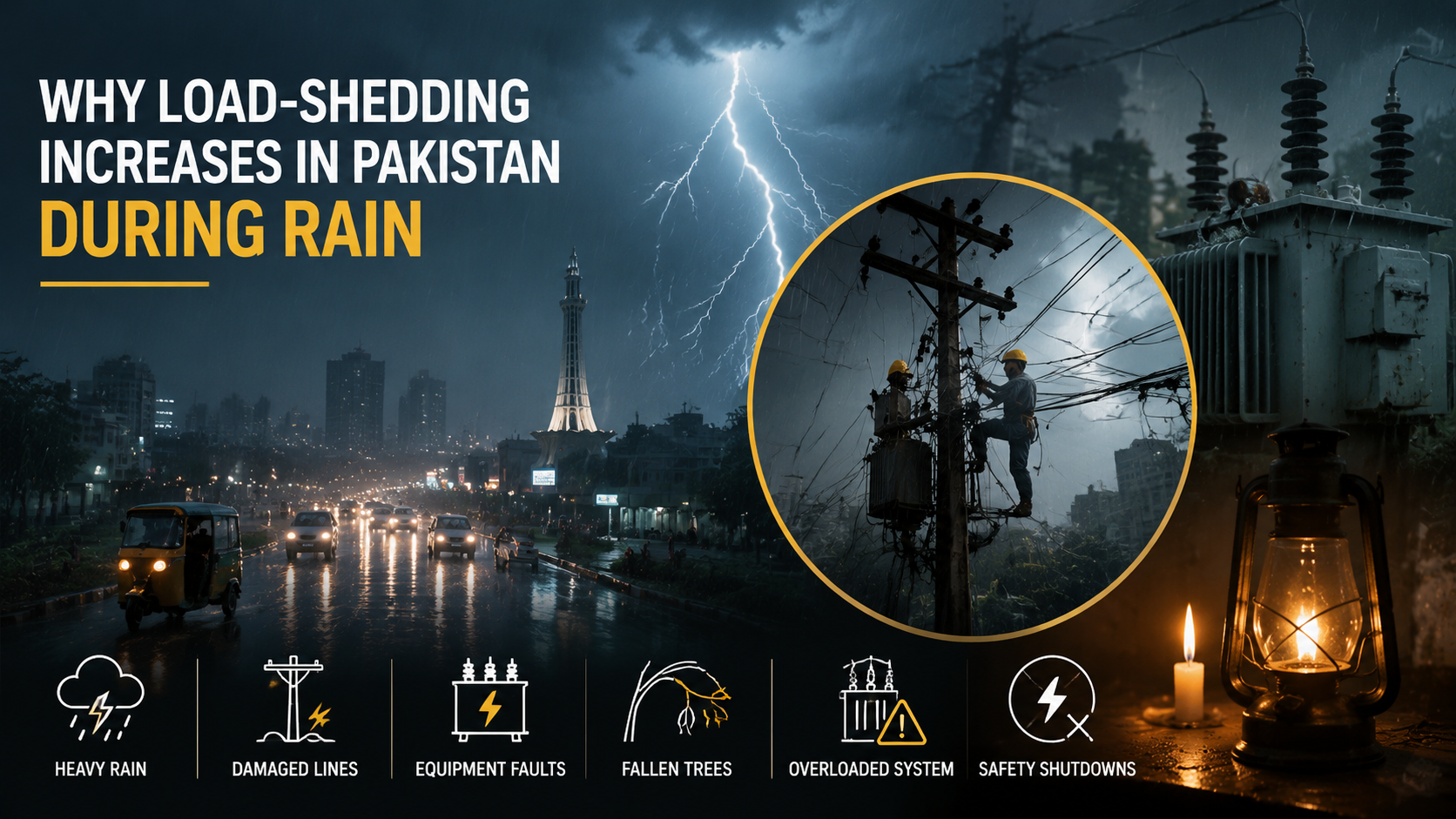
LAHORE – Why does electricity go out when it rains in Pakistan? This question becomes common every monsoon season as heavy rainfall often brings unexpected power interruptions across the country. While rain provides relief from extreme heat, millions of households frequently face electricity outages due to damaged infrastructure, grid faults, safety shutdowns and weather-related challenges.
From Karachi to Lahore and Islamabad, heavy rain frequently causes power failures, leaving residents without electricity for hours. Although rain itself does not directly create a shortage of electricity, it exposes weaknesses in Pakistan’s power distribution system.
The main reasons behind rain-related load-shedding include ageing infrastructure, damaged electricity equipment, safety shutdowns, overloaded distribution networks, illegal connections and delayed maintenance.
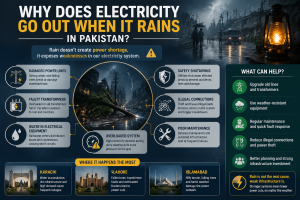
This Image is Ai generated and used for Illustration purposes only.
Quick Overview: Why Rain Causes Power Outages in Pakistan
| Cause Factor | Technical Process | Main Impact on Grid |
| Precautionary Safety Shutdown | Power utilities (like LESCO, K-Electric) proactively shut off local feeders during downpours. | Prevents fatal electrocutions and equipment damage in waterlogged neighborhoods. |
| Automatic System Tripping | Heavy moisture and water intrusion seep into exposed transformers and high-tension lines. | Triggers automatic safety switches to trip, isolating faults and shutting down entire circuits. |
| Outdated Infrastructure | Older distribution transformers utilize fragile, exposed outdoor fuses (locally called D’s and T’s). | Exposed components easily short-circuit, burn, or blow out under heavy rainfall or humidity. |
| Physical Weather Damage | Monsoon winds and heavy downpours uproot trees, snap overhead wires, and collapse old poles. | Directly severs physical transmission lines, causing sustained localized blackouts. |
| Urban Flooding | Excess rainwater submerges ground-level electrical substations and localized consumer meters. | Prevents repair crews from accessing faults safely until municipal water is drained. |
How Rain Affects Pakistan’s Electricity System
Pakistan’s electricity network depends on thousands of kilometres of transmission lines, transformers, feeders and distribution stations.
During normal weather conditions, these systems can handle daily demand. However, heavy rainfall creates additional challenges.
Water and Electricity Equipment Do Not Mix
Electricity equipment requires protection from moisture and water exposure. During heavy rain, water can enter distribution boxes, transformers and underground connections.
As a result, electricity companies often switch off affected feeders to prevent:
- Electrical fires
- Equipment damage
- Public safety risks
- Short circuits
These temporary shutdowns may appear as load-shedding, although they often happen as emergency safety measures.
Outdated Electricity Infrastructure Increases Problems
One of the biggest reasons Pakistan faces frequent power interruptions during rain is the condition of its electricity infrastructure.
Many parts of the distribution network were built decades ago and now struggle to handle:
- Growing electricity demand
- Extreme weather conditions
- Urban expansion
- Increased air-conditioning usage
According to Pakistan’s power sector reports, distribution losses remain a major challenge for electricity companies. Technical losses and outdated systems reduce the reliability of supply, especially during extreme weather.
Why Karachi Faces Frequent Rain-Related Power Failures
Karachi experiences some of the most visible rain-related electricity problems in Pakistan.
The city’s electricity provider, K-Electric, often temporarily shuts down some areas during heavy rainfall to protect residents and equipment.
Karachi faces additional challenges because:
- Many electricity cables run through densely populated areas.
- Underground water accumulation affects electrical equipment.
- Rapid urban expansion increases pressure on the network.
- Illegal connections create additional load.
During monsoon rains, areas with damaged infrastructure or water accumulation often experience longer restoration times.
Why Lahore Experiences Outages During Rain
In Lahore, electricity distribution is managed mainly by Lahore Electric Supply Company (LESCO).
Heavy rainfall can affect Lahore’s electricity network because:
- Trees and branches can damage overhead wires.
- Transformers may develop faults.
- Flooded streets make repair work difficult.
- High electricity demand puts additional pressure on feeders.
Although Lahore has seen improvements in electricity availability in recent years, local faults during storms remain a recurring issue.
Islamabad and Rawalpindi Rain-Related Electricity Issues
Islamabad and Rawalpindi also experience power disruptions during heavy rainfall.
The region faces problems including:
- Falling trees near transmission lines
- Landslides in surrounding areas
- Damaged transformers
- Faults in local distribution networks
The hilly terrain around Islamabad can make repair work more difficult, especially during severe weather conditions.
Grid Failures and Transmission System Problems
Pakistan’s electricity network operates through a complex system connecting power plants, transmission lines and distribution companies.
However, failures can occur when one part of the system experiences problems.
Common causes include:
Overloaded Transmission Lines
When electricity demand rises sharply, transmission equipment operates under greater stress.
During summer rainfall, households often continue using:
- Fans
- Air conditioners
- Refrigerators
- Water pumps
This increased demand can overload local systems.
Transformer Failures
Transformers convert electricity into usable voltage for homes and businesses.
However, overloaded or poorly maintained transformers can fail during storms.
A single transformer failure can affect hundreds of consumers.
Illegal Electricity Connections Add Pressure
Illegal electricity connections, commonly known as electricity theft, remain a major challenge for Pakistan’s power sector.
These connections increase pressure on distribution networks by:
- Overloading transformers
- Increasing technical losses
- Creating safety hazards
During rainfall, already stressed systems become more vulnerable to breakdowns.
Maintenance Challenges During Extreme Weather
Electricity companies need regular maintenance to prevent failures.
However, maintenance work becomes more difficult during:
- Heavy rainfall
- Flooding
- Strong winds
- Limited road access
Furthermore, emergency repairs often take longer because workers must wait for safer conditions before handling electrical equipment.
Is rain the real cause of Load-Shedding?
Rain itself does not create electricity shortages.
Instead, rainfall exposes existing weaknesses in the electricity network.
A strong and modern power system can continue operating during storms with limited interruptions. However, weak infrastructure increases the impact of weather events.
Therefore, frequent rain-related outages highlight deeper issues, including:
- Infrastructure investment gaps
- Distribution losses
- Maintenance problems
- Network expansion challenges
How Pakistan can reduce rain-related power outages
Experts believe Pakistan can improve electricity reliability through:
-
Modernising Distribution Networks
Electricity companies need to upgrade:
- Old transformers
- Transmission lines
- Distribution equipment
-
Installing Weather-Resistant Equipment
Modern systems can reduce damage from:
- Water exposure
- Strong winds
- Lightning strikes
-
Reducing Electricity Theft
- Improving monitoring systems and preventing illegal connections can reduce pressure on the grid.
-
Better Urban Planning
Cities need improved coordination between:
- Electricity companies
- Municipal authorities
- Development agencies
This can reduce problems caused by flooding and construction damage.
Conclusion
Rain-related load-shedding in Pakistan is not simply caused by rainfall. Instead, storms expose weaknesses in an electricity system that faces ageing infrastructure, overloaded networks, maintenance challenges and distribution losses.
While electricity companies often take temporary safety measures during heavy rain, long-term improvements require investment in stronger grids, modern equipment and better maintenance systems.
Until these improvements take place, many Pakistanis will continue to experience power interruptions whenever severe weather arrives.
Frequently Asked Questions (FAQs)
Why does electricity go out when it rains in Pakistan?
Electricity often goes out during rain because water, strong winds and falling trees can damage power equipment. Companies also shut down some areas temporarily for safety reasons.
Does rain cause load-shedding in Pakistan?
Rain does not directly cause load-shedding. However, it can trigger power failures by damaging infrastructure and creating safety risks.
Why does Karachi lose electricity during rain?
Karachi experiences outages during rain due to water accumulation, damaged equipment, overloaded networks and emergency shutdowns by the electricity provider.
Why does electricity come back late after rainfall?
Restoration can take time because workers must identify faults, access damaged areas and safely repair electrical equipment.
How can Pakistan reduce rain-related power outages?
Pakistan can reduce outages by upgrading infrastructure, improving maintenance, reducing electricity theft and investing in modern weather-resistant power systems.
Read More:
Stay Connected with Upfront
Get the latest news, technology, business, sports and entertainment stories from Upfront.
Add Upfront as a preferred source on GoogleAdd Upfront to your preferred sources to see more of our stories across Google Search.